
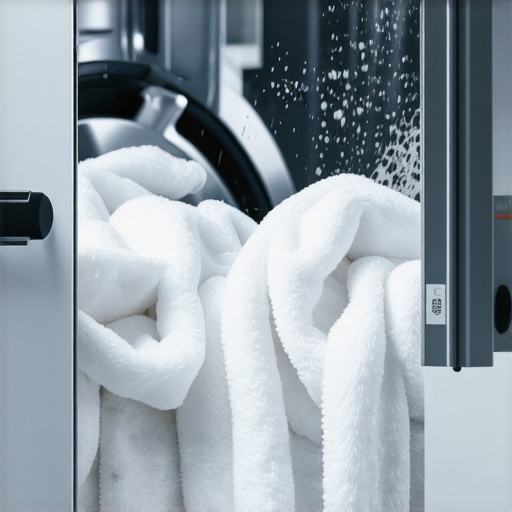
I spent three weeks convinced that our guest bedroom was infested with bedbugs. Every morning, I would wake up with these maddening, itchy red patches across my shoulders and back, yet my wife didn’t have a single mark. I tore the mattress apart, searched every crevice with a flashlight, and found absolutely nothing. It wasn’t until I switched to a different t-shirt—one that had been buried in the back of the drawer for months—that the itching stopped. The culprit wasn’t a bug; it was the ‘extra clean’ laundry pods I had been using in our brand-new, water-saving machine. My clothes looked spotless, but they were actually saturated with chemical residues that my skin just couldn’t handle. It was a wake-up call that led me to obsess over every dial and setting on my control panel, especially that one mysterious button: the extra rinse.
Stop the Itch by Using Your Washer Correctly
Today, I want to dive deep into whether that extra splash of water is a genuine lifesaver for people with sensitive skin or if it is just a placebo that wastes your time and utility budget. We are living in an era where washing machines that save water are the industry standard, but that efficiency comes at a cost that many of us feel right on our skin. I am going to share exactly how I adjusted my laundry routine to finally get rid of the hives, and why your machine might be working against you.
Does an extra rinse cycle actually do anything?
You might be skeptical. After all, if the machine is doing its job, why should we need to run a second rinse? The reality is that modern high-efficiency (HE) units operate on a knife-edge of water usage. I learned this the hard way after a massive detergent mistake I made when we first got our smart washer: I assumed more soap meant cleaner towels. In reality, why your high-efficiency washer uses barely any water is because it relies on high-concentration chemistry rather than a massive flood of water. When you use too much soap, or even just the standard amount in a heavy load, the machine often struggles to dilute it all. According to a report by the Environmental Working Group (EWG), many conventional detergents contain surfactants like sodium lauryl sulfate that can remain trapped in textile fibers even after a standard wash cycle, acting as a constant irritant. Have you ever felt like your ‘clean’ clothes actually felt a bit stiff or waxy? That is exactly the residue we are talking about. Let me know in the comments if you have ever had to re-wash a load just to get the ‘soapiness’ out.
Why Modern Efficiency Might Be Irritating Your Skin
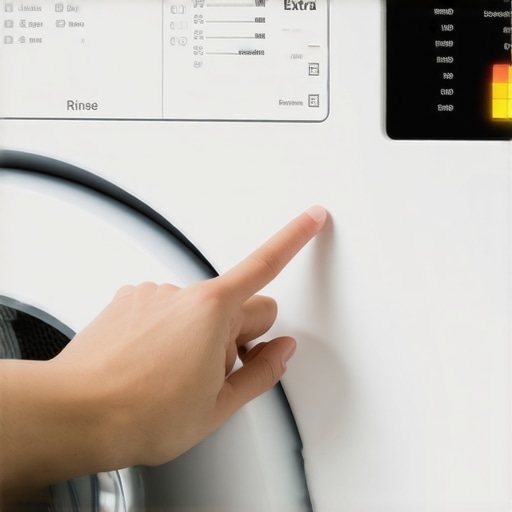
The transition to how smart washing machines can simplify laundry day often overlooks the fact that less water means higher chemical concentrations. When I first started experiencing skin issues, I was frustrated because I thought I had bought the best machine on the market. What I didn’t realize was that the default ‘Normal’ cycle is designed to pass government energy ratings, not necessarily to cater to someone with an allergy. By opting for the extra rinse, you are essentially overriding those hyper-efficient presets to ensure that the fabric is actually clear of surfactants. It is the single most effective way to manage detergent allergies without having to resort to expensive, scent-free specialty soaps that don’t always get the tough stains out. It takes a bit more time, but compared to the misery of a skin rash, it is a trade-off I would make every single time.
Take Control of the Extra Rinse Cycle
Getting the most out of your machine isn’t about pushing every button; it is about knowing which ones actually move the needle for your skin health. When you select that extra rinse, you are not just adding time; you are changing the final dilution ratio. I think of it like a professional chef deglazing a pan—that last bit of liquid is what lifts the stubborn residue off the surface. Because of why your high-efficiency washer uses barely any water, that secondary flush is often the only time your clothes see truly clear, soap-free water.
Stop Following the Detergent Bottle Instructions
The biggest mistake most of us make is falling for the ‘cap-full’ trap. Most HE detergents are ten times more concentrated than the formulas our parents used. I once filled the dispenser to the ‘Max’ line for a load of gym clothes, thinking I needed the extra power. Halfway through the rinse, the door glass looked like a bubble bath, and the machine threw an error because the foam was tripping the sensors. Now, I use the secret to using less detergent in your high efficiency washer: two tablespoons, max. If you see bubbles during the final rinse, you have already lost the battle against residue.
Match Your Load Size to the Water Level
Modern machines are smart, but they can be tricked by bulky items that absorb water before the sensors can register the weight correctly. If you are trying to master the trick to washing bulky comforters, remember that the extra rinse is non-negotiable. These thick fabrics act like massive sponges, locking in soap deep in the batting. I always run a ‘Deep Fill’ or ‘Heavy Duty’ setting along with an extra rinse for bedding to ensure the water actually penetrates the core of the fabric. Without it, you are basically sleeping in a field of dried chemicals.
Clear Out the Drum Grime for Better Results
If your machine’s drum or gaskets are coated in a thin layer of old soap scum, every ‘clean’ load starts with a disadvantage. You need to periodically clean the debris filter on your front load washer effectively to keep the drainage paths clear. When that filter is clogged, the ‘dirty’ rinse water doesn’t evacuate fast enough, meaning your clothes are essentially sitting in a diluted soup of the previous load’s grime. I remember one Saturday when I decided to ‘deep clean’ my work jeans using a guide on how to use the steam setting on your washer. I combined steam with a heavy-duty cycle but forgot to hit the extra rinse. The steam actually baked the excess detergent into the denim fibers. When I put them on, my legs felt like they were on fire within twenty minutes. I had to jump in a cold shower and re-wash those jeans three times without any soap just to make them wearable again. It was a messy, itchy lesson in why ‘more’ isn’t always ‘better’ when it comes to heat and chemistry.
Use High Spin Speeds to Assist the Rinse
An overlooked part of the rinsing process is the spin speed. By maximizing the centrifugal force, you are physically forcing the soapy water out of the fibers before the fresh rinse water even enters. This makes the extra rinse twice as effective. If you are using how smart washing machines can simplify laundry day features, check your app settings to ensure your ‘Rinse Spin’ is set to the highest safe RPM for the fabric. It reduces the work the water has to do and ensures that when the cycle ends, the fabric is as neutral as possible.
The Quick Wash Trap You Need to Avoid
Most people assume the ‘Quick Wash’ setting is just a standard cycle with a faster drum speed, but that is a dangerous misconception for anyone with skin sensitivities. In reality, to shave off those twenty minutes, your machine significantly reduces the rinse time and often skips the secondary dilution phase entirely. If you are struggling with unexplained itching, you might be falling for this efficiency trap. While why your energy efficient washer takes so long to finish can be frustrating, that extended duration is actually what protects your skin. The extra time is dedicated to ensuring the water has enough contact time to break down complex surfactants. Have you ever fallen into the trap of using the fastest cycle for every load just to save time? Let me know in the comments because I certainly did until my back looked like a road map of hives.
Stop Adding Extra Water Manually
A common ‘hack’ in the HE washer community is to manually dump a bucket of water into the drum to ‘help’ the machine rinse better. This is a massive mistake that can lead to a mechanical disaster. Modern the most reliable washing machines for large families use sophisticated pressure switches to calculate the load weight. When you add water manually, you confuse the sensors, which often leads to why your washing machine keeps getting an unbalanced load error because the suspension system cannot handle the unexpected weight distribution. Instead of manual intervention, trust the ‘Deep Fill’ or ‘Extra Rinse’ buttons which are programmed to adjust the water level without compromising the machine’s internal calibration.
Can your machine actually reach the temperatures needed for a true sanitize cycle?
For those of us worried about more than just soap residue, the ‘Sanitize’ button feels like a safety net. However, a significant nuance most owners miss is the ‘thermal gap.’ According to research by Dr. Charles Gerba at the University of Arizona, many residential machines fail to reach the consistent 140°F (60°C) required to kill stubborn pathogens like E. coli or salmonella if they aren’t equipped with an internal water heater. If your machine relies solely on the water coming from your home’s water heater, the liquid often cools down significantly by the time it hits the cold drum. 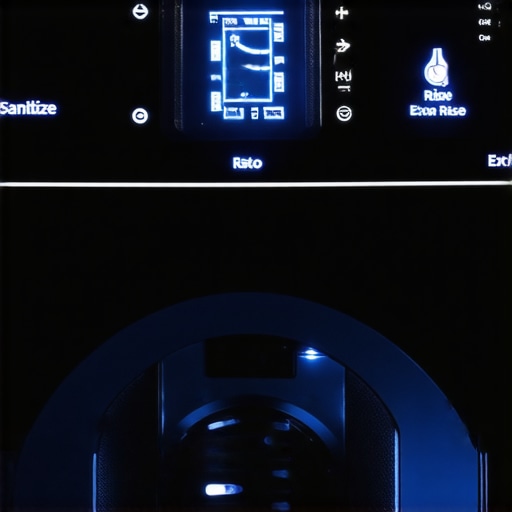 To get a real sanitize result, you need to ensure your machine has a dedicated heating element rather than just mixing tap water. This is a primary factor in the real reason your clothes still feel damp after the cycle or still smell ‘off’ even after a long wash.
The Hidden Biofilm in Your Detergent Drawer
If you have mastered the extra rinse but still find yourself scratching, the culprit might be hiding in the one place you never look: the detergent dispenser drawer. Over time, liquid softeners and detergents create a waxy biofilm that acts as a breeding ground for mold. This is why choosing the best front load washers for preventing mold and mildew buildup is only half the battle; you must physically remove that drawer and scrub the housing. When the ‘clean’ rinse water passes through a moldy dispenser, it carries those spores directly into your clothing fibers. It is a subtle, hidden nuance that transforms a high-tech appliance into a source of irritation. Take a moment this weekend to pull that drawer out—you might be shocked at what is lurking behind your ‘clean’ laundry routine.
Give Your Fridge Room to Breathe
After focusing so much on washing machine hygiene, I realized that my maintenance obsession had to extend to the kitchen if I wanted my investment to last. The most critical tool in my kit isn’t a high-tech sensor, but a simple 30-inch flexible nylon condenser brush. I use this specific tool because vacuum attachments simply cannot reach the tight crevices where pet hair and dust consolidate. When those coils are coated, your compressor works double time, leading to a spiked utility bill and premature failure. According to the Association of Home Appliance Manufacturers (AHAM), even a light coating of dust on condenser coils can reduce energy efficiency by as much as 30%. I make it a habit to use this brush every six months, which is the secret to making your refrigerator last twice as long. If you have a golden retriever like I do, you definitely need to learn how to keep your refrigerator coils clean in a pet-friendly home to prevent the system from suffocating. 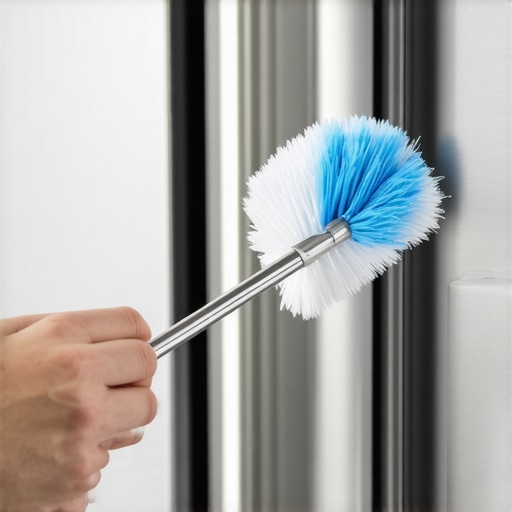
Stop Your Dishwasher from Choking on Hard Water
I used to think that because a dishwasher is full of soap, it must be self-cleaning. I was wrong. I noticed my plates were coming out with a gritty film, and no amount of rinse aid helped. I finally pulled the bottom rack out and used a small toothpick to clear the holes in the rotating spray arms. You would be amazed at how many tiny seeds and calcium deposits get lodged in there. Taking the time to clean the internal spray arms of your dishwasher for better flow is the difference between a machine that actually sanitizes and one that just moves dirty water around. This is a maintenance step most people skip because it requires a bit of manual labor, but it saves you from the frustration of re-washing half your load by hand.
How do I maintain these complex machines over the long haul?
Maintenance is no longer just about brushes and toothpicks; it is about digital hygiene. If you have embraced the ultimate guide to smart home appliances for a modern living, you have to treat your kitchen like a computer network. I set aside the first Saturday of every quarter to check for software patches. You might wonder why your smart appliance app keeps asking for a firmware update, but these files often contain crucial fixes for sensor calibration and energy-saving algorithms. Ignoring these can lead to ‘zombie’ appliances that function but do so inefficiently or with buggy interfaces. Looking forward, I predict we will soon see AI-driven internal diagnostics that monitor the specific vibrational patterns of motors. Instead of waiting for a bang or a leak, your machine will likely send a push notification that a bearing is beginning to wear out, allowing for a cheap fix before a total catastrophic failure occurs. I strongly encourage you to go check your washer’s debris filter right now—it is the one simple task that prevents 90% of drainage emergencies.
Hard Truths I Discovered While Chasing an Itch-Free Night
Looking back on those three weeks of mystery rashes, I realized that my biggest mistake wasn’t the machine I bought, but how much I trusted the marketing on the soap bottle. One of the most important lessons I learned is that the ‘Normal’ setting is often a compromise between efficiency and performance, and it rarely prioritizes those with sensitive skin. If you are noticing stiffness in your towels, it is a sign of residue, not a lack of fabric softener. I also discovered that if you how to diagnose a washing machine that wont spin at full speed, you are often catching a drainage issue before it becomes a skin irritant. High-efficiency machines are incredible tools, but they require a level of manual oversight that the manuals don’t always emphasize. Trusting the extra rinse was the first step; trusting my own observation of the fabric’s feel was the second.
Tools That Keep My Laundry Room Humming
Maintaining a modern home requires more than just a box of pods; you need a strategy. I always keep a few specific resources and tools in my cabinet to ensure my system stays clean. First, I swear by the the best way to clean a stainless steel fridge without leaving streaks to keep my kitchen looking as good as my laundry feels. For the digital side of things, I regularly check my manufacturer’s portal because I finally understand why your smart appliance app keeps asking for a firmware update—it is often about improving the very rinse cycles I rely on. Lastly, I cannot recommend a flexible condenser brush enough; it is the secret to making your refrigerator last twice as long and prevents your utility bill from skyrocketing while you focus on your laundry settings.
Your Path to a Residue-Free Life
Taking control of your laundry routine might seem like a small change, but for anyone who has suffered through skin irritation, it is a total game-changer. By embracing the extra rinse and understanding the limits of high-efficiency water usage, you are reclaiming your comfort. Don’t be afraid to experiment with your machine’s unique settings until you find the perfect balance for your household. Remember, these appliances are there to serve you, not just to meet an energy quota. Once you master the rhythm of your washing machines that save water, you will enjoy truly clean clothes that feel as good as they look. Have you ever noticed a soapy film or a weird smell on your clothes even after a long wash cycle? Let me know your experiences in the comments below!