
I stood there, tongs in hand, staring at my sleek new induction cooktop like it was a ticking time bomb. I had just dropped a significant chunk of change on this “future-proof” kitchen tech, but the moment I cranked the heat to sear a ribeye, my favorite skillet started singing a high-pitched, metallic aria that set my teeth on edge. It wasn’t the satisfying sizzle of rendered fat. It was a rhythmic, aggressive buzz. I froze. I honestly thought I’d bought a lemon. I even considered calling a technician, much like you would if you heard the refrigerator noise that means your fan motor is dying. As it turns out, the stove was fine; it was my choice of cookware—and a bit of basic physics—that was the real culprit. Today, I am going to help you silence the swarm.
Stop Worrying About Your Cooktop Exploding
If you are hearing a vibration, a whistle, or a steady drone when you cook, take a deep breath. You haven’t broken your expensive kitchen. Induction is a marvelous piece of technology, but it is sensitive. It uses electromagnetic fields to heat your pans directly through induction, and sometimes that intense energy creates a bit of mechanical “chatter.” When I first started, I made the mistake of thinking every sound was a sign of a catastrophic failure, similar to the panic of finding your refrigerator leaking water directly onto the kitchen floor. But once you get the noise under control by matching the right pan to the right burner, you can go back to focusing on maintenance, like learning the best way to clean an induction cooktop without scratching it.
Is induction actually worth the hype if it’s this noisy?
I get the skepticism. When that buzzing first hit my ears, I almost went back to my old gas range. But here is the reality: the speed and precision of induction are unmatched, and the noise is usually just a user-error issue or a hardware mismatch. Have you ever jumped back from your stove because a weird noise made you think it was about to short-circuit? You are not alone. Most of the time, that sound is actually coming from the pan, not the appliance itself.
Why Low-Quality Metal Layers Create That Racket
The biggest mistake I made early on was buying a “bargain” set of multi-clad pans. I thought I was being savvy. In reality, cheaper multi-layered pans often have tiny air gaps or loose bonding between the layers of stainless steel and aluminum. According to research from the *Magnetics Society of the IEEE*, high-frequency magnetic fields can cause these individual layers to vibrate against each other at incredible speeds. This phenomenon, known as the Joule effect, creates that audible, grating hum. It is not your cooktop failing; it is your pan literally vibrating against itself. If your kitchen sounds more like a construction site than a bistro, it might be time to check the weight and construction of your pots. If you’ve ever dealt with other annoying appliance sounds, like a refrigerator making a clicking noise every ten minutes, you know how much a constant sound can wear on your nerves. Let’s look at how to identify which of your pans are the true troublemakers.
Upgrade Your Metal to Kill the Hum
The most effective way to eliminate that high-pitched whine is to rethink the mass of your cookware. While the magnet test tells you if a pan will heat up, it doesn’t tell you how loudly it will do it. Thin, lightweight pans are like a cheap tin roof in a hailstorm; they vibrate wildly under the pressure of the electromagnetic field. I remember trying to prep a massive batch of marinara in a thin-walled, ‘induction-ready’ stockpot I found on sale. The high-pitched whine was so piercing it felt like someone was running a fingernail across a chalkboard inside my skull. I moved the sauce into my heavy Dutch oven, and the sound instantly vanished. The increased mass of the cast iron acts as a natural dampener for those magnetic vibrations. If you are struggling with a kitchen that feels too loud, you might find similar peace by looking into the best quiet dishwashers for homes with open-plan floor designs to keep the entire room serene.
Solid Cast Iron Wins Every Time
When it comes to induction, density is your best friend. A solid piece of cast iron or heavy carbon steel is a single, unified piece of metal. Unlike multi-clad pans where layers can delaminate or expand at different rates, a solid pan has no internal gaps to rattle. This is very similar to the trick to stopping a vibrating washing machine during the spin where adding stability and weight prevents the appliance from turning into a percussion instrument. If you hear a buzz, reach for the heaviest pan in your cabinet. 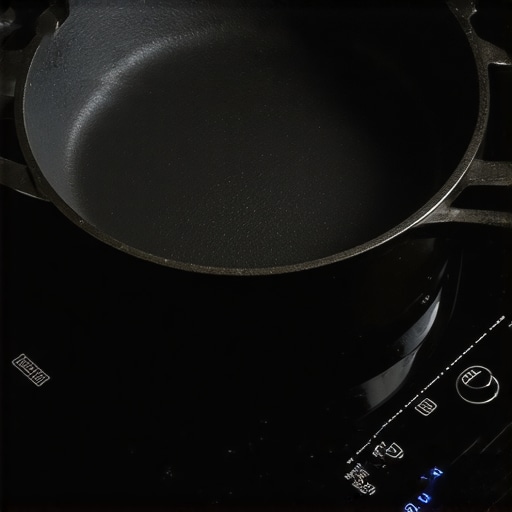
Match the Footprint to the Burner Ring
Size mismatching is another silent killer of kitchen peace. If you place a small pot on a large induction ring, the magnetic field isn’t fully ‘captured’ by the metal, which can cause the induction coils to struggle and emit a more pronounced hum. It is like trying to fit a square peg in a round hole; the energy has nowhere to go efficiently. Always choose a burner that most closely matches the diameter of your pan’s base. This ensures maximum energy transfer and minimum acoustic interference. If your appliance still feels ‘off’ despite the right pans, you might need to check the internal sensors, much like you would how to recalibrate your smart oven when the temperature feels wrong.
Manage the Clicking with Smarter Power Settings
Have you ever heard a rhythmic clicking sound, almost like a metronome? That is often Pulse Width Modulation (PWM). On lower settings, some induction cooktops cycle the magnetic field on and off to maintain a low simmer. This can be jarring, especially if you are used to the silent flame of gas. To minimize this, try preheating your pan on a medium-high setting to get it up to temperature quickly, then dropping it down. Higher-end models often have more sophisticated controllers that minimize this effect, making them some of the top smart appliances for a seamless home experience in 2025.
Check for Loose Handles and Lids
Sometimes the noise isn’t the cooktop or the pan’s metal—it is the hardware. A loose screw on a stainless steel handle can rattle like a snare drum when the magnetic field hits it. I’ve seen people panic thinking their stove was dying, only to realize their glass lid was vibrating against the rim of the pot. It can sound exactly like how to fix a rattling dishwasher that sounds like it has loose rocks. Tighten your handles and ensure your lids have a snug fit or a silicone rim to act as a gasket against the noise.
People often tell me that if a magnet sticks to the bottom of the pan, it is perfect for induction. That is a dangerous oversimplification. I have seen hundreds of people buy ‘induction-compatible’ sets only to find they scream like a banshee the moment they hit medium-high heat. The hidden nuance here is the quality of the bond between the layers. In my experience, even high-end ‘sandwich’ pans can fail if the thermal expansion rates of the aluminum core and the stainless exterior are too far apart. Much like the dishwasher detergent mistake that is etching your favorite glassware, using the wrong physical properties for the task can lead to permanent frustration rather than a better result.
The Induction Ready Label is Often a Lie
Let’s dig deeper into why that ‘induction-ready’ stamp on the bottom of your skillet might be misleading. Cheap manufacturers often use a thin, perforated steel plate sprayed onto an aluminum body. This is a recipe for acoustic disaster. Because the steel and aluminum heat at vastly different rates, they begin to microscopically pull apart. According to researchers at the International Journal of Thermal Sciences, these localized thermal gradients can cause mechanical stress that manifests as that high-pitched whine. If you want a silent kitchen, you need to look for fully clad pans or, better yet, single-material vessels like carbon steel. It is a similar logic to understanding the real difference between inverter compressors and standard fridge motors; the fewer moving parts or ‘layers’ reacting to energy, the quieter the operation will be.
Can high-frequency vibrations actually damage my expensive cookware over time?
This is the question I get most from readers who have invested in luxury copper-core sets. The short answer is: potentially. While it won’t shatter your pan instantly, constant high-frequency vibration can lead to ‘delamination’—where the layers of metal actually begin to separate. This ruins the heat distribution and makes the buzzing even louder. Have you ever fallen into this trap? Let me know in the comments. It is a subtle hardware failure, much like when you need to know how to recalibrate a smart oven thermostat that burns everything; you think you are the one cooking wrong, but the tool itself has fundamentally changed its behavior.
Don’t Blow Out Your Circuits on the Boost Setting
The ‘Boost’ or ‘Power’ mode on your cooktop is the most tempting button in the kitchen, but it is also the fastest way to trigger a noise complaint from your own ears. I used to crank it to the max every time I boiled water, until I realized I was essentially redlining my appliance’s electromagnetic coils. This intense energy creates a massive magnetic ‘tug’ that stresses the internal components of both the stove and the pan. If you find your cooktop is making a low-frequency hum that vibrates the actual countertop, you are likely overpowering the pan’s ability to absorb the energy. This is not unlike why your washing machine takes much longer than the timer says—the system is working overtime to compensate for an imbalance. For a truly quiet experience, use 70% power for 20% more time; your ears and your pans will thank you.
The Two Tools That Saved My Glass Surface
After spending months perfecting my induction technique, I realized that keeping the hardware in peak condition is just as important as the pots you put on it. My go-to tool isn’t a fancy electronic gadget; it’s a simple, high-quality specialized razor scraper held at a strict 45-degree angle. This is the only way to remove carbonized spills without causing permanent micro-scratches. I’ve seen people ruin their kitchens by using abrasive pads, which is a tragedy on par with the dishwasher detergent mistake that is etching your favorite glassware. To keep everything running smoothly, I also keep a dedicated ferrous-strength magnet in my utility drawer to test every new piece of cookware before it even touches the glass. This ensures I’m not stressing the electromagnetic coils with subpar metal. It’s the same proactive mindset you need when you learn how to keep your refrigerator coils clean in a pet-friendly home. If you neglect the small maintenance tasks, the big repairs will find you sooner than you think. 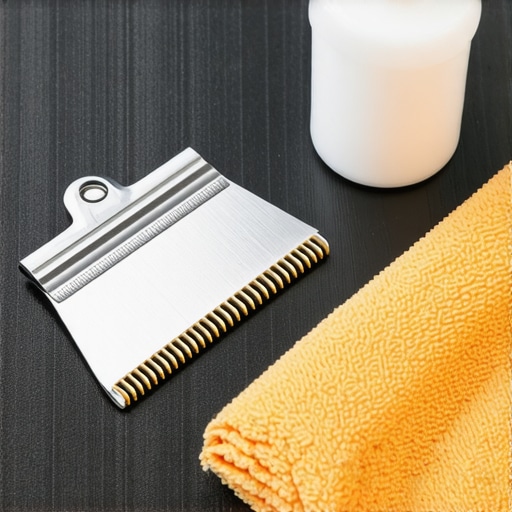
Why Firmware is the New Wrench
In the modern kitchen, a screwdriver isn’t always enough to fix a performance issue. I recently discovered that a persistent clicking sound on my cooktop was actually solved by a software patch. You might be annoyed when your smart appliance app keeps asking for a firmware update, but these downloads often recalibrate the Pulse Width Modulation cycles to make the induction process quieter and more efficient. According to the technical standards set by the Association of Home Appliance Manufacturers (AHAM), regular software optimization can extend the life of internal control boards by preventing unnecessary heat spikes. This digital upkeep is becoming the baseline for the top smart appliances for a seamless home experience in 2025. I’ve even started to calibrate my smart fridge temperature sensors manually once a season to ensure my energy bills stay low.
How do I keep my induction stove running like new for a decade?
The absolute secret to longevity is airflow management. Most people don’t realize that induction cooktops have internal cooling fans that can get choked with dust and grease over time. If those fans struggle, the electronics overheat, and that’s when you get catastrophic failure. Once a year, I use a vacuum with a brush attachment to clear the underside vents. It is a simple habit, much like knowing the easiest way to clean the filter in your dishwasher, which prevents the motor from burning out. Looking ahead, I predict that by 2030, our appliances will feature self-cleaning internal air filtration systems. Until then, the manual work falls on us. To stay ahead of the curve, you should set up a central kitchen hub for all your smart appliances so you can monitor the health of every motor and sensor from one screen. My challenge to you: Open your appliance app right now and check for a pending update—it’s the easiest maintenance task you’ll do all year.
The Hidden Truth Behind My First Induction Sear
After months of experimentation, I realized that the common magnet test is only the bare minimum for success. If a magnet sticks, the pan will heat, but if that pan is lightweight or poorly bonded, it will scream like a siren. I’ve learned that the mass of your cookware is the single most important factor in acoustic dampening. Furthermore, I discovered that the ‘Power Boost’ setting is a primary cause of low-frequency vibrations that can make your entire countertop feel like it is humming. This is why I always recommend using a dedicated circuit for your cooktop to ensure stable power delivery. Finally, never underestimate the power of a software patch; modern induction units rely on digital control just as much as hardware. Keeping your software current is as essential as knowing how to set up a central kitchen hub for all your smart appliances to maintain peak performance across your home.
Essential Gear to Quiet the Clatter
To keep my kitchen serene, I rely on a specific set of tools that go beyond just buying ‘induction-ready’ labels. First, heavy-duty cast iron or carbon steel is my go-to choice because their density naturally absorbs the energy that causes lighter pans to vibrate. Second, I keep a high-quality glass scraper in my drawer; removing carbonized residue ensures the pan sits perfectly flat, which minimizes the physical rattle against the glass surface. Third, I highly recommend reading the ultimate guide to smart home appliances for a modern living to see how induction fits into a wider strategy of energy efficiency and noise reduction. For those looking at other high-performance upgrades, checking out refrigerators in 2025 will show you how manufacturers are prioritizing quiet operation across the board.
#IMAGE_PLACEHOLDER_A#
Step into the Future of Quiet Cooking
Transitioning to induction is a learning curve, but the precision and speed are worth every second of troubleshooting. Once you silence the buzz by matching the right mass to the right burner, you are left with the most responsive and efficient cooking surface on the planet. Don’t let a few metallic notes scare you away from what is clearly the future of home appliances. Your induction cooktop is a precision tool that rewards high-quality cookware and proactive maintenance. Just as you might look for washing machines that save water to optimize your laundry, choosing the right induction setup optimizes your kitchen’s energy and atmosphere. Embrace the tech, upgrade your pans, and enjoy the silence of a perfectly executed meal. Which of your pans is currently the loudest? Let me know your ‘screaming skillet’ stories in the comments!