

I still remember the “Great Yogurt Incident” of 2018. I had just moved into a 300-square-foot studio in the city, feeling like a total adult until I realized my hand-me-down fridge was so wide I had to shimmy past it sideways just to get to the bathroom. One morning, half-asleep and rushing, I clipped the corner of the fridge, sending a full container of Greek yogurt flying across my only rug. It was the breaking point. I realized then that choosing the right refrigerator isn’t just about cooling food; it’s about reclaiming your floor space and your sanity. If you’re currently playing Tetris with your groceries or bruising your hips on a bulky appliance, I promise you there is a better way. Today, we’re diving into the world of slimline models that actually perform without eating your entire living area.
Stop Cluttering Your Kitchen with Overly Bulky Units
The biggest mistake I made early on was thinking a “compact” fridge had to be one of those tiny cubes you see in freshman dorm rooms. Those things are basically expensive paperweights that freeze your lettuce and leave your drinks lukewarm. What we really need are the best slim refrigerators for studio apartment living and tight corners—units that stand tall but stay narrow. According to a report by the Association of Home Appliance Manufacturers (AHAM), the trend toward “urban-sized” appliances has led to a significant increase in high-efficiency, narrow-profile designs that don’t compromise on features like humidity-controlled crispers. You shouldn’t have to choose between a gallon of milk and a vegetable drawer just because your zip code is expensive.
Is a Slimline Fridge Actually Big Enough for Real Life?
This is the question I get asked most often by my neighbors. They worry they’ll be grocery shopping every single day because nothing fits. I used to think the same until I found models that utilize vertical height instead of horizontal bulk. It’s all about the shelf configuration and smart door storage. Have you ever felt like your kitchen was designed by someone who never actually cooked a meal? Drop a comment below if you’ve ever had to store your leftovers in a weird way just because the shelves weren’t adjustable!
Silence is Golden When Your Bed is Five Feet Away
When you live in a studio, your kitchen is your bedroom, and your bedroom is your office. I once bought a budget slim model that sounded like a jet engine taking off every time the compressor kicked in. It was a disaster for my sleep. Now, I always point people toward the best quietest refrigerators for studio apartments and small rooms. You want an inverter compressor that hums rather than clatters. Trust me, your future well-rested self will thank you for paying attention to those decibel ratings before you sign the delivery receipt. Moving a massive unit is a pain, so it’s better to move a heavy refrigerator once and have it be the right one.
Measure Twice and Account for the Swing
Before you fall in love with a sleek stainless steel finish, you need to measure your space like a crime scene investigator. It is not just about the width; it is about the door swing radius. I once bought a beautiful 24-inch unit that fit perfectly in the gap, only to realize the door hit my oven handle every time I tried to open it more than halfway. I had to live for six months reach-and-grabbing my milk like a ninja. Always check the best refrigerator styles for narrow kitchen walkways to ensure you have enough clearance for the doors to open fully without bruising your shins. If your kitchen is a narrow galley, look for a model with a reversible door hinge so you can choose which way it swings.
Treat Your Shelves Like a High-Rise Apartment
In a slim fridge, horizontal space is a luxury you do not have. Think of your organization like urban planning: build upward, not outward. I learned this the hard way during a holiday party when I tried to fit a large platter of appetizers into my fridge. I ended up having to dismantle three shelves and stack my eggs on top of a juice carton. It was a precarious Jenga tower that eventually collapsed. To avoid this, prioritize units with ‘spill-proof’ glass shelves that can be adjusted in one-inch increments. You should also learn how to organize your freezer to prevent frost burn and food waste by using vertical bins that slide out, allowing you to see what is in the back without digging. 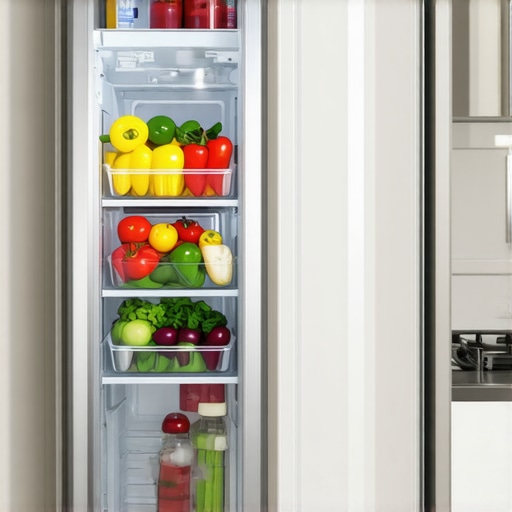
The Real Magic Happens in the Compressor
If your fridge sounds like a dying lawnmower, it is probably using an old-school single-speed compressor. These motors are either ‘all on’ or ‘all off,’ which wastes a ton of energy and creates a racket. Modern slim units often use digital inverters. Think of a standard motor like a light switch and an inverter like a dimmer. The inverter slows down or speeds up based on the cooling demand, which keeps the temperature stable and your utility bill low. You can find more details on the real difference between inverter compressors and standard fridge motors to understand why this upgrade is worth the extra fifty bucks.
Test Your Seals or Pay the Price
A slim fridge works harder because it has less internal mass to hold the cold. If your door seal is even slightly warped, your compressor will run 24/7. Use the ‘dollar bill test’: close the door on a dollar bill and try to pull it out. If it slides out easily, you are losing money. It is vital to how to test if your fridge door seal is actually airtight to prevent your energy bill from skyrocketing. While you are at it, make sure you are using the best energy efficient fridge settings for your utility bill, usually around 37°F (3°C) for the fridge and 0°F (-18°C) for the freezer.
Listen for the Warning Signs
Living in a studio means you are the first responder to any appliance mechanical failure. If you start hearing a rhythmic clicking or a high-pitched whine, do not ignore it. That is often the refrigerator noise that means your fan motor is dying. In a small space, these sounds are amplified. I once ignored a soft chirping sound for a week, thinking it was a bird outside, only to wake up to a puddle of melted ice cream and a dead evaporator fan. Address these noises early to keep your sanctuary peaceful and your food frozen.One of the biggest lies we tell ourselves in the kitchen is that more power always equals a better clean. I used to think that the ‘Heavy’ cycle on my dishwasher was the only way to tackle a Friday night’s worth of lasagna pans. But here is the contrarian truth: most modern appliances are designed around sensors, not brute force. In fact, understanding the hidden cost of running your dishwasher on the heavy cycle daily reveals that you are likely wasting gallons of water and kilowatt-hours for a result that a standard ‘Auto’ cycle could have achieved. These machines use turbidity sensors to ‘see’ how dirty the water is. By forcing a heavy cycle, you bypass that intelligence and often subject your delicate plates to unnecessary heat and pressure.
The Detergent Trap That Is Killing Your Machine
If you think more bubbles mean a deeper clean, you are falling for the oldest trap in the book. This is especially true for laundry. I have seen so many people complain that their clothes feel ‘crunchy’ or that their machine smells like a swamp. The culprit? Excess soap. When you over-pour, the machine cannot rinse it all away, leaving a biofilm that becomes a breeding ground for mold. Learning the secret to using less detergent in your high-efficiency washer is the single best thing you can do for your clothes and your machine’s lifespan. According to a study by the American Cleaning Institute, using more than the recommended amount of HE detergent can lead to ‘suds lock,’ a condition where the pump cannot drain because of excessive foam, eventually burning out the motor. 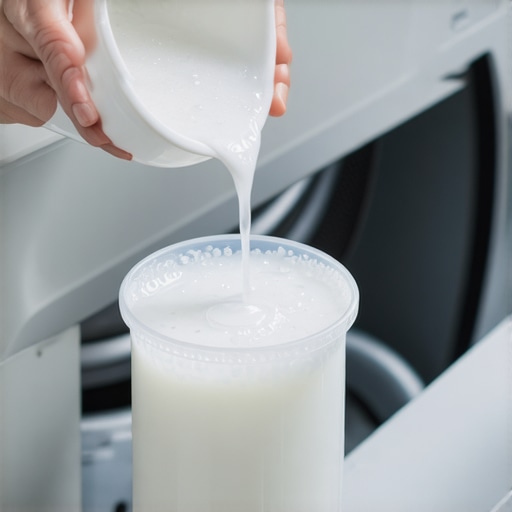
Does the Extra Rinse Cycle Actually Help With Detergent Allergies?
For readers with sensitive skin, this is the ultimate nuance. You might think an extra rinse is a catch-all solution, but it is often a band-aid for the real problem: improper dosing or hard water interference. While you can check if the extra rinse cycle actually helps with detergent allergies, the root cause is usually that the primary rinse failed because the drum was overloaded. In a packed machine, the water cannot penetrate the center of the laundry ‘donut,’ leaving soap trapped in the fibers. It is a sophisticated balancing act between load size and chemistry.
Don’t Ignore the Smart Feature Fatigue
We are currently living in a golden age of tech, but I often see people buy high-end units only to never connect them. This is a mistake. It is not just about getting a notification on your phone when the dryer is done; it is about the firmware updates. Just like your smartphone, your fridge needs software patches to optimize its cooling algorithms. If you have been hesitant, you should look into the ultimate guide to smart home appliances for a modern living to see what you are missing. For example, some smart washers can now detect the specific hardness of your local water and adjust the cycle length automatically—something no manual setting can replicate. Have you ever fallen into the ‘more soap is better’ trap or avoided the smart features of your new fridge because they seemed too complex? Let me know in the comments! If you are still having trouble with your tech, you can always contact us for more specific troubleshooting advice.If you have managed to get your smart hub connected and your detergent levels dialed in, you might think you are in the clear. But the real test of a pro homeowner is what happens behind the scenes. Most people wait for a breakdown to call a technician, but I have saved thousands over the last few years by treating my appliances like my car—preventative maintenance is non-negotiable. If you want to avoid a massive repair bill, you need to start looking at the parts of your machine that never see the light of day.
Dust Is the Ultimate Enemy of Your Fridges Lifespan
I learned this the hard way after my first ‘slimline’ unit started buzzing like a swarm of bees. The compressor was overworking because the coils underneath were matted with pet hair and dust. When those coils are dirty, they cannot release heat efficiently, which forces the motor to run twice as long as it should. I now keep a long, flexible refrigerator coil brush in my utility closet and use it every six months. According to the Department of Energy, a dusty coil can increase your refrigerators energy consumption by as much as 30%. Taking ten minutes to learn how to keep your refrigerator coils clean in a pet-friendly home is the difference between a fridge that lasts fifteen years and one that dies at seven. 
How do I keep my home appliances running like new for years?
Consistency is more important than deep cleaning once a year. For your dishwasher, stop relying on the ‘Self-Clean’ cycle alone. Those cycles are great for the tub, but they do nothing for the physical filter at the bottom where bones, labels, and glass shards collect. You need to physically remove it and scrub it with an old toothbrush. Finding the easiest way to clean the filter in your dishwasher will prevent that ‘old food’ smell and ensure your dishes actually come out sparkling. Similarly, if your smart fridge feels like it is running too cold or too warm, do not just trust the digital display. Every few months, you should know how to calibrate your smart fridge temperature sensors using a standard manual thermometer to ensure the software is still accurate.
Clear Out the Hidden Gunk in Your Washing Machine
Most people do not realize that front-load washers have a ‘secret’ door at the bottom. This is the debris filter, and it is where all the loose change, hair ties, and lint go to die. If you do not drain and clean this every few months, your machine will eventually stop mid-cycle because it cannot pump water out fast enough. Learning how to clean the debris filter on your front-load washer effectively is a messy job—keep a shallow tray and some towels handy—but it is essential for preventing the ‘unbalanced load’ errors that plague older machines. While you are there, take a quick look at refrigerators in 2025: top features that transform your kitchen, as we are seeing a massive shift toward appliances that actually notify you when these physical filters are reaching capacity.
AI Will Likely Solve Our Maintenance Woes Soon
Looking toward the near future, I predict we are about to enter an era where appliances are self-healing—or at least self-reporting. By 2025, expect to see more machines that use vibration analysis to detect a failing bearing months before it actually snaps. We are already seeing the groundwork for this in the ultimate guide to smart home appliances for a modern living. The goal is to move away from ‘reactive’ repairs and into ‘predictive’ care. For now, your best tool is your own eyes and ears. My challenge to you this weekend: find your washing machine’s debris filter door and clean it out for the first time. You might be surprised (and slightly disgusted) by what you find!
Lessons My Puddle-Prone Floor Taught Me
Looking back on my years of apartment living and kitchen upgrades, the biggest lightbulb moment was realizing that appliances aren’t just boxes—they are breathing systems. I used to think that if the light was on, everything was fine. Now, I know better. For instance, I learned that why your washing machine keeps getting an unbalanced load error is often a cry for help from a machine that hasn’t been leveled properly, rather than a mechanical death sentence. Small apartments require a higher attention to detail because the margins for error are so thin. If your fridge fails in a studio, your whole life smells like spoiled milk in three hours. Don’t be afraid to learn how to recalibrate your smart oven when the temperature feels wrong—factory settings are just a starting point, not a rule for your specific home.
My Toolkit for an Error-Free Kitchen
I do not expect you to become a certified technician overnight, but I do recommend keeping a few things in your digital and physical arsenal. First, bookmark the ultimate guide to smart home appliances for a modern living as your primary resource for connectivity issues. Second, I highly suggest investing in a high-quality digital thermometer; it is the only way to verify if your cooling sensors are accurate. Lastly, I always recommend checking the AHAM-certified database for real-world energy consumption stats rather than just relying on the sticker on the showroom floor.
Your Home Deserves a Little Less Stress
Managing your home appliances should not feel like a chore that drains your weekends. It is about creating a space where you can focus on the things that matter, like a perfect Friday night dinner, without worrying about a buzzing motor or a leaking seal. As we look toward the exciting innovations in refrigerators in 2025: top features that transform your kitchen, it is clear that the future is all about making our lives easier through automation and smarter design. Take the small steps today—clean that filter, check that seal, and listen to what your machines are telling you. Have you ever had an appliance ‘fail’ only to realize it was something simple like a clogged filter or a loose plug? Let me know your best DIY save in the comments below!