
I remember the day I pulled my ‘clean’ white sheets out of the wash, only to find a smear of grey slime on the corner of a pillowcase. I leaned in, took a sniff, and it hit me—that unmistakable, musty stench of a damp basement. My three-year-old front-loader, which I’d spent a small fortune on, had turned into a literal petri dish. I looked closer at the rubber gasket, peeled back the layers of the fold, and let out a genuine ‘yuck.’ It wasn’t just a bit of stray lint; it was a flourishing ecosystem of black mold. I felt like a failure as a homeowner. But here is the thing: it happens to the best of us, and it is usually because we are treating our modern machines like the old-school tanks our parents had.
Why your rubber seal is a magnet for slime
Most of us switched to front-loading models because they are the washing machines that save water most effectively while being gentle on fabrics. However, that very efficiency is the culprit. Because these machines use less water, they don’t always flush away all the soap suds and fabric softener. This residue, which I call ‘scrud,’ settles into the folds of the door seal. When you add the airtight nature of a closed door, you’ve basically built a five-star spa for fungal spores. If you’ve wondered why your front load washer smells like a swamp, trust me, I’ve been in those trenches and I know the frustration of re-washing the same load three times. Today, I am going to share the simple routine that saved my machine and my sanity. We are going to tackle the cleaning habits that actually work and the mistakes you need to stop making immediately.
Is it actually possible to keep a front-loader clean without daily scrubbing?
I used to be skeptical too. I thought I’d be chained to my laundry room with a toothbrush and a bottle of bleach every weekend. My biggest mistake early on was thinking that closing the door tightly after a cycle was ‘tidy.’ In reality, I was trapping moisture in a dark, warm box. A study published by Microorganisms (MDPI) confirms that washing machines are hotspots for microbial biofilms, specifically in the rubber seals. If you don’t break that cycle of moisture, the mold will win every time. Have you ever noticed that black film forming in the folds of your gasket? I want to hear about your ‘lightbulb moment’ when you realized your washer needed more than just a quick wipe. The good news is that even if your seal looks like a lost cause, you might not need to replace the door seal on a front load washing machine just yet. Before you give up and look for the best front load washers for preventing mold, let’s try to fix what you have with a few neighborly tips.
Getting your hands dirty to save your gasket
Cleaning that rubber seal isn’t just about a quick wipe-down; it’s about a deep-tissue massage for your machine. Think of the gasket as a series of valleys and ridges. If you only clean the surface, you’re leaving the mold in the shadows to multiply. I remember spending two hours with a headlamp and a pack of microfiber cloths, feeling like a spelunker in my own laundry room. I found a stray sock, three hair ties, and enough ‘scrud’ to fill a coffee cup. It was gross, but the transformation was worth it.
Master the fold-and-scrub method
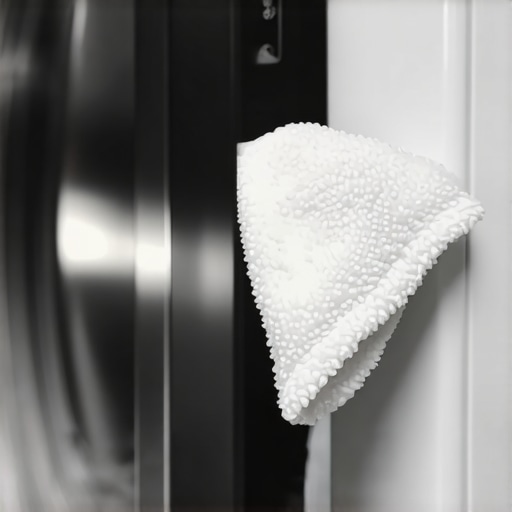
Grab a solution of one part bleach to ten parts water, or a specialized enzyme cleaner if you prefer to avoid the harsh fumes. Peel back the rubber layers with one hand and use a cloth soaked in the solution to dig deep into the crevices. Don’t be afraid to use a bit of elbow grease. If the mold is particularly stubborn, soak some paper towels in your cleaning solution and tuck them into the folds of the gasket, letting them sit for about an hour. This ‘poultice’ method works wonders on those deep black stains.#IMAGE_PLACE_HOLDER_B#
Empty the trap to kill the smell at the source
Most people forget that the gasket is only half the battle. If your machine smells like a locker room, you need to know how to clean the debris filter on your front load washer effectively. This little door, usually located at the bottom front of your machine, catches everything from coins to pet hair. When it gets clogged, water sits in the pump housing and rots. I once pulled a handful of slimy dog hair out of mine that had been fermenting for months. It’s a messy job, so keep a shallow tray and a towel handy for the inevitable spill. If you ignore this, you’ll constantly wonder why your washing machine smells like damp towels even after a wash regardless of how much bleach you use.
Cut back on the suds to starve the spores
Modern high-efficiency machines are incredibly sensitive. Using a full cap of detergent is like trying to wash a single plate with a gallon of soap—it’s overkill and leaves a sticky film behind. This film is the primary food source for mold. Learning the secret to using less detergent in your high-efficiency washer is the single best way to prevent the slime from returning. I switched to using only two tablespoons per load, and the ‘scrud’ buildup stopped almost immediately. If you’ve been seeing dark marks on your laundry, you’re likely seeing the results of why your washing machine is leaving black spots on clothes, which is usually just accumulated soap and mold breaking free from the internal drum. Finish by wiping the door and the seal dry after every single wash day. It takes ten seconds but saves you hours of scrubbing later.It isn’t just washing machines where our intuition often fails us. I’ve seen so many homeowners treat their modern kitchens like it is 1995, and it is costing them both money and performance. For instance, most people think they are doing their dishwasher a favor by pre-rinsing every plate until it is spotless. In reality, you’re tricking the machine into doing a worse job. Modern units are equipped with turbidity sensors that measure the level of soil in the water. If you rinse everything off, the sensor signals the control board that the load is clean, leading to shorter cycles and lower temperatures that won’t properly sanitize your dishes. You actually need a bit of organic material for the enzymes in modern detergents to latch onto. If you’ve been doing this and seeing poor results, you might also need to check the hidden sensor in your dishwasher that needs a manual scrub because those sensors can eventually get blinded by hard water scale and grease. Then there’s the white vinegar obsession. I know every DIY blog claims vinegar is a miracle eco-cleaner, but the truth about using white vinegar in your high efficiency dishwasher is that the acetic acid can eventually degrade the specialized rubber seals and door gaskets. According to the Association of Home Appliance Manufacturers (AHAM), appliances are engineered for the specific pH levels found in commercial detergents, not the high acidity of household vinegar. Using it as a dedicated rinse aid might result in a clean scent today, but a costly leak tomorrow.
Why is your high-end dishwasher leaving a gritty white film?
This frustrating phenomenon usually isn’t a mechanical failure but a chemistry mismatch. If you have hard water, the minerals react with the phosphates or surfactants in the detergent to form a precipitate. This is often why your dishwasher is leaving a gritty white film on your plates. I once helped a friend who thought her brand-new machine was broken; it turned out she was simply using too much detergent for her soft water, which led to the dishwasher detergent mistake that is etching your favorite glassware. Etching is a permanent molecular change to the glass, not just a film, and it cannot be washed off. #IMAGE_PLACE_HOLDER_C# Even in the refrigerator, we fall for the ‘set it and forget it’ trap. We assume the digital display is 100% accurate, but air pockets and sensor placement mean you often need to know how to recalibrate your refrigerators internal thermometer for better cooling to ensure your perishables stay at a safe temperature. We often overlook the ‘brain’ of the appliance too. If you’ve been ignoring those notifications on your smartphone, you should understand why your smart appliance app keeps asking for a firmware update. These updates often include critical patches for how the motherboard interprets sensor data. A sensor that worked perfectly for six months might start misreading data as the hardware ages, and a firmware tweak is the manufacturer’s way of fixing a widespread issue without requiring a physical repair. Have you ever fallen into the ‘pre-rinse’ trap or found out your cleaning hacks were actually doing more damage than good? Let me know in the comments.
Stop ignoring the lungs of your kitchen
Beyond the daily cleaning habits, there is a technical side to maintenance that most manuals bury in the fine print. It is easy to focus on the grime you can see, but the real appliance killers are the ones lurking in the shadows. I am talking about the dust bunnies under your fridge. If you have pets, those coils are basically a magnet for fur, which forces the compressor to run hotter and longer. Knowing how to keep your refrigerator coils clean in a pet-friendly home is not just about hygiene; it is about preventing a massive repair bill. I personally use a 26-inch flexible condenser brush with stiff nylon bristles that can slide under the toe kick without me having to pull the unit out. It takes ten minutes, but a technical report from Energy Star notes that dirty coils can increase energy consumption by nearly 25 percent because the heat transfer process is smothered by debris. While you are down there, do the dollar bill test on your door gaskets. If you can pull a bill out easily while the door is closed, your seal is failing. It is a quick way how to test if your fridge door seal is actually airtight without calling a technician. #IMAGE_PLACE_HOLDER_D#
How do I maintain my appliances over the long haul?
Maintenance is not a one-time event; it is a rhythm. For my washing machine, I have learned the hard way that the Sensing cycle is not a suggestion—it is a diagnostic phase. If your machine is struggling, I have found that a simple reset often clears the digital cobwebs. But when things get weird with the Wi-Fi, it is usually not the machine’s fault. I spent three hours last month trying to figure out why your smart washer keeps disconnecting from the home network, only to realize my mesh router was trying to force a 5GHz connection on a legacy 2.4GHz chip. Moving my node three feet closer solved the problem instantly.
Why your mesh network might be fighting your washer
We are moving toward a world where innovative dishwashers with AI technology you must know about will actually predict these failures before they happen. In the future of home appliances trends to watch in 2025, we will see sensors that detect the specific vibration patterns of a failing motor weeks before it actually dies. This predictive maintenance will be a game changer for busy households. For now, we still have to be the eyes and ears of our homes. My best advice? Tonight, take five minutes to learn how to recalibrate your refrigerators internal thermometer for better cooling. It is the easiest way to ensure your expensive groceries do not spoil because of a two-degree sensor drift. Give it a try—you might be surprised how far off your factory settings actually are.
Hard-Won Wisdom from My Years in the Troubleshooting Trenches
If there is one thing I’ve learned, it’s that modern technology requires a different kind of respect. We often expect our high-tech gear to be bulletproof, but the more advanced they get, the more they rely on us to keep their sensors clear. I’ve realized that how smart washing machines can simplify laundry day is only half the story; the other half is the two minutes of care we give them after the chime sounds. I used to think my fridge was just a cold box, but after diving into refrigerators in 2025 top features that transform your kitchen, I saw that these machines are essentially high-performance computers that happen to keep milk cold. My biggest lightbulb moment was realizing that ‘efficient’ doesn’t mean ‘self-cleaning’—it usually means we have to be more intentional about residue and airflow.
#IMAGE_PLACE_HOLDER_E#
The Minimalist Toolkit for a Glitch-Free Kitchen
You don’t need a garage full of specialized gear to keep things running. My go-to arsenal is surprisingly simple: a long-reach flexible coil brush, a microfiber cloth, and a basic understanding of the ultimate guide to smart home appliances for a modern living. I also swear by the AHAM (Association of Home Appliance Manufacturers) guidelines for pH-neutral cleaning, which keeps those expensive seals from cracking prematurely. If you’re currently in the market for an upgrade, remember that choosing the right refrigerator tips from industry experts can save you hundreds in future repairs just by picking a model with accessible filters. I also keep a bookmark on the best energy saving refrigerator models currently on the market to compare my current power draw against newer, more efficient standards.
Reclaim Your Time and Peace of Mind Today
Managing your home appliances shouldn’t feel like a second job. By implementing these small, rhythmic habits—wiping the seal, checking the filter, and skipping the pre-rinse—you are extending the life of your machines by years. You deserve a home that works for you, not against you. Take one small step tonight: check your fridge door seal or run a cleaning cycle on your washer. You’ll breathe easier knowing your home is running at its absolute best. Have you ever found a ‘surprise’ in your washer gasket that changed how you do laundry? Let me know in the comments below!