
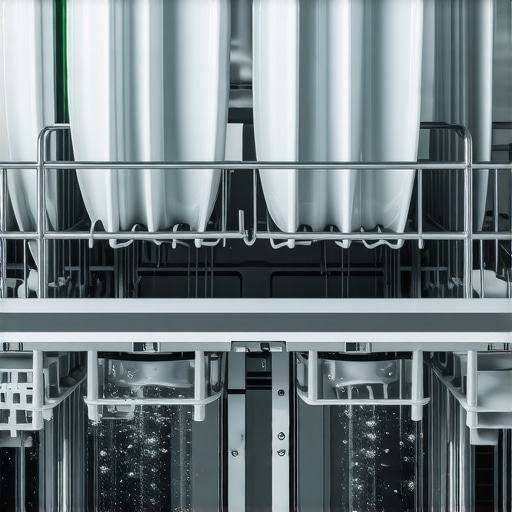
I stood in my kitchen at midnight, staring at a blinking “End” light, only to pull out a bowl that still had a stubborn ring of dried chili around the rim. I’d just spent a significant amount on one of those innovative dishwashers with AI technology, and here I was, hand-scrubbing a plate like it was 1995. I felt cheated. I’d hit that little green “Eco” button thinking I was saving the world and my utility bill in one go, but all I got was lukewarm water and a second round of chores. If you’ve ever looked at your machine’s four-hour runtime and wondered if the “Eco” setting is just a clever marketing ploy to make you feel better while your dishes stay dirty, you aren’t alone. Today, I’m pulling back the curtain on what’s actually happening inside that tub of suds, because once I stopped fighting the cycle and started working with it, my kitchen life changed.
The Night My ‘Green’ Dishwasher Failed the Lasagna Test
My biggest mistake when I first upgraded my kitchen was treating the Eco mode like a “Quick Wash” for the environment. I assumed that “Eco” meant efficient, and efficient meant fast. I was dead wrong. In fact, most people struggle to understand how to tell if your appliances eco-friendly tag is just marketing or a genuine feature. That first night, I loaded up a tray of lasagna-crusted pans, hit the Eco button, and expected magic. I didn’t realize that the secret to saving energy isn’t heat or speed—it’s time. By letting the dishes soak longer in lower-temperature water, the machine avoids the massive power draw of the internal heater. It’s a trade-off I didn’t appreciate until I saw my first month’s energy savings.
Does Eco Mode actually clean anything?
It’s the number one question I get from neighbors when they see my new setup. There is a huge fear that using less water means your plates are basically just taking a lukewarm bath in their own filth. I used to share that skepticism. I thought if the water wasn’t scalding, it wasn’t killing the germs. But here is the reality: Eco mode uses less energy because it doesn’t blast the heating element to get the water to boiling temperatures instantly. Instead, it soaks the dishes longer. According to the U.S. Department of Energy, modern dishwashers use significantly less water than hand-washing, but they need that extra time for the enzymes in your detergent to actually break down the proteins without the “brute force” of extreme heat.
The Real Reason Your Machine Runs for Hours
When you see a three-hour timer, your brain probably screams “waste!” but the opposite is happening. Think of it like a slow cooker versus a microwave. The microwave is fast but uses a massive surge of power; the slow cooker takes all day but sips electricity. Your dishwasher is doing the same thing. It’s circulating a smaller amount of water more frequently. Have you ever checked your meter during an Eco cycle? It’s barely a blip. This is also why many people complain that their energy efficient washer leaves your clothes feeling crunchy or their dishwasher doesn’t dry perfectly—it’s all about the lower heat levels. I’ve learned the hard way that you have to adjust your expectations to get the best results. Are you currently frustrated with how long your appliances are taking, or are you just happy to see the lower bill? I’d love to hear about your experience with these long cycles in the comments below.
Stop Washing Your Dishes Before the Dishwasher Does
I used to be a serial pre-rinser. I thought I was helping the machine by basically delivering it a clean plate, but I was actually sabotaging the chemistry of the wash. Most modern detergents are packed with enzymes—think of them as tiny biological Pac-Men—that are specifically designed to latch onto food particles. When you rinse every scrap of sauce away, those enzymes have nothing to grab onto, which can lead to a chemical imbalance that actually wears down your plates. In fact, the dishwasher detergent mistake that is etching your favorite glassware often starts with a plate that is too clean. I learned this the hard way after my favorite wine glasses started looking cloudy. Now, I just scrape the big chunks into the bin and let the machine handle the rest. The Eco mode thrives on this because the longer soak time gives those enzymes hours to work their way through the grease without needing 150-degree water to do the heavy lifting.
Master the Art of the Dishroom Tetris
If you just toss things in wherever they fit, you are blocking the very water you’re trying to save. I once spent twenty minutes trying to figure out why your dishwasher is not getting the top rack clean anymore, only to realize I had placed a giant mixing bowl directly over the center spray arm. It was like putting an umbrella over the rest of the dishes. To make the most of an energy-efficient cycle, you have to prioritize water paths. Face the dirtiest surfaces toward the center spray arms and ensure nothing is nesting. When spoons nest together, the water can’t get between them, leaving you with a sticky mess. Learning the best way to load a dishwasher for maximum water flow is the difference between a one-and-done cycle and having to run the whole thing again.
Why Your Rinse Aid is Non-Negotiable in Eco Mode
Since Eco mode uses lower temperatures, it doesn’t have the same ‘flash evaporation’ effect that high-heat cycles use to dry dishes. This is where rinse aid becomes your best friend. It’s not just about shine; it’s a surfactant that breaks the surface tension of the water. Instead of water forming beads that turn into spots, it sheets off the dishes. I used to skip the blue liquid because I thought it was an unnecessary expense, but then I noticed my plastics were coming out soaking wet. If you find that your dishwasher is not dispensing the rinse aid properly, your Eco cycle will fail the drying test every single time. It is the secret weapon for getting bone-dry Tupperware without using a power-hungry heating element.
Time Your Cycles to Save Even More
If your machine is one of the newer models, it likely has a delay start feature. Much like how to use your smart washers delayed start for cheaper energy rates, you can set your dishwasher to run at 2 AM when the grid is less stressed and electricity is often cheaper. I started doing this last summer, and seeing my utility bill drop by another 10% just by changing *when* I pressed the button felt like a massive win. You don’t need to be awake to watch the machine work; you just need to set the stage for it to be successful while you sleep.One of the biggest ‘experts-only’ secrets I’ve learned is that we are all probably using too much detergent. In a world where we think ‘more is better,’ the reality of modern appliances is the exact opposite. If you’re seeing white residue, you might think the machine isn’t rinsing enough, but often the reason your washing machine is leaving white streaks on dark clothes is simply an overdose of soap. Modern high-efficiency machines use so little water that excess suds never fully dissolve, creating a ‘cushion’ that actually prevents clothes from agitating effectively. It’s the same in the dishwasher; too many suds can cause the pump to cavitate, meaning it’s pumping air bubbles instead of water, leading to those annoying gritty spots on your glasses.
Stop Using Vinegar as a General Purpose Cure-All
I see this advice everywhere on social media: ‘Just put a bowl of vinegar in your dishwasher for a natural clean.’ In my experience, this is a dangerous trap. While vinegar is a great mild acid, it is incredibly hard on the rubber gaskets and seals inside modern units. Over time, that ‘natural’ hack can lead to brittle parts and eventual leaks. If you want to know the science, the truth about using white vinegar in your high-efficiency dishwasher is that it can actually void some manufacturer warranties. Instead, stick to citric acid-based cleaners that are specifically formulated to handle the pH balance of your machine’s internals without eating away at the plumbing. #IMAGE_PLACE_HOLDER_C#
Can a software update actually improve your cleaning results?
It sounds a bit ridiculous—why does a fridge or a dishwasher need ‘firmware’? But here is the nuance: manufacturers are constantly tweaking the algorithms that control sensor sensitivity based on field data. According to the Association of Home Appliance Manufacturers (AHAM), modern efficiency standards are so tight that even a 2-degree shift in water temperature can be the difference between an effective cycle and a ‘Fail.’ If your machine is acting up, check the app; understanding why your smart appliance app keeps asking for a firmware update often comes down to the manufacturer pushing a fix for a sensor that was being too aggressive with the ‘Eco’ restrictions, allowing the machine to finally clean properly.
Don’t Fall Into the Sensor Trap
Most people don’t realize that their dishwasher doesn’t actually ‘see’ if the dishes are clean; it measures the turbidity, or cloudiness, of the water. If you’ve ever wondered about the hidden sensor that stops your dishwasher from drying properly, it’s usually because a film of grease or hard water has built up on the sensor eye itself. This leads the machine to ‘think’ the water is clean and end the cycle prematurely before the final rinse. The same digital logic applies to your fridge. If your food is spoiling despite the settings, don’t just turn the dial; learning how to recalibrate your refrigerators internal thermometer for better cooling can save you hundreds in groceries and energy costs. Have you ever fallen into this trap of over-relying on the machine’s ‘brain’ only to have it fail you? Let me know in the comments below.
Why I started treating my filters like high-performance car parts
After years of thinking my dishwasher was ‘just old,’ I discovered that a single clogged hole in the spray arm was reducing the water pressure by nearly 40%. It wasn’t the motor failing; it was a tiny piece of plastic from a milk carton that had made its home in the plastic jet. Now, I make it a monthly ritual to perform a deep clean. I don’t just run a cycle; I physically remove the arms and use a toothpick to clear every jet. Knowing how to clean the internal spray arms of your dishwasher for better flow is the difference between cloudy glasses and a factory-new shine. This isn’t just about aesthetics; it’s about reducing the strain on the pump, which significantly prolongs the entire life of the machine.
How do I keep these complex machines running for a decade?
Long-term reliability comes down to the things you can’t see. For my washing machine, that means the debris filter. If you’ve never opened that little hatch at the bottom of your front-loader, you are in for a shock. It’s usually filled with coins, hair, and a sludge that smells like a swamp. Learning how to clean the debris filter on your front load washer effectively is the single most important maintenance task you can do. According to the Technical Service Manual for LG Direct Drive Washers, even a minor blockage here increases the back-pressure on the drain pump, which can lead to premature motor failure and that dreaded situation why your front loader is vibrating so hard it shakes the whole house. I use a dedicated soft-bristle brush to scrub the housing every 30 days, ensuring the pump never has to fight against a wall of lint.
I also realized that moisture is the enemy of the modern smart home. In my laundry room, I’ve started using a magnetic door prop to keep the washer door open between cycles. This is the only real way to prevent the rubber gasket from becoming a petri dish. If you don’t stay on top of this, how to prevent mold growth in your washing machines door seal becomes a battle you’ve already lost. It’s much easier to spend five seconds drying the seal with a microfiber cloth than it is to spend two hours scrubbing black spots with specialized chemicals later.
The shift toward appliances that fix themselves
Looking ahead, the future of home appliances trends to watch in 2025 point toward predictive maintenance. We are moving away from ‘dumb’ sensors and toward ‘Digital Twins’—software models that live in the cloud and compare your machine’s vibration patterns against thousands of others. In the next few years, your fridge won’t just tell you it’s warm; it will tell you that the compressor’s harmonic frequency has changed and a technician needs to come out before your food spoils. It’s an exciting time, but for now, the best tool you have is your own eyes and ears. My challenge for you today: find your washing machine’s debris filter and clean it out. You’ll be surprised at what’s been slowing your machine down. If you need help finding it, check out our guide on how to reach our team for specific model advice.
The Hardest Lessons I Learned About My High-Tech Kitchen
After a year of trial and error, I realized that my frustration with modern tech was actually a misunderstanding of physics. First, the noise of a machine is not a measure of its power. We grew up thinking a loud, vibrating motor meant a deeper clean, but in the world of high-efficiency, silence is actually a sign of precision. Second, I learned that my habit of ‘helping’ the machine by pre-rinsing was actually the fastest way to dull my silverware. Finally, I discovered that the ‘Eco’ button isn’t a compromise; it is a specialized tool designed for the way we actually eat—lots of small meals and grazing throughout the day rather than one massive Sunday roast. If you are still struggling to adapt, I highly recommend checking out our ultimate guide to smart home appliances for a modern living to reset your expectations.
#IMAGE_PLACEHOLDER_E#
My Personal Toolkit for Keeping Everything Running Smoothly
I don’t just rely on the factory settings anymore. I’ve curated a specific set of habits and tools that ensure I never see a ‘gritty’ plate again. I keep a small bottle of citric acid in the cupboard to run a monthly descaling cycle, which is far safer for the internals than vinegar. I also switched to high-quality enzyme-based pods, but I only use them when the machine is 100% full. If you’re dealing with residue, the secret to using less detergent in your high-efficiency washer applies to your dishwasher as well—over-sudsing is the most common cause of mid-cycle errors. When it comes to buying new units, I always look for models that prioritize internal sensors over flashy external screens; you can see my thoughts on choosing the best dishwasher for your specific water hardness level in our deep-dive review.
Your Future With a Smarter Home Starts Today
The transition to a high-efficiency home can feel like a steep learning curve, but the rewards—lower bills, quieter evenings, and longer-lasting clothes—are worth the effort. Don’t be afraid to experiment with the settings you’ve been ignoring. These machines are built to be smarter than we give them credit for, provided we stop treating them like the ‘dumb’ appliances of the nineties. Once you master the rhythm of your home, you’ll find that these smart appliances actually give you back the most precious resource of all: your time. Have you ever had a moment where you thought your machine was broken, only to realize it was just being ‘smart’? Let me know your funniest appliance fails in the comments below!