
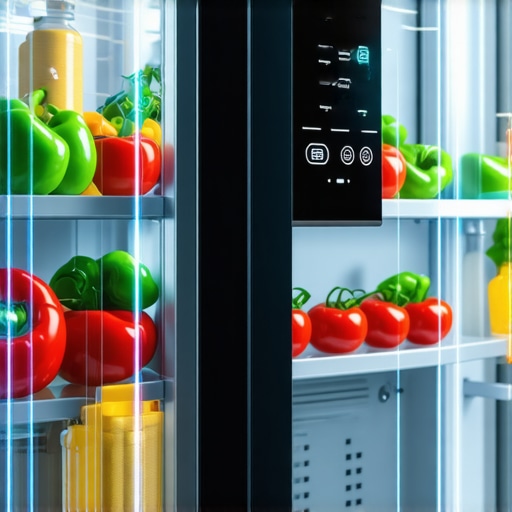
I opened my fridge yesterday morning, craving a splash of cream in my coffee, only to be met by a smell that could peel paint. That expensive organic heavy cream I bought just ‘the other day’—which was actually three weeks ago, apparently—had evolved into a sentient being. I stood there, pouring seven dollars down the drain, feeling that familiar sting of guilt. We have all been there; it is the mystery of the crisper drawer where spinach goes to die. But here is the secret: your appliance is already capable of stopping this. If you are still just using that giant screen to check the weather, you are missing out on its best feature.
Stop Throwing Your Money in the Trash Can
According to the Natural Resources Defense Council, the average American family of four loses about $1,500 a year to wasted food. That is not just a few brown bananas; it is a whole vacation fund literally rotting away. I used to be the champion of food waste until I realized that refrigerators in 2025 have top features designed specifically to handle this mental load for us. In this guide, I am going to show you how to set up automatic tracking so you can finally stop playing ‘guess the freshness’ with your leftovers. Whether you are looking for the best smart fridges for people who love to meal prep or you just want to save your groceries, the solution is simpler than you think.
Is This Whole Automated Tracking Thing Actually Worth the Hype?
When I first brought my smart fridge home, I made a massive mistake: I tried to type every single expiration date into the screen manually. It was tedious, I looked like a data entry clerk in my own kitchen, and I gave up after four days. That is the biggest fear people have—that ‘smart’ just means ‘more work.’ But the real magic happens when you use receipt scanning and internal cameras. Have you ever stood in the grocery store aisle wondering if you still had eggs at home? I have, and I usually end up with three cartons I do not need. We are going to fix that. If you have ever felt the frustration of finding a science project in the back of your fridge, let me know—I need to know I am not the only one! By changing a few fridge settings, you can transform your kitchen into a waste-free zone.
Sync Your Phone with the Fridge Eye
To make this work without the headache of manual entry, you first need to establish the connection between your mobile device and the internal cameras. Think of your fridge camera as a permanent security guard for your groceries. If you cannot see your milk from the grocery store aisle, the whole system fails. I remember once trying to show off my new tech to a friend, only to realize my view was blocked by a giant jar of pickles I had shoved right in front of the lens. It was embarrassing, but it taught me a valuable lesson about placement. If you run into technical snags, learning how to fix a smart fridge camera that wont show you the interior is the first step to regaining control. Once the feed is live, you can literally peak inside your appliance while standing in the dairy section at the supermarket, ensuring you never buy a duplicate again. 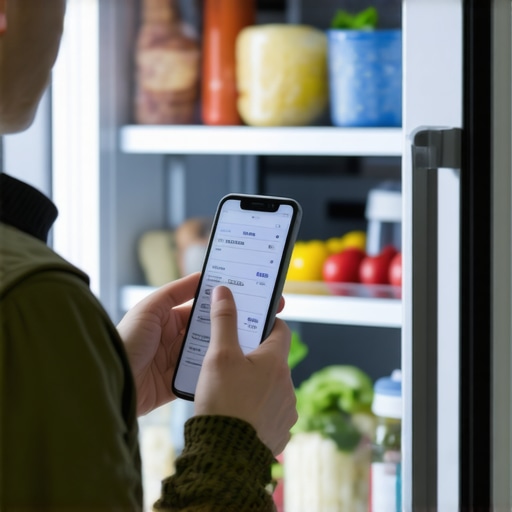
Turn Receipts into Digital Data
Most people do not realize that the best refrigerators in 2025 have top features like receipt scanning built directly into their companion apps. Instead of typing ‘Organic Kale,’ you simply snap a photo of your grocery receipt. The AI identifies the items and automatically assigns a generic expiration date based on industry standards. I started doing this last month, and it felt like I finally had a personal assistant. One Tuesday, I received a notification while at work that my chicken breasts were twenty-four hours away from ‘the danger zone.’ I pivoted my dinner plans from takeout to a stir-fry, saving twenty dollars and preventing a biological hazard in my bottom drawer. To keep things running smoothly, you should also know how to recalibrate your refrigerators internal thermometer for better cooling so those expiration dates actually mean something.
Fix the Humidity Crisis in Your Crisper
Automation only works if the environment is stable. If your door seal is leaky, your ‘smart’ fridge is just an expensive box of warm air. You should regularly perform a quick check to see how to check if your refrigerator door seal is actually airtight. I once found a stray rubber band stuck in my seal that was letting in just enough moisture to turn my berries into a fuzzy mess within two days. Beyond the seal, you need to master the layout. Learning how to organize your freezer to prevent frost burn and food waste is equally important because even frozen food has a shelf life. Use the ‘First In, First Out’ (FIFO) method: older items move to the front, and the app tracks the age of the stuff in the back.
Configure Alerts That Actually Save You Money
The final piece of the puzzle is the notification settings. Do not set an alert for every single item, or you will develop ‘notification fatigue’ and start ignoring your phone. Focus on high-value, high-spoilage items like meats, berries, and leafy greens. By changing three fridge settings regarding energy and alerts, you can prioritize what matters. I personally have my app set to a ‘Critical’ alert for anything that costs more than five dollars. It is a simple mental hack that turns a digital ping into a real-world saving action.
Stop Falling for the Eco-Mode Myth
Most people assume that hitting the ‘Eco’ button is the ultimate way to save money and the environment, but in my experience, it can sometimes backfire spectacularly. If you are dealing with heavy grease or hard water, the lower temperatures used in these cycles might fail to fully dissolve detergents, leading to a nasty mineral buildup. I have seen countless users complain about the truth about the eco mode on your new dishwasher, only to realize they were creating a secondary problem: a gritty white film on their favorite plates. Sometimes, running a high-heat ‘Sanitize’ cycle once a week is actually more cost-effective than re-washing three separate loads because the first attempt did not get the job done. This is the hidden nuance of modern efficiency; the ‘smart’ choice depends entirely on your specific water chemistry and soil levels.
Your Detergent Habit is a Silent Machine Killer
The biggest ‘Oops’ factor I see with modern home appliances involves high-efficiency (HE) washing machines. We have been conditioned for decades to think that more bubbles equals more clean, but in a smart washer, that is a recipe for a service call. Excessive suds can actually trap moisture and skin cells in the outer drum, leading to that dreaded ‘locker room’ smell that never seems to go away. According to research by Consumer Reports, many modern machines only require about two tablespoons of detergent per load—anything more is just literal waste that gunks up your sensors. If you are noticing white streaks on your laundry, learning the secret to using less detergent in your high efficiency washer can extend the life of your appliance by years. 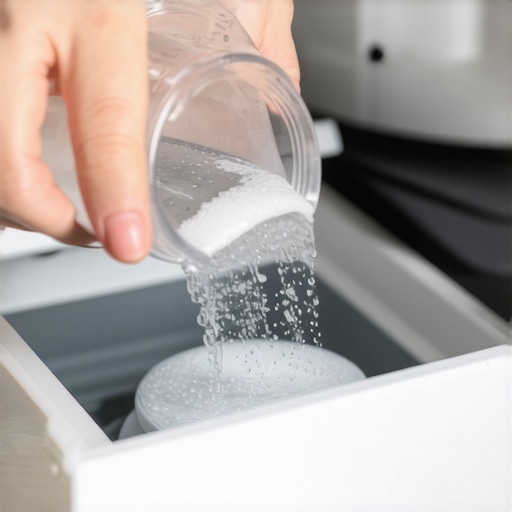
Does Your App Really Need That Weekly Firmware Update?
A sophisticated question I often get from readers is whether these constant software updates actually do anything or if they are just a way for manufacturers to track data. The answer lies in the sensors. Unlike old-school mechanical machines, smart appliances rely on complex algorithms to interpret data from internal thermometers and weight scales. If your oven is suddenly running hot or cold, you might need to know how to recalibrate your smart oven when the temperature feels wrong through the mobile app interface. These updates often include refined ‘tuning’ for these sensors based on real-world performance data gathered from thousands of units globally. Ignoring a firmware update is like refusing to sharpen a kitchen knife—the tool still works, but it is not nearly as efficient as it should be. Have you ever fallen into this trap of ignoring updates only to have your appliance act up? Let me know in the comments! To keep your digital ecosystem running smoothly, you should always check why your smart appliance app keeps asking for a firmware update before you hit the ‘dismiss’ button. It might just be the invisible fix for a mechanical problem you did not even know you had.I have realized that the real secret to a stress-free smart home is not just the software—it is the hardware maintenance that nobody talks about. I personally keep a specialized 24-inch flexible dryer lint brush and a telescoping mirror in my kitchen junk drawer. Why? Because you need to see behind the unit to spot a leak before it ruins your hardwood floors. If you are noticing moisture, you need to know why your refrigerator is leaking water directly onto the kitchen floor before the damage becomes permanent. It is about being proactive rather than reactive in a world of complex sensors.
Don’t Wait for the Service Call
I have a rule: every six months, I pull my appliances out. It sounds like a chore, but it takes ten minutes and saves hundreds. I use a slim vacuum attachment to suck out the pet hair and dust from the bottom of the fridge. If you leave that debris there, your compressor works double time, and that is how to spot a failing refrigerator compressor before it dies. According to the Association of Home Appliance Manufacturers (AHAM), keeping these mechanical parts clean is the single best way to ensure your ‘smart’ tech actually lives long enough to see its next major software update. You also need to get your hands dirty with the wet stuff. I spent years wondering why my clothes did not smell ‘mountain fresh’ until I learned how to clean the debris filter on your front load washer effectively. Finding a stray penny and a glob of grey lint in that filter was a wake-up call; your machine is only as smart as its cleanest part. #IMAGE_PLACE_HOLDER_D#
How do I maintain these complex systems over time?
The answer is a mix of digital hygiene and old-school elbow grease. For the digital side, do not ignore those pings. I know we talked about why your smart appliance app keeps asking for a firmware update, but it is also about the sensors. If your dishwasher is acting up, it might just be the hidden sensor that stops your dishwasher from drying properly being blocked by a piece of errant kale. For the physical side, I highly recommend buying a specialized cleaning kit for your stovetop; learning the best way to clean an induction cooktop without scratching it will keep that glass looking like a mirror for years.
The Future of Your Kitchen is Predictive
In the next few years, we are going to see a shift where your appliances do not just tell you they are broken—they tell you they are going to break. We are moving toward ‘Predictive Maintenance’ where the AI monitors the vibration of the drum to warn you how to diagnose a washing machine that wont spin at full speed weeks before the motor actually gives out. If you want to stay ahead of the curve, keeping an eye on the future of home appliances trends to watch in 2025 is essential. We are entering an era where your fridge might order its own replacement water filter before the light even turns red. Try this today: Open your fridge app, find the ‘Care’ or ‘Maintenance’ tab, and run a manual diagnostic scan. You might be surprised to find a ‘silent’ error that has been making your machine work harder than it needs to. Let’s make sure that investment lasts as long as it possibly can.I opened my fridge yesterday morning, craving a splash of cream in my coffee, only to be met by a smell that could peel paint. That expensive organic heavy cream I bought just ‘the other day’—which was actually three weeks ago, apparently—had evolved into a sentient being. I stood there, pouring seven dollars down the drain, feeling that familiar sting of guilt. We have all been there; it is the mystery of the crisper drawer where spinach goes to die. But here is the secret: your appliance is already capable of stopping this. If you are still just using that giant screen to check the weather, you are missing out on its best feature.
Stop Throwing Your Money in the Trash Can
According to the Natural Resources Defense Council, the average American family of four loses about $1,500 a year to wasted food. That is not just a few brown bananas; it is a whole vacation fund literally rotting away. I used to be the champion of food waste until I realized that refrigerators in 2025 have top features designed specifically to handle this mental load for us. In this guide, I am going to show you how to set up automatic tracking so you can finally stop playing ‘guess the freshness’ with your leftovers. Whether you are looking for the best smart fridges for people who love to meal prep or you just want to save your groceries, the solution is simpler than you think.
Is This Whole Automated Tracking Thing Actually Worth the Hype?
When I first brought my smart fridge home, I made a massive mistake: I tried to type every single expiration date into the screen manually. It was tedious, I looked like a data entry clerk in my own kitchen, and I gave up after four days. That is the biggest fear people have—that ‘smart’ just means ‘more work.’ But the real magic happens when you use receipt scanning and internal cameras. Have you ever stood in the grocery store aisle wondering if you still had eggs at home? I have, and I usually end up with three cartons I do not need. We are going to fix that. If you have ever felt the frustration of finding a science project in the back of your fridge, let me know—I need to know I am not the only one! By changing a few fridge settings, you can transform your kitchen into a waste-free zone.
Sync Your Phone with the Fridge Eye
To make this work without the headache of manual entry, you first need to establish the connection between your mobile device and the internal cameras. Think of your fridge camera as a permanent security guard for your groceries. If you cannot see your milk from the grocery store aisle, the whole system fails. I remember once trying to show off my new tech to a friend, only to realize my view was blocked by a giant jar of pickles I had shoved right in front of the lens. It was embarrassing, but it taught me a valuable lesson about placement. If you run into technical snags, learning how to fix a smart fridge camera that wont show you the interior is the first step to regaining control. Once the feed is live, you can literally peak inside your appliance while standing in the dairy section at the supermarket, ensuring you never buy a duplicate again.
Turn Receipts into Digital Data
Most people do not realize that the best refrigerators in 2025 have top features like receipt scanning built directly into their companion apps. Instead of typing ‘Organic Kale,’ you simply snap a photo of your grocery receipt. The AI identifies the items and automatically assigns a generic expiration date based on industry standards. I started doing this last month, and it felt like I finally had a personal assistant. One Tuesday, I received a notification while at work that my chicken breasts were twenty-four hours away from ‘the danger zone.’ I pivoted my dinner plans from takeout to a stir-fry, saving twenty dollars and preventing a biological hazard in my bottom drawer. To keep things running smoothly, you should also know how to recalibrate your refrigerators internal thermometer for better cooling so those expiration dates actually mean something.
Fix the Humidity Crisis in Your Crisper
Automation only works if the environment is stable. If your door seal is leaky, your ‘smart’ fridge is just an expensive box of warm air. You should regularly perform a quick check to see how to check if your refrigerator door seal is actually airtight. I once found a stray rubber band stuck in my seal that was letting in just enough moisture to turn my berries into a fuzzy mess within two days. Beyond the seal, you need to master the layout. Learning how to organize your freezer to prevent frost burn and food waste is equally important because even frozen food has a shelf life. Use the ‘First In, First Out’ (FIFO) method: older items move to the front, and the app tracks the age of the stuff in the back.
Configure Alerts That Actually Save You Money
The final piece of the puzzle is the notification settings. Do not set an alert for every single item, or you will develop ‘notification fatigue’ and start ignoring your phone. Focus on high-value, high-spoilage items like meats, berries, and leafy greens. By changing three fridge settings regarding energy and alerts, you can prioritize what matters. I personally have my app set to a ‘Critical’ alert for anything that costs more than five dollars. It is a simple mental hack that turns a digital ping into a real-world saving action.
Stop Falling for the Eco-Mode Myth
Most people assume that hitting the ‘Eco’ button is the ultimate way to save money and the environment, but in my experience, it can sometimes backfire spectacularly. If you are dealing with heavy grease or hard water, the lower temperatures used in these cycles might fail to fully dissolve detergents, leading to a nasty mineral buildup. I have seen countless users complain about the truth about the eco mode on your new dishwasher, only to realize they were creating a secondary problem: a gritty white film on their favorite plates. Sometimes, running a high-heat ‘Sanitize’ cycle once a week is actually more cost-effective than re-washing three separate loads because the first attempt did not get the job done. This is the hidden nuance of modern efficiency; the ‘smart’ choice depends entirely on your specific water chemistry and soil levels.
Your Detergent Habit is a Silent Machine Killer
The biggest ‘Oops’ factor I see with modern home appliances involves high-efficiency (HE) washing machines. We have been conditioned for decades to think that more bubbles equals more clean, but in a smart washer, that is a recipe for a service call. Excessive suds can actually trap moisture and skin cells in the outer drum, leading to that dreaded ‘locker room’ smell that never seems to go away. According to research by Consumer Reports, many modern machines only require about two tablespoons of detergent per load—anything more is just literal waste that gunks up your sensors. If you are noticing white streaks on your laundry, learning the secret to using less detergent in your high efficiency washer can extend the life of your appliance by years.
Does Your App Really Need That Weekly Firmware Update?
A sophisticated question I often get from readers is whether these constant software updates actually do anything or if they are just a way for manufacturers to track data. The answer lies in the sensors. Unlike old-school mechanical machines, smart appliances rely on complex algorithms to interpret data from internal thermometers and weight scales. If your oven is suddenly running hot or cold, you might need to know how to recalibrate your smart oven when the temperature feels wrong through the mobile app interface. These updates often include refined ‘tuning’ for these sensors based on real-world performance data gathered from thousands of units globally. Ignoring a firmware update is like refusing to sharpen a kitchen knife—the tool still works, but it is not nearly as efficient as it should be. Have you ever fallen into this trap of ignoring updates only to have your appliance act up? Let me know in the comments! To keep your digital ecosystem running smoothly, you should always check why your smart appliance app keeps asking for a firmware update before you hit the ‘dismiss’ button. It might just be the invisible fix for a mechanical problem you did not even know you had.I have realized that the real secret to a stress-free smart home is not just the software—it is the hardware maintenance that nobody talks about. I personally keep a specialized 24-inch flexible dryer lint brush and a telescoping mirror in my kitchen junk drawer. Why? Because you need to see behind the unit to spot a leak before it ruins your hardwood floors. If you are noticing moisture, you need to know why your refrigerator is leaking water directly onto the kitchen floor before the damage becomes permanent. It is about being proactive rather than reactive in a world of complex sensors.
Don’t Wait for the Service Call
I have a rule: every six months, I pull my appliances out. It sounds like a chore, but it takes ten minutes and saves hundreds. I use a slim vacuum attachment to suck out the pet hair and dust from the bottom of the fridge. If you leave that debris there, your compressor works double time, and that is how to spot a failing refrigerator compressor before it dies. According to the Association of Home Appliance Manufacturers (AHAM), keeping these mechanical parts clean is the single best way to ensure your ‘smart’ tech actually lives long enough to see its next major software update. You also need to get your hands dirty with the wet stuff. I spent years wondering why my clothes did not smell ‘mountain fresh’ until I learned how to clean the debris filter on your front load washer effectively. Finding a stray penny and a glob of grey lint in that filter was a wake-up call; your machine is only as smart as its cleanest part. #IMAGE_PLACE_HOLDER_D#
How do I maintain these complex systems over time?
The answer is a mix of digital hygiene and old-school elbow grease. For the digital side, do not ignore those pings. I know we talked about why your smart appliance app keeps asking for a firmware update, but it is also about the sensors. If your dishwasher is acting up, it might just be the hidden sensor that stops your dishwasher from drying properly being blocked by a piece of errant kale. For the physical side, I highly recommend buying a specialized cleaning kit for your stovetop; learning the best way to clean an induction cooktop without scratching it will keep that glass looking like a mirror for years.
The Future of Your Kitchen is Predictive
In the next few years, we are going to see a shift where your appliances do not just tell you they are broken—they tell you they are going to break. We are moving toward ‘Predictive Maintenance’ where the AI monitors the vibration of the drum to warn you how to diagnose a washing machine that wont spin at full speed weeks before the motor actually gives out. If you want to stay ahead of the curve, keeping an eye on the future of home appliances trends to watch in 2025 is essential. We are entering an era where your fridge might order its own replacement water filter before the light even turns red. Try this today: Open your fridge app, find the ‘Care’ or ‘Maintenance’ tab, and run a manual diagnostic scan. You might be surprised to find a ‘silent’ error that has been making your machine work harder than it needs to. Let’s make sure that investment lasts as long as it possibly can.
The Hard Truths My Kitchen Taught Me
After a year of living with these systems, I realized that data only works if you act on it. My biggest lightbulb moment was when I stopped trying to track the salt and pepper and started focusing only on the expensive proteins—that is where the real savings are found. Another hard truth: your phone is a tool, not a miracle worker. If you do not keep the hardware clean, the software will eventually give you false readings. I also learned that the community is your best resource; seeing choosing the right refrigerator tips from industry experts helped me understand that sometimes the simplest settings are actually the most effective for daily life.
The Gear That Keeps My Appliances Alive
I do not just rely on the apps; I have a physical toolkit that bridges the gap between digital and mechanical. First, a high-quality microfiber cloth is essential; I have found it is the only way to keep touchscreens responsive and free of kitchen grease. Second, I keep a bookmark for the ultimate guide to smart home appliances for a modern living because technology moves faster than my memory can keep up with. Finally, I use a simple pH test strip for my water once a month; knowing your water hardness helps you understand why your high efficiency washer leaves white streaks on dark clothes before you start blaming the detergent or the machine itself.
Claim Your Future in a Waste-Free Home
Getting your home in order is not about buying the most expensive gadget on the market; it is about making the gadgets you have work for your unique lifestyle. Whether you are dealing with laundry or meal prep, remember that these home appliances are there to serve you, not the other way around. Once you master the best way to load a dishwasher for maximum water flow and sync your notification alerts, you will find you have hours of your week back. It is time to stop being a servant to your chores and start being the master of your smart home.
Have you ever found yourself ignoring an appliance’s ‘check filter’ light for a little too long? Let me know your biggest maintenance confession in the comments below!