
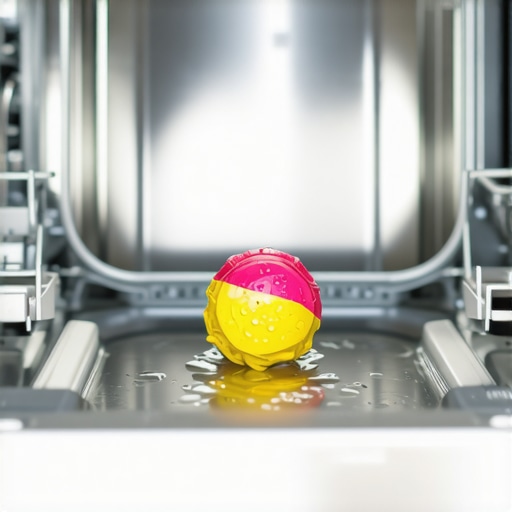
It was 6:00 PM, my parents were pulling into the driveway, and I realized every single wine glass I owned was covered in dried-on smoothie residue. I did what any panicked host would do: I tossed a premium detergent pod into the dispenser, hit ‘Quick Wash,’ and prayed. Thirty minutes later, I opened the door to a steaming mess. The dishes were still dirty, and there, sitting at the bottom of the tub like a stubborn, translucent ghost, was my detergent pod. It hadn’t even popped. I felt like a total failure in my own kitchen. We’ve all been there, right? You want the speed, but your machine just won’t cooperate with those fancy little squares of soap. Today, I’m going to show you exactly why your dishwasher pods are giving you the cold shoulder during those 30-minute runs and how you can finally get a reliable clean without waiting three hours for a standard cycle.
Is the short cycle actually a waste of time?
You might be thinking that ‘Quick Wash’ is just a gimmick that ruins your machine. I used to think so too, especially after I realized I had spent months basically rinsing dishes in lukewarm water because I didn’t understand how my appliance actually functioned. But here is the truth: short cycles are brilliant if you know the secret handshake.
Why your dishwasher refuses to melt that pod
The biggest culprit isn’t usually a broken machine; it’s physics. Most multi-chamber pods are designed for the long haul. They have thick plastic skins meant to dissolve slowly as the water heats up over an hour or more. When you switch to a short cycle, the water often doesn’t stay hot enough for long enough to penetrate that outer layer. In fact, experts at Reviewed.com note that many dishwasher pods require water temperatures to reach at least 120-150°F to fully break down. If your ‘Quick’ setting caps out at 105°F, you’re going to have a gooey mess every time. If you’ve been struggling with this, have you ever found a half-melted pod stuck to your dinner plates? It’s a literal headache. I’ve even seen cases where people thought they needed to fix a smart dishwasher that won’t recognize its own detergent pods, when really, it was just a temperature mismatch. We also have to talk about the truth about the eco mode on your new dishwasher, because those settings often lower the heat even further, making the problem worse. Even some of the most innovative dishwashers with AI technology can’t override the basic fact that plastic needs heat to melt. If you are tired of why your dishwasher is taking four hours to finish a single load, you need a strategy that actually works with the clock, not against it.The ‘Quick Wash’ setting is essentially a 100-meter dash for your appliance. If the machine spends the first half of that race just trying to warm up the water, it has already lost the battle against that thick, plastic-coated detergent pod. To get that ‘premium clean’ in thirty minutes, you have to stop treating your dishwasher like a miracle box and start treating it like a thermal engine.
Force your machine to hit the ground running
The secret to a successful short cycle starts before you even touch the control panel. If your dishwasher has to heat the water from room temperature on its own, it will never reach the 120°F required to melt a pod before the first drain cycle begins.
Clear the cold water out of your pipes first
Think of the water lines in your kitchen like a long garden hose sitting in the sun; the first few gallons are never the temperature you want. Before you press start, run the hot water at your kitchen sink until it is steaming. This simple act ensures that the very first fill of the dishwasher is scalding hot, rather than a lukewarm bath that barely softens the pod’s outer shell. I remember one Tuesday night, desperate to get coffee mugs clean before a 7 AM meeting. I actually stood by the sink with a digital meat thermometer, watching the water climb to 132°F before I dared to hit ‘Start.’ It felt ridiculous, like I was preparing a sous-vide steak instead of washing dishes, but for the first time in weeks, the pod actually vanished completely. If you do this and the water inside still feels cold ten minutes later, you might need to learn how to tell if your dishwasher heating element is actually broken.
Stop blocking the dispenser door with big plates
Even if the water is hot, a pod can’t dissolve if it can’t get out of the ‘jail’ of its dispenser. Many of us make the mistake of loading a large mixing bowl or a tall dinner plate right in front of the detergent door. When the machine triggers the release, the door hits the plate and stays shut, or worse, opens just enough for the pod to get stuck and turn into a sticky glob. You need to master the best way to load a dishwasher for maximum water flow to ensure that the spray arms can actually reach the detergent and blast it into the tub. 
Switch to liquid when time is tight
If you are consistently running 30-minute cycles, the hard truth is that pods might not be your best friend. Liquids and powders don’t have a plastic skin to shed, meaning they start working the second the water hits them. If you notice your dishes are still greasy, you might also want to investigate why your dishwasher is not dispensing the rinse aid properly, as rinse aid is critical for shedding water quickly in short bursts. For those who insist on using natural cleaners, it is worth exploring the truth about using white vinegar in your high efficiency dishwasher to help break down hard water spots that the short cycle usually leaves behind. By eliminating the ‘melt time’ required for a pod, you give your machine an extra five to ten minutes of actual scrubbing power.But here is where the ‘expert’ advice you’ve heard for years actually starts to work against you. Everyone tells you to rinse your dishes before they go in the rack to ‘help’ the machine out. I’m here to tell you to stop. It’s a total myth that clean-looking plates lead to a better wash. In fact, most innovative dishwashers with AI technology rely on something called a turbidity sensor. This little electronic eye measures how much gunk is floating in the water during the first few minutes. If you’ve already rinsed your plates to a mirror shine, the sensor incorrectly assumes the load is light and shortens the cycle even further or lowers the temperature prematurely. This leaves you with that gritty, sandpaper-like film on your glasses because the detergent didn’t have enough time or soil to react with. The American Cleaning Institute confirms that pre-rinsing is largely unnecessary with modern units and can actually lead to detergent attacking the glaze on your ceramic instead of the lasagna. You’re essentially paying for a high-tech machine and then accidentally lobotomizing its brain with your kitchen faucet.
Can AI sensors actually tell when your plates are truly clean?
The answer is a frustrating ‘not always.’ While the sensor tracks the water’s clarity, it doesn’t have a visual on whether a piece of spinach is physically glued to a fork. If you’ve ever dealt with why your dishwasher is not getting the top rack clean anymore, it might be because your ‘smart’ settings are being too optimistic about the water clarity. The real trap most of us fall into is over-compensating for a failed short cycle by doubling the amount of detergent. This is a massive mistake. Excessive soap in a low-water, short-duration environment leads to ‘etching’—a permanent cloudy scratching of your glassware that no amount of vinegar or scrubbing can fix. It’s the same logic behind the secret to using less detergent in your high efficiency washer; more soap does not equal more clean; it just equals more caustic residue left behind.  Beyond just the soap, there is the ‘hidden’ maintenance most people ignore that ruins the efficiency of these fast cycles. If your machine is more than a year old, the hidden sensor that stops your dishwasher from drying properly might just be coated in a thin layer of calcium or lime. If the machine can’t ‘feel’ the humidity or the temperature accurately, it’ll cut the drying phase short to save energy, leaving you with puddles. This is a common nuance often missed even in the most comprehensive ultimate guide to smart home appliances for a modern living. We expect these machines to be set-it-and-forget-it, but they require a precise thermal and chemical balance that the ‘Quick Wash’ setting frequently disrupts. Before you assume your unit is a lemon, check how to tell if your appliances eco-friendly tag is just marketing or if your water hardness is actually the culprit. Have you ever fallen into this trap of pre-rinsing everything only to find the cycle finished too early and left things dirty? Let me know in the comments.If you really want to see that short cycle succeed, you have to stop treating your dishwasher like a self-cleaning miracle. It’s an appliance, not a black hole. Once a month, I get down on my knees and pull out the cylinder filter at the bottom. It’s usually slimy, smells vaguely of old tacos, and is the number one reason why your ‘Quick Wash’ leaves grit on your glasses. This isn’t just a dishwasher problem; you need to apply this same logic to your laundry room by finding the secret to cleaning a front-load washer’s hidden filter. If that mesh is clogged, the pump works twice as hard, the water doesn’t drain fast enough, and your 30-minute cycle suddenly stretches because the machine is stuck in a draining loop.
How do I keep my appliances running like new for a decade?
Maintenance isn’t just about cleaning; it’s about recalibration and chemical balance. For my dishwasher, I swear by bulk citric acid. I skip the expensive ‘cleaner’ tabs and just toss two tablespoons of food-grade citric acid into the bottom of an empty machine on a hot cycle. It’s the ultimate trick to removing hard water spots from your dishwasher interior because it chemically breaks down the calcium that the short cycle’s lower temps can’t touch. According to the Association of Home Appliance Manufacturers (AHAM), modern machines are engineered to meet strict DW-1 energy standards, which often means the ‘Normal’ cycle is the only one truly optimized for the machine’s internal sensors. By manually descaling, you’re helping those sensors stay accurate. I also extend this preventative mindset to the fridge; once a season, I make sure to how to check if your refrigerator door seal is actually airtight using the ‘dollar bill test.’ If that seal is leaking, your compressor is working overtime, and no amount of ‘smart’ settings will save your energy bill or your produce.
The DIY tools that save me hundreds
Most people call a repairman for a ‘broken’ machine that is actually just confused. I keep a basic multimeter and a canister of compressed air in my kitchen junk drawer. The air is for the fridge coils—dusting them twice a year can drop your energy usage by ten percent. The multimeter is for when I need to know if a heating element has continuity. This is especially true for smart tech; I’ve seen people brick their expensive units because they didn’t know how to update your smart fridge software without crashing the system. When you treat your home like a tech stack rather than a collection of heavy boxes, everything lasts longer. 
What the kitchen of 2026 actually looks like
Looking ahead, the future of home appliances trends to watch in 2025 and beyond suggests we are moving toward ‘sensor-fusion’—where your dishwasher will actually weigh the detergent pod’s resistance to determine if the water is hot enough. We are also seeing a shift toward localized water recycling within the unit itself. Until that tech arrives, you are the brain of the operation. My challenge for you tonight: before you go to bed, run your kitchen sink until the water is hot, then start your dishwasher. You’ll be amazed at how much better that pod performs when it doesn’t have to fight the cold.
What My Mugs Taught Me About Detergent Efficiency
If there is one thing a decade of fixing my own kitchen mishaps has taught me, it is that logic often beats the instruction manual. I used to think the ‘Quick Wash’ was just a broken promise, but it turns out the machine was just waiting for me to catch up. One big lesson? If you use a pod, place it in the silverware basket if you find the dispenser door is always sticking. This ensures it gets hit by the first wave of hot water immediately. Also, don’t ignore the importance of knowing how to choose the best dishwasher for your specific family size—a machine that is too large for your daily needs will often struggle to distribute heat evenly on a short cycle.
The Small Inventory of Tools I Keep in My Junk Drawer
Maintaining a high-functioning kitchen doesn’t require a degree in engineering, just the right references. I personally rely on the ultimate guide to smart home appliances for a modern living whenever my Wi-Fi-enabled units act up. For physical cleaning, I skip the expensive chemical sprays and use the trick to removing hard water spots from your dishwasher interior with just a bit of food-grade citric acid once a month. I also keep a close eye on innovative dishwashers with AI technology because the newer sensors are significantly better at detecting detergent concentration than the models from five years ago. These tools keep me from overspending on repairmen for simple fixes.
#IMAGE_PLACEHOLDER_E#
Reclaim Your Time Without Sacrificing the Clean
You shouldn’t feel like you’re failing your chores just because you want to save two hours of your evening. By prepping your water lines and matching your detergent type to your cycle length, you can make dishwasher pods work efficiently every single time. As we look at the future of home appliances trends to watch in 2025, we can expect even more automation, but for now, your manual intervention is the key to a sparkling finish. Go ahead and give that ‘Quick Wash’ another shot tonight—just remember to run the hot water at the sink first. Have you ever tried skipping the pod and using liquid detergent for a 30-minute wash? Let me know in the comments below!