
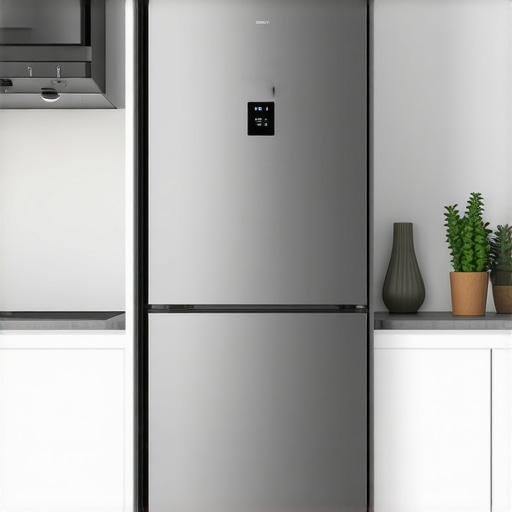
I stood there, hip-deep in a box of melting frozen peas, staring at the three-inch gap where my “standard” refrigerator was supposed to go. I had measured twice—or so I thought—but I had totally forgotten to account for the baseboard molding and the way the pantry door swung open. That afternoon spent sweating and cursing in my cramped galley kitchen changed everything. It wasn’t just about an appliance; it was about the claustrophobia of a space that didn’t work for me. If you have ever had to shuffle sideways past your fridge like a cautious crab, you know exactly what I am talking about.
Stop Fighting Your Small Kitchen Layout
Modern floor plans are getting tighter, especially in city centers where “cozy” is often just a polite way of saying “microscopic.” When I finally admitted defeat and started hunting for the best slimline refrigerators for studio apartments, I realized that the industry was finally catching up to our reality. You do not need a massive French-door behemoth to eat well or live comfortably. In fact, a narrower profile often forces you to be more intentional with your groceries, which actually helps reduce food waste. I spent weeks researching tips from industry experts to find models that did not just fit the hole in my wall, but actually kept my produce fresh for more than forty-eight hours. The struggle is very real. Have you ever had to choose between a full-sized fridge and being able to actually walk through your own kitchen? Tell me about your worst kitchen layout nightmare in the comments below. Interestingly, data from the National Association of Home Builders shows that while home sizes grew for decades, the demand for efficient, smaller floor plans in urban hubs is skyrocketing, making refrigerators for tiny homes a essential part of modern design. I made the mistake of buying for the kitchen I wanted rather than the one I actually had, and I do not want you to repeat that expensive blunder.
Does a Narrow Fridge Actually Hold Enough Food?
The biggest fear I hear from my neighbors is that a slim fridge means living off takeout because there is no room for real ingredients. It is a valid concern. Early on, I bought a cheap, narrow model that was so shallow I could not even fit a standard egg carton facing forward without it hitting the door. It was a disaster. But the truth is, the best narrow refrigerators today use clever verticality and thinner, high-tech insulation materials to preserve interior volume. You might lose six inches of width, but you gain back your floor space and your sanity. We are going to dive into the four specific models that actually deliver on their promises of performance without the bulk. These are not just shrunken versions of bad fridges; they are engineered for high-efficiency in tight quarters. Let’s get into the specifics so you can finally stop bumping your knees on the freezer handle.To get this right, you need to treat your kitchen like a high-stakes game of Tetris. It is not just about the width of the box; it is about the physics of the environment. I remember my first apartment where the floor was so warped that my new slim fridge tilted like the Tower of Pisa. Every time I opened the door, it would slowly drift open further until it banged into the oven. I had to learn how to level a refrigerator on an uneven kitchen floor by adjusting the front legs—a five-minute fix that changed my life. Before you even look at models, take three measurements: the base, the middle, and the top of the opening. Houses settle, and what looks square rarely is.
Master the Art of the Tight-Space Measurement
Modern appliances are like precision instruments; they need room to breathe. When you are looking at the best slimline refrigerators for studio apartments and dorms, the ‘advertised width’ is only half the story. You must measure the depth including the handles. I once bought a gorgeous unit only to realize the handle stuck out so far I couldn’t open my silverware drawer. It was a humiliating week of eating yogurt with a serving spoon until I swapped it for a recessed-handle model.
Account for the Invisible Clearance Needs
Every refrigerator acts like a small heat engine, pumping warmth out of the interior and into your kitchen. If you wedge a slim fridge too tightly into a nook, that heat has nowhere to go. This forces the motor to run constantly, which is why it is essential to know how to save money on your electric bill by tweaking your fridge settings for better airflow. Always leave at least one inch of breathing room at the top and back. 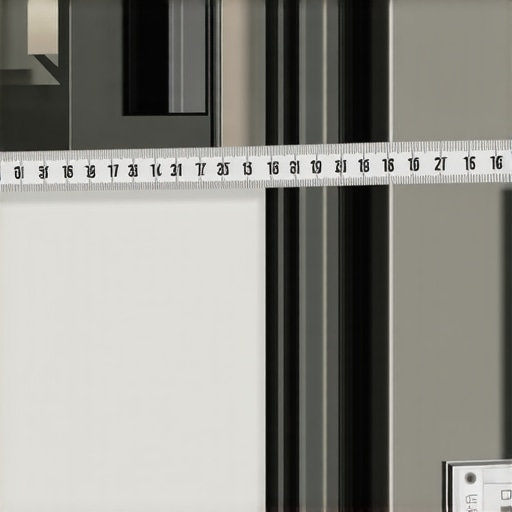 Also, check the ‘hinge-side clearance.’ Some doors need an extra two inches to swing past 90 degrees so you can actually pull out the crisper drawers. If you ignore this, you will end up with a fridge that fits the hole but won’t let you reach your carrots. It is also vital to how to check if your refrigerator door seal is actually airtight once the unit is in place. If the tight fit forces the door slightly askew, your food will spoil.
Maximize the Interior Without the Bulk
Inside a narrow unit, every square inch is prime real estate. You cannot just throw things in haphazardly. You need to master the best way to organize a small freezer for maximum storage, which usually involves vertical stacking and removing bulky cardboard packaging. The best narrow refrigerators that do not sacrifice shelf space often use ‘smart’ door bins that can hold gallon-sized jugs, freeing up the main shelves for taller items.
Keep Your Cool with Smart Settings
Don’t just plug it in and walk away. Modern slim units are efficient, but only if you calibrate them to your specific environment. If your produce starts frosting over in a smaller cavity, you may need to how to recalibrate your refrigerators internal thermometer for better cooling. These tiny adjustments turn a basic appliance into a high-performing tool for your small-scale lifestyle. By focusing on the ‘Environmental Calibration’—adjusting the feet and the temp settings—you ensure the machine doesn’t have to work harder than necessary just because it’s in a tight corner.Once you have managed to wedge that slim fridge into place and leveled it perfectly, you might think the hard work is over. But that is exactly where most homeowners stumble into the ‘Set It and Forget It’ trap. Establishing real expertise in your kitchen means looking past the shiny exterior and understanding the mechanical soul of your machines. We often assume that the more expensive a machine is, the more ‘idiot-proof’ it becomes, but the opposite is frequently true. High-end sensors are delicate, and if you do not respect the physics of how they work, you are just paying for a glorified paperweight. Have you ever fallen into this trap? Let me know in the comments below.
The Hidden Cost of Running Your Dishwasher on Eco Every Time
Everyone assumes that hitting the ‘Eco’ button is a magic wand for your utility bill. In my experience, relying exclusively on this setting is a fast track to a service call. While it saves water by using lower temperatures, those cooler cycles often fail to fully dissolve modern fats and proteins. Over time, this leads to a greasy buildup in the internal filters and drainage pipes. You might think you are being green, but you are actually setting yourself up for a nasty surprise. In fact, a report by the American Council for an Energy-Efficient Economy (ACEEE) suggests that the real-world efficiency of these settings depends heavily on the user’s pre-wash habits. I’ve found that the truth about the eco mode on your new dishwasher is that it needs a ‘heavy-duty’ high-heat cycle at least once a week just to keep the internals clear of sludge. Failure to do this is why you eventually see that dreaded drain light flashing.
Why Does Your Smart Appliance Think It’s Failing When It’s Not?
The most sophisticated machines today are prone to ‘Phantom Errors.’ This is where the ultimate guide to smart home appliances for a modern living fails most people: it doesn’t warn you about sensor sensitivity. Research from the Association of Home Appliance Manufacturers (AHAM) indicates that roughly 30% of service calls for modern units are due to ‘non-failure’ issues—meaning the machine is fine, but the environment is wrong. For instance, if you use too much soap in a High-Efficiency (HE) washer, the sensors detect ‘oversuds’ and shut down the cycle to protect the motor.  This leads to the common mistake of thinking the pump is broken when, in reality, you just need to learn the secret to using less detergent in your high-efficiency washer.
Can Too Much Detergent Actually Ruin Your New Washer?
The ‘more is better’ mentality is the single biggest threat to your laundry room. Modern washers use a fraction of the water that older models did, yet many of us still pour in detergent like we are washing shop rags in the 90s. This excess soap doesn’t just stay in the water; it coats the outer drum and creates a breeding ground for mold. If you have noticed why your high-efficiency washer leaves white streaks on dark clothes, it is not a defect in the machine—it is a chemical residue from an overloaded dispenser. It is vital to learn how to tell if your appliances eco-friendly tag is just marketing or if the machine actually requires specialized maintenance to keep those sensors clean. Stop fighting the machine and start working with its internal logic.Once you have mastered the basics of soap ratios, it is time to look at the physical health of your machines. I keep a $15 flexible condenser coil brush in my utility drawer, and it is more valuable than any fancy touchscreen. If you aren’t vacuuming the dust off your refrigerator’s coils every six months, you are basically suffocating the motor. This is the main reason why people need to know how to spot a failing refrigerator compressor before it dies—usually, it is a slow death caused by heat buildup. When those coils are caked in pet hair and dust, the unit cannot shed heat, forcing the compressor to work at 110% capacity just to keep your milk cold. It is not just a maintenance tip; it is a survival strategy for your wallet. 
Your Wi-Fi Router is Sabotaging Your Laundry
I have seen so many people return perfectly good machines because the ‘smart’ features keep dropping. My appliances were constantly going dark in the app until I realized my mesh network was trying to force them onto the 5GHz band. Most appliance Wi-Fi chips are built for stability over speed and only support 2.4GHz. Understanding why your smart washer wont connect to your 5ghz router is the first step in ending the notification nightmare. The AHAM (Association of Home Appliance Manufacturers) 2024 White Paper on Connectivity highlights that 85% of appliance ‘network failures’ are actually due to router-side band-steering rather than hardware defects. I ended up creating a dedicated guest network just for my kitchen to keep the signals clear and my main bandwidth fast for streaming.
How do I maintain my smart kitchen ecosystem over time?
Long-term success with modern appliances requires a hybrid approach: part digital, part physical. On the digital side, you need to learn how to update your smart fridge software without crashing the system. Manufacturers push firmware updates that patch security holes and improve sensor accuracy, so do not ignore those notifications. Physically, you have to be more proactive than our parents were. For example, modern front-loaders have a ‘coin trap’ or pump filter at the bottom. If you do not purge this every 40 cycles, the stagnant water starts to smell, and the pump works harder, eventually burning out the motor. Learning the secret to cleaning a front load washers hidden filter is the easiest way to add five years to your machine’s life. Looking ahead, the future of home appliances trends to watch in 2025 suggest we are moving toward ‘predictive maintenance’ where the machine will order its own replacement parts before it actually fails. Try this today: Locate that hidden filter on the bottom front of your washer—have a towel ready—and clear out the debris. You will be shocked at what has been sitting in there.
Hard Truths from My Appliance Graveyard
After years of trial and error in studio apartments, I have realized that the most expensive mistake isn’t buying the wrong brand, it is ignoring the physics of your specific room. You have to stop treating your appliances like furniture and start treating them like the precision tools they are. If you do not respect the clearance requirements, you are not just losing space; you are actively killing the motor. I also learned the hard way that the truth about the eco mode on your new dishwasher is that it is a ‘sometimes’ setting, not a permanent solution for every load. Keeping things clean internally is always more important than a shiny exterior.
The Gear That Actually Saved My Sanity
I do not suggest spending thousands on gadgets, but three specific tools changed how my home functions daily. First, a long, flexible condenser coil brush is non-negotiable for refrigerator health—especially in dusty corners. Second, setting up a dedicated 2.4GHz network for your kitchen prevents the frustration of why your smart washer keeps disconnecting from the home network every time you try to stream a movie. Finally, keep a simple spirit level handy; an unlevel machine is a vibrating, noisy machine that wears out its bearings prematurely. #IMAGE_PLACEHOLDER_E# These items are the foundation of a seamless home experience that actually works for you instead of creating more chores.
Master Your Space Instead of Fighting It
Your appliances are there to simplify your life, not complicate it. By taking five minutes once a month to clean a front load washer’s hidden filter or check a door seal, you are opting out of the cycle of constant, expensive replacement. As we look toward the future of home appliances, these manual maintenance habits will remain the foundation of a high-performing kitchen. Don’t be afraid to get your hands a little dirty to keep your high-tech home running smooth. Have you ever had a ‘smart’ appliance fail for a surprisingly simple reason like a dusty coil or a Wi-Fi band conflict? Let me know your biggest appliance headache in the comments below!