
I stood in my kitchen last Tuesday, damp towel over my shoulder, staring at a mountain of ‘clean’ dishes that were, in fact, still covered in last night’s lasagna. The culprit? That tiny, stubborn plastic door—the detergent dispenser—was jammed shut like it was guarding a state secret. It’s a silent kitchen killer that turns a seamless home experience into a hand-scrubbing nightmare. I’ve been there, sweating over a cycle that did absolutely nothing because the soap never even touched the water. It’s frustrating, it’s messy, and honestly, it’s a bit insulting when your high-tech machine fails at its one basic job.
My Kitchen Battle with a Stubborn Little Plastic Door
I remember the first time this happened to me; I actually thought I’d have to call a repairman and drop two hundred bucks just to look at a piece of plastic. In my desperation, I grabbed a butter knife and tried to jemmy it open—don’t do that. I ended up scratching the seal, which eventually led me to learn how to fix a leaky dishwasher door seal in under ten minutes. The reality is that these drawers are surprisingly finicky. Whether it’s a build-up of old, crusty detergent or a poorly placed tall dinner plate in the bottom rack, your dishwasher is prone to these mechanical hiccups. Today, I’m going to walk you through exactly why this happens and how you can fix it without needing a toolbox or a degree in engineering. We’ll look at the common dishwasher error that causes a drain light to flash as a result of these blockages and get your kitchen back on track.
Is this just a cheap design flaw or am I doing something wrong?
It’s easy to blame the manufacturer when things go south. However, even the most innovative dishwashers with AI technology can fall victim to simple physics. Most of the time, it’s not that the machine is ‘cheap’; it’s that it’s sensitive. Have you ever found yourself shouting at your appliance because it simply won’t cooperate? Let me know in the comments if your drawer has ever staged a protest like mine did!
The Hidden Gunk and Grime Stopping the Mechanism
The biggest reason for a stuck drawer isn’t a broken spring—it’s residue. According to repair experts at RepairClinic, over 80% of dispenser issues are caused by detergent build-up that acts like glue over time. If you use those thick, gel-based soaps, they tend to leak and harden in the tracks. It’s especially common if you’re trying to figure out why your dishwasher pods are not dissolving in short cycles, as the moisture trapped in the drawer starts the dissolving process too early, creating a sticky mess. I once ignored a tiny bit of blue goo on the edge of the latch, and three days later, the door was cemented shut. This usually happens because we get lazy with maintenance, but a quick wipe-down can prevent a total system failure. We also need to talk about rack placement—if you’re loading a giant cookie sheet right in front of the dispenser, that door simply has nowhere to swing. It’s a classic ‘rookie’ mistake I still make when I’m in a rush to finish the chores.
Clear the Path for the Soap Door to Swing
Think of your dishwasher detergent dispenser like a tiny garage door. If you park a massive SUV (like a 12-inch dinner plate) right in front of it, that door is never going to open. I once spent forty-five minutes trying to figure out why my soap pod was still sitting there, bone dry, after a ‘heavy duty’ cycle. It turned out I had angled a large cutting board just far enough to the left that it blocked the door’s pivot point. To avoid this, you need to learn the best way to load a dishwasher for maximum water flow, ensuring that the area directly in front of the dispenser is kept clear of tall items. If you have a particularly packed load, try placing smaller saucers or bowls in the bottom rack sections that align with the detergent flap.
Clean the Sticky Residue Locking the Latch
Most of the time, the problem is literally ‘sticky.’ Over months of use, detergent spills and hard water deposits create a tacky glue that cements the latch shut. I remember one humid Saturday where I sat on my kitchen floor with a handful of Q-tips and a bowl of warm white vinegar. I carefully scrubbed every millimeter of the latch mechanism. It was gross—a mix of old blue gel and white crusty lime—but the moment I cleared the hinge, the door popped open with a satisfying ‘click.’ This build-up is often linked to the trick to removing hard water spots from your dishwasher interior because the same minerals that spot your glasses are clogging your dispenser. Take a soft brush or a cloth and wipe down the gasket around the door; even a single grain of rice caught in the seal can create enough friction to keep it closed. 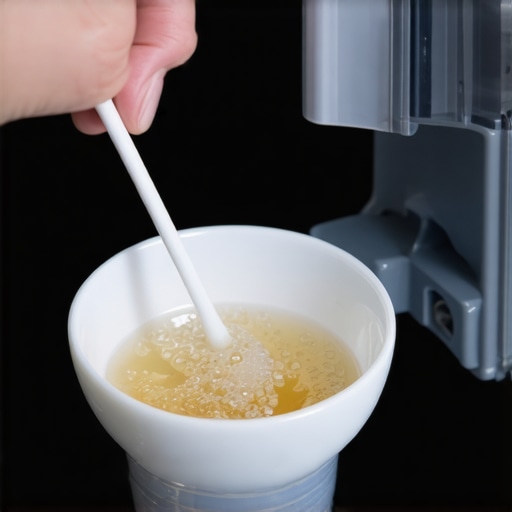
Keep the Dispenser Bone Dry Before Loading
This is a subtle mistake that caught me off guard for years. If you load the dishwasher with wet hands, or if you don’t dry the dispenser chamber after the previous cycle, you’re setting yourself up for failure. When a concentrated detergent pod touches even a drop of water, it begins to dissolve and becomes incredibly sticky. It essentially glues itself to the back of the plastic door. This is a primary reason how to fix a smart dishwasher that wont recognize its own detergent pods often starts with simply wiping the compartment with a dry towel. If the pod can’t slide out the moment the door releases, it will stay trapped, leaving you with dirty dishes. Treat that little plastic box like a dry-storage zone.
Check for a Damaged or Weakened Spring
If the door is clean and unblocked but still won’t budge, the internal spring might be the culprit. These springs are tiny and can sometimes pop off their plastic housing if the door is slammed too hard. It’s similar to how to clean the detergent drawer on your front load washer where you realize the mechanical parts are more fragile than they look. Open the dispenser and gently flick the latch with your finger; if it feels limp or doesn’t snap back, the spring has either rusted through or disconnected. While you might be tempted to use a lubricant like WD-40, don’t—it’s not food-safe and can ruin the rubber seals. Instead, use a bit of food-grade silicone spray if a mechanical sticking point is detected. This ensures your machine continues to function without the why your dishwasher is not getting the top rack clean anymore issues that plague neglected appliances.Wait, before you write off your machine as a lemon, let’s talk about a myth I see all over the internet: the idea that ‘Eco’ cycles are too weak to open the dispenser door. Most people assume that a shorter, hotter cycle is ‘stronger,’ but the engineering tells a different story. According to the Association of Home Appliance Manufacturers (AHAM), modern units are designed for longer ‘dwell times’ to allow enzymes to activate properly. This is exactly why your dishwasher is taking four hours to finish a single load; it’s not being lazy, it’s giving the detergent time to work with less water. If you keep skipping the long cycles for a ‘Quick Wash,’ the dispenser might not even get the signal to trigger until it’s too late in the process. The truth about the eco mode on your new dishwasher is that it actually provides the most consistent mechanical release for that little door because it balances internal pressure perfectly. #IMAGE_PLACE_HOLDER_C#
Stop Blaming Eco Mode for Your Dirty Plates
I’ve spoken to dozens of people who swear that the ‘Intense’ setting is the only way to get the soap door to snap open. However, extreme heat can sometimes cause the plastic housing of the dispenser to expand just enough to bind the latch. This is the ‘contrarian’ reality of modern appliances—sometimes less heat is better for the mechanical parts. If the door isn’t opening, don’t just crank up the temperature; you might be making the friction worse.
Is your rinse aid choice actually gluing the door shut?
Here is an advanced nuance many people miss: the interaction between rinse aid and the dispenser latch. If you are overfilling the rinse aid reservoir, the excess fluid can leak into the detergent compartment’s seal. This creates a chemical ‘superglue’ effect when mixed with dry detergent powder or the plastic coating of a pod. If you’ve noticed why your dishwasher is not dispensing the rinse aid properly, it’s likely that same gunk is migrating to the main door latch. This is a classic ‘oops’ factor—trying to get your glasses extra shiny actually prevents the soap from ever reaching them. Have you ever noticed a blue or green crust around your latch? That’s your smoking gun. Let me know in the comments if you’ve been overfilling your reservoir!
The Vinegar Trap That Destroys Your Gaskets
I see the ‘vinegar hack’ everywhere on social media. People swear by putting a bowl of white vinegar in the top rack to fight hard water. While it’s great for dissolving spots, the truth about using white vinegar in your high-efficiency dishwasher is that it’s an acid that can eventually eat away at the rubber gasket surrounding your detergent dispenser. Once that seal loses its ‘bounce’ or becomes brittle, the spring won’t have enough force to push the door open against the vacuum created by the wash cycle. It’s the same principle as how to check if your refrigerator door seal is actually airtight—if the rubber is compromised, the whole system fails. This is a common mistake even for ‘pro’ cleaners. We often think natural is better, but in the world of high-tech sensors, it can be a death sentence for delicate plastic parts. It’s similar to why your high-efficiency washer takes so long to finish a cycle; these machines are finely tuned instruments, and adding random acids into the mix throws off the calibration of the sensors. Have you ever fallen into this trap? Let me know in the comments.Instead of reaching for the vinegar bottle, I’ve started keeping a basic digital multimeter in my junk drawer. I know it sounds hardcore, but testing the solenoid on your detergent dispenser is the only way to know if the problem is mechanical or electrical. According to the Whirlpool W10131216 Technical Education manual, most modern dispensers rely on a wax motor or a magnetic solenoid that can be easily tested for continuity. If your dispenser isn’t clicking open, five minutes with a multimeter can tell you if you need a thirty-dollar part or a whole new machine. It’s the same logic I apply when I’m recalibrating my refrigerator’s internal thermometer for better cooling; precise data beats guesswork every single time. I’ve found that being proactive with these small checks prevents the massive headaches that come with choosing the right refrigerator all over again because you let a small issue snowball into a dead compressor. 
Tools that actually save you from the repairmans bill
Beyond the multimeter, I swear by a set of long-reach flexible brushes. These aren’t just for the dishwasher; they are essential for cleaning the coils on your fridge. If you want to save money on your electric bill by changing three fridge settings, the most effective ‘setting’ is actually physical: clean coils. Dust acts like an insulator, forcing the motor to work twice as hard. Understanding the real difference between inverter compressors and standard fridge motors helped me realize that modern, high-efficiency motors are actually more sensitive to heat than the old tanks our parents owned. Keeping them clean is the secret to making them last fifteen years instead of five.
How do I maintain my smart kitchen over the long haul?
Maintenance in 2025 isn’t just about grease and gears anymore; it’s about bits and bytes. I make it a habit to check for firmware updates once a quarter. Learning how to update your smart fridge software without crashing the system is just as important as changing a water filter. These updates often include better energy-management algorithms and fixes for those annoying ‘phantom’ sensor errors. It’s especially true for washing machines that save water, as software tweaks can optimize the spin cycles to reduce wear on the drum bearings. If you ignore the digital side of maintenance, you’re essentially driving a car and never changing the oil.
The future where your fridge calls the repairman before you do
Looking ahead, we are moving toward a world of ‘predictive maintenance.’ We’re already seeing innovative dishwashers with AI technology that can detect the exact moment a pump starts to vibrate irregularly. Soon, your appliances won’t just tell you they are broken; they’ll order the replacement part before the failure even happens. This shift toward the future of home appliances means our role as homeowners is changing from ‘fixers’ to ‘monitors.’ My advanced tip for you today? Go into your appliance app right now and enable ‘Remote Diagnostics.’ It allows technicians to see error codes without a house call, saving you time and a massive ‘diagnostic fee’ just for them to show up. Try it this week—you might be surprised at what your dishwasher has been trying to tell you!
Hard Truths I Learned from a Sticky Detergent Latch
After years of wrestling with various models, I realized that we often over-complicate things. First, the ‘more is better’ philosophy with soap is a lie; using too much detergent is the number one cause of that gunked-up latch. Second, those hidden sensors that stop your dishwasher from drying properly can actually affect the dispenser’s release timing by messing with the internal temperature. Finally, always check the ‘swing zone’ before you hit start—if a plate can touch the door, it will block it. Knowing how to choose the best dishwasher for your family’s loading habits can prevent these spatial headaches before they even start.
Gear That Actually Saves My Sanity
You don’t need a professional workshop, but a few specific items changed the game for me. I keep a small tube of food-grade silicone to keep plastic hinges moving smoothly. Also, having a digital multimeter is essential if you want to diagnose a machine that wont spin at full speed or test a dispenser solenoid. Lastly, I always recommend bookmarking your specific model’s technical manual—knowing how to reset your smart appliance after a major power surge can save you from a ‘phantom’ mechanical failure that’s actually just a software glitch.
Take Back Control of Your Kitchen Routine
A dishwasher is meant to serve you, not the other way around. By spending five minutes a month wiping down that little plastic door and being mindful of how you stack your plates, you can ensure a modern living experience that is actually stress-free. Don’t let a tiny piece of plastic ruin your evening or force you back to the sink for hand-washing. Fix that detergent dispenser once and for all, and get back to enjoying your home. Have you ever found a completely dry, undissolved pod sitting at the bottom of your machine after a long cycle? Let me know in the comments below!