
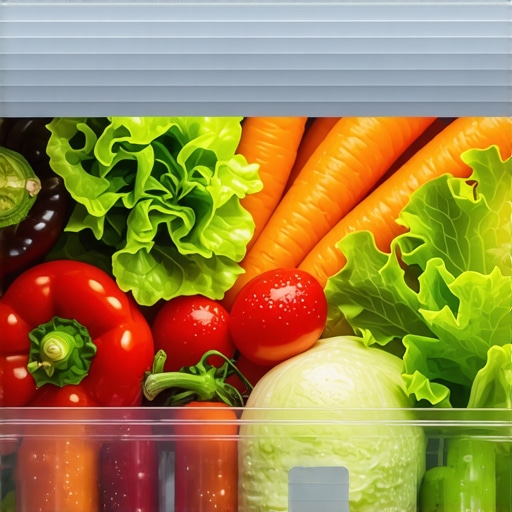
I stood in my kitchen last Tuesday, holding a cucumber that had the structural integrity of a wet noodle. It was the third time that month I’d reached into the bottom of my fridge only to find a liquefied mess where my salad should have been. It’s a gut-punch, isn’t it? You spend forty bucks on organic produce, tuck it away with the best intentions, and then—bam—science turns it into compost before you can even find the salad spinner. I used to think I just needed a fancy new appliance, maybe one of those refrigerators in 2025 with the built-in cameras, but the truth was much simpler. I was sabotaging my own food because I didn’t understand the two plastic sliders in my crisper drawer.
Stop Letting Your Veggies Die a Slow Death
For the longest time, I assumed those humidity sliders were just a marketing gimmick. I’d shove kale, apples, and peppers into the same bin and wonder why the kale turned yellow while the apples stayed fine. My biggest mistake early on was thinking “cold is cold.” I didn’t realize that certain fruits are essentially biological gas-emitters, actively killing their leafy neighbors. If you’ve ever felt like your fridge is a graveyard for groceries, you’re not alone. We’re going to fix that today. By the time you finish reading this, you’ll know exactly how to balance the microclimates in your kitchen so your spinach stays crisp for two weeks instead of two days.
Does That Tiny Plastic Slider Actually Make a Difference?
I get the skepticism. It feels like such a low-tech solution for such an expensive machine. But according to the Natural Resources Defense Council (NRDC), the average American family wastes about 40 percent of their food, much of it due to improper storage. That’s a lot of money to lose over a sliding tab. When I finally sat down and looked at how to recalibrate my refrigerator’s internal thermometer, I realized that even a slight variation in air-flow can be the difference between a crisp carrot and a moldy one. Have you ever opened your crisper and wondered if those sliders were actually connected to anything, or if they were just there for show? When I was first trying to figure this out, I made the classic rookie error: I kept my fridge too crowded. I thought I was being efficient by packing it tight, but I was actually blocking the very vents that keep the humidity stable. If you’re dealing with fridge temperature fluctuations, your crisper doesn’t stand a chance. I had to learn the hard way that airflow is king.
Turn Your Crisper into a Custom Greenhouse
Think of those plastic sliders as the windows of your kitchen. When you close the slider (High Humidity), you’re effectively shutting the window to trap moisture inside. This is a sanctuary for anything that wilts. If it’s leafy, green, or has a tendency to get ‘crunchy,’ it belongs here. I learned this the hard way during what I now call the ‘Great Kale Catastrophe.’ I had just bought a beautiful bunch of dinosaur kale, but I left the vent wide open. Within thirty-six hours, it looked like a piece of dried parchment paper. By keeping the vent closed, you’re creating a humid micro-environment that mimics the misting systems you see in the grocery store aisles. If you are currently shopping for a new unit, look for choosing the right refrigerator tips from industry experts to find models with independent moisture controls.
Give Your Fruit Some Breathing Room
On the flip side, the Low Humidity setting—or the ‘open window’—is for the rotters. These are the fruits that emit ethylene gas as they ripen. If you trap that gas in the drawer, your produce will essentially overcook itself in its own chemicals. Apples, pears, and stone fruits are the worst offenders. When I first started meal prepping, I’d throw my apples in with my spinach, thinking I was being organized. The result? The spinach turned to slime in record time because the apples were ‘gassing’ it to death. If you have a high-turnover kitchen, you might want to check out the best refrigerators for households with a high grocery turnover to ensure you have enough separate bin space to keep these enemies apart. 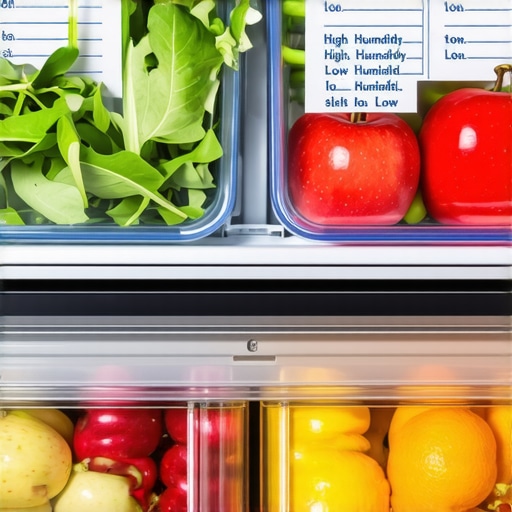
Stop the Invisible Air Leaks
No amount of slider-fiddling will save your carrots if the main environment of your fridge is compromised. I noticed my humidity drawers were failing last summer, and it turned out the culprit wasn’t the bins at all—it was a loose gasket. You should periodically learn how to check if your refrigerator door seal is actually airtight by using the dollar bill test. If your door doesn’t seal, the compressor works overtime, stripping the moisture out of the air and making your crisper sliders useless.
Smart Strategies for Maximum Shelf Life
Once you have the humidity levels dialed in, the layout of your fridge becomes the next battleground. Don’t stack heavy items like bags of oranges on top of delicate herbs. It sounds like common sense, but when you’re rushing home from the store, it’s easy to just shove things in. Even in the freezer, organization prevents the air from becoming stagnant. I found that the best way to organize a small freezer for maximum storage actually helps maintain the temperature of the fridge section below it. If you’re using a modern unit, you might even have sensors that do this for you. Knowing the secret to preventing freezer burn in your smart refrigerator often comes down to maintaining that consistent airflow, ensuring the humidity stays in the drawers and the dry, freezing air stays exactly where it belongs.But even if your airflow is perfect, there’s a trap that almost every modern homeowner falls into when they first upgrade to a high-tech suite: the over-reliance on automatic and eco-friendly settings. We’ve been conditioned to think that ‘Eco’ is the superior choice for every load, but the reality is more nuanced. While [the truth about the eco mode on your new dishwasher](https://smartappliancereview.com/the-truth-about-the-eco-mode-on-your-new-dishwasher) is that it saves water, it often does so at the cost of lower temperatures. In my experience, using Eco-mode exclusively for months on end is a recipe for disaster. Low temperatures fail to fully dissolve animal fats and grease, which then solidify in your drainage pipes and filters. This is exactly [why your dishwasher smells like a sewer when it is not running](https://smartappliancereview.com/why-your-dishwasher-smells-like-a-sewer-when-it-is-not-running), even if the dishes look mostly clean. To keep your system running like the [innovative dishwashers with AI technology you must know](https://smartappliancereview.com/innovative-dishwashers-with-ai-technology-you-must-know) about for 2025, you need to run a high-heat sanitization cycle at least once a week to clear out that hidden sludge. 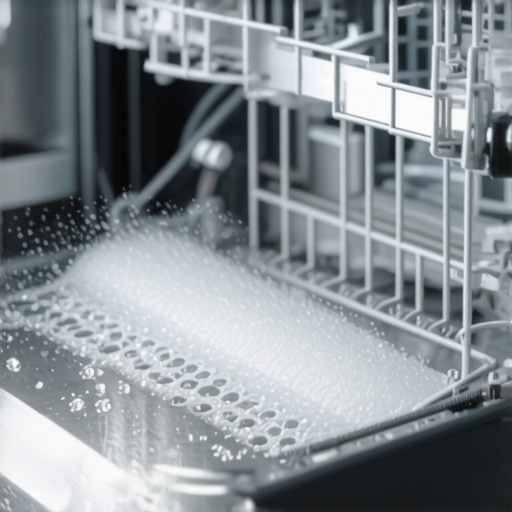
Stop Making This Detergent Mistake
Another sophisticated ‘trap’ involves the very thing meant to help: detergent pods. Most people assume that more cleaning power is always better, but if you are running quick cycles, you’re likely wasting money and damaging your machine. I’ve seen countless cases where a pod doesn’t fully break down, leaving a sticky residue that clogs the spray arms. If you’ve ever wondered [why your dishwasher pods are not dissolving in short cycles](https://smartappliancereview.com/why-your-dishwasher-pods-are-not-dissolving-in-short-cycles), it’s because those pods are designed for the long haul. Expert technicians from the American Council for an Energy-Efficient Economy (ACEEE) have noted that as appliances become more efficient, the chemistry of our detergents must adapt; otherwise, we end up with a ‘film’ that actually attracts more grime over time. Have you ever fallen into this trap? Let me know in the comments if you’ve ever found half-melted pods at the bottom of your machine.
Why does my energy-efficient washer leave clothes feeling crunchy?
This is one of the most common complaints among those who have just mastered their crisper drawers and moved on to optimizing their laundry. You might notice [why your high efficiency washer leaves white streaks on dark clothes](https://smartappliancereview.com/why-your-high-efficiency-washer-leaves-white-streaks-on-dark-clothes) or why towels feel like sandpaper. The irony is that because these machines use so little water, any excess detergent becomes a permanent part of the fabric fibers. If you’re struggling with [why your energy efficient washer leaves your clothes feeling crunchy](https://smartappliancereview.com/why-your-energy-efficient-washer-leaves-your-clothes-feeling-crunchy), the solution isn’t more softener—it’s actually less soap and an extra rinse.
Long-Term Gains for Your Smart Home
As we look toward the [future of home appliances trends to watch in 2025](https://smartappliancereview.com/future-of-home-appliances-trends-to-watch-in-2025), the focus is shifting from simple ‘set and forget’ features to active management. You can significantly extend the life of your hardware and [how to save money on your electric bill by changing three fridge settings](https://smartappliancereview.com/how-to-save-money-on-your-electric-bill-by-changing-three-fridge-settings) just by understanding these hidden mechanics. Whether you’re following an [ultimate guide to smart home appliances for a modern living](https://smartappliancereview.com/ultimate-guide-to-smart-home-appliances-for-a-modern-living) or just trying to keep your lettuce from rotting, the goal is the same: work with the machine’s physics, not against them. Stop letting the default settings dictate the lifespan of your expensive kitchen investments.
Deep Clean with the Right Tools
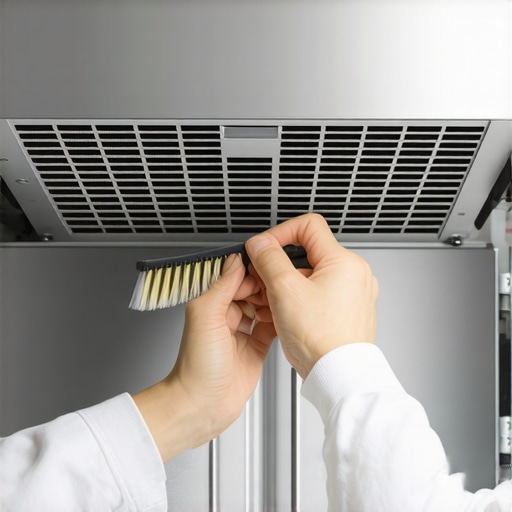
I’ve spent thousands on my kitchen over the years, so it kills me when I see people trying to maintain a high-end unit with just a damp rag and some dish soap. If you want to avoid spotting a failing refrigerator compressor before it dies, you need to get comfortable with a shop vac and a long-handled condenser coil brush. Every six months, I pull my unit out and vacuum the thick layer of pet hair and dust off the condenser coils. According to technical bulletins from the Association of Home Appliance Manufacturers (AHAM), dirty coils can force the motor to work 20 percent harder, which is the leading cause of internal component failure. This is arguably the most effective way to save money on your electric bill by tweaking your fridge settings because a clean machine doesn’t have to fight its own physics. I also keep a basic multimeter in my utility drawer; it’s the only way to accurately tell if your dishwasher heating element is actually broken or if you’re just dealing with a simple software glitch.
How do I maintain my smart appliances over time?
Maintenance in 2025 isn’t just physical; it’s digital. I treat my refrigerator like I treat my laptop. You absolutely must update your smart fridge software without crashing the system whenever a firmware patch is released. These updates often optimize cooling cycles based on new data from the manufacturer. On the physical side, I make it a quarterly habit to clean a front-load washer’s hidden filter. This isn’t the standard lint trap; it’s the debris filter located near the bottom pump. I once found three quarters and a stray bobby pin in there—left unchecked, those small items would have burned out the drain motor. If you notice small holes in your clothes, it’s usually a sign that your drum or your filters are snagging fabric due to debris buildup.
The Future of Self-Healing Hardware
Looking ahead, the future of home appliances is moving rapidly toward predictive maintenance. We are already seeing innovative dishwashers with AI technology that can detect a partial clog in the spray arm before you ever notice a dirty plate. Eventually, your washer won’t just throw an error code; it will send an augmented reality walkthrough to your phone showing you the 5-minute fix for a washing machine that won’t drain. Until that full automation arrives, I highly recommend you link your smart appliances to a single voice assistant. This creates a unified dashboard for maintenance alerts so you never forget to replace the water filter in your fridge ever again. My personal challenge to you for this weekend: pull your washing machine manual out and locate the ‘drain pump filter.’ Clean it out just once, and you will be absolutely shocked at the gunk your machine has been struggling to work around.
Hard Truths from a Decade of Kitchen Maintenance
After years of trial and error, I’ve realized that the ‘smartest’ thing about smart appliances isn’t their Wi-Fi chip; it’s the person operating them. One of my biggest lightbulb moments was realizing that default settings are designed for the average home, not your home. If you have hard water, your dishwasher needs a specific approach regardless of the label on the box. If you live in a humid climate, your fridge door seal needs more frequent inspections than the manual suggests.
Another hard lesson? Never trust a machine to tell you it’s broken until you’ve checked the manual filters first. I almost replaced a perfectly good unit before discovering that cleaning the detergent drawer on your front load washer could solve most drainage and odor issues. Finally, remember that efficiency doesn’t always mean quality—sometimes an extra rinse is the most ‘eco-friendly’ thing you can do to save your clothes from abrasive detergent residue.
The Gear That Keeps My Kitchen Running
I don’t buy into every gadget, but these four resources are non-negotiable for my household maintenance routine. First, the technical bulletins from the Association of Home Appliance Manufacturers (AHAM) are the gold standard for understanding true energy draw. Second, I swear by a simple long-handle coil brush; it’s a tiny investment that can save you a fortune in compressor repairs. Third, I always keep the ultimate guide to smart home appliances for a modern living bookmarked for when I need to troubleshoot sync issues. Lastly, for the laundry room, knowing how to prevent mold growth in your washing machines door seal has saved me more money on specialized cleaners than I care to admit.
Reclaiming Your Time and Your Grocery Budget
You don’t need to be a professional technician to maintain a high-performing home. By simply adjusting those humidity sliders, running a high-heat cycle occasionally, or learning the best way to load a dishwasher for maximum water flow, you are already doing more than the average homeowner to protect your investments. Your smart appliances are meant to serve you, not create more work. Start with one small tweak this weekend—perhaps it’s recalibrating the fridge or finally cleaning that hidden drain filter—and watch how much further your groceries and your sanity go. Which appliance setting have you been using wrong all this time? Let me know in the comments below!