
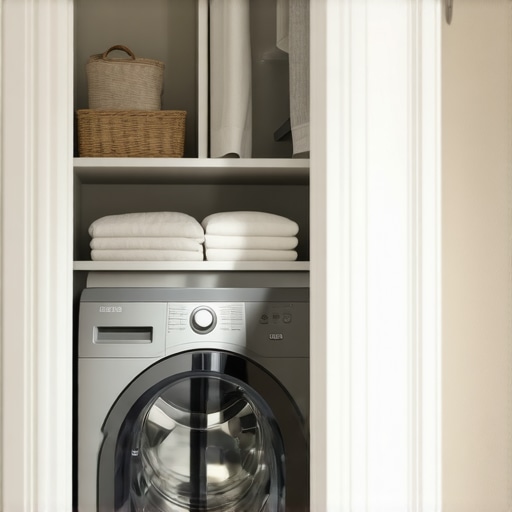
I stood there, sweat dripping off my forehead, staring at my bathroom closet door that simply would not shut. I had spent three hours wrestling a standard washing machine into that tiny nook, only to realize I had completely forgotten about the drainage hose clearance. It was a classic rookie mistake that left me with a laundry room—if you can even call a closet that—looking like a construction site. Living in a small space shouldn’t mean you are doomed to spend your weekends at a laundromat. I have been through the trial and error, the scraped knuckles, and the frustrating returns so you do not have to.
My Quest for the Perfect Tiny Laundry Setup
When I first started looking for narrow width washing machines for small laundry nooks, I realized most compact labels are a bit of a stretch. They might be slim, but they are often incredibly deep, or they are short but require massive side clearances for ventilation. I once bought a unit that looked perfect on paper, but because I did not account for the high-speed spin cycle vibration, it practically tried to walk out the front door the first time I washed jeans. Learning how to stop your washing machine from jumping saved my tile floor, but it did not solve the fundamental space problem. That is when I realized the secret is not just the width; it is finding a machine designed specifically for shallow closet depths. Today, I am sharing the five units that finally let me close that closet door for good without sacrificing performance.
Can a small washer really handle my actual laundry load?
This is the biggest skepticism I hear from my neighbors and friends. We all fear that a compact unit means doing ten tiny loads a day just to get through a week of clothes. However, data from the Energy Star program confirms that modern compact washers can often handle up to 12 pounds of laundry while being significantly more efficient than their full-sized ancestors. I have found that even my bulkiest bath towels fit perfectly in these high-efficiency machines if you load them right. Plus, switching to washing machines that save water is not just about the environment; it is about fitting a high-tech solution into a home that was never built for a full-scale laundry room. Have you ever had to return a compact appliance because it was still an inch too big? Tell me your horror stories below, because I promise you are not alone.
Measure for the Hoses Not Just the Box
Most people make the mistake of measuring their laundry nook like they are fitting a square peg into a square hole. You cannot just look at the machine’s dimensions on the website and call it a day. I remember the time I bought a ‘compact’ washer that was exactly 24 inches wide for my 25-inch closet. I thought I was a genius until I tried to push it back. The drain hose and the water valves needed four inches of breathing room. My machine ended up sitting halfway in the hallway because I forgot the ‘hose tax.’ When you are hunting for narrow width washing machines for small laundry nooks, always subtract five inches from your total closet depth to account for the plumbing and the power cord. If you are really tight on space, look for 90-degree elbow adapters for your hoses; they can save you nearly two inches of depth, which is often the difference between a closed door and a trip to the hardware store.
Level Your Machine or Prepare for a Breakout
A narrow washer is like a high-strung athlete; if it is not perfectly balanced, it is going to cause a scene. Because these machines have smaller footprints, their center of gravity is higher, making them prone to ‘walking’ during a high-speed spin. I once left a load of heavy towels running and came back to find my washer had migrated three inches to the left, pinning my vacuum cleaner against the wall. To avoid this, use a spirit level on the top of the machine, checking both front-to-back and side-to-side. Adjust the feet until it is rock solid. If you still hear a rhythmic thumping, you need to learn how to stop your washing machine from jumping before it cracks your floor tiles or shakes the plumbing loose.
Stop the Swamp Smell Before it Starts
In a small apartment or a closet, a stinky washer isn’t just an appliance issue; it’s a whole-home atmosphere. Compact front-loaders are notorious for trapping moisture in the rubber door gasket. After a few weeks of keeping the closet door shut, my laundry room started smelling like a damp basement. The fix is simple but mandatory: wipe down the seal after every wash and leave the machine door slightly ajar. If you are worried about the closet door hitting it, just leave it open an inch. Learning how to prevent mold growth in your washing machines door seal is the only way to keep your clothes smelling fresh in a confined space. I also recommend a monthly ‘clean’ cycle with a dedicated tablet or a bit of bleach to clear out the internal drum.
Master the Art of the High-Efficiency Load
You might notice that your new compact unit takes longer than your old bulky top-loader. If you are wondering why your high efficiency washer takes so long to finish a cycle, it is because it is using less water and more mechanical action to clean. To make the most of this, don’t overfill it. A compact drum should only be about three-quarters full. I once tried to cram a king-sized comforter into my 2.2 cubic foot washer, and it came out with dry spots—the water literally couldn’t reach the middle. Instead, use the best energy saving settings for your smart washing machine for daily clothes and save the heavy items for a separate, dedicated cycle. If you have a smart unit, take the time to learn how to connect your smart washer to your home network without the lag so you can get alerts on your phone. This prevents clothes from sitting in the damp drum for hours, which is the leading cause of that mildew smell in small homes.
While mastering the physical dimensions of a laundry nook is a massive win, I have learned that the real headaches start once you actually plug these high-tech machines in. There is a common belief that ‘smarter’ always equals ‘better’ or ‘more efficient.’ However, I have found that the most sophisticated features can often be a double-edged sword if you do not understand the underlying mechanics. For instance, many people religiously hit the ‘Eco Mode’ button on every appliance, thinking they are saving the planet and their wallet simultaneously. In reality, constant use of eco settings in dishwashers can lead to a buildup of fatty deposits because the water never reaches a high enough temperature to fully melt grease. Before you commit to a cycle, you should look into the truth about the eco mode on your new dishwasher to ensure you are not accidentally shortening its lifespan.
The Connection Trap Most Techies Overlook
The most frequent ‘oops’ moment I see with modern home setups involves the Wi-Fi signal. You buy the latest unit, get it leveled, and then find out why your smart washer wont connect to your 5ghz router. Most appliances are still stuck on 2.4GHz bands for stability and range, but our modern mesh networks often try to force them onto faster, shorter-range channels. I once spent an entire Saturday trying to sync a fridge only to realize my router was too ‘smart’ for its own good. If you are struggling, you might need to learn how to keep your smart home hub from interfering with appliance signals to get everything talking again.
Can a smart washer actually make your clothes dirtier?
It sounds like a paradox, but it happens more often than you would think. Advanced sensors are designed to detect soil levels and adjust water usage accordingly. However, if you use too much high-efficiency detergent, the sensors get ‘blinded’ by the suds and cut the rinse cycle short, leaving a soapy film on your garments. This is often the reason your washing machine is leaving white streaks on dark clothes. A study by the Association of Home Appliance Manufacturers suggests that consumers regularly use up to three times the necessary amount of detergent. If you are noticing residue, try cutting your soap usage in half; the sensors will likely do a better job when they can actually ‘see’ the water clarity. Have you ever fallen into this trap of over-relying on the machine’s ‘brain’ only to have it backfire? Let me know in the comments.
The Secret to Refrigerator Longevity
Most experts will tell you that a fridge is a ‘set it and forget it’ appliance, but that is a myth that leads to early compressor failure. The digital readout on the front of your fridge is often an average, not a real-time reflection of every shelf. To keep your food safe and your energy bill low, you should know how to recalibrate your refrigerators internal thermometer for better cooling. This simple adjustment ensures the ‘smart’ brain is making decisions based on accurate data. Furthermore, while we love the convenience of connectivity, we often ignore the security side of things. It is worth investigating the truth about smart appliances and your home data privacy before you let every gadget in your house join your primary network. Staying ahead of these nuances is what separates a frustrating ‘smart’ home from a truly seamless one.
After five years of living with a ‘smart’ kitchen, I have realized that the most expensive tool in your kit isn’t a Wi-Fi booster—it is a fifteen-dollar long-handled coil brush. We get so caught up in the digital side of things that we forget these machines are still mechanical beasts at heart. I make it a point to vacuum my refrigerator coils every six months without fail. If you skip this, your compressor starts working overtime to shed heat, which is usually the secret behind how to stop a refrigerator from making that constant clicking sound. That clicking is a rhythmic warning that your fridge is gasping for air and its heart is starting to struggle. I also keep a small ’emergency kit’ tucked away in my laundry closet that has saved me hundreds in service calls. It includes a dedicated shop vac—essential for the 5-minute fix for a washing machine that wont drain—and a set of heavy-duty vibration pads. If you are scaling up your home tech, do not just buy the machines; invest in the maintenance gear that supports them. According to the Service Matters technical database by Whirlpool, nearly thirty percent of reported control board failures are actually just sensors being triggered by simple clogs or overheating caused by domestic dust buildup.
How do I maintain my smart appliances over time?
The biggest shift in my personal routine was moving from reactive repairs to proactive software care. Just like your smartphone or laptop, your fridge needs its software maintained to function correctly. I have seen friends accidentally brick their expensive touchscreens because they lost power or signal during a firmware download. Learning how to update your smart fridge software without crashing the system is now just as important as knowing how to change a water filter. I personally set a recurring calendar reminder for a ‘Digital Cleaning Day’ where I check for firmware updates across all my connected gear. Looking ahead, the future of home appliances trends to watch in 2025 suggest we are moving toward self-healing tech where machines detect their own part failures before they happen. But until that becomes the industry standard, you are still the first line of defense. I highly encourage you to grab a coil brush this weekend and give your fridge some much-needed breathing room—you will literally hear the difference in the silence of your kitchen.
The Hardest Lessons My Smart Home Taught Me the Hard Way
After years of wrestling with sensors and tight clearances, I’ve realized that the ‘smart’ in your appliances refers to their potential, not their autonomy. One of the biggest lightbulb moments I had was discovering that over-automation can sometimes mask simple mechanical issues. For instance, if your washer is constantly recalibrating, it might not be a software bug; it could just be that the floor isn’t as level as you thought. I’ve also learned to trust my ears more than the app notifications. A slight change in the rhythmic hum of a fridge often tells you more than a digital dashboard ever will. Most importantly, I’ve found that the ultimate guide to smart home appliances for a modern living starts with mastering the manual maintenance first.
The Survival Kit I Keep in My Utility Drawer
I don’t rely on luck to keep my machines running; I rely on a few specific tools and sources that haven’t let me down. First, a high-quality spirit level is non-negotiable for anyone with a compact laundry setup to prevent that dreaded walking during the spin cycle. Second, I keep a dedicated ‘tech log’ where I write down the dates of every filter change and software update. For purchasing advice, I frequently revisit the choosing the right refrigerator tips from industry experts because they focus on the mechanical build quality rather than just the flashy touchscreens. Finally, I always keep a bottle of neutral pH cleaner handy—harsh chemicals are the fastest way to ruin the expensive seals on your high-end washers. #IMAGE_PLACEHOLDER_E#
Your Path to a Seamless High-Tech Home
Transitioning to a modern kitchen doesn’t have to be a source of stress or constant troubleshooting. Whether you are living in a tiny studio or a sprawling house, the goal of smart appliances is to make your life easier, not more complicated. By staying proactive and understanding the needs of your machines, you can enjoy all the benefits of top smart appliances for a seamless home experience in 2025 without the constant fear of a breakdown. You’ve got the tools and the knowledge now—it is time to take control of your space and make it work for you. Have you ever had a smart appliance ‘ghost’ you with a weird error code just when you needed it most? Let me know in the comments below!