
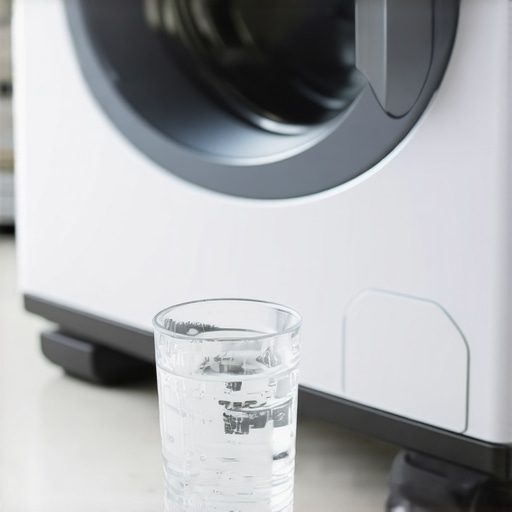
It started as a low hum, the kind of sound you can ignore while the TV is on. Then, without warning, the spin cycle hit 1,200 RPM and my entire kitchen began to dance. I’m talking about plates-clinking-in-the-cabinet levels of vibration. I remember standing in my hallway, watching a half-full glass of water literally migrate across the counter because of the rhythmic pounding coming from the laundry room. It’s a helpless feeling, isn’t it? You just want to get through a load of towels without your neighbors thinking there is a construction crew in your living room. Today, I am going to show you exactly how to tame that beast and regain your peace of mind.
The Day My Washer Tried to Escape the Laundry Room
I will be the first to admit it: I made the classic mistake of thinking more soap meant cleaner clothes, which led to suds-locking and some truly violent shaking. But the real kicker was when I first got my high-efficiency machine and ignored the leveling instructions. I thought, “How off can it really be?” Turns out, even a fraction of an inch can turn a modern appliance into a jackhammer. If you’re dealing with this, you might be wondering why your front loader is vibrating so hard it shakes the whole house, and the answer usually isn’t “it’s just old.” Most of the time, it is a physics problem we can solve in twenty minutes. Believe it or not, the experts at The Spruce note that excessive vibration can actually cause long-term damage to the machine’s internal bearings and even your home’s subflooring. I learned that the hard way after a particularly rowdy cycle left a hairline crack in my laundry room floor. Have you ever walked into your laundry room only to find your machine a foot away from where it started?
Is a perfectly quiet spin cycle actually worth the effort?
You might think that a bit of noise is just part of the laundry experience, but once you see how smart washing machines can simplify laundry day without the architectural drama, you will never go back. It isn’t just about the noise; it is about protecting your investment. Whether you are working with compact washers that actually fit inside a bathroom closet or a massive industrial-sized unit, the mechanics of balance remain the same. I once spent an entire Saturday morning shimming my machine with scraps of cardboard—a move I deeply regret now that I know about proper anti-vibration pads and how to stop your washing machine from jumping during the spin cycle the right way. We are going to dive into the physical adjustments and the hidden settings that can turn your home from a shake-shack back into a sanctuary.
Lock Down the Leveling Legs First
The most common reason for a washer to start its own marathon across your floor is actually the simplest to fix: the feet aren’t flat. Think of your washing machine like a four-legged chair at a restaurant. If one leg is even a millimeter shorter than the others, it wobbles. But while a chair just annoys your knees, a 200-pound drum spinning at high speed creates centrifugal force that turns that tiny wobble into a violent impact. To fix this, you need a spirit level. Place it across the top of the machine—front to back and side to side. Most machines have threaded legs you can turn by hand or with a wrench to extend or retract. Always tighten the lock nut against the frame once you’re level; if you don’t, the vibration will eventually unscrew the leg again. I remember helping a friend who swore her machine was broken, only to find the front-left leg was completely loose. Ten seconds of twisting saved her a $150 repair visit. If your laundry room floor is particularly slanted, learning how to level a refrigerator on an uneven kitchen floor actually uses the same basic principles of physics. 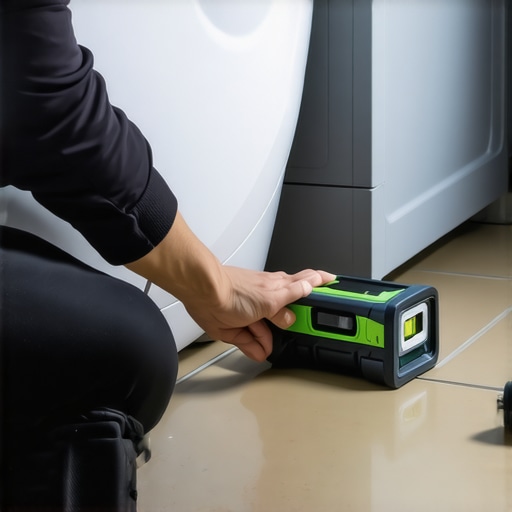
Check for the Infamous Shipping Bolts
If you just bought a new machine and it sounds like a jet engine taking off in your house, stop it immediately. Every front-loader comes with shipping bolts—heavy-duty steel rods that lock the drum in place so it doesn’t bounce around during transit. If you don’t remove these, the suspension system can’t do its job, and the energy from the spin cycle is transferred directly into the outer casing. I once ignored these on a brand-new unit, and within three minutes, the machine had actually shifted so far it nearly unplugged itself from the wall. You can find these on the back of the unit. Remove them and keep them in a safe place in case you move. This is the single most effective way to how to stop your washing machine from jumping during the spin cycle before you cause permanent structural damage.
Give Your Machine a Solid Foundation
Sometimes the problem isn’t the machine; it’s the floor. In older homes with wooden joists, the floor can act like a drumhead, amplifying the vibration. If your machine is level but still shakes the walls, consider adding a 3/4-inch piece of plywood under the unit to distribute the weight across more joists. Alternatively, thick rubber anti-vibration pads can absorb the shock before it hits the floor. This is especially important for compact washers that actually fit inside a bathroom closet, where space is tight and the walls are thin. You might also notice that why your front loader is vibrating so hard it shakes the whole house is often worse on the second floor than in a basement because of this lack of structural rigidity.
Balance the Load Every Single Time
We are all guilty of trying to shove “just one more towel” into the drum. But an uneven load is a death sentence for a quiet cycle. When you wash a single heavy item, like a bath mat or a heavy denim jacket, the machine can’t distribute that weight evenly around the drum. It clumps on one side, and when the spin starts, it creates a massive imbalance. Try to wash heavy items in pairs or with smaller rags to balance the scale. Even the most advanced top load washers for families with heavy laundry needs can struggle with a single wet comforter that refuses to spread out. While washing machines that save water expert advice for 2025 suggests smaller loads for efficiency, ensure those loads aren’t so small they become lopsided.
It is a common gripe in the appliance world: “They don’t make them like they used to.” And honestly, when your brand-new dishwasher takes four hours to clean a single load, it is easy to feel cheated. But here is the contrarian truth that most big-box retailers won’t tell you: that marathon cycle is actually doing a significantly better job than the 45-minute blast from 1995. The biggest myth I encounter is that “Eco Mode” is just a marketing gimmick to satisfy regulators. In reality, modern enzymes in detergents need time and specific low temperatures to activate effectively. According to the Association of Home Appliance Manufacturers (AHAM), the extended soak time in these cycles allows the chemistry to break down proteins without the need for high-heat, high-impact water jets that eventually strip the finish off your plates. When you understand the truth about the eco mode on your new dishwasher, you realize that patience is actually the secret to protecting your expensive glassware.
Stop Overloading the Tech with Too Much Soap
The most expensive mistake I see people making with their 2025-ready gear isn’t a mechanical failure—it is a chemical one. We are conditioned by decades of marketing to think that “more bubbles equals more clean.” In a smart, high-efficiency system, excess suds act like a thick blanket of insulation. They coat the internal sensors, preventing the machine from accurately “seeing” how dirty the water actually is. This is a primary reason why your washing machine is stuck on the sensing cycle for an hour; the computer is literally flying blind because it is drowning in foam. If you have ever wondered why your high efficiency washer takes so long to finish a cycle, check your detergent bottle. You likely only need about two tablespoons for a full load, regardless of what the cap size suggests.

Can your machine’s sensors actually go blind?
Yes, and it is usually our own maintenance habits that cause the cataracts. Beyond soap, hard water buildup on the internal optics of your dishwasher or the moisture sensors in your dryer can cause total system confusion. If your clothes come out damp even on the highest setting, it is often because the secret sensor that knows exactly when your clothes are dry is coated in a thin, invisible layer of dryer sheet wax. These tiny nuances separate a frustrated owner from a power user. We often blame the “smart” features for being finicky, but they are actually just incredibly precise instruments that require a different philosophy of care.
The High-Pitched Hum of Modern Efficiency
If you have recently upgraded your kitchen, you might be worried about the new sounds coming from the corner. While we often talk about cooling capacity, the real magic is in the real difference between inverter compressors and standard fridge motors. Traditional refrigerators were binary—they were either 100% on or 100% off. New models vary their speed like a dimmer switch. That high-pitched, steady hum isn’t a sign of a failing motor; it is the sound of a machine maintaining a perfect temperature with minimal energy. Before you dive into how to choose the best dishwasher or fridge for your next renovation, remember that these machines are more like computers than tractors. They require a “software-first” mindset to operate. Have you ever fallen into this trap and blamed the machine when it was actually just doing its job? Let me know in the comments.
Your Wi-Fi Router Is Actually Your Most Important Tool
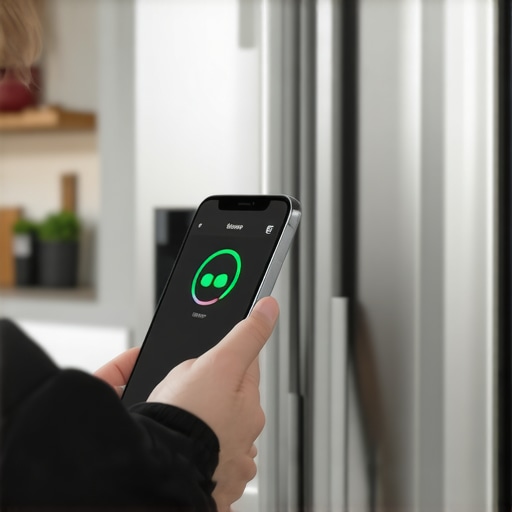
I used to think a sturdy screwdriver and a wrench were the only things I needed to keep my kitchen in check. But when I upgraded to a modern ecosystem, I realized that my most vital piece of equipment is actually a dedicated Wi-Fi analyzer app on my phone. If your signal is weak or congested, your appliance’s processor works overtime trying to maintain a handshake with the server, which can actually lead to premature board failure. You need to know how to keep your smart home hub from interfering with appliance signals to ensure that high-pitched hum doesn’t turn into a digital crash. I personally use a mesh network with a dedicated 2.4GHz band specifically for my gear, as this lower frequency penetrates cabinet walls much better than the faster 5GHz bands. It is the difference between a fridge that stays connected and one that constantly triggers ‘network error’ pings on your phone while you’re at the grocery store.
How do I keep my smart gear running like day one?
The secret isn’t in the manual; it’s in the parts the manufacturers hide behind plastic panels. For example, the secret to cleaning a front load washer’s hidden filter is something most people only discover after their laundry room floods. I make it a habit to drain and clean my pump filter every three months. This prevents hair, coins, and lint from stressing the drain motor. Similarly, your dishwasher has spray arms that collect calcium. You should learn how to clean the grime out of your dishwasher spray arms using a simple toothpick and a vinegar soak. According to technical reports from IEEE Spectrum, the precision of MEMS (Micro-Electro-Mechanical Systems) sensors used in 2025 appliances can drift if they are subjected to constant vibration or residue buildup, so physical cleanliness is directly tied to digital accuracy. If you don’t keep the sensors clear, the ‘smart’ part of your machine effectively becomes ‘blind.’
AI Will Soon Tell You When to Buy a New Filter
Looking ahead, the trend is moving away from manual schedules and toward predictive maintenance. By late 2025, we expect to see more future of home appliances trends where the machine analyzes its own power draw to tell you exactly when a bearing is starting to wear out before you even hear the squeak. We are already seeing this in how we update your smart fridge software without crashing the system; these updates often include sensor recalibrations that extend the life of the compressor. I believe we are entering an era where your house will be more like a self-healing organism than a collection of boxes. For now, the best thing you can do is link your smart appliances to a single voice assistant so you can receive maintenance alerts in real-time. My challenge to you: go find your washing machine’s drain filter tonight—it’s probably behind a small door on the bottom front—and clean it out. You’ll be shocked at what’s been slowing down your spin cycle.
What the User Manual Never Actually Told Me
After years of tinkering, I’ve realized that less is almost always more when it comes to high-efficiency home appliances. First, we are often conditioned to use giant scoops of soap, but that is the fastest way to kill a modern washer’s bearings through suds-locking. Second, your Wi-Fi isn’t just for flashy ‘smart’ features; it’s the vital lifeline for the software updates that prevent your internal sensors from drifting or ‘going blind’ over time. Finally, treat your machines like computers rather than cast-iron stoves; they are delicate instruments that thrive on precise leveling and regular filter purges rather than brute-force usage. These small shifts in mindset changed my relationship with my laundry room forever and saved me thousands in unnecessary service calls.
The Gear That Keeps My Kitchen Running
If you want to stay ahead of the curve and maintain your sanity, I highly recommend checking out the ultimate guide to smart home appliances for a modern living to see how these complex systems should ideally integrate. For physical maintenance, a simple 9-inch torpedo level is my best friend for checking vibration regularly. I also frequently revisit the list of top smart appliances for a seamless home experience in 2025 to see which manufacturers are actually prioritizing user-repairable filters over flashy but fragile touchscreens. Finally, for those focusing on the heart of the home, keep an eye on refrigerators in 2025 top features that transform your kitchen to ensure your next upgrade handles power fluctuations better than current models.
#IMAGE_PLACEHOLDER_E#
Stop the Shake and Start Enjoying Your Home
You don’t have to live with a house that rattles every Tuesday when the towels are in the wash. By taking twenty minutes to level those legs, clearing your filters, and respecting the software inside your gear, you can turn your utility room back into a place of quiet efficiency. Modern home appliances are designed to make our lives easier, but they require us to be just a little bit smarter in how we maintain them. Go check that drain filter tonight—your future self will thank you for the peace and quiet. Have you ever found a strange object in your washing machine’s drain filter that was causing a ruckus? Let me know in the comments below!