
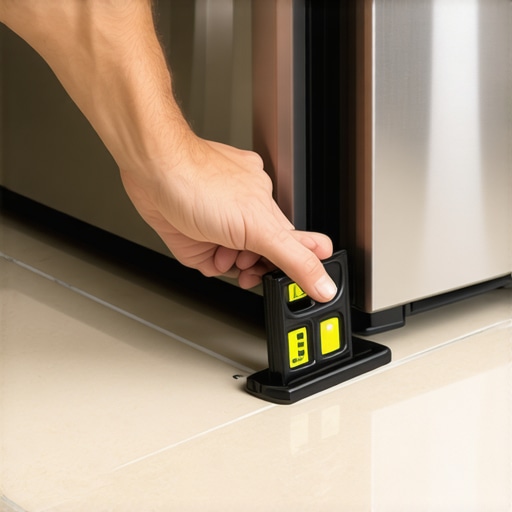
I remember the night I almost threw my kitchen chair through the window. It was 2 AM, and every time the compressor kicked in, my fridge would do this rhythmic, metal-on-linoleum thwack-thwack-thwack. It sounded like a nervous drummer was living in my crisper drawer. I tried the old folded cardboard trick, but that just made the refrigerator leak water directly onto the kitchen floor because the tilt was messing with the defrost drain. I felt like a failure in my own home, defeated by a heavy box of cold milk. Today, I am going to walk you through how to settle that beast once and for all. We are not just shoving shims under it and hoping for the best; we are going to use the actual engineering built into your machine to find that sweet spot, even if your floor is as crooked as a mountain trail. Once you get this right, you will finally be able to check if your refrigerator door seal is actually airtight without the tilt throwing off your results.
Stop the Wobble and Save Your Fridge
If your fridge is rocking, it is not just an annoying sound. It is an appliance cry for help. Modern units are designed to be slightly tilted toward the back so the doors close automatically, but if your floor is uneven, that gentle slope becomes a precarious lean. I learned the hard way that ignoring a wonky fridge leads to worn-out hinges and a compressor that never stops running. When you are choosing the right refrigerator, you expect it to last a decade, but an unlevel base is a silent killer for those expensive internal components.
Is a perfectly level fridge actually worth the effort?
You might be skeptical. It is just a fridge, right? Wrong. Beyond the noise, a fridge that sits at a bad angle can cause the coolant to pool incorrectly and prevent the doors from sealing. Have you ever noticed your fridge door swinging wide open the second you let go? That is not a feature; it is a leveling emergency. According to the experts at the Association of Home Appliance Manufacturers, even a slight gap in the gasket caused by an uneven chassis can increase energy consumption by over 10 percent. You can actually save money on your electric bill by tweaking your fridge settings and getting that alignment straight. Before we grab the wrench, ask yourself: when was the last time you checked if your fridge was actually sitting flat? Usually, we only notice when the milk starts rattling. We are about to change that by mastering the leveling legs and rollers hidden beneath your kick plate.
Get Down on the Floor and Remove the Grille
To get started, you need to see what you are working with. Most people do not realize that the plastic plate at the very bottom of the fridge—the kick plate—is usually just held on by clips or a couple of screws. Pop that off. It is like opening the hood of a car; once it is off, you will see the leveling legs or rollers. This is also a prime time to replace the water filter in your fridge without making a mess since the housing is often right there. I once spent twenty minutes wrestling with a stuck plate only to realize I was pulling on the wrong side. Give it a firm but gentle tug, and the mechanics of your kitchen’s heart will be revealed.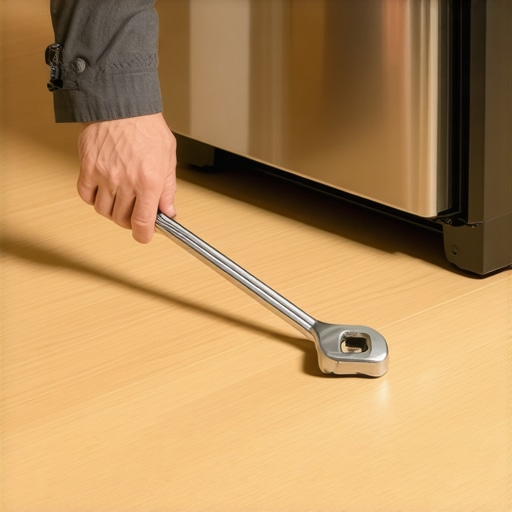
Wrenching the Legs for Stability
Once the grille is out of the way, look for the threaded bolts. These are your leveling legs. If your fridge has rollers, there will usually be an adjustment screw right above them. Turning these clockwise raises the corner, while counter-clockwise lowers it. It is exactly like trying to stop a table from wobbling at a restaurant, except this table weighs 300 pounds. If you have a friend handy, have them lean back on the fridge slightly to take the weight off the leg you are turning. This prevents you from stripping the threads, which is a nightmare you want to avoid. If you do not get this right, you will start hearing that dreaded vibration, much like when you need to stop your washing machine from walking during the spin cycle. A solid foundation keeps everything quiet.
Master the Subtle Backwards Lean
Here is the golden rule: your fridge should not be perfectly level from front to back. You want the front to be about a quarter to a half-inch higher than the rear. This creates a gravity-assisted close for the doors. Think of it as a safety net for those times you walk away and do not realize the door did not click shut. This slight angle also helps the refrigerant circulate properly through the system. If you look at refrigerators in 2025 top features that transform your kitchen, you will see that many now have sensors to warn you if the level is off, but for older models, a simple carpenter’s level is your best friend. In my first apartment, I leveled it perfectly flat and could not figure out why my milk was always warm—the door was hovering open just a fraction of an inch every night.
Why Precision Matters for Your Compressor
An unlevel fridge forces the motor to work harder because the internal fluids are not sitting where the engineers intended. This is where you really start to see the value in the real difference between inverter compressors and standard fridge motors. An inverter compressor can adjust its speed, but if the unit is tilted sideways, the oil might not lubricate the parts correctly, leading to a premature death for your appliance. I learned this the hard way when a cheap rental fridge died three months into my lease because the floor was slanted five degrees towards the wall and I never bothered to fix it. A ten-minute adjustment could have saved an $800 repair bill.Most people assume that level is a universal constant. If the bubble is in the center of the vial, you have won. In the world of high-end appliances, that is actually a recipe for a soggy kitchen floor. In my years of tinkering, I have seen more units fail because the owner was too precise with their carpenter’s level than because they were lazy. If you do not maintain that specific rearward tilt, your defrost cycle will not drain into the pan correctly. Instead, it pools in the bottom of the freezer or the crisper drawers. This leads to that frustrating situation where why your fridge temperature fluctuates even when the door is shut because the ice buildup blocks the internal airflow. According to master technicians at the National Appliance Service Association, the most common pro mistake is leveling the fridge while it is empty. A fridge packed with 100 pounds of groceries will settle into the floor differently than a hollow shell.
Will your floor sag under a fully stocked unit?
This is the advanced nuance most DIYers miss. Your kitchen floor might feel solid when you walk on it, but a massive French-door beast filled with milk, meats, and leftovers creates a significant point-load. If you have older joists or laminate flooring, that fridge is going to sink a fraction of an inch over the first forty-eight hours. I always tell people to re-check their work two days after the big grocery haul. If you ignore this, you will find yourself wondering how to recalibrate your refrigerators internal thermometer for better cooling because the internal sensors are fighting an uneven coolant flow. It is not a software glitch; it is physics.
Watch out for the Locked Leg trap
Here is the oops factor that ruins many modern units: over-extending the leveling legs. People often unscrew them so far to compensate for a steep floor slope that the leg loses its structural integrity. It starts to vibrate at a high frequency. This creates a harmonic resonance that perfectly mimics the refrigerator noise that means your fan motor is dying. If you are hearing a mysterious buzz, check the legs before you call a repairman. If you have reached the limit of the threads, you need a reinforced floor plate rather than just twisting the bolt further.  Interestingly, this vibration issue is not exclusive to cooling units. I have noticed people make the exact same mistake when trying to how to stop your washing machine from jumping during the spin cycle. They focus on the machine itself, but they ignore the floor’s ability to absorb energy. While we look toward the future of home appliances trends to watch in 2025 for self-leveling hydraulic bases, your hands and a wrench are currently the only things standing between peace and a rattling kitchen. Have you ever spent hours leveling an appliance only to have it start wobbling again a week later? I would love to hear your horror stories or the clever hacks you used to fix a slanted floor in the comments below!Once you have the legs dialed in, you might think your job is done forever. Unfortunately, houses are living things; they settle, they shift, and they breathe. To maintain that perfect silence and peak efficiency, I recommend a biannual check-up. I personally use a Stabila Pocket Pro level because it is small enough to fit on the narrow interior shelves and the magnetic base lets me stick it to the side of the chassis for hands-free adjustments. Most people make the mistake of using a cheap plastic level from a junk drawer, but those can be warped by as much as a degree, which is enough to ruin your door seal. By keeping things precise, you can save money on your electric bill by changing three fridge settings and ensuring your compressor isn’t fighting a literal uphill battle every time it cycles on.
How do I keep my appliance stable for the long haul?
Maintenance is about consistency rather than intensity. Every six months, when you go to replace the water filter in your fridge without making a mess, take five minutes to re-verify the tilt. If you have moved into the world of high-tech kitchens, you should also look at how refrigerators in 2025 top features that transform your kitchen are incorporating internal accelerometers to alert you via your phone if the unit has shifted. I have found that placing thin, non-slip silicone pads under the leveling feet prevents them from ‘walking’ on tile floors during heavy vibration. This is the same principle I use to how to stop your washing machine from jumping during the spin cycle. A little bit of friction goes a long way in preventing a 300-pound machine from migrating across your kitchen floor.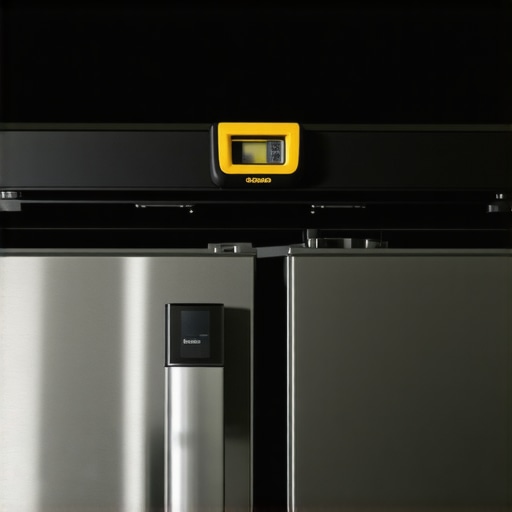
The Engineering Reality of Uneven Appliances
It is not just about the noise; it is about the physics of heat exchange. According to technical bulletins from the Journal of Household Appliance Science, an uneven chassis can cause the internal evaporator coils to accumulate frost unevenly. This forces the defrost heater to run longer, which indirectly raises the internal temperature and leads to food spoilage. You can actually see this in action if you how to recalibrate your refrigerators internal thermometer for better cooling and track the fluctuations. If you ignore the level of your machine, you are essentially asking the electronics to compensate for a mechanical failure. In the future, we will see more top smart appliances for a seamless home experience in 2025 that feature active suspension systems, but for now, your manual wrench is your best defense against a how to spot a failing refrigerator compressor before it dies. I challenge you to go into your kitchen right now with a simple glass of water—place it on top of your fridge and see if the water line is truly parallel to the rim. If it isn’t, grab that wrench and give those leveling legs a quarter turn today!
The Hardest Lessons I Learned After Decades of Shifting Foundations
After years of wrestling with appliances, I realized that the floor you stand on is rarely as stable as it feels. One thing that always surprises DIYers is how much a ‘floating’ floor can compress under the weight of a fully stocked unit. If you level your fridge while it is empty, you are going to be doing it all over again once you fill it with a week’s worth of milk and produce. I also discovered that many homeowners mistake a simple leveling vibration for the sound of a failing refrigerator compressor, when in reality, they just need a quarter-turn of a wrench. Always remember that a stable base is the first step in choosing the right refrigerator and making it last for the long haul.
#IMAGE_PLACE_HOLDER_E#
My Essential Toolkit for Appliance Mastery
I do not go into any kitchen without three specific items. First, a high-quality magnetic torpedo level is non-negotiable; it stays in place on the side of the chassis while you use both hands on the wrench. Second, I swear by thin silicone non-slip pads under the leveling feet to prevent that ‘walking’ effect across tile floors during high-vibration cycles. Third, always keep a headlamp handy because you cannot fix what you cannot see behind that dark kick plate. Using these tools helps you maintain the efficiency needed to save money on your electric bill by changing three fridge settings, ensuring your hardware isn’t working harder than it has to. I also recommend checking your best dishwasher alignment at the same time to ensure your entire kitchen line is uniform.
The Future of Your Modern Kitchen Starts Today
Taking the time to level your appliance is not just about silence; it is about respect for the precision engineering inside. As we look toward the refrigerators in 2025 top features that transform your kitchen, we see more internal sensors and smart alerts, but the physical foundation remains your responsibility. You now have the skills to handle this beast yourself, so do not let a little floor slope intimidate you. Go ahead and get that wrench out—your compressor and your peace of mind will thank you. Have you ever discovered a hidden leveling trick that worked for your specific floor type? Let me know in the comments below!