
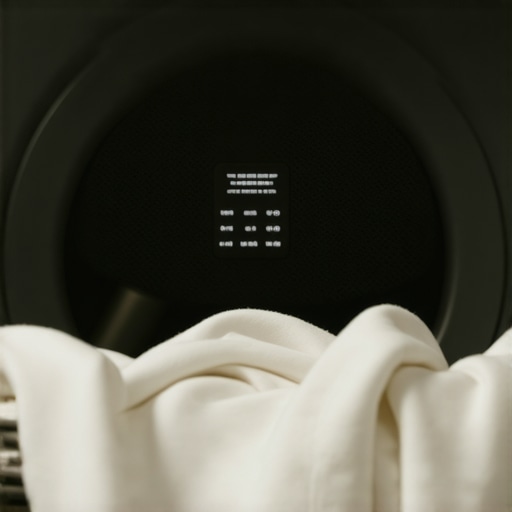
I stood there staring at what used to be my favorite navy blue wool sweater. It wasn’t navy anymore; it was a shriveled, felted square that wouldn’t fit a house cat, let alone a grown man. I’d done what my dad taught me: “Set it for 60 minutes and walk away.” That was my first big mistake. I assumed the machine was just a dumb box of hot air. But modern laundry is changing, and if you’re still relying on that ticking dial, you’re literally burning money. Today, I’m going to show you how to trust the hidden tech inside your machine so you never have to mourn a piece of clothing again.
The Day I Realized My Dryer Was Smarter Than Me
For years, I treated my dryer like a microwave. I’d guess the time, hit start, and hope for the best. Usually, I’d come back to clothes that were either damp or—more often—bone-dry and statically charged enough to power a small city. This constant heat cycling is a nightmare for fabrics. When I finally upgraded to a unit with a dedicated moisture sensor, I was skeptical. I thought it was just another gimmick to inflate the price of smart washing machines and dryers. I was wrong. The secret isn’t in how much heat you throw at the problem, but in how the machine “feels” the air.
Is this moisture sensor actually worth the hype?
You might be worried that a sensor will stop the load too early, leaving you with soggy jeans. I get it. I used to think the “Sensing” light was just a fancy way of saying the machine was taking a nap. But here’s the reality: these sensors measure the conductivity of the air or the electrical resistance of the clothes themselves. It’s remarkably precise. According to research from the U.S. Department of Energy, using a moisture sensor instead of a timed dry can save you up to 15% in energy costs per year. That’s real money back in your pocket.
Stop Using the Timer and Let the Machine Work
We often talk about energy-saving settings for our laundry appliances, but the dryer is the real energy hog. The promise is simple: if you stop treating laundry like a timed chore and start treating it like a data-driven process, your clothes will last twice as long. Have you ever pulled out a load only to find the waistbands are still wet while the legs are scorching? That’s usually because we haven’t learned how to “talk” to the sensor properly. Before we dive into the calibration steps, tell me—have you ever had a dryer “finish” only to find a pile of damp towels? It’s frustrating, right? We’re going to fix that.
Strip Away the Waxy Film Blocking Your Sensors
I learned the hard way that ‘clean’ is a relative term. Last summer, I was getting ready for a wedding and my favorite shirt came out of the dryer feeling like a damp dishcloth even though the machine insisted it was done. I realized that my addiction to dryer sheets had backfired. Those sheets coat your clothes in a fine layer of wax to make them soft, but that wax also migrates to the sensor bars. It’s like trying to read a book while wearing sunglasses covered in butter; the machine simply cannot ‘feel’ the moisture anymore. To fix this, take a cotton swab dipped in rubbing alcohol and rub those two metal strips inside the drum. You’ll be shocked at the gray residue that comes off. This is a critical part of maintenance, much like knowing the best way to clean the lint trap in a smart dryer to ensure the air actually moves. 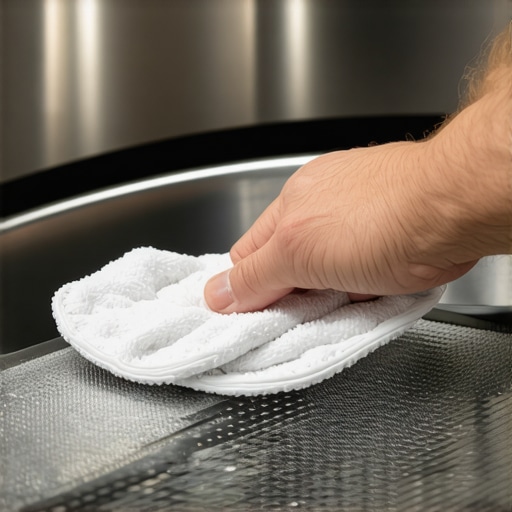
Stop Mixing Heavy Denim with Thin Synthetics
One of the biggest mistakes we make is the ‘all-in’ approach. If you throw a pair of heavy work jeans in with three thin polyester gym shirts, the dryer is going to fail you. The sensors are usually located near the front of the drum. As the load tumbles, those light synthetic shirts will dry in ten minutes and slap against the sensor, telling the computer the job is done. Meanwhile, your jeans are still holding a quart of water in the pockets. It is the same logic as washing machines that save water; the system works best when the load is uniform. Keep your fabrics similar in weight so the sensor gets an honest reading of the entire batch.
Give Your Clothes Room to Breathe and Tumble
Imagine trying to dry yourself with a towel while standing in a crowded elevator; you need elbow room to get the job done. If you pack the drum to the top, the wet air has nowhere to go. It just hangs around the clothes, creating a humid microclimate that confuses the sensors. If you have been struggling with how to fix a washing machine that is stuck on the sensing cycle, you know how frustrating it is when tech gets confused by a physical overload. The same applies here. A dryer should never be more than two-thirds full. This allows the air to circulate and the sensor to make frequent, accurate contact with every item.
The Secret Reason Your Bedding Always Bunches
We have all dealt with the ‘burrito effect’ where your duvet cover swallows all your pillowcases into a damp ball. When this happens, the outside of the ball feels dry to the sensor, and the machine shuts off, leaving a soggy mess inside. The trick? Use wool dryer balls or even a couple of clean tennis balls. They act like little hammers, constantly punching the fabric apart so the sensor can do its job. Using these is one of the the best energy saving settings you can manually implement because it cuts drying time by 20% easily.Beyond the dryer, the biggest lie we’ve been sold is that cold water is the universal answer to eco-friendly laundry. While it’s great for your electric bill and delicate fabrics, it can be a slow death sentence for your machine’s internals. Most users don’t realize that modern detergents, especially the concentrated pods we love, require specific temperatures to fully activate and dissolve. If you only ever run cold cycles, you’re inadvertently creating a breeding ground for ‘scrud’—a nasty, waxy buildup of undissolved soap, minerals, and organic matter. This residue is the real culprit when you notice washing machine streaks on dark clothes. To keep the system clean, you must run at least one hot cycle a week to ‘purge’ the internal plumbing. It’s a nuance that even industry experts emphasize for maintaining any high-performance appliance.
Stop Overdosing Your Laundry With Too Much Soap
We have been conditioned to believe that more bubbles equal more clean. In the world of high-efficiency (HE) machines, this is the quickest way to trigger a service call. Modern units use remarkably little water; adding too much detergent creates a ‘suds cushion’ that actually prevents clothes from rubbing against each other, which is the mechanical action required to lift stains. Even worse, the excess foam coats the very sensors that determine water levels and cycle times, leading to a ‘suds lock’ error.  According to the Association of Home Appliance Manufacturers (AHAM), using more than two tablespoons of HE detergent is usually overkill for a standard load. If you’ve ever wondered why your high-efficiency washer takes so long to finish a cycle, it’s likely because the machine is stuck in an automated rinse-and-wait pattern trying to clear out the soap you over-poured.
Why do modern high-efficiency cycles take forever to finish?
It feels counterintuitive that a ‘smart’ machine takes three times longer than a 1990s model. The secret lies in the chemistry and physics of low-water washing. Because these units use roughly 70% less water, they require more time for the enzymes in the detergent to chemically break down soil and for the drum to move the fabric through the limited moisture. It’s a deliberate trade-off: less water and heat, but more mechanical time. This same efficiency logic applies across the kitchen; for instance, the truth about the eco mode on your new dishwasher is that it runs longer at lower temperatures to save energy without sacrificing hygiene. If you try to ‘hack’ the system by manually forcing higher heat settings for everything, you risk needing to recalibrate a smart oven thermostat or other heat-sensitive sensors that expect specific factory parameters. Modern tech isn’t broken; it just operates on a different timeline than our old ‘dumb’ appliances. Have you ever fallen into the ‘more soap is better’ trap or had a machine die from a ‘cold wash only’ diet? Let me know in the comments.
The Two Tools Every Smart Home Owner Needs
I used to think that ‘smart’ meant ‘hands-off.’ I was wrong. The more complex the machine, the more it needs a human who knows how to listen to its signals. I have started keeping a small digital multimeter in my kitchen junk drawer. If a sensor fails, like the one in a fridge that tells the compressor to kick on, a quick continuity test can save you a $400 service call. It sounds intimidating, but it is just about following the wire. Beyond hardware, the best ‘tool’ I use is a simple monthly calendar alert. I treat my appliances like a high-performance car. Every thirty days, I check the gaskets and purge the systems. If you are not sure where to start, looking into the secret to cleaning a front load washer’s hidden filter is the best first step. Most people do not even know that filter exists until their laundry room is flooded. 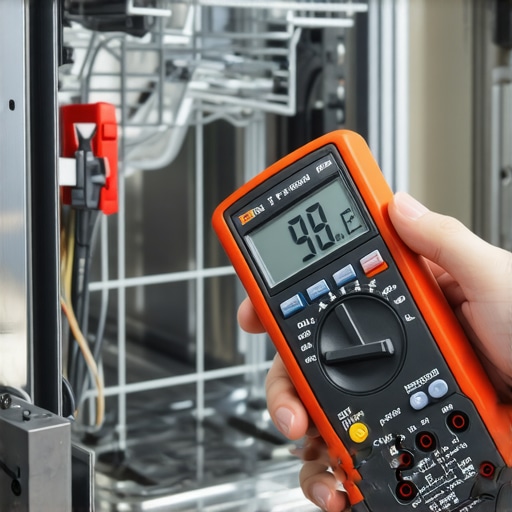
How do I keep my high-end appliances alive for the long haul?
Maintenance is not about fixing things when they break; it is about preventing the ‘wear and tear’ that the software cannot see. For my refrigerator, this means pulling it out once a year to vacuum the coils. Dust acts like a thick wool blanket for your fridge, forcing the motor to work twice as hard. When the motor overworks, it generates heat, which is the enemy of electronics. I have seen countless people search for how to spot a failing refrigerator compressor before it dies, and 90% of the time, the root cause was just a layer of cat hair on the coils. For the internal systems, I strictly follow the manual’s schedule for filtration. Learning how to replace the water filter in your fridge without making a mess is a life skill that protects your ice maker from mineral scale. According to the Whirlpool Technical Service Manuals for 6th Sense technology, even a 2-ohm variance in sensor resistance—often caused by simple dirt or scale—can throw off an entire cooling cycle.
Future Diagnostics Are Going Proactive
We are entering an era where your machine will likely tell you what is wrong before you notice a symptom. In my experience with top smart appliances for a seamless home experience in 2025, we are seeing AI that monitors the sound of the motor to predict bearing failure. It is fascinating and slightly eerie. As I track the future of home appliances and trends to watch in 2025, it is clear that local repairability is going to be the new luxury. If you can’t fix the software, you can’t fix the machine. This is why I always recommend keeping your firmware updated. If you are struggling with a glitchy interface, check out how to fix a smart fridge camera that won’t show the interior; often, a simple software patch solves what looks like a hardware death. My challenge to you: Go grab a cotton swab and rubbing alcohol today and clean those dryer sensor bars I mentioned earlier. It takes two minutes, costs nothing, and might just save your next load of laundry from a damp disaster.
Lessons That Saved My Appliances and My Sanity
After years of trial and error, I’ve realized that the smartest part of a home isn’t the Wi-Fi connection—it’s the person using the machine. First, cleaning is non-negotiable. Whether it is the sensor bars in your dryer or the hidden filters in your dishwasher, physical grime will always outsmart digital code. Second, less is almost always more. We live in an era where detergents and energy are concentrated; our old habits of over-pouring soap are the leading cause of appliance death. Finally, do not ignore the updates. A software patch can be just as vital as a physical repair when it comes to following the ultimate guide to smart home appliances for a modern living.
The Pro Toolbox I Use Every Month
You do not need a degree in engineering to keep things running smoothly. I trust a few simple items: a high-quality microfiber cloth for those delicate touchscreens, rubbing alcohol for cleaning metal sensor strips, and a smartphone app to track maintenance schedules. I also highly recommend keeping an eye on the future of home appliances and trends to watch in 2025 so you know when a repair is worth the investment versus when tech is simply outdated. These tools are not just about fixing things; they are about maintaining the top smart appliances for a seamless home experience in 2025.
Reclaim Your Time with Tech That Actually Works
Modern laundry and kitchen tech is not meant to be a mystery. Once you stop fighting the sensors and start working with them, you will find you have more time for the things that actually matter. It is about moving from a reactive mindset—waiting for things to break—to a proactive one where you are in control. Do not be afraid to dive into the settings and learn how your specific machines think. Have you ever discovered a hidden maintenance trick that completely changed how you use your laundry room? Let me know in the comments below!