
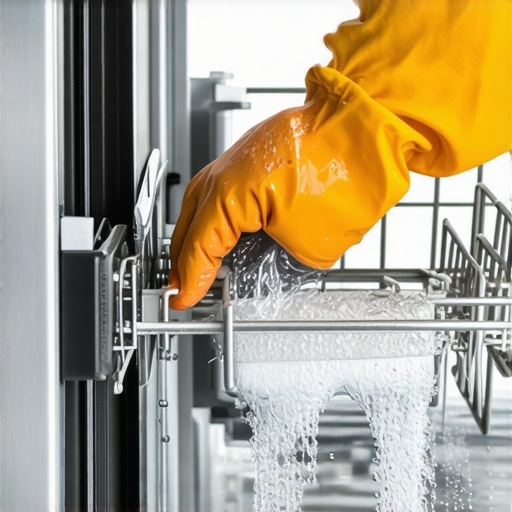
The smell hit me first—that swampy, metallic odor that tells you exactly one thing: your dishwasher didn’t finish its job. I remember opening my door last Tuesday, expecting the steam of a finished cycle, but instead, I was greeted by a murky, gray lagoon sitting right where the clean floor of the machine should be. It’s a gut-punch moment. You start thinking about expensive repair bills or, worse, having to hand-wash every fork for the next week.
Stop Before You Call an Overpriced Repair Tech
Believe me, I know the panic. A few years ago, I actually went out and bought a replacement drain pump the second I saw standing water, convinced the motor had fried. I spent eighty bucks and three hours sweating under the sink, only to realize the “broken” pump was perfectly fine—there was just a single, stubborn popcorn kernel wedged in the check valve. Talk about a blow to the ego. Today, we’re going to walk through the exact steps to clear that water without spending a dime on parts you might not even need. We’ll look at why your dishwasher bottom is full of standing water and how to kick that drainage system back into gear. I remember the first time I faced this. I spent more time Googling local repair shops than actually looking inside the machine. My neighbor saw me dragging my toolbox out to the driveway and laughed. “Check the hose, kid,” he said. Turns out, a tiny piece of a broken glass had made its way into the drain line. It was a five-minute fix that saved me a $150 service call.
Is My Dishwasher Actually a Lemon?
It’s easy to feel like modern machines are just built to fail. You might be wondering if these high-tech units are actually worth the headache or if you just bought a shiny piece of junk. According to data from Consumer Reports, a significant portion of appliance “breakdowns” are actually just maintenance issues that homeowners can solve themselves. While some innovative dishwashers with AI technology can alert you to these issues, most of us are stuck playing detective. Have you ever opened your machine only to find a mini-lake at the bottom? It’s more common than you think.
The Dirty Truth About That Hidden Filter
The first place most people go wrong is ignoring the filter. It sounds simple, right? But manufacturers love to hide these things. I used to think the “self-cleaning” label meant I never had to touch the guts of the machine. I was wrong. If you haven’t learned how to clean the hidden filter in your energy efficient dishwasher, that’s likely where your problem started. Over time, a slurry of labels, grease, and bits of food creates a waterproof seal that even the strongest pump can’t push through. It’s gross, it’s slimy, but cleaning it is the fastest way to get back to a dry tub. You might also want to check out how to fix a dishwasher that wont drain completely if the problem persists after a good scrubbing. I’ve found that even the best quiet dishwashers for open-concept living aren’t immune to a stray piece of plastic wrap or a buildup of hard water minerals. If you’re dealing with a dishwasher making a grinding noise alongside the standing water, you might have something more solid stuck in the impeller, but don’t lose heart—we can usually fish that out too. Let’s roll up our sleeves and get that water moving.
Look at Your Garbage Disposal Before Touching the Dishwasher
It might seem unrelated, but your dishwasher and your garbage disposal are essentially roommates that share the same plumbing ‘exit.’ If your disposal is clogged with potato peels or pasta, the dishwasher literally has nowhere to send its dirty water. I learned this the hard way during a Thanksgiving cleanup. I thought the machine had finally died, but after I spent five minutes using the best way to clean a stinky garbage disposal using kitchen staples, the dishwasher drained perfectly. Always run your disposal with plenty of cold water before you start a cycle to ensure the path is clear.
Pop the Cap on Your Air Gap
If you have a small chrome cylinder sitting on your sink deck, that is your air gap. Its job is to prevent dirty sink water from siphoning back into your clean machine. I once spent half an hour bailing water with a coffee mug because I forgot the simplest thing: my kids had shoved a plastic straw down the drain, and it was wedged perfectly in the air gap. It looked like a tiny, neon green barricade when I finally popped the chrome cap off. Once I pulled it out with some needle-nose pliers, the water vanished instantly. If you find that the filter is clear but you are wondering why your dishwasher still has standing water in the filter area, the air gap is the most likely culprit. 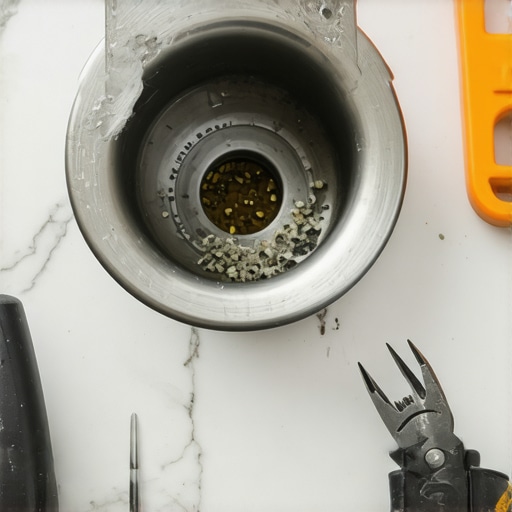
Straighten Out Your Drain Hose
Think of your drain hose like a garden hose; if there is a kink, the flow stops. These hoses are often made of flexible plastic that can soften when hot water runs through them, making them prone to sagging or bending if they aren’t secured properly. I’ve seen cases where someone pushed a heavy pot into the cabinet under the sink and accidentally crushed the hose against the back wall. Take a flashlight and look under your sink. You want to see a ‘high loop’ where the hose reaches up to the underside of the counter before heading to the drain. This prevents backflow. If you are struggling with a persistent clog, you should also know how to fix a dishwasher that wont drain completely by checking the connection point where the hose meets the sink tailpiece.
Check the Pump Impeller for Shards
If you have cleared the filter and the hose but you still hear a weird noise, the problem is deeper. When a dishwasher is suddenly making a grinding sound, it’s usually the impeller—the little fan that pushes water—trying to chew on something it can’t handle. I once found a tiny piece of an acorn squash skin wrapped around the shaft. It wasn’t much, but it was enough to seize the motor. You’ll need to remove the filter assembly and possibly a small plastic cover held by a single screw to reach it. Use a pair of tweezers; don’t use your fingers, because broken glass loves to hide in there. Even high-end dishwashers can suffer from this if a glass breaks during the cycle. While you are in there, you might also find out how to get your dishwasher to finally dry your plastic tubs by ensuring the heating element isn’t being blocked by debris.But even with a clean heating element and a clear impeller, I’ve seen perfectly good machines get stuck in a drainage loop because of one thing: chemistry. Everyone tells you that if your dishes aren’t getting clean, you should just double up on the detergent. In my experience, that is the fastest way to kill your pump. Modern high-efficiency machines use so little water that excess soap creates a ‘suds lock.’ It’s a literal wall of foam that blocks the pressure sensors, making the machine think it’s still full of water even when it’s empty. I’ve seen people throw away perfectly good units because they didn’t realize why your washer doesnt need a whole cup of detergent to get clothes clean applies just as much to your kitchen as it does to your laundry room. If you have soft water, you actually need even less than the manufacturer recommends. #IMAGE_PLACE_HOLDER_C#
The Suds Trap Most Homeowners Fall Into
This isn’t just about waste; it’s about the physics of drainage. According to a technical report from the Association of Home Appliance Manufacturers (AHAM), excess detergent residue can actually coat the internal sensors, leading to ‘phantom clogs.’ When these sensors get slimy or coated in a film of un-rinsed soap, the AI logic in innovative dishwashers with AI technology starts to panic. It throws error codes that look like a mechanical hardware failure, when in reality, it just can’t ‘see’ through the film on its own sensors. If you’ve ever noticed a white, chalky residue or a slippery feel on your clean plates, you’re likely over-soaping and setting yourself up for a drainage disaster.
Why does my machine still show an error after I’ve cleared the hose?
This is the advanced level of appliance troubleshooting that the manuals rarely cover. Often, the software has registered a ‘critical drain failure’ and won’t reset even if you’ve cleared the physical obstruction like a champion. You might find that why your smart home app cant find your dishwasher or why it keeps pinging your phone with drainage alerts is simply a matter of the machine’s digital memory. You often need to perform a hard reset—unplugging the unit or flipping the circuit breaker for ten full minutes—to clear those stubborn logic traps. This allows the capacitors to discharge and the control board to re-evaluate the sensor readings from scratch.
Trust the Cold Water Truth
Another common belief is that you must always use the ‘Intense’ or ‘Sanitize’ settings to prevent fatty clogs from forming in the line. While heat is excellent for melting grease, constantly running on maximum-heat cycles can actually degrade the rubber seals and gaskets significantly faster than necessary. I actually recommend using the truth about eco mode on modern dishwashers to your advantage; these cycles are specifically designed to maximize soak time. This enzymatic action breaks down proteins far better than a high-pressure blast of boiling water ever could. If you’re looking for washing machines that save water expert advice for 2025 suggests that the industry is moving toward these longer, lower-energy cycles because they are actually gentler on the appliance’s internal plumbing. Have you ever fallen into the ‘more soap is better’ trap only to find a kitchen full of bubbles? Let me know in the comments below, because I’ve definitely been there!I’m a firm believer that every homeowner needs a basic wet/dry vacuum in their utility closet. When you’re staring at a gallon of gray water, a shop vac is the difference between a ten-second cleanup and a back-breaking hour of scooping. I personally use mine for more than just bailing; it’s my secret weapon for reverse-flushing. If you carefully blow air backwards through the drain hose while the machine is empty, you can often dislodge stubborn grease plugs that the pump simply isn’t strong enough to push out. This proactive approach is a cornerstone of smart appliances revolution how to choose the best dishwasher that actually lasts. 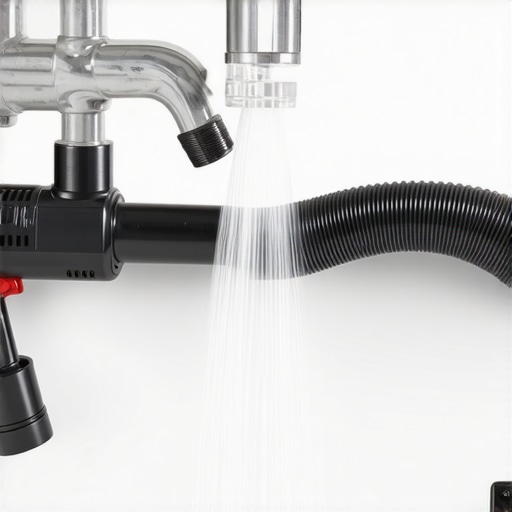
How do I maintain my kitchen appliances over time?
Longevity isn’t just about cleaning filters; it’s about digital health too. I’ve found that many ‘drainage errors’ are actually software glitches. You should regularly check how to update the firmware on your smart kitchen appliances to ensure the latest sensor logic is installed. According to research published in the International Journal of Sustainable Engineering, proactive maintenance like descaling and firmware updates can increase the service life of major appliances by up to 30%. It’s not just the dishwasher, either; I often find that people forget things like the secret drain filter at the bottom of your fridge you never knew existed, which can lead to similar swampy odors and floor leaks.
Predictive Maintenance is the Real Future
Looking ahead, the trend is moving toward internal diagnostic systems that won’t just tell you there is a leak, but will tell you exactly which valve is failing before the water even hits your floor. We are seeing this in the future of home appliances trends to watch in 2025, where AI will manage everything from motor load to water hardness adjustments in real-time. For now, you can get a head start by using the best smart plugs for monitoring appliance energy use. A sudden spike in energy during the drain cycle is a clear sign that your pump is struggling and needs a cleaning before it burns out completely. Try this right now: If your machine is acting up, perform a hard reset by flipping the breaker for ten minutes, then run an empty cycle with a high-quality descaler to clear out the internal pressure sensors.
Hard Lessons from My Kitchen Plumbing Disasters
After years of tinkering, I’ve realized that the most expensive repairs usually start with the smallest oversights. One major takeaway is that your machine’s ‘brain’ is often more sensitive than its ‘muscles.’ I spent hours replacing hardware when a simple ten-minute power cycle would have cleared the error. Also, never underestimate the power of a single lemon seed or a tiny shard of glass; they are the ultimate saboteurs of a clean drain. Finally, remember that high efficiency doesn’t mean low maintenance. These machines need you to be their partner, not just an operator.
The Survival Kit for a Smooth-Running Kitchen
If you want to avoid the panic of seeing your dishwasher bottom is full of standing water again, I recommend keeping a few things handy. First, a reliable wet/dry vacuum is non-negotiable for quick water removal. Second, I swear by using energy-monitoring smart plugs to catch pump struggles before they become floods. For deeper reading on system longevity, check out expert guidance on modern efficiency. Keeping these resources in your back pocket turns you from a frustrated owner into a savvy home manager.
#IMAGE_PLACE_HOLDER_E#
Take Charge of Your Home Tech
Maintenance might feel like a chore, but there is a real sense of empowerment in fixing a problem yourself. Whether you are navigating the smart appliance revolution or just trying to get through a Tuesday night of dishes, you have the tools to keep things running. Don’t forget to keep your firmware current to avoid those pesky digital glitches. You’ve got this! Have you ever found a weird object like a cherry pit or a piece of plastic blocking your drain? Let me know in the comments below!