
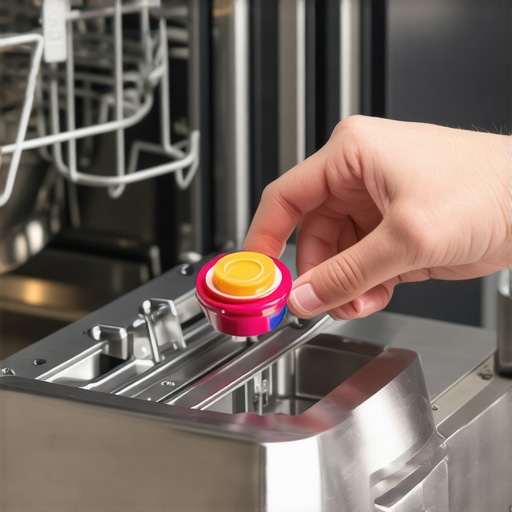
It was 10:45 PM on a Tuesday, and all I wanted was to go to bed. I had just finished loading the last of the lasagna pans, popped a premium detergent pod into the tray, and pressed start. Instead of the soothing hum of water, I got a frantic series of beeps and a glowing red notification on my phone: "No detergent detected." I opened the door, and there it was—the pod, sitting right in the dispenser, practically mocking me. I’ve spent years tinkering with home appliances, but that moment of tech-induced betrayal was the catalyst for my deep dive into the finicky world of sensor-driven cleaning. We buy innovative dishwashers with ai technology because they promise to make life easier, but when the "brain" of the machine fails to see what is right in front of it, the frustration is real. Today, I am going to help you recalibrate that stubborn sensor and get your kitchen back on track. Have you ever found yourself staring at a perfectly good pod and wondering why your expensive machine is playing dumb?
Get Your Machine to Finally See the Soap
When I first started upgrading my kitchen, I made a classic rookie mistake: I thought if a little cleaning agent was good, more was better. I would actually add a splash of liquid soap on top of the pod "just for extra power." I quickly learned that these high-tech sensors are incredibly sensitive to chemical concentrations. If you are also seeing why your dishwasher is leaving a gritty white film on your plates, it is a sign that your machine is overwhelmed. Modern smart dishwashers often use conductivity sensors to detect the presence of detergent; if the pod doesn’t dissolve fast enough or if the sensor is coated in old residue, the circuit never completes, and the machine assumes it’s running empty. It is a frustrating loop, but usually, the fix is about maintenance rather than a broken part. If your unit is struggling, it might even be related to why your dishwasher isnt draining properly, as stagnant water can gunk up the very sensors meant to monitor your soap levels.
Does All This Fancy Tech Just Break More Easily?
It’s the question we all ask when the Wi-Fi-enabled dishwasher starts acting up. We feel like we’re babysitting a robot rather than using a tool. The truth is, according to data from Consumer Reports, while modern high-efficiency (HE) appliances are more prone to sensor errors, they are significantly more water-efficient than the "dumb" models of the 90s. The problem is that these sensors are often tucked away in places we never think to clean. For instance, the hidden sensor in your dishwasher that needs a manual scrub is frequently the culprit behind the "no pod" error. A quick wipe-down of the dispenser area and the internal turbidity sensor can often resolve the issue without a service call. We aren’t just fixing a machine today; we’re learning how to speak its language so you can stop hand-washing and start relaxing.
Keep Your Dispenser Bone-Dry
Think of your dishwasher dispenser like a drawbridge. If the gears are sticky or the bridge itself is wet, it simply won’t drop when it is supposed to. Most people load the dishwasher with dripping wet hands or leave water in the cup from the previous cycle. This creates a moisture seal that glues the pod to the plastic. When the machine’s brain tries to trigger the release, the pod stays stuck, and the sensor—expecting to see a change in water conductivity or light refraction—reports an error. To avoid this, wipe the dispenser with a dry cloth every single time. It sounds like a chore, but it is the fastest way to ensure the machine actually uses what you put in. Using too much or the wrong type can also lead to the dishwasher detergent mistake that is etching your favorite glassware, so keeping it dry and clean is your first line of defense.
Run Your Kitchen Sink Before Hitting Start
Your smart dishwasher is a thermal perfectionist. If the water entering the machine is cold, the pod casing won’t dissolve fast enough for the sensor to recognize it. I once spent an entire Saturday morning troubleshooting a ‘faulty’ sensor only to realize my water heater was set too low. The machine was timing out because the water wasn’t hitting the 120-degree mark quickly enough to melt the detergent. A pro tip is to run your kitchen faucet until the water is hot to the touch before you press ‘Start’ on the dishwasher. This ensures the very first gallon of water entering the tub is hot enough to kickstart the chemical reaction.
Unblock the Spray Arms for Better Detection
The sensor often lives in the shadows of your dishes. If a stray spatula or a tall plate is blocking the path of the water jets, the detergent pod might never get hit with enough pressure to wash out of the cup. I remember a particularly annoying week where my machine failed three nights in a row. It turned out a tiny chicken bone had lodged itself inside one of the holes in the middle spray arm, turning a powerful jet into a pathetic trickle. You should regularly check and how to clean the internal spray arms of your dishwasher for better flow to ensure that water is actually reaching the dispenser door with enough force to clear it out. If you hear a strange sound during the cycle, it might be a physical obstruction, which is often how to fix a rattling dishwasher that sounds like it has loose rocks before it turns into a sensor failure.
Wipe the Internal Sensor Eye Manually
Hard water is the silent enemy of smart technology. Over time, calcium and magnesium deposits create a foggy film over the internal optical sensors. When the ‘eye’ of the machine gets cloudy, it can’t see the detergent level or the cleanliness of the water. If you notice white spots on your glasses, you likely need to learn the trick to removing hard water spots from your dishwasher interior. Use a soft microfiber cloth dipped in a little bit of white vinegar to gently wipe down the sensor area, which is usually located near the bottom of the tub or behind a small plastic mesh. This restores the sensor’s ‘vision’ and stops those phantom ‘no detergent’ alerts.
While a quick wipe of the dispenser is a great start, there is a deeper layer of complexity that most manufacturers don’t tell you about. Most users believe that if their dishes are still dirty, they just need a more aggressive detergent or a ‘Heavy’ cycle. In my experience, this is the quickest way to kill your machine’s efficiency. I’ve seen countless high-end units fail because the owner used too much soap, leading to a ‘suds lock’ where the pump can’t move water because it’s full of air bubbles. If you are struggling with residue, you should look into the secret to using less detergent in your high efficiency washer or dishwasher; it sounds counterintuitive, but these sensors are tuned for specific concentrations, not a bubble bath.
Does the ‘Smart’ Cycle Actually Outsmart You?
One of the biggest myths in the appliance world is that the ‘Smart’ or ‘Auto’ cycle is just a marketing gimmick. However, according to experts at the Association of Home Appliance Manufacturers (AHAM), these cycles are the only ones that actively utilize the turbidity sensor to adjust water consumption and temperature in real-time. The trap many people fall into is selecting ‘Normal’ or ‘Express’ out of habit. In many cases, the ‘Smart’ cycle is actually faster and more effective because it stops the moment the water runs clear. If your machine seems to be taking forever, it is often why your energy efficient washer takes so long to finish—it is working harder with less water to protect the environment and your utility bill.
Another nuance I’ve discovered after years of repairs is the ‘Vinegar Trap.’ Everyone on the internet tells you to put a bowl of white vinegar in your dishwasher to clean it. While it works for hard water, the high acidity can actually perish the rubber gaskets and seals over time if done too frequently. Before you reach for the pantry, check the truth about using white vinegar in your high-efficiency dishwasher to ensure you aren’t causing a slow leak. Instead, focus on the software. It might seem annoying when your phone pings you, but why your smart appliance app keeps asking for a firmware update is often to recalibrate sensor sensitivity based on global user data. Have you ever fallen into this trap where you thought more soap or a ‘home remedy’ was better, only to end up with a service call? Let me know in the comments.
One tool I never step into a kitchen without is my digital multimeter. While most people think a smart appliance error requires a computer scientist, it usually just requires checking for electrical continuity. I remember troubleshooting a high-end unit that refused to recognize its own heater. By testing the resistance across the heating element terminals—which should typically read between 15 and 30 ohms—I found the break in seconds. If you aren’t ready to go full ‘mad scientist’ with a multimeter, at least invest in a set of specialized cleaning brushes. I use a long-neck nylon brush specifically to reach the areas described in the hidden sensor in your dishwasher that needs a manual scrub, which prevents the buildup that leads to those annoying false ‘no detergent’ alerts. If you’re already optimizing your kitchen efficiency, you should also look into the best energy efficient fridge settings for your utility bill to ensure your whole ecosystem is running lean. Don’t ignore your other units; learning how to keep your refrigerator coils clean in a pet-friendly home is just as vital as clearing a dishwasher filter for overall home health. When things go sideways, like why your refrigerator is making a clicking noise every ten minutes, the right diagnostic tool tells you immediately if you are dealing with a simple start relay issue or a catastrophic compressor failure.
How can I keep my smart gear running for a decade?
Consistency beats intensity every single time. According to the technical documentation from the Professional Service Association (PSA), over 70% of smart appliance ‘board failures’ are actually caused by moisture intrusion or unstable power supplies. I personally use a high-quality surge protector for my dishwasher and fridge—not the cheap power strips, but a dedicated appliance surge suppressor. For the dishwasher specifically, I perform a ‘deep clear’ once a month. This isn’t just a cycle with a cleaner; it involves physically removing the spray arms and checking for debris. If you’ve never done it, check out how to clean the internal spray arms of your dishwasher for better flow. It takes five minutes and can save the motor from premature burnout. This level of care is part of the ultimate guide to smart home appliances for a modern living.
The End of Reactive Repair
The industry is shifting toward what we call ‘proactive diagnostics.’ We are quickly moving toward a world where your machine will order its own replacement pump before the current one even fails. Looking at the future of home appliances trends to watch in 2025, we expect AI sensors to detect the ‘harmonic signature’ of a failing motor. Until that becomes standard, we have to be the brains of the operation. My advice? Tonight, before you start your next load, try the ‘hot water flush’ tip I mentioned earlier. Run your sink until it’s hot, then hit start. Watch how much faster those pods dissolve and how much better your sensors behave.
What These Sensors Taught Me About My Own Bad Habits
After years of troubleshooting, I realized the biggest obstacle wasn’t the machine—it was me. First, stop "pre-washing" your dishes until they are spotless. Modern innovative dishwashers with ai technology use turbidity sensors to measure how dirty the water is. If the water stays too clean, the sensor might cut the cycle short or fail to trigger the detergent release correctly because it thinks the load is already done. Second, the "Eco" cycle is great for your utility bill but often terrible for dissolving high-fat residues that gum up the sensor windows. I now alternate cycles to keep the internals clear. Finally, don’t let a bad pod ruin your day; I’ve found that the coating on certain "budget" brands is simply too thick for a smart machine’s humidity sensor to handle, leading to those phantom empty dispenser alerts.
The Gear I Keep in My Kitchen Drawer for Quick Fixes
You don’t need a degree in robotics, but a few specific items changed how I handle appliance maintenance. I always have a digital multimeter to check for heating element continuity—it is the only way to know for sure if the water is getting hot enough to melt your soap properly. I also swear by a long-neck nylon brush for reaching the tiny crevices in the filter housing where old soap likes to hide. For the tech side, staying updated is crucial, so I regularly check why your smart appliance app keeps asking for a firmware update to ensure my machine’s "brain" has the latest sensor sensitivity patches. Lastly, a dedicated appliance surge protector is a non-negotiable for protecting the expensive motherboards found in top smart appliances for a seamless home experience in 2025.
Stop Babysitting Your Dishwasher and Start Living
It is easy to feel like technology is making our lives more complicated, but once you master these small maintenance habits, your kitchen will truly work for you. Don’t be afraid of the "Smart" settings; they are the heart of the ultimate guide to smart home appliances for a modern living. By keeping your sensors clean, your water hot, and your software updated, you can trust your machine to do the heavy lifting while you focus on the people at the table. Your innovative dishwashers with ai technology are meant to be tools, not chores. Have you ever had your dishwasher "reject" a specific brand of detergent pod? Let me know in the comments below.