
It was exactly 3:14 AM when I found myself standing in my underwear in the laundry room, staring at a digital display that refused to stop chirping. I had recently upgraded my setup, thinking about how smart washing machines can simplify laundry day, only to realize I had invited a mechanical poltergeist into my home. There was no error code. No water on the floor. Just a persistent, rhythmic beep that seemed to mock my need for sleep. I did what any desperate person would do: I pressed every button at once like a frantic pilot in a crashing plane. Spoiler alert: it did not work. Today, I am going to show you how to silence that phantom noise once and for all without calling an expensive technician. [image placeholder]
Why Your Laundry Room Sounds Like a Distressed Cricket
We have all been there. You expect a quiet evening, but your appliance has other plans. Most people assume a beep means a catastrophic failure, but often, it is just the machine being overly sensitive about a minor detail. Early in my DIY journey, I made the classic mistake of ignoring these signals or just unplugging the unit, which never actually solves the underlying glitch. I once spent three hours trying to figure out the fix for a washer that pauses in the middle of every load, only to find out it was a simple sensor misalignment I could have fixed in five minutes. Modern appliances are packed with sensors that act like nervous toddlers. According to data from the Association of Home Appliance Manufacturers, electronic control issues are among the top reasons for service calls, yet many are caused by simple environmental factors. If you have ever wondered why your high-efficiency washer takes so long to complete a load, you already know that these machines have a complex mind of their own.
Is it actually worth trying to fix this yourself?
I get it. You are afraid of voiding the warranty or making things worse. I felt the same way until I realized that a huge chunk of “ghost beeps” are caused by simple things like unlevel floors or a faulty lid switch on your top loader that just needs a quick adjustment. You do not need an engineering degree; you just need to know where the “hush” button is hidden. Have you ever been driven to the brink of insanity by an appliance that will not shut up? Let me know in the comments if you have ever felt like tossing your washer out the window. Before we get into the heavy lifting, let us look at the common culprits that turn your laundry room into a noise zone.
Kill the Power Before You Lose Your Mind
When the beeping starts, your first move shouldn’t be the manual; it should be the circuit breaker. I once spent forty minutes scrolling through a digital menu on my fridge, only to realize that a simple power cycle would have cleared the glitch. This is the equivalent of a forced restart on your computer. If you are dealing with a screen freeze, finding the hidden reset button on your smart refrigerator that fixes glitches can save you a massive headache. If you can’t find a button, unplug the unit for a full ten minutes. This allows the capacitors to discharge completely, often wiping out the phantom error that’s causing the noise.
Check Your Floor Level Before Buying New Parts
You would be surprised how many mechanical failures are actually gravity issues. A few years ago, my washer started a rhythmic chirping during the spin cycle that sounded like a morse code distress signal. I was convinced the bearings were shot. After an hour of frustration, I realized one of the leveling legs had vibrated loose. If your machine isn’t sitting flat, the sensors think the load is unbalanced and will beep to protect the motor. Knowing how to level a washing machine on an old slanted floor is a foundational skill that stops the walking and the noise simultaneously. 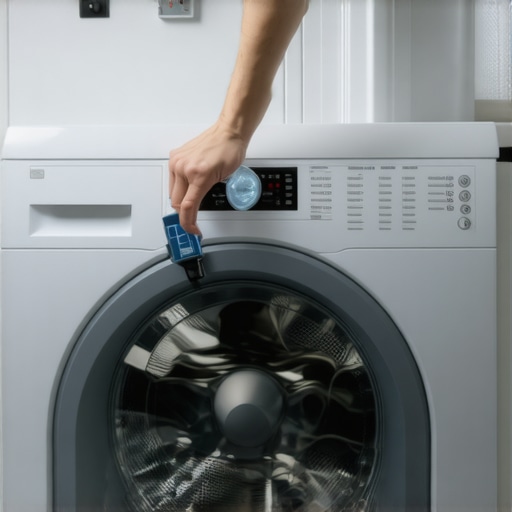
Force the Control Panel to Pipe Down
Sometimes the machine is technically fine, but the software is stuck in a loop. For those with kitchen units, you can often find a specific key combination to mute the interface. I learned this the hard way when a software update made my fridge chime every time the compressor kicked in. Learning how to silence a chirping smart fridge control panel usually involves holding the Door Alarm and Freezer buttons for five seconds. It is a digital shut up command that works wonders for your sanity.
Clean the Hidden Filters That Trigger Alarms
Sensors are often just reacting to a lack of flow. If your dishwasher or washer is beeping at the end of a cycle, it is likely because it did not drain fast enough. I once had a washer that beeped incessantly because a stray dime was wedged in the pump filter. You need to know how to clean the lint filter you didn’t know your washer had to prevent these drainage backups. Similarly, ensure you how to set up your smart refrigerator to alert you when the door is ajar correctly, so you are not hearing an alarm just because a jar of pickles is preventing a tight seal.
Stop Drowning Your Laundry in Excess Detergent
The biggest myth in the laundry world is that more soap equals cleaner clothes. In my experience, this is the number one cause of those mysterious error chirps and mid-cycle pauses. Modern high-efficiency machines use very little water, meaning they can only handle a tiny amount of soap. I’ve seen dozens of washers succumb to ‘suds lock’ because the owner treated it like an old 1990s top-loader. If you see white residue, you already know why your washer doesn’t need a whole cup of detergent to get clothes clean. Over-sudsing creates a film that coats sensors and traps bacteria, leading to that nasty ‘locker room’ smell. Have you ever fallen into this trap? Let me know in the comments. 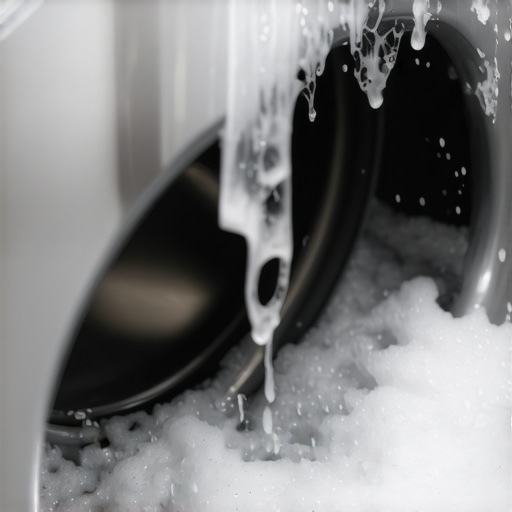
Why the Quick Wash Cycle Is Actually a Trap
We are all tempted to use the 15-minute cycle for everything, but it is a major mistake for the longevity of your machine. Quick cycles often don’t reach the high temperatures needed to dissolve fats or properly flush out the drum. This leads to a buildup of ‘scrud’—a delightful mix of detergent and fabric softener that creates a biological slime. To avoid this, you need to master the secret to odor-free laundry in a high-efficiency machine, which involves running a high-heat sanitizing cycle at least once a month. According to a technical report from Yale Appliance, over-sudsing and improper cycle selection are responsible for nearly 40% of their service calls for front-load machines. If you want to keep your unit running, stop the ‘quick wash’ habit for heavily soiled loads.
Does AI Technology Really Adjust for Hard Water Mineral Build-up?
Advanced readers often ask if innovative dishwashers with AI technology can detect and compensate for mineral deposits. The short answer is: not entirely. While some high-end units can adjust cycle length based on turbidity, they cannot ‘sense’ the lime scaling on your heating element until it is too late. This is why even the most expensive units struggle with drying if you ignore the basics. In fact, many users are surprised to find out why your dishwasher still needs rinse aid even with 3-in-1 tablets; the tablets release the rinse agent too early, leaving your glasses cloudy.
Your Fridge Runs More Often Because It Is More Efficient
I hear this complaint constantly: ‘My new fridge never stops running, it must be broken!’ Contrarily, this is actually a sign of a healthy machine. Modern units use inverter compressors that run at variable speeds rather than just ‘on’ or ‘off.’ If you understand the difference between inverter and traditional refrigerator compressors, you know that keeping the motor running at a low speed uses significantly less energy than a high-power startup. If you find why your high-efficiency fridge runs more often than your old one concerning, just remember it is maintaining a stable climate for your groceries rather than letting the temperature swing wildly. When picking new gear, checking washing machines that save water expert advice for 2025 will help you find the sweet spot between efficiency and performance.
The Tools That Saved My Sanity and My Wallet
Maintaining a modern home isn’t just about knowing where the ‘on’ button is; it is about having the right gear in your utility drawer. I used to rely on a rusty screwdriver and luck until I realized that smart machines require a bit more finesse. Personally, I never start a weekend diagnostic without my digital multimeter and a set of non-marring pry tools. These are essential for checking voltage at the board without scratching your stainless steel finish. If you are tired of mysterious errors, learning how to clean the hidden debris under your refrigerator grille is a game-changer. I found that a long, flexible coil brush—the kind used for dryer vents—is the secret weapon for reaching the dust bunnies that cause your compressor to overheat and trigger those annoying alarm bells. 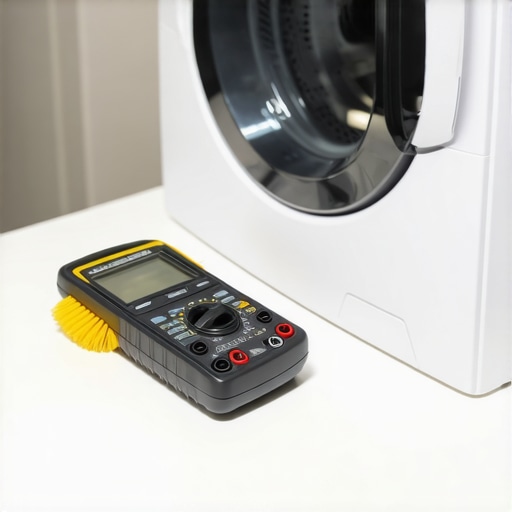
Software Glitches Are the New Mechanical Failures
We have entered an era where your dishwasher might fail not because of a broken pump, but because of a bad Wi-Fi handshake. I have spent more time debugging apps than tightening bolts lately. It is incredibly frustrating when why your smart fridge app refuses to sync with your grocery list becomes a morning-long project. To scale your smart home effectively, you need a dedicated 2.4GHz guest network just for your appliances. This keeps their traffic separate from your high-speed Netflix streaming, preventing the lag that often leads to ‘Device Offline’ errors. In my experience, most ‘broken’ smart features are just network congestion issues. If your kitchen tech is acting up, check the ultimate guide to smart home appliances for a modern living for a deeper dive into stabilizing your local ecosystem.
How do I maintain these complex systems over the long haul?
Consistency is the only way to avoid a four-figure repair bill. According to a technical service bulletin from Bosch Home Appliances, nearly 20% of sensor-related failures in high-end dishwashers are caused by hard water scale that could have been prevented with monthly descaling. I make it a habit to run a dedicated cleaner through both the washer and dishwasher on the first Sunday of every month. This isn’t just about hygiene; it is about protecting the delicate AI sensors that determine water levels. If you neglect this, you’ll eventually find yourself searching for 5 mistakes that are shortening the life of your smart refrigerator or washer.
Why a Simple Filter Check Beats a Service Call
If there is one piece of advice I can give you to save hundreds of dollars, it is this: find your filters before they find you. Most front-load washers have a ‘coin trap’ or debris filter hidden behind a small door at the bottom. I once found a stray house key and three paperclips in mine, which were inches away from destroying the drain pump. You must know how to clean a front load washer filter without flooding the room, as doing it wrong creates a massive mess, but doing it right extends your machine’s life by years. Looking ahead, I predict the future of home appliances trends to watch in 2025 will move toward self-diagnosing hardware that actually ships you the replacement part before the machine even breaks. Until then, the manual labor is on us. Go check your washer’s bottom filter right now—if you haven’t opened it in six months, you are in for a very ‘aromatic’ surprise.
Hard Lessons from My Midnight Appliance Battles
After years of wrestling with digital chirps and mechanical groans, I have realized that the smartest feature any machine can have is a well-informed owner. One of the biggest shifts in my mindset was realizing that smart appliances are not set-it-and-forget-it robots; they are high-performance tools that require a different kind of respect than the analog beasts of the 90s. I once thought that a more expensive unit meant less work, but the truth is that complexity requires more specific care. Another lightbulb moment came when I stopped viewing error codes as threats and started seeing them as a conversation. If you listen to what the sensors are saying early on, you will rarely have to deal with the ‘scream’ of a total breakdown. Lastly, I learned that connectivity is a double-edged sword. While it is great to get a text when your laundry is done, keeping your software updated is just as important as cleaning the lint trap to prevent those frustrating ‘ghost’ glitches.
The Gear That Keeps My Kitchen Running Quietly
You do not need a professional van full of equipment to maintain a peaceful home, but a few curated items make all the difference. I personally swear by a digital multimeter for testing continuity on those tricky door switches and a long-reach flexible brush for those neglected condenser coils. Beyond the physical tools, I rely on staying updated with the latest industry shifts. If you are looking to upgrade your setup without the noise, I highly recommend checking out the smart appliances revolution: how to choose the best dishwasher for units that prioritize decibel levels over flashy lights. For those planning a full kitchen overhaul, keeping an eye on the top smart appliances for a seamless home experience in 2025 will help you avoid the clunky first-gen tech that causes the most headaches. I also keep a bookmark for common troubleshooting, specifically on 5 mistakes that are shortening the life of your smart refrigerator, because prevention is always cheaper than a service call.
Take Back Control of Your Quiet Home
The transition to a truly modern household should be exciting, not a source of anxiety. By mastering the small maintenance tasks we discussed, you are doing more than just saving money; you are reclaiming your peace of mind. Your smart appliances should serve you, not the other way around. Don’t be afraid to open that filter door or dive into the settings menu to silence a chime. You have the knowledge and the tools to handle these digital poltergeists on your own. Have you ever found a weird object like a coin or a key in your washer’s filter? Let me know in the comments below!