
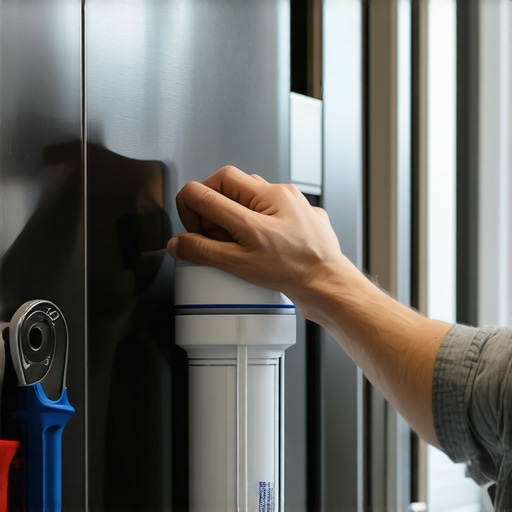
It was late one evening when I finally opened my refrigerator and noticed the water flow was sluggish, almost non-existent. Frustration bubbled up as I grabbed a glass to fill, only to be met with a pathetic trickle of water. That lightbulb moment hit me—my water filter was clogged, and I had ignored the signs for too long. Like many homeowners, I assumed these filters just needed changing every few months, but what I didn’t realize was how a simple clog could halt my daily routine and compromise the freshness of my drinking water.
Reclaim Your Water Flow in Minutes
Imagine the annoyance—you’re running late for work, reaching for a cool glass of water, and instead, you’re greeted with a weak stream or silence. It’s one of those sneaky home appliance problems that can seem minor but quickly turn into a major hassle. But here’s the good news: I discovered a quick, proven method—The 5-Minute Fix—that can clear your clogged refrigerator water filter without the need for costly replacements or complex tools.
This simple technique not only restores your water flow but also extends the lifespan of your filter, helping you save money and frustration in the long run. No more waiting for a technician or staring at a stubborn filter refusing to budge. With just a few minutes and a handful of household items, you can get back to enjoying fresh, clean water without interruption.
Before we jump into the step-by-step process, let me answer a critical question that often worries homeowners like you:
Is cleaning a clogged water filter actually worth the effort?
I’ll admit, I was skeptical at first—thinking this was just another gimmick or a temporary fix. Early on, I made the mistake of just replacing filters every time they slowed down, which is costly and unnecessary. But I learned that a clogged filter can often be cleaned and rejuvenated, especially when approached with the right technique. According to appliance experts, a well-maintained filter can last longer and perform better, ultimately saving you money and reducing waste.
Now, let’s get into the practical steps so you can fix your water flow problem quickly and confidently. If you’ve faced this issue before, or if it’s just starting to nag at you, stay tuned—this could be the solution you’ve been waiting for.
Locate the Water Filter
First, find the water filter in your refrigerator. Most models hide it behind a filter cover or panel, often at the top right corner or inside the crisper drawer. I remember fumbling a bit the first time, but consulting your fridge’s manual helps. Once located, remove the cover if necessary, and gently unscrew or pull out the filter, depending on your model.
Clean or Replace the Filter
If your filter is reusable, soak it in warm water mixed with a bit of vinegar for 10-15 minutes. Then, scrub gently with a soft brush to remove debris. For disposable filters, it’s best to replace them—use a compatible new filter from your appliance store. I once tried cleaning a disposable filter, and it didn’t improve water flow; replacing it was quicker and more effective.
Flush the System
Reinstall the filter and run a flush cycle—usually, turning on the water dispenser and letting it run for 3-5 minutes clears out trapped air and debris. Make sure to discard the first few glasses of water to remove any residual contaminants. This step is crucial; it’s like rinsing a new sponge before use. Remember, if your fridge has a filter reset button, press and hold it after replacing or cleaning the filter.
Check for Blockages in the Water Line
Sometimes, the clog isn’t solely in the filter but along the water line. Locate the water inlet valve at the back of the fridge. Disconnect the water line carefully, and inspect for kinks or obstructions. Use a small brush or compressed air to clear any debris. I once used a blow dryer on low heat to loosen mineral buildup, which worked well but made sure everything was dry before reconnecting.
Confirm Water Flow and Functionality
Reconnect everything securely, and test your water dispenser. If the water flows freely, you’ve fixed the clog! If not, double-check the filter installation and water line. Sometimes, a clogged inlet filter on the water supply hose is the culprit. In that case, turn off the water supply, disconnect the hose, and inspect the inline filter for buildup—replacing it if necessary.
Prevent Future Clogs
Regular maintenance keeps your water flow smooth. Change filters every 6 months or as recommended by the manufacturer. Additionally, install a whole-house water filter if mineral deposits are frequent in your area. For more tips on maintaining your appliances, check out this guide.
Many homeowners assume that managing appliances like washing machines, dishwashers, and refrigerators is straightforward, but there’s more beneath the surface that often goes unnoticed. For instance, a common myth is that all detergents are equally effective across different machines, but in reality, using the wrong type can cause buildup or even damage your appliance over time. Expert technicians emphasize selecting detergents formulated specifically for your machine’s design—front or top load—to prevent residue accumulation that hampers performance. Moreover, many believe that periodic cleaning alone suffices, yet neglecting component-specific maintenance, like cleaning dishwasher spray arms or refrigerator coils, can drastically reduce lifespan and efficiency.
An advanced mistake many make involves ignoring the network connection nuances of smart appliances. While a strong Wi-Fi signal is essential, the placement of your router, especially when the appliances are in basements or far corners, can cause intermittent connectivity issues. For smart devices, an inconsistent connection can result in false error reports or delayed notifications. According to a study by the Connectivity Standards Alliance, optimizing your Wi-Fi setup can improve smart device reliability by up to 30%. This underscores that for smart appliances, it’s not just about having Wi-Fi, but ensuring robust, well-placed coverage.
Another overlooked aspect concerns the importance of proper appliance calibration. Many assume that the factory settings are fine-tuned forever, but over years, components like thermostats or load sensors drift, leading to issues like overfilling, under-washing, or frost buildup. Regular calibration, often as simple as adjusting your refrigerator’s temperature sensors or running diagnostic cycles, can prevent costly repairs and energy wastage. For in-depth tips, check out this guide.
Finally, integrating appliances into a smart home isn’t foolproof. A prevalent mistake is assuming all appliances are compatible or that they will seamlessly communicate. Do your research on compatibility, firmware updates, and network security. Failing to secure these devices can expose your home to vulnerabilities, as cybersecurity experts warn. Ensuring your smart appliances are secure and functional involves more than just app setup; it also means regular updates and network safeguards.
Have you ever fallen into this trap? Let me know in the comments. Remember, understanding these lesser-known nuances can significantly extend your appliance’s lifespan and boost performance. Stay sharp, and keep your home running smoothly!Maintaining your home appliances beyond basic cleaning requires the right tools and a strategic approach. I personally rely on high-quality equipment like a digital multimeter for troubleshooting electrical issues in smart appliances. A multimeter allows me to measure voltage, current, and resistance, which is essential when diagnosing problems without calling a technician. For example, when my smart refrigerator’s screen flickered unexpectedly, I used a multimeter to verify the power supply’s stability, helping me determine whether the issue was electrical or software-related. This proactive approach saves time and reduces service calls.
In addition to physical tools, software plays a critical role in ongoing maintenance. I recommend keeping firmware and app updates current for your smart devices. Developers often release patches that fix bugs, improve security, and add features designed to enhance longevity. I set a monthly reminder to check for updates; this habit ensures that my appliances operate smoothly and their smart features remain reliable.
For more complex issues, I utilize diagnostic modes and check error logs offered by many modern appliances. For example, Fisher & Paykel appliances often feature diagnostic cycles accessible via their control panels, which can identify specific faults like clogged filters or sensor failures without expert intervention. Familiarizing yourself with these built-in diagnostics can empower you to resolve minor problems independently.
Looking ahead, I believe these tools and methods will become increasingly integrated with AI-driven diagnostics, enabling appliances to predict failures before they occur—think of it as a self-healing home. As an example, recent developments in appliance firmware, as detailed by the National Institute of Standards and Technology, suggest future models may use machine learning to optimize maintenance schedules proactively.
How do I keep my appliances performing well over time? Consistent inspection, employing precise diagnostic tools, and staying current with software updates are key strategies. For smart appliances, ensuring secure network connections is equally important; a weak Wi-Fi signal can cause erratic behavior. Consider using a mesh Wi-Fi system to bridge coverage gaps, especially in basements or large homes, which can significantly improve reliability—more on this in this detailed guide.
Finally, don’t underestimate the power of keeping an organized maintenance schedule. Regularly inspecting hoses, filters, and seals—using specialized tools like hose wrenches or seal cleaners—can prevent costly repairs. I highly recommend trying out a digital leak detector, which I’ve found invaluable for early detection of water leaks that could cause major damage if ignored. Integrate these tools and habits into your routine, and your appliances will serve you reliably for years to come.
Why Personal Experiences Reveal Hidden Appliance Myths
One of the biggest lessons I’ve learned is that even the most routine maintenance tasks can hide unexpected complexities. For instance, I used to believe that replacing filters every six months was enough, but I discovered that small factors like water mineral content drastically affect longevity. This lightbulb moment pushed me to tailor my maintenance schedule, which significantly extended my appliances’ lifespan.
How Listening to Your Appliances Can Save You Money
During a routine check, I noticed my fridge was running more than usual, which initially seemed minor. However, after inspecting the coils, I realized they were clogged with dust. Cleaning them improved efficiency and kept my energy bills lower. It taught me to pay close attention to subtle cues from smart devices—they often tell you more than their screens display.
Beyond the Manual: Developing Intuitive Maintenance Habits
Reading the manual is helpful, but developing an intuitive sense of when appliances need care has been invaluable. For example, noticing a slight wobble in my washer led me to adjust its leveling, preventing excessive vibrations. This proactive approach prevents costly repairs and keeps everything running smoothly.
Curated Tools That Changed My Appliance Care Game
Investing in a reliable multimeter has been foundational for troubleshooting smart appliances safely and accurately. Additionally, a magnifying glass helps me inspect tiny components, and a digital leak detector alerts me to issues early. These tools have transformed maintenance from guesswork into precise, confident actions.
Trustworthy Resources for Modern Appliance Management
For deep dives into appliance technology, I rely heavily on expert guides on Wi-Fi optimization and troubleshooting water leaks. Forums and community groups also provide real-world solutions that are often more practical than generic advice. These resources keep me ahead of emerging issues and innovative fixes.
Embrace Your Inner Appliance Whisperer and Take Action
The future of appliance care is personal and proactive. The more you learn to interpret subtle signals from your devices, the more empowered you’ll be to maintain peak performance. Remember, small daily habits—like inspecting seals or running cleaning cycles—add up immensely over time. You’re not just maintaining appliances; you’re taking control of your home environment.
So, what’s the first step you’ll take today to better understand your appliances? Share your plans below—I’d love to hear how you’re planning to implement these insights for a smarter, more efficient home.