
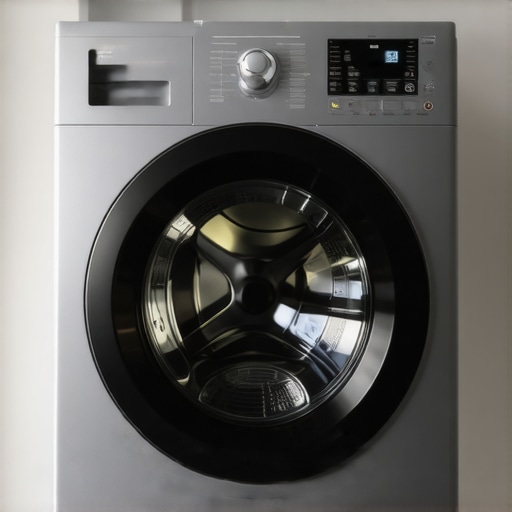
I’ll never forget the winter of 2018 when my tiny studio apartment felt more like a tropical rainforest than a home. I had wet towels draped over the shower rod, jeans hanging off the backs of kitchen chairs, and a laundry day that actually lasted three days because nothing would dry in the humid, stagnant air. I didn’t have a dryer vent, and for the longest time, I thought that meant I was doomed to a life of damp fabric and that faint, musty smell. I even made the rookie mistake of buying a massive, second-hand vented unit and tried to jury-rig a hose out of a cracked window—spoiler alert: it just made my electricity bill skyrocket and the room freezing cold. It was a disaster. But then I discovered the world of compact, ventless dryers, and let me tell you, it changed everything. Today, I’m going to show you that you don’t need a hole in your wall to get crisp, warm clothes, and we’ll find the perfect fit for your cramped space so you can finally reclaim your living room from those clunky drying racks. [IMAGE_PLACEHOLDER]
Stop Drying Laundry on Your Chairs and Reclaim Your Space
When you’re dealing with a tight floor plan, every square inch is a battleground. Most people assume that if they don’t have that four-inch silver tube sticking out of their wall, they are stuck with air-drying forever. I used to think the same, especially after my hose-out-the-window fiasco which really highlighted the hidden costs of cheap budget appliances that aren’t right for your specific home setup. The truth is, ventless technology has come a long way. Whether you are looking at the best stackable washer and dryer sets for tiny closets or a standalone unit, the options for 2025 are surprisingly powerful. According to the U.S. Department of Energy, heat pump dryers—a popular type of ventless dryer—can be up to 50% more energy-efficient than traditional vented models because they recycle heat rather than venting it outside. Have you ever felt like your apartment was just too small for real laundry? Trust me, I’ve been there, and the solution is much simpler than you think.
Will a Ventless Dryer Really Get My Jeans Bone Dry?
This is the big one. Everyone is terrified they’ll spend a thousand dollars only to find the real reason your clothes still feel damp after the cycle is just the nature of the machine. I’ll be honest: early condenser models were a bit sluggish. They worked by pulling moisture into a tank or drain, and if you didn’t know the tricks, you’d end up with steamed jeans instead of dry ones. However, with the new wave of smart technology—similar to how washing machines that save water have evolved—modern compact dryers use sensors to detect exactly when the moisture is gone. You aren’t just buying a smaller version of a big dryer; you’re buying a more intelligent way to handle fabric care without the architectural headache of a vent installation. Have you faced the frustration of waiting days for a single load of laundry to dry?
Stop Overstuffing the Drum if You Want Dry Clothes
Imagine trying to walk through a crowded elevator; it is impossible to move without bumping into someone. That is exactly what happens to the hot air inside a compact ventless dryer when you cram it full of towels. Unlike those giant vented monsters at the laundromat, these units rely on airflow to pull moisture out of the fabric. I learned this the hard way during my first week with a ventless unit. I shoved a week’s worth of gym clothes and a thick duvet into the drum, thinking I was being efficient. Two hours later, I pulled out a heavy, steaming ball of laundry that was somehow wetter than when I put it in. Now, I stick to ‘half-loads.’ By giving the clothes room to tumble, the warm air can actually reach the fibers. This is particularly important because why your high-efficiency washer uses barely any water means the clothes might come out with a different texture than you are used to, and they need that air space to fluff back up.
#IMAGE_PLACE_HOLDER_B#
Maximize Your Spin Cycle Before the Drying Starts
Your dryer is not a magician; it is a finisher. If your clothes are dripping when they hit the drum, you are setting yourself up for failure. This is where your washing machine’s ‘extra spin’ setting becomes your best friend. A high-RPM spin cycle uses centrifugal force to fling water out, which is infinitely more energy-efficient than using heat to evaporate it. If you find why your clothes are still soaking wet after the final spin cycle, you might have a drainage issue or an unbalanced load. I once spent an hour wondering why my dryer was taking forever, only to realize my washer had not reached its full speed because it was wobbling like a leaf in the wind. Learning how to level a washing machine so it stops banging on tile floors solved my drying time problem instantly. A stable machine spins faster, and a faster spin means a shorter drying time.
Empty the Water Tank After Every Single Load
In a vented system, moisture turns into steam and vanishes out the window. In a ventless system, that moisture has to go somewhere—usually into a plastic drawer or a dedicated drain hose. If that tank gets full, the machine will either shut off mid-cycle or just spin aimlessly without removing any more humidity. I used to forget this constantly until I started treating it like a ritual. Just like you would not leave a full tray in the best small dishwashers for studio apartments, you cannot leave standing water in your dryer. It takes ten seconds to pull the tray and dump it in the sink, but it saves you from the real reason your clothes still feel damp after the cycle: a machine that simply has nowhere left to put the water it is trying to extract.
Keep the Condenser Clean to Save Your Utility Bill
Think of the condenser as the ‘lungs’ of your dryer. About once a month, you need to pull it out—it usually looks like a metal radiator block—and rinse it under a showerhead. Lint finds its way past the primary filter and starts to clog these metal fins. When that happens, your dryer has to work twice as hard to cool the air and condense the moisture. It is like trying to breathe through a straw while running a marathon. Keeping this part clear is the secret to avoiding the hidden costs of cheap budget appliances that degrade quickly over time. A clean condenser means the heat exchange happens fast, your clothes dry quickly, and your electricity bill stays under control.
Most people think that ‘smart’ means ‘maintenance-free,’ but in my experience, the more sensors a machine has, the more ways it can get confused. Everyone says these high-tech units are ‘set and forget,’ but I’ve found that the smarter the machine, the more it relies on you to keep its sensors calibrated. For example, your ventless dryer uses moisture sensors—those tiny metal strips inside the drum—to decide when to stop the cycle. If you use dryer sheets, they coat these sensors in a waxy film. The machine ‘thinks’ the clothes are dry because it can’t feel the moisture through the wax, which is often the real reason your clothes still feel damp after the cycle. It is a classic ‘smart’ trap.
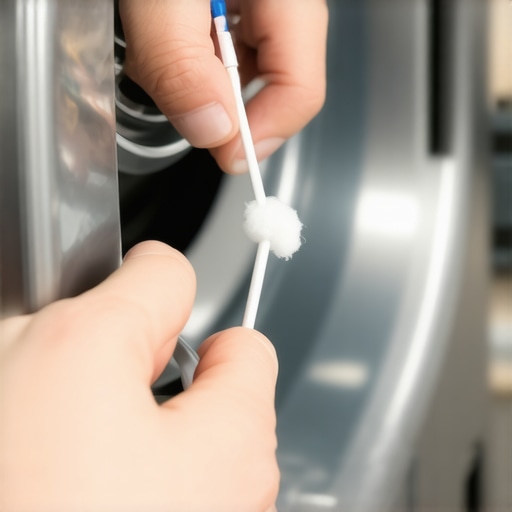
The Tiny Metal Strips Holding Your Laundry Hostage
I see this mistake constantly: people buy a top-of-the-line unit and then treat it like a 1990s analog beast. Beyond just the dryer, this applies to your kitchen too. You might be wondering, is a smart fridge really worth the extra money if you have to manually clean the sensors anyway? The answer is yes, but only if you’re willing to do the specialized upkeep. Just like the hidden sensor in your dishwasher that needs a manual scrub, these dryer sensors need a quick wipe with rubbing alcohol every few months. A study by the Association of Home Appliance Manufacturers (AHAM) highlights that sensor accuracy is the primary driver of energy efficiency in modern units, yet consumer maintenance—or the lack thereof—is the leading cause of reported ‘malfunctions’ that aren’t actually mechanical failures at all.
How Do I Calibrate a Machine That Thinks It Is Smarter Than Me?
When your appliance starts acting up, your first instinct is probably to call a repairman. Wait! Before you spend a hundred dollars on a service call, check your phone. I know it sounds annoying, but why your smart appliance app keeps asking for a firmware update is usually because the manufacturer has tweaked the sensor algorithms to handle specific issues like the ones I’m describing. Updating the software is the modern version of a tune-up. While how smart washing machines can simplify laundry day is a huge selling point, they only stay simple if the software and the hardware are in sync. Have you ever fallen into this trap of blaming the machine when it just needed a quick sensor clean or a software patch? Let me know in the comments. We are moving toward the future of home appliances where AI does more, but until the machines can clean themselves, we’re still the ones in charge of the scrub brush.
Why Your App Is Not a Substitute for a Scrub Brush
It is easy to get distracted by flashy touchscreens and remote-start features. However, the most advanced ultimate guide to smart home appliances will tell you that physical hygiene of the machine is what preserves its lifespan. If you ignore the ‘clean filter’ light or the ‘firmware update’ notification, you are essentially driving a Ferrari with a clogged air filter. You won’t get the performance you paid for, and you’ll likely end up frustrated. Focus on the nuances—clean the sensors, update the app, and don’t overstuff the drum—and your ‘tiny’ laundry setup will outlive and outperform any standard vented unit on the market.
Once you’ve mastered the sensors, the next level of maintenance involves the parts of the machine you can’t see from the front panel. I used to think that as long as my fridge was cold, everything was fine. Then I moved the unit to clean behind it and saw a layer of dust on the coils that looked like a thick wool sweater. This is exactly how to keep your refrigerator coils clean in a pet-friendly home: you have to get aggressive with the vacuum once every six months. If those coils are choked with fur, your compressor runs hot, eats more power, and eventually just dies. It is the secret to making your refrigerator last twice as long and it costs you nothing but fifteen minutes of your time.
Stop Waiting for the Error Code and Start Looking Under the Hood
In the appliance world, there is a concept called ‘preventative hygiene.’ It is the difference between a machine that lasts five years and one that lasts fifteen. For my dishwasher, this means I do not just rely on the self-clean cycle. I actually pull out the spray arms to check for tiny seeds or bits of plastic that might be wedged in the nozzles. According to technical service manuals from Miele, even a 10% reduction in water flow through the spray arms can significantly impact the cleaning pressure, leading to that annoying grit on your plates. This is also the easiest way to clean the filter in your dishwasher and ensure you are not just recirculating dirty water. I have found that a simple soft-bristled toothbrush is better than any ‘smart’ diagnostic tool for clearing out those tiny nozzles.
How do I keep these high-tech machines running for a decade or more?
The answer is not a better app; it is better water. Hard water is the silent killer of the ultimate guide to smart home appliances. Calcium buildup inside the heating elements of your washer or dishwasher will eventually cause them to burn out or take much longer to heat up. I personally use a citric-acid-based descaler once a quarter instead of vinegar. It is more effective at breaking down mineral deposits and does not damage the delicate rubber seals. If you have noticed your clothes are not as soft as they used to be, it might be time to look into washing machines that save water and how they react to your local water hardness. Keeping the internal plumbing clear is just as vital as keeping the outside shiny.
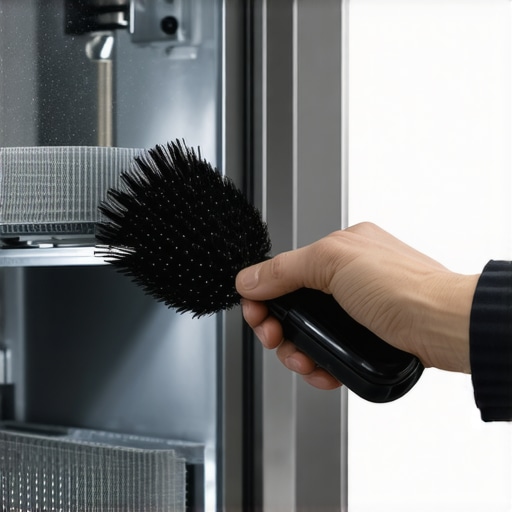
Why I Swear by a Ten Dollar Coil Brush
If you own a refrigerator or a ventless dryer, you need a long, flexible coil brush. It is a low-tech tool that solves high-tech problems. I use mine to reach into the crevices of the condenser fins where a vacuum hose simply cannot fit. This simple habit prevents why your refrigerator is making a loud humming noise because it keeps the fan from overworking. Looking ahead, the future of home appliances will likely include built-in self-cleaning condensers—some high-end models already have them—but for most of us living in the real world today, a bit of manual labor is the price of reliability. My challenge to you? Pull your fridge out tonight and check those coils. If they are dusty, clean them. You will hear the difference in the motor within minutes.
[IMAGE_PLACEHOLDER]
Three Hard Truths About Living With High-Tech Laundry
Living with these machines for years has taught me that airflow is the undisputed king of efficiency. If you don’t respect the drum space and try to cram in that extra pair of jeans, the machine simply cannot breathe, and you’ll end up with a damp mess. I also learned that those tiny metal sensor strips are the true brain of the operation; if they are coated in waxy residue from dryer sheets, the machine is essentially blind to how dry your clothes actually are. Lastly, don’t be afraid of the technology; embracing how smart washing machines can simplify laundry day starts with the realization that you are a partner to the machine, not just its operator. You provide the maintenance, and it provides the convenience.
The Only Tools You Actually Need in Your Utility Closet
You do not need a massive toolbox to keep your appliances happy. I swear by a high-quality citric acid descaler for anything that uses water—from your dryer’s condenser to your coffee pot—because it is significantly gentler on internal rubber seals than standard white vinegar. For your digital setup, I highly recommend diving into the ultimate guide to smart home appliances to identify which manufacturers offer the most robust long-term software support. If you are just beginning to build your small-space ecosystem, checking out the top smart appliances for a seamless home experience in 2025 will help you find units that prioritize easy-access filters and user-friendly diagnostics.
Take Back Your Home from the Laundry Rack
Switching to a compact, ventless setup is about more than just square footage; it is about reclaiming the visual peace of your home. The future of home appliances is focused on making even the smallest studio feel like a fully functional haven. You no longer have to settle for a damp apartment or clothes that smell like a basement. Take the leap, follow the maintenance rituals we discussed, and finally clear those drying racks out of your living room for good. Have you ever had a load of laundry take hours longer than expected in a ventless dryer? Let me know in the comments how you solved the mystery!