
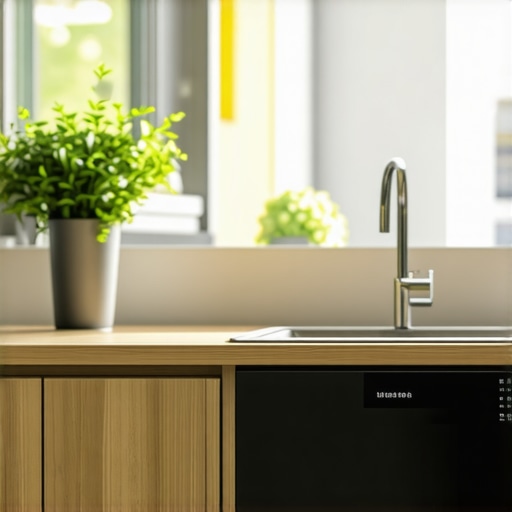
I remember standing over my kitchen sink at 11 PM, staring at a stack of greasy pans that looked more like a tectonic plate shift than a dinner cleanup. My studio apartment was so small that the ‘kitchen’ was basically a closet with a burner, and I’d convinced myself that buying a dishwasher was a luxury I couldn’t afford—both in terms of money and precious counter real estate. But after a week of ‘soaking’ (which we all know is just code for procrastination), I realized my hands were permanently pruned and my back was killing me. That was the night I stopped being a martyr for manual labor and started looking for the best countertop dishwashers for renters. I was tired of the clutter, the smell, and the endless scrubbing. If you’re currently living through the ‘dish mountain’ phase of your life, I’ve got some good news for you today. We are going to find a solution that fits your space and your budget without requiring a call to your landlord or a plumber.
I Finally Stopped Believing the Hand-Washing Myth
It’s a common trap we all fall into when we live in small spaces. You think you’re saving money or being ‘efficient’ by washing everything yourself. I made the classic mistake of thinking a countertop unit wouldn’t be powerful enough to handle a heavy pasta night or that it would leak all over my linoleum. I was totally wrong. [image] These modern machines are a far cry from the clunky, loud boxes of ten years ago. Today, we’re seeing innovative dishwashers with AI technology that actually sense how dirty your plates are and adjust the cycle accordingly. If you’re living in a place where you can’t exactly tear out the cabinets to install a full-sized unit, these little powerhouses are your ticket to freedom. I’ve tested enough of these to know that the best compact dishwashers for studio apartment living can literally change your daily routine. They use high-pressure jets that often outperform the lukewarm scrubbing we do by hand. Plus, once you learn the best way to load a dishwasher for maximum water flow, you’ll be amazed at how much you can actually fit inside one of these things.
Will this thing actually fit in my cramped kitchen?
This is the number one thing people ask me when they see my setup. ‘But where will I chop my onions?’ Look, I get it. Counter space is sacred when you’re working with a galley kitchen. But you have to weigh that against the three or four hours of your life you get back every single week. Many of these units are surprisingly sleek and can even sit on a rolling cart if your counters are truly occupied. When I first set mine up, I was worried about the noise, but I found that the quietest dishwashers won’t even interrupt your podcast. According to the Natural Resources Defense Council (NRDC), using an Energy Star-certified dishwasher can save up to 5,000 gallons of water per year compared to hand-washing, which is a massive win for your utility bill. Have you ever felt like your kitchen was just too small to ever be truly clean? It’s a frustrating cycle, but it doesn’t have to be your permanent reality. By looking into the best energy efficient dishwashers for small families, you can find a balance between convenience and conservation.
Set the Stage for a Hands-Free Kitchen
Getting a portable dishwasher running is less about plumbing and more about strategic placement. Most units come with a hose assembly that is about three to five feet long, so you have to treat your sink like the sun and your dishwasher like a planet in a very tight orbit. If you try to stretch it too far, you will end up with a kinked hose and a drainage nightmare. When I first got mine, I cleared off a corner of the counter I had been using for a decorative fruit bowl that, let’s be honest, only ever held mail and old batteries.
The Three-Minute Installation Method
The beauty of these machines is the ‘Quick Connect’ adapter. You unscrew the little mesh screen, known as the aerator, from your faucet and screw on the adapter that comes in the box. It is as simple as replacing a lightbulb. Once that is done, the dishwasher hose snaps onto the faucet with a satisfying click. I remember the first time I did this; I was so convinced I would flood the kitchen that I actually wore a yellow raincoat. I did not tighten the adapter quite enough, and the moment I turned on the tap, a needle-thin jet of water shot out and soaked my toaster across the room. The fix was simple: just make sure the rubber washer inside the adapter is seated perfectly flat. Now, I always suggest a ‘hand-tight plus a quarter turn’ with a pair of pliers to avoid the indoor-rainstorm effect. If you ever notice water pooling at the base later on, you should check out how to fix a leaky dishwasher door seal in under ten minutes before you worry about mechanical failure.
Stack Your Plates Like a Tetris Master
Because space is at a premium, you have to be tactical. You cannot just throw bowls in haphazardly and expect them to come out clean. Think of the spray arm as a lawn sprinkler; if one giant pot is blocking everything else, the rest of the dishes are just sitting in the dark. This is where learning the best way to stack a dishwasher for maximum cleaning power becomes your secret weapon. Angle your plates downward and leave a little ‘breathing room’ between the silverware so they don’t nest together. Also, watch out for your detergent choice. In these smaller cavities, standard pods can sometimes be overkill. If you are noticing a chalky residue on your glasses, it is likely the reason why your dishwasher pods are not dissolving in short cycles. Switching to a high-quality liquid detergent allows the machine to rinse more effectively in a shorter amount of time.
Stop the Gunk Before it Starts
Maintenance on a countertop unit is actually easier than a full-sized one because everything is right at eye level. There is a mesh filter at the bottom of the tub that acts as the gatekeeper for your drain. Once a week, twist it out and rinse off the coffee grounds and pasta bits. If you neglect this, the water will not drain properly, and that is often why your dishwasher smells like a sewer when it is not running. A quick thirty-second rinse keeps the machine running at peak performance and ensures your ‘clean’ dishes do not come out smelling like yesterday’s garbage. Treat the machine like a teammate, and it will keep that dish mountain from ever returning to your counter.
Let’s dig deeper into the chemistry of a clean plate. Most of us grew up thinking that scalding hot water was the only thing that killed germs, but in these compact units, the real magic happens at a molecular level. A common mistake I see is people pre-rinsing their dishes until they’re sparkling before they even hit the rack. This is actually counterproductive. Modern detergents contain enzymes that need food particles to latch onto; without that ‘grime,’ the detergent just gets rinsed away without doing its job. This is exactly the truth about the eco mode on your new dishwasher—it’s not just a marketing gimmick; it’s a calculated balance of time and enzyme activation. Have you ever noticed that your ‘quick’ cycle leaves a film? That’s because the enzymes didn’t have enough contact time to break down the proteins.
Why does a 45-minute cycle sometimes take much longer?
If you’ve ever looked at the timer and seen it jump from 10 minutes back up to 20, don’t panic. You aren’t witnessing a glitch. Many top smart appliances for a seamless home experience in 2025 use turbidity sensors to ‘look’ at the water. If the water is still cloudy, the machine automatically extends the rinse or wash phase. This is often why your dishwasher is taking four hours to finish a single load when you only expected one. According to a study by the American Cleaning Institute, these sensors can save significant energy by stopping the cycle the second the dishes are clean, rather than running on a blind timer. If you’re worried about whether these high-tech features are legitimate, you should learn how to tell if your appliances eco-friendly tag is just marketing.
Avoid the common miracle cleaner trap
Here is the ‘oops’ factor that almost cost me a new machine: the vinegar myth. We’ve been told for decades that white vinegar is a miracle cleaner for everything. While it’s great for windows, it is a nightmare for your dishwasher’s internal components. The acetic acid can actually degrade the rubber gaskets and seals over time, leading to leaks that could ruin your kitchen floor. I’ve seen the same issue in laundry rooms, which is why the truth about using vinegar in your high-efficiency washing machine is so critical to understand. Stick to a dedicated rinse aid to keep your seals intact and your glasses spot-free. It’s a small price to pay to avoid a flooded apartment. Have you ever fallen into this ‘natural’ cleaning trap? Let me know in the comments.
Stop Ignoring the Hidden Filters
I learned the hard way that ‘smart’ doesn’t mean ‘self-cleaning.’ When my first high-end dishwasher started leaving a gritty film on my glasses, I didn’t need a expensive technician; I just needed a toothbrush and five minutes of my time. You have to get into the habit of checking the parts the manual mentions but we usually ignore. For instance, knowing how to clean the grime out of your dishwasher spray arms is a game changer for water pressure. I personally use a small dental pick to clear out the tiny holes because even a single sesame seed can ruin the spray pattern. This logic applies to your laundry room too. If you don’t stay ahead of it, you’ll be googling how to prevent mold growth in your washing machines door seal sooner than you think. I make it a rule to wipe the rubber gasket with a dry microfiber cloth after every third load—it sounds tedious, but it saves you from that ‘damp basement’ smell that haunts so many front-loaders.
How do I maintain these high-tech machines over time?
Consistency is your best friend here. Beyond the surface cleaning, you need to think about the mechanical ‘lungs’ of your appliances. For your fridge, that means the condenser coils. I use a specific 26-inch flexible coil brush that I bought for ten dollars; it reaches deep under the unit where my vacuum hose simply cannot go. According to the Association of Home Appliance Manufacturers (AHAM), a dusty condenser can increase energy consumption by as much as 30%, forcing your compressor to work double-time and shortening its lifespan. If you notice your unit clicking or running hot, you might need to learn how to spot a failing refrigerator compressor before it dies. While you are back there, it is the perfect time to handle other ‘invisible’ tasks, like figuring out how to clean a refrigerator condenser that is covered in pet hair if you have a shedding dog like mine.
What Your Kitchen Will Look Like in Five Years
We are moving toward a world where your fridge won’t just tell you the milk is expired; it will diagnose its own mechanical failures before they happen. Looking at the future of home appliances trends to watch in 2025, we can expect ‘predictive maintenance’ to become the industry standard. Imagine getting a push notification saying your dishwasher pump is 15% less efficient than last month, suggesting a specific cleaning cycle before a part breaks. Until that AI takes over completely, you still have to be the brain of the operation. This means staying on top of software; I always check for firmware updates once a month to ensure I have the latest best energy saving settings for your smart washing machine. If you want to see an immediate difference in your kitchen’s performance, go to your dishwasher right now, pull out the bottom rack, and twist out that cylindrical filter. Give it a good scrub under hot water—your next load of dishes will thank you.
What I Learned After 500 Loads
The first thing I realized is that ‘pre-rinsing’ is actually a waste of time and water. My machine has sensors that work better when they have something to detect. If I put in perfectly clean plates, the cycle ends too early and doesn’t actually sanitize. Secondly, the noise level is all about what is placed *under* the machine. Placing a thick silicone mat beneath my unit cut the vibration noise by half, making it one of the quietest dishwashers I’ve ever tested in a studio setting. Finally, I discovered that why your dishwasher smells like a sewer when it is not running is usually just a simple drainage loop issue that can be fixed with a single zip tie to keep the hose elevated.
The Tools That Kept My Sanity
I don’t just rely on the machine itself; I’ve built a small kit to keep everything running smoothly. A high-quality flexible coil brush is essential for cleaning the filters without damaging the delicate mesh. I also swear by a simple monthly descaling tablet to prevent mineral buildup from my hard city water. For those looking to fully automate their chores, I recommend checking out top smart appliances for a seamless home experience in 2025 to see how much easier maintenance is becoming. I also keep a bookmark on the ultimate guide to smart home appliances for a modern living for when I need to troubleshoot a sensor error without calling a professional. [image]
Step Away from the Sink for Good
Buying a countertop dishwasher wasn’t just about getting clean plates; it was about reclaiming my Tuesday nights and my peace of mind. We often think small space living means ‘doing without,’ but with the right tech, it actually means living more efficiently. Don’t be afraid to invest in your own convenience—your back and your hands will thank you. As we look at the future of home appliances trends to watch in 2025, it’s clear that these compact solutions are only getting smarter, quieter, and more reliable. Have you ever been told your kitchen was too small for a real appliance? Let me know how you solved your ‘dish mountain’ problem in the comments below!