
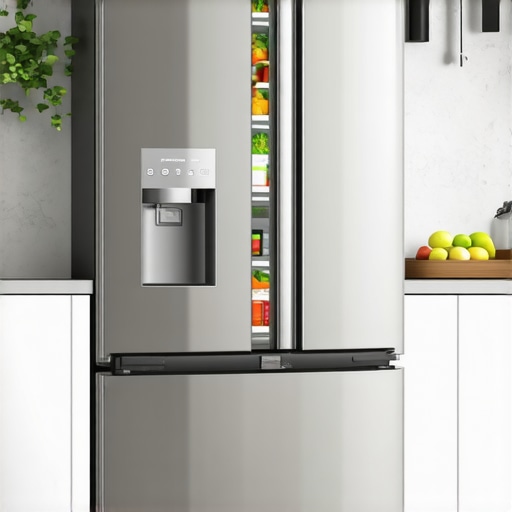
I still remember the sinking feeling in my stomach when I walked into the kitchen at 2:00 AM for a glass of water, only to realize the floor was soaking wet. My old side-by-side had finally kicked the bucket, and the puddle was creeping toward the hardwood. I spent the next four hours frantically moving milk and half-frozen chicken into coolers, cursing the day I decided to ‘save money’ on a refurbished unit with no warranty. It was a mess. But that disaster led me on a three-week obsession with finding the perfect replacement. I wanted the wide, beautiful layout of a French door model, but I wasn’t about to drop three months’ mortgage on a kitchen appliance. I quickly realized that many of us are overpaying because we fall for marketing gimmicks. I once fell for a unit just because it had a fancy internal camera, but it ended up making a loud humming sound that drove my dog crazy. I’ve learned that the secret isn’t spending more; it’s spending smarter. Today, I am going to show you how to find a refrigerator that looks like a million bucks but keeps you firmly under that $2,000 ceiling.
Stop Overpaying for Your Dream Kitchen Layout
When you start shopping for that classic three-door look, the sticker shock can be paralyzing. You see those $4,000 units with built-in tablets and think, ‘Is that what it takes to have a modern kitchen?’ I’m here to tell you it isn’t. The real value is hidden just below the premium tier. I used to think a lower price meant settling for a loud, inefficient box, but after choosing the right refrigerator with a bit of help from the pros, I found that the core cooling technology in a $1,800 unit is often identical to the $3,000 one. According to the Bureau of Labor Statistics, while major appliance prices can be volatile, the ‘value’ segment remains incredibly competitive, offering features that were considered luxury just five years ago. You just have to know which corners are safe to cut.
Can You Really Find a Reliable French Door Fridge for Less Than Two Grand?
It is the question I get asked most often at neighborhood cookouts. People are skeptical. They worry that a sub-$2k price tag means they are falling into the trap of the hidden costs of cheap budget appliances, where repairs end up costing more than the unit itself. I’ll be honest: if you buy a brand nobody has heard of just to save a buck, you’re asking for trouble. But if you stick to the ‘sweet spot’ models from reputable manufacturers, you’re getting a workhorse. My biggest mistake early on was prioritizing a ‘smart’ screen over a high-quality compressor. Now, I tell everyone to ignore the apps and focus on the insulation and the door seals.
Focus on Performance Over Fluff
We are going to prioritize the things that actually matter: cubic footage, adjustable shelving, and humidity control that actually works. You don’t need your fridge to tweet, but you do need it to keep your spinach from turning into a science project within two days. Have you ever been blinded by a flashy feature only to regret it six months later? Let me know your biggest appliance ‘fail’ in the comments! We’re about to dive into the specific models that pass the neighbor test for durability and style.To get that high-end look without the high-end debt, you have to treat the purchase like buying a used truck—ignore the paint job and check the engine. First, let’s talk about the physical reality of your space. I once spent three hours trying to pivot a massive French door unit through my back door, only to realize I was literally a quarter of an inch short. I ended up having to take the fridge doors off in the driveway while it was drizzling. It was a nightmare. Before you even look at a price tag, you need to know how to move a heavy refrigerator without scratching the floor or getting stuck in the doorframe. If you’re looking at a sleek model for a tight kitchen, you might need to prioritize the best ways to maximize space in a counter-depth refrigerator since those models often shave off depth to stay flush with your cabinets.
Skip the Screen and Save Seven Hundred Dollars
One of the fastest ways to stay under $2,000 is to identify ‘feature creep.’ Manufacturers love to slap a tablet on the door because it justifies a $1,000 markup. But honestly, is a smart fridge really worth the extra money when the software will be obsolete in three years? Think of the compressor like a car’s engine; you want a reliable V6, not a flashy dashboard with a broken GPS. Look for brands that offer ‘internal’ water dispensers. They keep the exterior looking clean and modern like a high-end luxury model, but they significantly reduce the points of failure and the initial cost.
Test the Build Quality Yourself
Don’t trust the glossy brochure. When you’re in the store, pull the drawers. Do they glide like they’re on silk, or do they rattle like a cheap plastic toy? The weight of the door matters too. A heavy door usually indicates better insulation, which is the secret to making your refrigerator last twice as long because the motor doesn’t have to work overtime. You should also check the gaskets. You can actually learn how to test if your fridge door seal is actually airtight using a simple dollar bill—if you can pull it out easily while the door is closed, that fridge is leaking money every single day. 
Master the Art of the Humidity Slide
Most people ignore those little plastic sliders in the crisper drawer, but they are the difference between fresh kale and a slimy mess. If you learn how to use your fridges humidity slides to keep produce fresh, you effectively extend the ‘value’ of your fridge by wasting less food. High-end units do this automatically with sensors, but on a $1,800 budget, you do it manually. It’s a 5-second task that saves you $20 a week in groceries. We are looking for mechanical simplicity. In the world of appliances, the more moving parts and sensors you have, the more things there are to break when the warranty expires. Focus on the bones of the machine: the shelving versatility, the thickness of the door bins, and the roar (or lack thereof) of the cooling fans.I see people get caught in the ‘more is better’ trap every single day. They think more water in a washer means cleaner jeans, or more power in a fridge means better cooling. It’s actually the opposite. In fact, one of the biggest shocks for new owners of high-end value models is hearing the compressor run almost constantly. You might think it’s broken, but why your high efficiency fridge runs more often than your old one is actually a sign of it working correctly. Modern variable-speed compressors are designed to sip energy at a low level rather than gulping it in loud, frequent bursts. According to the Association of Home Appliance Manufacturers (AHAM), modern refrigerators are roughly 40% more efficient than models from two decades ago, even though they run for longer durations to maintain thermal stability.
The High Efficiency Noise Trap
Many shoppers return perfectly good units because they aren’t used to the ‘new’ sounds of efficiency. If your unit is whistling or clicking, it’s often just the refrigerant expanding or the sensors calibrating. However, if the sound is a persistent rattle, you might just need to learn how to adjust the feet on your refrigerator to stop it from rocking against your tile. We often blame the machine when the issue is actually the installation.
Why Does My Washing Machine Use So Little Water?
This is the most common complaint in the appliance world. We’ve been conditioned to believe that clothes need to swim in a deep tub of soapy water to get clean. The truth? Modern HE machines rely on the friction of the fabrics rubbing together. If you add too much water, the clothes just float, and you lose that scrubbing action. This is why washing machines that save water are actually superior at stain removal. 
Suds Are the Enemy of a Clean Load
Have you ever opened your washer to find mysterious white streaks? Most people reach for more detergent, thinking the clothes didn’t get clean. In reality, the culprit is usually the opposite. Realizing why your washer doesnt need a whole cup of detergent to get clothes clean is the most important lesson for any modern homeowner. Excess suds create a ‘bubble cushion’ that prevents the clothes from agitating and can eventually lead to a moldy smell in the drum. If you’ve already overdone it, you might need to find the only way to get that weird smell out of your front loader before your next load of whites.
Don’t Ignore the Hidden Maintenance Points
If you want that $1,800 fridge to last ten years instead of five, you have to look where the dust bunnies hide. Most people know about the coils, but few know about the secret drain filter at the bottom of your fridge you never knew existed. When this gets clogged, it’s not just a mess; it forces the motor to run hot, shortening its lifespan significantly. Have you ever fallen into the trap of buying a flashy feature like a built-in coffee maker or a Wi-Fi-enabled toaster only to have it break in a month? Let me know in the comments! We’re moving toward a smarter kitchen, but only if we master the basics first.I personally keep a 48-inch I-beam level in my laundry room, and I’m not joking. Most people think a small torpedo level is enough, but to truly stabilize a heavy front-loader, you need to bridge the entire width of the machine. If you don’t, you’ll find that the reason your washing machine vibration pads arent working is actually a slight tilt that a small level just can’t catch. I’ve seen machines literally shake their own internal components loose over three years because the owner didn’t know how to level a washing machine on an old slanted floor with precision. It’s about more than just the noise; it’s about protecting the motor from uneven centrifugal forces.
How do I keep my high-efficiency appliances running like new?
The secret is a religious adherence to a ‘clean the cleaner’ schedule. Every month, I run a specialized citric acid cycle through my dishwasher and a tub-clean cycle on my washer. This isn’t just for smells; it prevents the scale buildup that eventually kills heating elements. You should also make it a habit to find the easiest way to clean the filter in your dishwasher before it becomes a swampy mess. According to technical bulletins from the Appliance Standards Awareness Project (ASAP), proactive maintenance like clearing filters can improve energy efficiency by up to 15% over the life of the unit. If you’ve neglected the laundry side, you might need to learn how to clear a blocked pump on your front load washing machine before you’re stuck with a tub full of grey water and a service call fee that costs as much as your monthly grocery bill.
Predictive AI and the End of Surprise Breakdowns
Looking ahead, we are moving away from manual ‘checkups’ and toward a world of predictive diagnostics. I’m already seeing this with innovative dishwashers with AI technology that can actually alert your phone when a motor is drawing more current than usual—a telltale sign of an impending failure. By the time refrigerators in 2025 become the standard, we won’t be guessing about maintenance. To stay ahead of the curve now, I recommend learning how to sync your smart kitchen appliances to one app so you can monitor health alerts in real-time. Don’t wait for the leak; go grab a level and check your washer’s balance right now—it’s the single easiest way to add three years to its life. After a vacation, don’t forget the best way to sanitize your dishwasher after a long vacation to ensure no stagnant water issues arise.
The Expensive Truths I Discovered in My Own Kitchen
After years of trial and error, I’ve realized that the shiny showroom floor is designed to distract you from the reality of ownership. First, don’t assume a higher price tag buys you more years; often, it just buys more sensors that can fail. I also learned that if you have pets, you must prioritize how to keep your refrigerator coils clean in a pet-friendly home because fur is the silent killer of compressors. Finally, the smartest appliance is the one that actually fits your lifestyle—if you never use the app to start your dishwasher, don’t pay the premium for it.
#IMAGE_PLACEHOLDER_E#
Where I Turn for Real Appliance Tech Specs
I don’t just rely on marketing brochures. I spent hours reading the ultimate guide to smart home appliances for a modern living to understand how different systems talk to each other. For long-term outlooks, I keep an eye on the future of home appliances-trends to watch in 2025 to see which technologies are becoming standard and which are just passing fads. I also trust resources like the Appliance Standards Awareness Project for energy data and consumer reports for real-world reliability scores.
Take the Leap Toward a Stress-Free Home
Choosing the right machines for your home shouldn’t feel like a gamble. When you focus on the core build quality and commit to a simple maintenance routine, you’re not just buying a tool; you’re buying peace of mind. Your home appliances should work for you, not the other way around. Go ahead and make that upgrade, keep your level handy, and enjoy a kitchen that finally runs as smoothly as it looks. What’s the one appliance feature you bought and now realize you never use? Drop a comment below!