
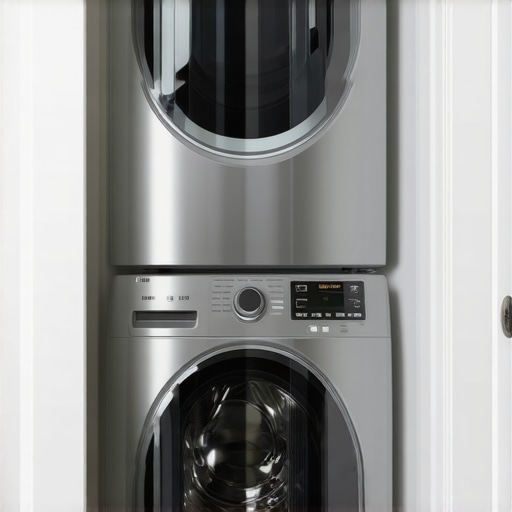
I stood there in my narrow hallway, staring at a damp pile of jeans and a closet door that refused to close. My old machine was a relic, a top-loader that required a crane to move and a prayer to operate. Every time it hit the spin cycle, it felt like a small earthquake was centered right between my bedroom and the bathroom. I eventually learned that how to stop your washing machine from banging against the wall isn’t just about leveling the feet—it’s about choosing the right hardware for the space. If you’re living the “small home” life like I am, you know that every inch in a hallway closet is a battlefield.
Stop Settling for a Laundry Setup That Doesn’t Fit Your Life
Choosing the right set is about more than just matching colors. We’re going to find a set that doesn’t just fit the hole in your wall, but actually makes your life easier. I’m talking about units that won’t vibrate your pictures off the wall and won’t leave you trapped in the hallway because the door swings too wide. I’ve been through the “measure twice, cry once” phase so you don’t have to. We are looking for the perfect balance of depth, height, and smart features. You might even find that how smart washing machines can simplify laundry day by letting you start a load from your phone while you’re still stuck in traffic.
Is a Stacked Set Actually Worth the Installation Headache?
I used to think stacking was a recipe for disaster—a top-heavy tower of vibrating metal waiting to topple. But modern engineering has come a long way. According to Energy Star, modern front-load washers use about 50% less water than standard top-loaders, which is a huge deal when you’re working with limited drainage capacity in a closet. My biggest mistake early on? I ignored the depth required for the venting and the hoses. I bought a “compact” set that ended up sticking out four inches past the door frame. It was a tripping hazard and an eyesore. If you’re worried about longevity, you should check out the most reliable washing machine brands for durability before you commit to a permanent stack.
Focus on the Dimensions That Actually Matter
When you’re shopping, the sticker on the front of the machine is only half the story. You need to account for what I call the “hidden inches”—the space behind the unit for the dryer vent and the water lines. If you’re looking for washing machines that save water, you’ll find that most are front-loaders, which are perfect for stacking. Just make sure you check if the doors are reversible! Have you ever tried to unload a dryer when the door opens toward the wall you’re standing against? It’s a literal nightmare. Have you ever bought an appliance only to realize it’s two inches too deep for the door to close? It’s time to get those measurements right so we can move on to the actual setup.
Give Your Appliances Some Breathing Room
Think of your dryer vent like a giant straw. If you bend it too much or pinch it against the wall, the machine can’t breathe, and your clothes will stay damp forever. When I first installed my unit in that cramped hallway closet, I shoved it back as far as it would go to make the doors close. Big mistake. I ended up crushing the semi-rigid aluminum ducting, which nearly caused a fire hazard from lint buildup. Now, I always use a periscope vent—it’s a flat, metal box that lets you vent the air without needing six inches of clearance. While you are back there, you must learn how to find a leak in your washing machines water supply line before it turns your subfloor into a sponge. Small leaks often hide behind the machine for months before they are noticed.
Lock the Feet or Watch the Machine Dance
The biggest myth in laundry is that a heavy machine won’t move. In reality, a stacked set is like a skyscraper; if the foundation is off by even a millimeter, the top floor is going to sway violently. I learned this the hard way when my dryer started walking toward the closet door during a heavy towel cycle, nearly punching a hole through the drywall. I had to crawl back there and realize I hadn’t tightened the lock nuts on the leveling feet. Use a spirit level on the top of the washer before you put the dryer on. If the bubble isn’t perfectly centered, your machine is basically a 200-pound vibrating wrecking ball.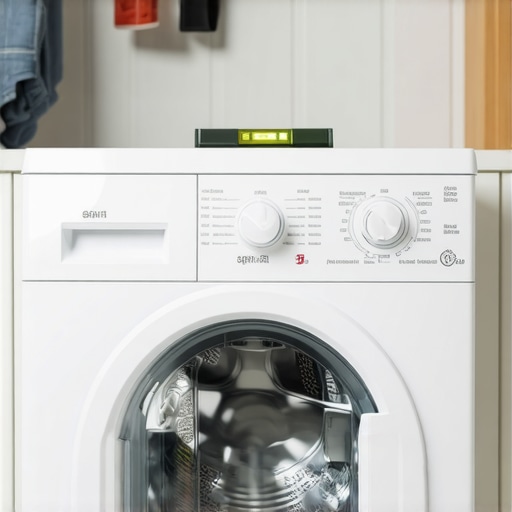
Connect to the Grid Before You Close the Door
Once the hardware is physically in place, the software becomes the next hurdle. I’m a huge fan of knowing exactly when my clothes are done so they don’t sit and get that damp basement smell. You should definitely look into how to set up automated laundry alerts on your phone to save yourself from constant trips to the hallway. When I first tried how to sync your laundry room with your smart home hub, I realized my Wi-Fi signal was being blocked by the metal casing of the machines and the thick closet walls. I had to move my router closer, but now I get a ping on my watch the second the spin cycle ends. It’s a total game-changer for someone like me who constantly forgets a load of whites exists until the next morning.
The Right Way to Handle the Plumbing
If you’re dealing with an older home, your water pressure might be a bit temperamental. I remember the panic of hearing a loud, metallic thump every time the washer shut off the water. That is called water hammer, and it can eventually lead to you needing to know how to replace the water inlet valve on your washer. Use braided stainless steel hoses instead of the cheap rubber ones that often come in the box. They are like insurance for your floors. I once had a rubber hose blister and nearly burst because I ignored a small kink near the faucet. It’s these tiny, boring details—the hoses, the clamps, and the leveling—that dictate whether your laundry day is a breeze or a plumbing disaster that requires a professional to fix.Most people think they are being smart by using more detergent for dirtier clothes. It is the biggest ‘more is better’ lie in the appliance world. Modern high-efficiency (HE) machines are engineered to use surprisingly little water, and when you dump in half a capful of soap, you are creating a mountain of suds that the machine simply cannot rinse away. This leads to what pros call ‘scrud’—a slimy buildup of undissolved detergent and body oils that coats the outer drum where you cannot see it. This hidden layer of filth is exactly why your front-load washer always smells like a damp locker room even after you have run a ‘clean’ cycle. According to reports from the Association of Home Appliance Manufacturers (AHAM), using excessive detergent is the primary cause of premature sensor failure and mold growth in HE units because the sensors get coated in a film that prevents them from reading water levels correctly.
Will Constant Use of Eco-Mode Actually Damage Your Dishwasher?
It sounds counterintuitive, but exclusively using the most energy-efficient settings can be a slow death sentence for your appliances. I have seen so many people frustrated because their plates are not coming out clean, only to realize the truth about eco-mode on modern dishwashers is that it often does not get hot enough to fully dissolve animal fats and grease. Over time, these grease deposits solidify in the drain lines, leading to expensive plumber visits. It is a similar story with detergent pods. If you are running a short or cool cycle, you might discover why your dishwasher pod isnt dissolving completely is simply because the outer plastic requires a specific temperature threshold to break down. Another major nuance people miss is the ‘Cold Water Trap.’ We have been told for years that washing in cold water saves the planet and your clothes. While that is true for the fabric, it is often terrible for the machine’s internal hygiene. Without a monthly hot-water sanitization cycle, that biofilm becomes a permanent resident. It is one of the common 5 mistakes that are shortening the life of your smart refrigerator and other connected home gear—ignoring the deep-clean cycles that the manufacturer actually programmed into the software. If you are serious about your setup, you should check out my ultimate guide to smart home appliances for a modern living to see how to balance efficiency with mechanical longevity. Have you ever fallen into this trap? Let me know in the comments.
Stop Calling the Repairman for Every Little Squeak
I’ve spent way too much money on service calls only to watch a technician flip a single switch and charge me $150. That’s why I finally invested in a digital multimeter and a basic socket set. If you’re serious about your gear, you need to understand the electrical health of your units. It’s the only way to verify if a heating element is actually dead or if you just need to know how to diagnose a faulty lid switch on your top loader without expensive guesswork. I use mine once a quarter to check the continuity of my dryer’s thermal fuse. It’s a ten-minute job that prevents a fire hazard and a massive repair bill. I’ve found that being proactive with these small checks is the secret to getting a twenty-year lifespan out of a ten-year machine.
How do I keep my high-end appliances running for a decade?
Maintenance isn’t just about cleaning the visible parts; it’s about the components hiding in the shadows. For my refrigerator, I use a specialized flexible coil brush and a vacuum attachment every six months. If you let pet hair and dust build up on those condenser coils, your energy bill will skyrocket, and you’ll eventually wonder why your refrigerator compressor is cycling too often. According to data from the Service Technicians Society of America, nearly 40% of cooling failures are directly linked to a lack of simple coil maintenance. It’s a dusty, thankless job, but it’s the primary difference between a fridge that lasts and one that ends up in a landfill prematurely.
The Digital Side of Keeping Things Running
We often forget that our modern machines are basically computers that happen to wash clothes or chill milk. Just like your phone, they need software love to function at peak performance. I’ve made it a habit to check for patches monthly because knowing how to update the firmware on your smart kitchen appliances can actually fix mechanical efficiency bugs that the manufacturer discovered post-production. Sometimes a simple update is the secret to finding the top smart appliances for a seamless home experience in 2025 because software recalibrates how sensors interact with your home’s specific water pressure and Wi-Fi strength.
Don’t Ignore the Gurgle in Your Drain
If your dishwasher is starting to sound like a gravel pit, stop running it immediately. Most of the time, it’s just a stray cherry pit or a piece of broken glass stuck in the impeller. I keep a dedicated set of long-nose pliers and a shop-vac specifically for these moments. Learning how to clear a blocked drain hose in your dishwasher has saved me at least three Saturday mornings of mopping up kitchen floods. Looking ahead, the future of home appliances trends to watch in 2025 suggest we’ll soon have internal AI sensors that detect these blockages before the water even starts to back up. But until those machines are in every home, we have to do the manual labor ourselves. My challenge to you: pull out your fridge this weekend and vacuum those coils—your wallet will thank you for the lower energy bill and the avoided repair fee.
The Hardest Lesson I Learned While Wrestling With HE Washers
Looking back at my years of appliance repair bills, I realize most of my headaches were self-inflicted. I used to think that more detergent meant cleaner clothes, but I eventually realized that modern high-efficiency machines operate on a ‘less is more’ philosophy. Here are the lightbulb moments that finally clicked for me: First, your appliance isn’t just a box of gears; it is a sensitive ecosystem where water hardness and detergent volume must be perfectly balanced. Second, ignoring the ‘clean cycle’ is the fastest way to ruin a thousand-dollar investment. Third, manual labor like cleaning a filter is non-negotiable, even if the marketing promises a ‘self-cleaning’ experience. If you are struggling with odors, you might need to check why high efficiency washers smell like mold and how to stop it before the scent becomes permanent.
#IMAGE_PLACE_HOLDER_E#
Tools and Guides to Keep Your Home Running Like Clockwork
I don’t expect you to become a certified technician overnight, but having the right resources makes a world of difference. When I am stuck on a specific issue, I return to my ultimate guide to smart home appliances for a modern living to ground myself in the basics of digital integration. For those living in smaller spaces, I highly recommend looking at 7 space saving appliances for tiny apartment kitchens to maximize every square inch. If you are planning an upgrade, keep an eye on the future of home appliances trends to watch in 2025 so you don’t buy yesterday’s technology today. These are the sources I trust because they prioritize real-world usability over flashy spec sheets.
Master Your Machines Instead of Letting Them Rule Your Weekend
At the end of the day, your home should serve you, not the other way around. Taking twenty minutes once a month to vacuum a coil or wipe down a gasket isn’t just about saving money—it’s about the peace of mind that comes with knowing your home is safe and efficient. Whether you are troubleshooting a leak or setting up your first automated laundry alert, remember that every small step contributes to a more seamless life. Embracing smart home appliances shouldn’t be intimidating; it’s an opportunity to reclaim your time. Have you ever had a simple maintenance mistake turn into a major repair disaster? Let me know in the comments below!