

It was 3:14 AM, and I was standing in my kitchen with a glass of water, staring at my refrigerator as if it were a temperamental roommate. Every ten minutes, the machine would let out a violent, metallic clunk, followed by a hum so loud I could hear it through my bedroom door. I used to think that was just the sound of ‘freshness’ happening. I was wrong. I spent years tolerating that mechanical racket and paying bloated electricity bills because I didn’t realize my old-school fridge motor was basically a light switch that only knew how to be ‘off’ or ‘full-blast.’ That realization changed everything about how I look at choosing the right refrigerator for a peaceful home.
Stop Paying for Power You Aren’t Actually Using
The biggest mistake I made early on was assuming that all compressors were created equal. I figured if the food stayed cold, the motor was doing its job. But here is the catch: a standard fridge motor is a single-speed beast. It waits for the internal temperature to rise, kicks on at 100% power to blast it back down, and then shuts off completely. This constant cycling is why you hear that annoying clicking noise every ten minutes. It is incredibly inefficient. When I finally swapped to an inverter compressor, it felt like moving from a rickety bicycle to a luxury sedan with cruise control. Today, I want to show you why this isn’t just tech-speak—it’s the difference between a fridge that lasts fifteen years and one that dies the week after its warranty expires.
Is an Inverter Actually Worth the Hype?
I get the skepticism. Inverters usually cost more upfront, and we’ve all been burned by ‘innovations’ that are just marketing fluff. However, the U.S. Department of Energy has noted that high-efficiency compressors can reduce energy consumption by as much as 25% to 30% compared to older models. In my own house, that switch meant I could finally stop searching for the best energy efficient fridge settings just to keep my utility bill under control. An inverter doesn’t just turn off; it slows down and speeds up smoothly, maintaining a rock-steady temperature that keeps your milk from spoiling prematurely on the top shelf. Have you ever felt like your fridge was more of a noisy chore than a helpful appliance? I’d love to hear if your current setup is keeping you awake at night too.
We are going to dive into the mechanical guts of these machines so you can see exactly where your money goes. If you are tired of the constant humming or worried about the top features for refrigerators in 2025, understanding the compressor is the single best place to start. Let’s look at why the ‘cruise control’ logic of an inverter is the secret to the quietest refrigerators for open-concept kitchens.
Think of Your Compressor as a Cruise Control System
To really get why an inverter compressor is a game-changer, imagine you are driving a car. A standard compressor is like a driver who only knows two positions: foot floored to the metal or foot completely off the brake. It is jarring, it burns through fuel, and it wears out the engine. An inverter compressor, however, is like having high-end cruise control. It calculates exactly how much ‘gas’ is needed to stay at 65 mph and adjusts the flow of refrigerant in real-time. This is why the quietest refrigerators for open-concept kitchens almost always feature this technology. It doesn’t need to scream at 100% power to keep your lettuce crisp.
Test Your Door Seal Before Buying a New Unit
Before you blame the compressor for your high bills, you need to check the seal. If cold air is leaking out, even the smartest inverter will work overtime. I call this the ‘Dollar Bill Test.’ Take a crisp bill, close the fridge door on it, and try to pull it out. If it slides out with zero resistance, your gasket is shot. I remember helping a friend who was convinced her fridge was haunted because of a constant whistling sound. It turned out the seal was warped from years of spilled juice. Learning how to test if your fridge door seal is actually airtight can save you from a $2,000 replacement bill you don’t actually need.
Get Those Coils Clean to Save the Motor
The compressor is the heart, but the coils are the lungs. If those lungs are choked with dust, the heart has to pump twice as hard. I learned this the hard way with my old golden retriever, Cooper. His shedding was legendary, and after six months, my fridge started making a sound like a small prop plane taking off. When I finally pulled the unit out, the back coils were wearing a thick sweater of dog hair. I spent three hours vacuuming and realized that simple maintenance is the secret to the best energy saving refrigerator models currently on the market. If you have pets, you must know how to keep your refrigerator coils clean in a pet-friendly home to prevent premature motor failure.

Find the Sweet Spot for Temperature Settings
Most people crank their fridge to the coldest setting thinking it’s safer. It’s not. It’s just an invitation for your eggs to turn into ice cubes and your compressor to burn out early. Setting your fridge to 37°F (3°C) and your freezer to 0°F (-18°C) is the industry standard for a reason. It’s the perfect balance of food safety and mechanical longevity. If you find your unit struggling, check the best energy efficient fridge settings for your utility bill to ensure you aren’t just throwing money out the window. This applies to all smart home appliances for a modern living; more power doesn’t always mean better performance.
How to Spot a Failing Component Early
If you start hearing a rhythmic clicking, don’t ignore it. That is often the start-relay trying—and failing—to kick the compressor into gear. When I ignored that sound in my first apartment, I woke up to a puddle of melted mint chocolate chip ice cream on my linoleum floor. Understanding why your refrigerator is making a clicking noise every ten minutes is the difference between a $50 part replacement and a total loss of your groceries. This logic extends to other appliances too; for instance, if you hear a thumping in the laundry room, you should immediately look into how to fix a washing machine that keeps banging during spin before the drum goes out of alignment. Keeping an ear out for these mechanical ‘cries for help’ is the hallmark of a savvy homeowner.
Let’s go beyond the fridge for a second, because the ‘more is better’ mentality is a plague in modern laundry rooms. Most people I talk to believe that if their clothes are extra dirty, they need a double dose of soap. This is the fastest way to kill a modern machine. In high-efficiency (HE) units, excess suds actually create a ‘cushion’ that prevents the clothes from agitating against each other. Instead of a deep clean, your clothes just float in a soapy soup. Worse, that extra soap builds up as ‘scrud’—a waxy residue that eats away at your seals. I spent a weekend learning the truth about high-efficiency detergent in old washers after my neighbor’s machine flooded his laundry room. The fix is simpler than you think: the secret to using less detergent in your high-efficiency washer is often using just two tablespoons, max. 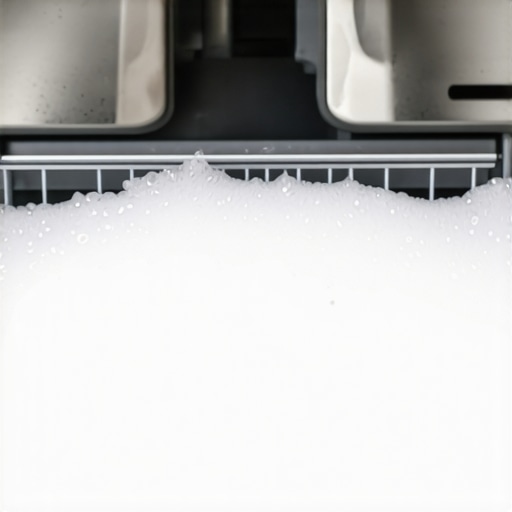
Stop Drowning Your Laundry in Detergent
The Association of Home Appliance Manufacturers (AHAM) has highlighted that modern sensors are far more sensitive than we give them credit for. If you are noticing a film on your clothes or a funky smell, it’s likely not a broken machine, but a chemistry problem caused by over-sudsing. This is a common hurdle when transitioning to top smart appliances for a seamless home experience in 2025; we try to use 1990s habits on 2020s technology. We expect the machine to just ‘handle’ the extra soap, but the logic board can only do so much before the pump gives out.
Why is your high-efficiency washer taking forever to finish?
I get this question constantly from friends who recently upgraded. You start a ‘Normal’ cycle, the timer says 45 minutes, but an hour later, it’s still hum-drumming away. You aren’t crazy—the machine is actually re-calculating the physics of your laundry in real-time. HE washers use a series of ‘senses’ to determine load balance and water clarity. If you overloaded the drum or used too much soap, the machine will keep adding water and time to try and balance the weight or rinse away the bubbles. Understanding why your energy efficient washer takes so long to finish is about realizing that ‘efficiency’ refers to water and power consumption, not necessarily your personal schedule. It is a calculated trade-off for a lower utility bill and better fabric care.
The Eco-Mode Trap That Clogs Your Pipes
We’ve been told that ‘Eco’ modes are the gold standard for saving the planet, but if you use them exclusively, you are setting yourself up for a nasty surprise. Eco cycles use lower water temperatures to save energy. This sounds great until you realize that animal fats and grease from your dinner plates don’t fully melt at those lukewarm temperatures. Over months, that gunk solidifies in your drain lines and on the hidden sensor in your dishwasher that needs a manual scrub. This sensor gets coated in a film of grease, tricking the machine into thinking the dishes are clean when they are actually still covered in a microscopic layer of bacteria. To avoid this, I always recommend running one ‘Heavy’ or ‘Sanitize’ cycle with a dedicated cleaner once a month to blast out the buildup. It keeps the sensors calibrated and the pipes clear. Have you ever fallen into this trap? Let me know in the comments.
The single most important tool in my kitchen isn’t a high-end chef’s knife; it’s a $20 digital multimeter. I can’t tell you how many times people assume a motor is dead when it’s actually just a $5 thermal fuse that’s popped. Before you even think about calling a technician for a premium service fee, you need to learn how to diagnose a washing machine that wont spin at full speed using basic continuity tests. It sounds intimidating, but checking a heating element or a sensor with a probe is a five-minute job that has saved me thousands over the last decade.
Stop Ignoring the Gunk in Your Drain Pump
Maintenance isn’t just about electricity; it’s about mechanical friction. Every three months, I get down on my hands and knees to clear the debris filter on my washer. It’s disgusting—filled with coins, lint, and occasionally a stray Lego—but if that filter clogs, the pump works twice as hard and eventually burns out. If you’ve noticed your cycles are stalling, you need to know how to clean the debris filter on your front load washer effectively. The same logic applies to your kitchen; the easiest way to clean the filter in your dishwasher is simply to rinse it under hot water once a week. According to the experts at The Repair Association (Repair.org), the ‘Right to Repair’ movement is gaining ground specifically because consumers are tired of ‘disposable’ engineering, and these simple habits are your first line of defense against planned obsolescence.
How do I keep my gear running for twenty years?
The secret isn’t buying the most expensive model; it’s being proactive with the wear-and-tear items. Rubber gaskets and seals are the most common points of failure. I treat my washer’s bellows with a specialized cleaner to prevent the rubber from becoming brittle and cracking. If you see a leak, don’t wait; learning how to replace the door seal on a front load washing machine is a manageable Saturday project that prevents water damage to your subflooring. This proactive approach is essential for top smart appliances for a seamless home experience in 2025, where the complexity of the internal electronics makes physical maintenance even more critical.

The Future Belongs to Modular Machines
I predict that by the end of this decade, we will see a massive shift toward modular appliance design. Instead of replacing a whole fridge because a screen failed, you’ll just swap out a standardized ‘intelligence module.’ We are already seeing the beginning of this with the way why your smart appliance app keeps asking for a firmware update—the hardware is becoming a platform for software. Looking at the future of home appliances and trends to watch in 2025, the winners will be the brands that make their components accessible to the average homeowner. My advice? Go grab a multimeter this weekend and test a simple outlet or a battery; getting comfortable with that tool is the first step toward never being at the mercy of a repairman again.
Lessons My First Smart Kitchen Taught Me
Reflecting on a decade of DIY repairs, I have realized that silence is often a warning. While we crave whisper-quiet units, a sudden change in pitch—even if it gets quieter—can signal a dying motor or a shifting component. I have also learned that software is now as critical as hardware. If you have ever wondered why your smart appliance app keeps asking for a firmware update, it is usually to patch efficiency bugs that physically protect your internal sensors. Finally, always ask yourself is a smart fridge really worth the extra money if you are not prepared to do the physical upkeep. Technology cannot replace a clean coil or a fresh gasket.
The Resources That Keep My Kitchen Running
I do not rely on guesswork when a machine acting up. My first stop is always my own Digital Manual Archive; I keep a cloud folder for every PDF manual so I can troubleshoot on the fly. I also regularly consult the Repair Association (Repair.org) to see which manufacturers are supporting the Right to Repair. For those who want a complete strategic roadmap for their home, I highly recommend the ultimate guide to smart home appliances for a modern living. It provides the technical depth needed to understand how your specific models should be performing at their peak.
Take Charge of Your Home Tech Today
You do not need a degree in mechanical engineering to keep your home running smoothly. You just need a little curiosity and the willingness to look behind the machine once in a while. By staying proactive with your smart appliances, you are not just saving money on utility bills; you are reclaiming peace of mind and preventing unnecessary waste. Don’t wait for a total breakdown to start learning how your home functions. If you have any questions or need specific advice, feel free to visit our contact us page. Have you ever been blindsided by a repair bill that could have been avoided with a simple five-minute fix? Let me know in the comments below!