
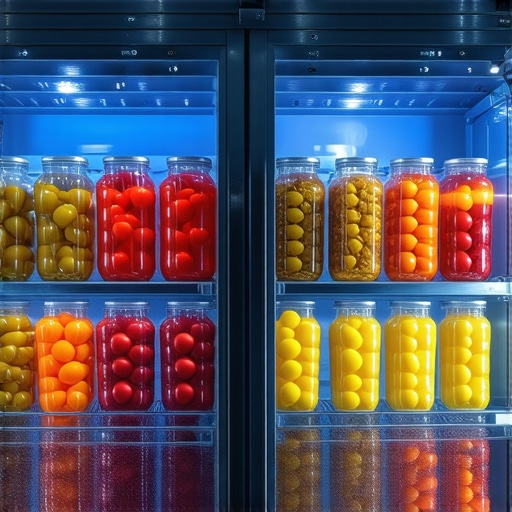
It happened at 2:00 AM on a Tuesday. I was standing in my kitchen, parched, reaching for that carton of organic milk I’d just bought the day before. One sip and—ugh. It wasn’t sour yet, but it had that unmistakable, lukewarm ‘almost there’ funk. I checked the door. It was shut tight. The seal was clean. Yet, my milk was tepid, and strangely, the spinach sitting right behind it was frozen into a block of green ice. This wasn’t a case of someone leaving the door ajar; this was a ghost in the machine. It’s frustrating, expensive, and honestly, a bit gross. Today, we are going to stop the guessing game and fix that erratic cooling once and for all.
Stop Blaming the Kids for Leaving the Door Open
Most of us assume that if the door is closed, the temperature should stay as steady as a rock. I learned the hard way that this is a total myth. Early in my DIY journey, I made the classic mistake of just cranking the thermostat to the coldest setting whenever I noticed a warm spot. All that did was burn out my compressor faster and lead to a situation where I was freezing the eggs on the top shelf while my milk spoiled in the door. It was a mess.
Is my fridge just dying a slow, expensive death?
You might be worried that a fluctuating temperature means you need to drop two grand on a new unit, but that’s rarely the case. Often, the culprit is something as simple as blocked air vents or a sensor that has lost its mind. According to the FDA, keeping your refrigerator at or below 40°F (4°C) is non-negotiable for food safety, as bacteria can double in as little as 20 minutes in the ‘danger zone.’ If your internal thermometer is bouncing around like a pinball, you aren’t just losing money on groceries—you’re risking a nasty bout of food poisoning. Before you call a repairman, you need to check if your refrigerator door seal is actually airtight. Even a tiny gap can let in enough humidity to throw the whole system into a tailspin. Have you ever opened your fridge only to find it’s acting more like a sauna than a cooler? It’s a common headache, but most of the time, the fix is right at your fingertips if you know where to look. By tweaking your fridge settings and checking a few hidden sensors, you can restore order to your kitchen. We’re going to look at the ‘why’ behind these shifts so you can stop throwing away spoiled food and start trusting your appliance again. [image_placeholder]
Clear the Path for Cold Air to Move
To fix a fridge that is freezing the lettuce while the milk spoils, you have to think about air as a fluid. It needs to flow. Imagine trying to cool a room with an air conditioner, but you’ve hung a heavy curtain directly over the vent. That is exactly what happens when you shove a jumbo-sized pizza box or a stack of meal-prep containers against the back wall.
Don’t Pack the Vents Like a Suitcase
Most modern refrigerators have a ‘jet’ or a series of slats where the cold air enters. If these are blocked, the air pools in one spot—usually the top shelf—and never reaches the bottom. This is why you need to learn how to organize your freezer to prevent frost burn and food waste as well as your fridge compartment. Keep items at least two inches away from the perimeter walls. If your fridge has a ‘multi-flow’ system, look for the small circular vents on every level and make sure they aren’t ‘choked’ by grocery bags.
The Hidden Grime That Strangles the System
Your refrigerator is essentially a heat exchanger. It doesn’t ‘create’ cold; it removes heat. It does this through the condenser coils, usually located at the bottom or the back of the unit. When these coils get coated in dust, pet hair, or kitchen grease, they can’t release heat efficiently. This forces the system to run longer and harder, leading to those wild temperature swings you’re seeing.
Dusty Coils Are Stealing Your Money
I remember once spending an entire Saturday morning thinking my compressor was on its last legs. I even started researching the real difference between inverter compressors and standard fridge motors to see if an upgrade was worth it. I had pulled the unit out and was ready to call a pro when I saw it: a thick, felt-like layer of dust and cat hair covering the coils. It looked like the fridge was wearing a heavy wool sweater in July. Ten minutes with a vacuum and a long-handled brush later, the temperature stabilized. The ‘dying’ motor was just a suffocating one. If you ignore this, you’ll eventually need to know how to spot a failing refrigerator compressor before it dies, which is a much more expensive conversation.
Listen for the Fan Motor’s Cry for Help
If your fridge feels warm but you hear a rhythmic clicking or a high-pitched Whirring, your evaporator fan might be struggling. This fan is responsible for pulling air over the cooling coils and pushing it into the food compartment. If a stray piece of plastic wrap or a buildup of ice gets caught in the blades, the air stops moving entirely. Before you panic, check the refrigerator noise that means your fan motor is dying to differentiate between a simple obstruction and a mechanical failure.
Reset the Brain of Your Appliance
Sometimes the hardware is fine, but the software—or the sensor—is lying. Every fridge has a thermistor (a temperature-sensitive resistor) that tells the control board when to kick the cooling into gear. If this sensor is covered in frost or has been bumped by a gallon of milk, it sends the wrong data. You can often fix this by learning how to recalibrate your refrigerator’s internal thermometer for better cooling. It’s the digital equivalent of splashing cold water on your face to wake up; it forces the fridge to re-read the actual environment instead of relying on a glitched memory.
The Counterintuitive Reality of Your Eco-Button
Most people look at the ‘Eco’ cycle on their dishwasher and assume it is a compromise—less water, less heat, and ultimately, less clean. I used to think the same thing until I looked at the engineering specs. The big secret is that eco-modes actually clean better because they use time as a mechanical force. While a standard cycle blasts your plates with high-pressure hot water, the eco-setting allows the enzymes in your detergent more time to break down proteins and starches. It’s like a slow-cooked meal versus a microwave burrito. If you find your dishes aren’t coming out right, it’s probably not the cycle; you might be falling for the dishwasher detergent mistake that is etching your favorite glassware. Understanding the truth about the eco mode on your new dishwasher can save you hundreds in energy costs without sacrificing sparkle.
Stop Drowning Your Laundry in Soap
The biggest ‘Oops’ factor I see in modern laundry rooms is the ‘more is better’ mentality with detergent. In the old days of top-loaders and massive water usage, you needed a lot of soap. Today, using a full cap of high-efficiency (HE) detergent is basically sabotage. According to the Association of Home Appliance Manufacturers (AHAM), modern high-efficiency machines are designed to work with surprisingly small amounts of surfactants; anything extra just creates a ‘biofilm’ that traps bacteria and causes that ‘damp towel’ smell. If your clothes feel stiff, you need to learn the secret to using less detergent in your high efficiency washer. Excess suds can even confuse the sensors, leading to a situation where your washing machine takes much longer than the timer says because it’s stuck in an endless rinse loop trying to clear the bubbles.
Why does my smart washer think a single towel is a crisis?
Advanced sensors are a double-edged sword. Have you ever tried to wash just one heavy item, like a bath mat or a single king-size comforter, and the machine just refused to spin? This isn’t a glitch; it’s the machine protecting its own bearings. When a load is too small, the centrifugal force can’t be balanced. This is often why users see why your washing machine keeps getting an unbalanced load error even when the machine isn’t ‘full.’ To avoid this trap, always wash heavy items in pairs. Another sophisticated trap is the ‘vinegar hack.’ Everyone on the internet tells you to use white vinegar as a rinse aid, but the acetic acid can actually eat through the rubber seals and hoses of modern machines over time. Before you pour that bottle in, read about the truth about using white vinegar in your high efficiency dishwasher to see if you’re doing more harm than good. Have you ever fallen into this trap of thinking ‘natural’ always means ‘safe’ for your machine? Let me know in the comments. By learning how to tell if your appliances eco friendly tag is just marketing, you can cut through the noise and treat your hardware with the respect it deserves.If you really want to stop being a victim of your own appliances, you need to stop guessing and start measuring. I don’t care if you aren’t an electrician; you should own a basic digital multimeter. It’s the single most important tool in my utility drawer. When my fridge started acting up, I didn’t just hope for the best; I used the meter to check the resistance on the thermistor. This tiny $20 device told me exactly why the system was failing, saving me from a $300 ‘diagnostic fee’ from a repair company. Beyond electronics, a simple flexible coil brush is non-negotiable for anyone who wants to save money on your electric bill by changing three fridge settings and keeping the hardware efficient.
How can I keep my smart appliances running for a decade?
Maintenance in 2025 isn’t just about grease and filters; it’s about software hygiene too. You’ve probably noticed that your phone and computer get slower if you don’t update them, and the same applies to your kitchen. I’ve found that many ‘glitches’ are resolved simply by understanding why your smart appliance app keeps asking for a firmware update. These patches often contain critical fixes for sensor calibration that keep your motors from overworking. For your laundry room, the absolute best thing you can do is learn how to clean the debris filter on your front load washer effectively. According to technical documentation from the Association of Home Appliance Manufacturers (AHAM), a clogged filter is the primary cause of pump failure and mid-cycle stalls. I make it a habit to drain and clear mine on the first Sunday of every month. It’s a five-minute job that prevents a literal flood in your hallway.
Your Appliances Are Getting Smarter Than You Think
We are quickly moving toward an era of predictive maintenance. In the next few years, I predict that ‘smart’ won’t just mean you can start your oven from the couch; it will mean your dishwasher detects a slightly slower drain speed and orders its own replacement solenoid before the part actually breaks. We are already seeing the beginning of this with innovative dishwashers with AI technology you must know about, which adjust water pressure based on soil levels. To stay ahead of the curve, start using your data. For instance, you can use your smart washers delayed start for cheaper energy rates, which not only saves you cash but actually reduces the strain on the power grid during peak hours. If you want to see an immediate difference in your machine’s performance, go to your laundry room right now and pull out that bottom debris filter. You’ll be shocked at what’s been sitting in there—and your washer will thank you with a much quieter spin cycle.
Three Truths That Transformed My Appliance Habits
After years of wrestling with erratic cooling and noisy spin cycles, I have realized that maintenance isn’t a chore; it is an investment. First, never underestimate the power of a simple clean. A vacuumed coil or a cleared filter solves nearly eighty percent of common mechanical issues. Second, technology is your ally, not an obstacle. While it feels daunting, taking the time to learn why your smart appliance app keeps asking for a firmware update is the key to preventing long-term motor fatigue. Finally, remember that your machine relies on a delicate balance of sensors and physics. When you finally grasp the secret to using less detergent in your high efficiency washer, you aren’t just saving soap; you are extending the life of your pump and seals by several years.
The Gear and Guides That Keep My Kitchen Running
If you want to move from a frustrated owner to a household hero, I recommend building a small, specialized toolkit. Start with a digital multimeter to check continuity and a flexible long-reach brush for those hidden fridge coils. For staying ahead of the curve, I frequently check the future of home appliances trends to watch in 2025 to see how emerging tech is changing maintenance needs. If you are just starting your journey into home automation, this ultimate guide to smart home appliances for a modern living is a fantastic roadmap to follow. These resources have personally saved me thousands in unnecessary service calls and premature replacements over the last decade. [image_placeholder]
Take Back Control of Your Kitchen Tech
Don’t let a blinking error light or a lukewarm carton of milk ruin your week. Most of these machines are far simpler than they look once you peel back the plastic housing and understand their basic needs. By staying curious and proactive, you can ensure your home appliances serve you reliably for many years to come. You have the tools, the knowledge, and the plan—so go ahead and pull that washer out from the wall. You have got this.
Have you ever found a weird object—like a coin, a button, or even a stray toy—stuck in your washer’s debris filter? Let me know about your craziest maintenance discoveries in the comments below!