
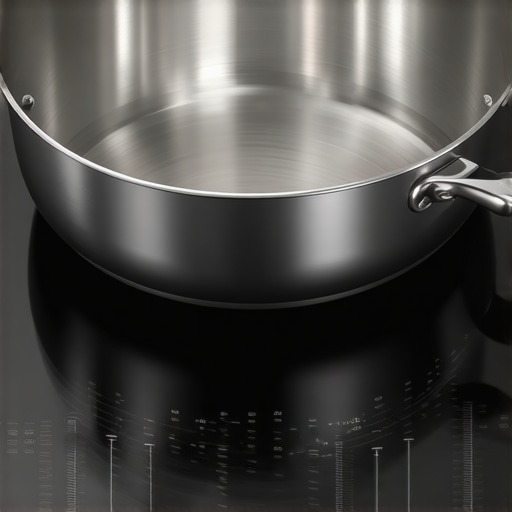
I’ll never forget the first night I fired up my brand-new induction range. I had just finished a sleek kitchen remodel and was feeling like a pro chef. I placed my favorite stainless steel skillet on the glass, turned the dial, and—ZZZZZZZZ. My heart sank. I genuinely thought I’d just fried a $2,000 appliance in less than thirty seconds. It didn’t sound like cooking; it sounded like a frustrated swarm of bees was trapped under my pots. I spent the next hour frantically googling and checking if I should call an electrician. If you’re hearing that annoying hum, whine, or rattle right now, take a deep breath. You aren’t crazy, and your house isn’t about to burn down. Induction technology is a marvel of the modern kitchen, but it’s also a bit of a diva. Today, I’m going to walk you through exactly why that noise is happening and how I finally got my kitchen back to being the quiet sanctuary I promised myself it would be.
The Noise Usually Comes From the Pan
Here is the truth: 90% of the time, the buzzing has nothing to do with the cooktop’s electronics. It’s the cookware. I made the classic mistake of buying a set of “induction-compatible” pans from a big-box store that were essentially thin layers of metal sandwiched together. When you are looking for new gear, you really need to know how to tell if your appliances eco-friendly tag is just marketing or if it actually denotes quality. Because these cheap layers aren’t perfectly fused, the magnetic field causes them to vibrate against each other at high frequencies. It’s a physical phenomenon, not a mechanical failure. If you’re using lightweight pans or pieces with loose handles, that vibration turns into an audible buzz. I’ve found that switching to heavy, single-clad cast iron or high-quality fully-clad stainless steel makes a world of difference. While you’re at it, make sure you know the best way to clean an induction cooktop without scratching it so your investment stays looking as good as it sounds.
Is my expensive stove actually broken?
Most people assume the worst when a new appliance makes a peep. When I first transitioned from gas, I didn’t realize that induction doesn’t use a flame or a traditional heating element. Instead, it uses electromagnetic fields. According to Scientific American, these fields create a current directly in your cookware, turning the pan itself into the heat source. If your pan is made of multiple layers of metal, those layers can literally rub against each other thousands of times per second. That is the sound you are hearing. It is part of the learning curve for anyone diving into the ultimate guide to smart home appliances for a modern living. Have you ever had a guest stop dead in their tracks because they thought your stove was “screaming” at them? Tell me about your loudest kitchen fails in the comments. This buzz is common, especially why your induction cooktop makes a buzzing sound with certain pans specifically. It is not a sign of a dying unit, but rather a sign of physics in action.
Grab a Fridge Magnet Before You Shop
I spent a week thinking my new stove was a lemon before I realized I was the one making the beginner mistakes. If you want to kill that annoying noise, you need to start with the magnet test. Not all cookware labeled as induction-ready is created equal. I’ve found that the best way to verify a pan is to grab a strong magnet from your refrigerator—the kind you use to pin up grocery lists—and stick it to the bottom. If it snaps on with a firm, satisfying thud, the magnetic connection is strong and likely to be quiet. If the magnet barely clings or slides off, that pan is going to vibrate and sing like a soprano on your cooktop. It’s a small detail, but just like how to save money on your electric bill by tweaking your fridge settings, the right equipment and setup determine the efficiency and noise level of your entire kitchen ecosystem. 
Stop Buying Sandwich Bottom Pans
The biggest culprit in my kitchen was a set of expensive-looking pans that had a heavy magnetic disc welded only to the bottom. These encapsulated or sandwich bases are notorious for buzzing because the different layers of metal expand and contract at different rates when the electromagnetic pulse hits them. When I switched to fully-clad cookware, where the magnetic stainless steel runs from the base all the way up the sides, the noise virtually vanished. The pan acts as one solid, heavy piece of metal rather than a vibrating stack of plates. If you are following the future of home appliances trends to watch in 2025, you will see that high-end material science is becoming just as critical as the smart chips inside the units.
Back Off the Power Settings
I remember the first time I tried the Boost mode on my range. It felt like I was launching a rocket, but that intensity is exactly when the buzzing is most aggressive. High power levels create an intense electromagnetic field that forces even high-quality pans to vibrate at a high frequency. I once tried to boil a massive pot of water for pasta on the highest setting, and the squeal was so sharp it actually made my dog leave the kitchen. I realized that backing the power down from a 10 to an 8 or 9 stopped the vibration entirely without adding more than a few seconds to the boil time. Much like the refrigerator noise that means your fan motor is dying, a specific sound is often a signal that the appliance is working at its absolute limit and needs a slight adjustment to run smoothly.
The Lid and Handle Vibration Trap
Sometimes the noise isn’t the cooktop or the pan itself, but the accessories. One afternoon, I was convinced my cooktop was failing because of a rhythmic, metallic rattling. I was ready to contact us for a professional repair technician until I reached out and touched the lid of the pot. The noise stopped instantly. The vibrations from the induction surface were traveling through the pan and shaking a slightly loose screw on the glass lid handle. It was an easy fix that sounded exactly like how to fix a rattling dishwasher that sounds like it has loose rocks. Before you assume the worst, tighten every screw on your cookware and ensure your lids fit snugly without gaps.
Is It the Fan or the Magnet?
Finally, you have to learn to distinguish between the magnetic hum and the cooling fan. Induction units generate significant heat within their internal electronics, and a cooling fan must kick in to prevent the system from overheating. This is a steady, mechanical whirring sound, very similar to what you might hear from washing machines that save water expert advice for 2025 during a high-speed spin. If you hear a whirring that continues for a few minutes after you’ve turned the heat off, don’t panic. That is simply the appliance protecting itself. It’s a normal part of the cooling cycle, not a sign of a faulty magnet or a buzzing pan.
While the hum of an induction coil might be your first introduction to the world of advanced kitchen technology, it certainly won’t be your last. Once you’ve mastered the art of choosing the right pans, you realize that the entire modern kitchen is built on a series of promises about efficiency and intelligence that aren’t always what they seem. In my years of obsessing over these machines, I’ve learned that the biggest mistakes don’t happen because of a lack of features, but because we treat new tech like the old-school gear we grew up with.
The Eco Mode Trap You Are Probably Falling For
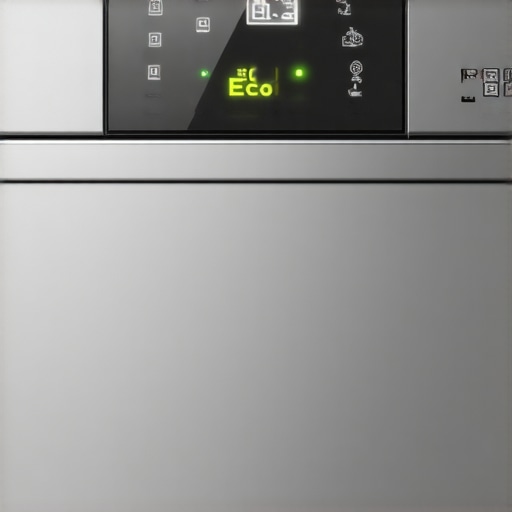
Everyone tells you to hit that ‘Eco’ button to save money, but in my experience, using it exclusively is a recipe for a repair bill. Most people assume Eco mode is just a more efficient version of a standard cycle. The reality is quite different. To save energy, these modes often use lower water temperatures and significantly longer cycle times. This is exactly why your dishwasher is taking four hours to finish a single load. The problem? Low heat often fails to fully dissolve modern fats and detergents. Over time, this leads to a buildup of ‘scrud’—a nasty combination of grease and soap scum—that can clog your internal sensors and pumps. It is a classic case of how to tell if your appliances eco-friendly tag is just marketing versus what is actually good for the machine’s lifespan. I always recommend running a heavy-duty, high-heat cycle at least once a week to ‘flush’ the system.
Does more smart tech actually mean more repairs?
This is the question I get asked most by people looking into the ultimate guide to smart home appliances for a modern living. The contrarian truth is that while smart appliances offer incredible convenience, they introduce a layer of software complexity that traditional repairmen aren’t always equipped to handle. According to a reliability study by Consumer Reports, the addition of complex electronic control boards and sensors in high-end appliances has historically led to higher repair rates compared to their purely mechanical ancestors. For instance, you might find why your smart dishwasher app keeps giving you phantom errors has nothing to do with the hardware, but is actually a firmware glitch or a weak Wi-Fi signal. It’s a nuance that requires you to be as much of an IT specialist as you are a home cook.
Stop Over-Dosing Your High Efficiency Washer
The ‘Oops’ factor that kills more appliances than anything else is the ‘more is better’ mentality with detergent. If you have a high-efficiency (HE) machine, using too much soap is the fastest way to ruin the bearings and invite mold. I’ve seen so many people frustrated because their washing machines that save water are leaving clothes feeling slimy or smelling like mildew. The truth is, you often only need two tablespoons of HE detergent. Anything more creates an oversuds condition that the machine can’t rinse away, forcing it to work harder and eventually leading to a costly service call. Learning the secret to using less detergent in your high efficiency washer is the single best thing you can do for your laundry room’s longevity. Have you ever fallen into this trap of thinking more soap equals cleaner clothes? Let me know in the comments below.
I used to think my toolbox only needed a Phillips head screwdriver and a pair of pliers. But the moment I transitioned to a kitchen full of interconnected tech, I realized my maintenance game had to level up. If you want to keep these machines running for a decade rather than five years, you have to stop treating them like passive boxes of metal and start treating them like the high-performance computers they actually are. I’ve learned the hard way that a little bit of technical curiosity can save you a $300 service call just to have someone press a reset button.
The Tool That Saved My Fridge
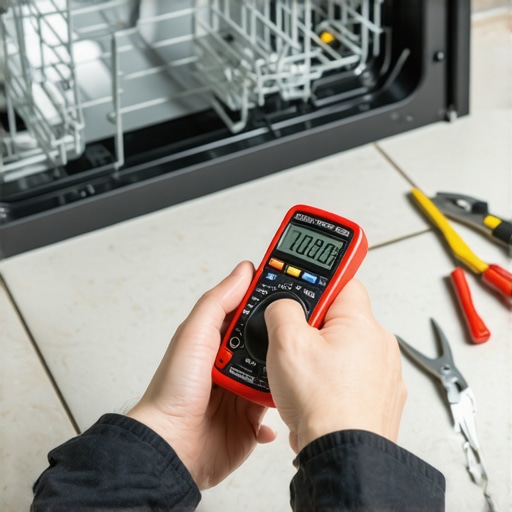
About two years ago, I noticed my refrigerator started behaving erratically—the lights stayed on, but the compressor wouldn’t kick in. Instead of panicking, I pulled out my digital multimeter. Most people think these are only for electricians, but if you want to know how to diagnose a washing machine that won’t spin at full speed or why your fridge isn’t cooling, this $20 tool is your best friend. According to the Samsung Smart Care technical guide, checking for continuity in your heating element or thermal fuse is often the first step in troubleshooting error codes before you ever buy a replacement part. I discovered a simple blown fuse that cost me $8 and ten minutes of work. It’s the same logic I use when I’m trying to how to save money on your electric bill by changing three fridge settings—it’s about precision and data, not guesswork.
Software Updates Are the New Oil Changes
We are living in an era where your dishwasher might need a patch more than it needs a scrub. I’ve had my share of frustration with firmware. One morning, my oven refused to preheat because it was stuck in a boot loop. Learning how to update your smart fridge software without crashing the system is a skill every modern homeowner needs. Manufacturers are constantly releasing updates that improve sensor accuracy and energy efficiency. However, you also have to be careful about your network; I’ve found that knowing how to keep your smart home hub from interfering with appliance signals is the difference between a seamless kitchen and a collection of ‘offline’ notifications. If your machine is acting ‘glitchy,’ always check the app for a pending update before you assume the hardware is failing.
How do I maintain these complex systems without a degree in engineering?
The secret is focusing on the ‘gatekeepers’ of your machine: the filters and the sensors. For my laundry room, I make it a point to learn how to clean the debris filter on your front load washer effectively once every three months. You would be shocked at the amount of loose change, pet hair, and lint that gets trapped there, eventually leading to a situation where you’re wondering how to fix a washing machine that is stuck on the sensing cycle. Clean filters allow the sensors to get accurate readings, which prevents the motor from overworking and burning out prematurely. It’s a simple cycle: clean filters lead to better sensor data, which leads to a longer lifespan for the expensive internal components.
Predictive Maintenance is the Future
Looking ahead, the burden of maintenance is going to shift from the owner to the AI. As we look at the future of home appliances trends to watch in 2025, we are seeing the rise of ‘self-healing’ tech. Newer units in the top smart appliances for a seamless home experience in 2025 are already starting to monitor their own vibration patterns and power draw. Soon, your washing machine will text you to say its bearings are wearing down weeks before they actually fail. Until then, stay proactive. My best advice? Go find your washing machine’s debris filter—usually behind a little door at the bottom front—and clean it out tonight. It’s the easiest way to prevent a flood and a headache.
The Kitchen Truths I Learned the Expensive Way
One thing I’ve realized over the years is that high-end tech doesn’t mean “set it and forget it.” I used to ignore the little mechanical details until they became massive repair bills. I learned the hard way that the truth about the eco mode on your new dishwasher is often about trade-offs in cleaning power that you need to be aware of. Also, that induction buzz isn’t a defect—it’s just the pan communicating with the magnetic field. If you listen closely, your machines are always telling you what they need, whether it’s a heavier pan or a simple software check.
My Must-Have Gear for a Glitch-Free Home
Keeping a modern kitchen running smoothly requires a few specific items that I now swear by. First, a high-quality digital multimeter is non-negotiable if you want to know how to diagnose a washing machine that won’t spin at full speed without calling a pro. Second, I always keep a dedicated smartphone for appliance apps; ensuring you know how to connect your smart washer to your home network without the lag keeps your laundry schedule on track. Finally, I always refer back to choosing the right refrigerator tips from industry experts to make sure my cooling systems are properly leveled and ventilated.
The Confidence to Own Your Tech
Don’t let a buzzing pan or a blinking error code intimidate you. The leap into the top smart appliances for a seamless home experience in 2025 is meant to make your life easier, not more stressful. By understanding the physics of your induction cooktop and the maintenance needs of your laundry room, you transition from a frustrated consumer into a master of your home environment. It’s all about staying curious and remaining proactive with your maintenance. Have you managed to silence a buzzing pan with better cookware, or are you still dealing with a noisy kitchen mystery? Let me know in the comments below!