
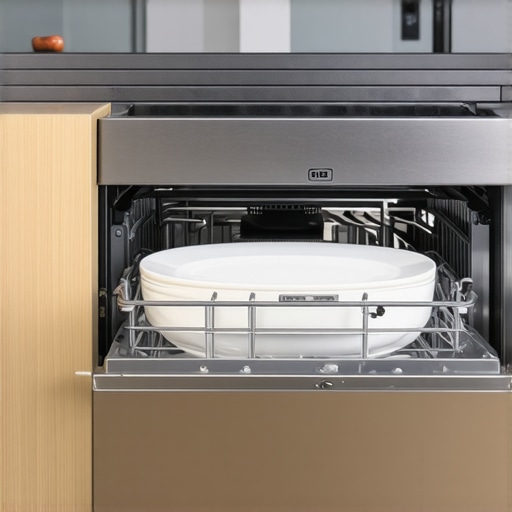
I stood there, staring at a stack of greasy plates that had somehow migrated from my tiny kitchen counter into the bathroom sink because I quite literally ran out of flat surfaces. It was 11 PM on a Tuesday, and I was on the verge of a breakdown in my 400-square-foot studio. I remember thinking, “There has to be a better way than hand-washing every single fork in a space the size of a shoebox.” At first, I tried one of those bulky countertop units, but it ate every inch of my prep area. It was a massive mistake that taught me a hard lesson: in a small kitchen, you don’t just need an appliance; you need a smart solution that disappears when you don’t need it.
The Day I Realized My Studio Kitchen Needed a Major Upgrade
For the longest time, I thought a dishwasher was a luxury reserved for people with “real” houses. I was wrong. The secret isn’t just a smaller version of a standard machine; it’s the drawer dishwasher. These units are game-changers because they slide right into your existing cabinetry, often taking up only half the vertical space of a traditional tub. Today, I’m going to help you avoid the expensive errors I made and show you the 4 best drawer dishwashers that actually deliver on their promises. Whether you’re dealing with a “vintage” apartment or just want more storage, these picks are about to change your life. Making the switch to modern living doesn’t require a renovation; it just requires better choices.
Do These One-Drawer Wonders Actually Clean Your Dishes?
This is the big one. Everyone asks me, “Is it really worth the hype, or is it just a glorified rinse station?” I get the skepticism. When I first looked at small-batch dishwashers, I was terrified I’d be re-washing half the load by hand. But modern engineering has come a long way. According to data from the National Kitchen & Bath Association, demand for compact, high-performance appliances has grown significantly as urban living spaces shrink, pushing manufacturers to pack full-sized cleaning power into smaller frames. Some even feature advanced AI technology to detect soil levels. Have you ever had to choose between a dishwasher and a cabinet for your pots and pans? It is a tough call. Before you pull the trigger, it’s vital to understand how to choose the best dishwasher for your specific layout. My early mistake was ignoring the noise level, which led to me having to turn the TV to max volume just to hear over the cycles. Let’s make sure that doesn’t happen to you.
Measure Twice to Avoid a Renovating Nightmare
Most people assume a drawer dishwasher is a standard size, but that is a dangerous trap. I once spent three hours trying to shave down a cabinet face because I forgot to account for the mounting brackets. You need to treat your cabinet opening like a high-security vault—every millimeter counts. Most single drawers require a 24-inch wide opening, but the depth is where they vary wildly. If your plumbing is directly behind the unit, you might find that the drawer doesn’t sit flush, leaving an ugly gap that mocks you every time you walk into the room. Before you buy, check the specific clearance requirements in our guide on the smart appliances revolution to ensure your layout can actually handle the tech. It is much easier to modify a cabinet before the dishwasher arrives than it is to fix it while water is already leaking onto your floor.
Stop Pushing the Drawer Too Far Back
Installation is where most DIY dreams go to die. The biggest mistake I ever made was shoving the unit into the cavity without checking the drain hose. I remember the first time I pushed the drawer into place; I was so proud until I heard a strange gurgling noise and realized I’d pinched the drain line flat against the back wall. It is exactly like trying to breathe through a straw that someone is stepping on—the pump will work overtime and eventually burn out. You need to loop the hose high to prevent sink water from siphoning back into your clean dishes. If you ignore this, you will end up wondering why your dishwasher bottom is full of standing water the next morning.
Why One Pod Is Often Too Much for One Drawer
Since these units use about half the water of a giant tub, using a standard detergent pod can actually backfire. I used to find a mountain of suds leaking out because I was over-cleaning a small space. You might see why your dishwasher pod isnt dissolving completely if the water volume is too low to break down the thick plastic coating. Switch to a high-quality powder or gel so you can control the dose precisely. This also prevents the etching that happens when too much chemical sits on your glasses in a confined space. While you are at it, make sure you are loading large serving platters without blocking the spray arm. Because the space is shallow, a single stray plate can stop the water from reaching anything else, leaving you with a greasy mess that requires a second run. Use the best energy efficient settings for your new dishwasher to save on your utility bill without sacrificing the shine on your silverware. If the machine feels sluggish, it is usually the 5-minute fix for a dishwasher that wont start its cycle that saves the day, rather than a call to an expensive repairman. Mastering these small nuances is the difference between a kitchen that works for you and a kitchen that creates more chores.
Why Your Smart Settings Might Be Making More Work for You
Most people think the ‘Smart’ label on a modern appliance means the machine does all the thinking for you. In reality, it often means the machine is far more sensitive to user error. I used to believe that the ‘Eco’ setting was the holy grail of washing—saving money and the planet simultaneously. However, in my experience, if you live in a hard water area, the Eco cycle is a recipe for disaster. Because it uses lower temperatures and less water, it often fails to fully activate the surfactants in your detergent. This leads to a gradual buildup of film that eventually clogs the internal sensors. If you’re seeing why your dishwasher pod isnt dissolving completely, it’s likely because the cycle isn’t providing enough heat to break it down. I’ve found that running a ‘Heavy’ or ‘Intense’ cycle once a week is actually more efficient in the long run because it prevents the need for a deep chemical clean later. Have you ever fallen into this trap? Let me know in the comments.
Can Your Smart Dishwasher Actually Outsmart Hard Water?
This is the question that separates the beginners from the experts. High-efficiency (HE) units rely on turbidity sensors to check how dirty your water is. If your water is naturally cloudy due to mineral content, the AI might get confused and run a much longer cycle than necessary. A study by the Association of Home Appliance Manufacturers (AHAM) highlights that modern high-efficiency sensors require specific enzyme-based detergents to function at peak performance—ignoring this renders the ‘smart’ features effectively useless. This is why choosing the best detergent for hard water that wont kill your dishwasher is the most underrated step in your kitchen setup.
The Expensive Myth of Maintenance-Free Appliances
There is a common misconception that innovative dishwashers with AI technology can diagnose and fix their own mechanical issues. They can’t. They can only tell you when something is already wrong. I’ve seen so many people neglect basic upkeep because they assume the app will handle it. For instance, drawer units have smaller filters that require cleaning twice as often as full-sized tubs. If you ignore this, you’ll eventually face the headache of how to fix a dishwasher that leaves water in the bottom after the cycle. It is a similar story with other high-tech gear; for example, there are 5 mistakes that are shortening the life of your smart refrigerator, and most of them involve over-relying on the tech to compensate for poor maintenance habits. Even something as simple as why your high efficiency washer takes so long to complete a load often boils down to a dirty sensor or an unbalanced drum rather than a software glitch.
The Hidden Cost of Skipping Rinse Aid
Don’t let the marketing fool you; even if you use 3-in-1 tablets, a drawer dishwasher almost always needs separate rinse aid. Because the drying phase in a compact drawer relies on residual heat rather than a heating element (to save space), the water needs to ‘sheet’ off the dishes instantly. Without that extra help, you’ll find yourself wondering why your dishwasher still needs rinse aid even with 3-in-1 tablets when your plastic containers come out soaking wet. Transitioning to modern living means understanding that these machines are precision instruments. They require precise inputs to give you that hands-off lifestyle you’re looking for. If you treat a $1,000 drawer unit like a 1990s ‘chugger,’ you’re going to be disappointed with the results.If you treat a $1,000 drawer unit like a 1990s ‘chugger,’ you’re going to be disappointed with the results. To keep these machines running at peak efficiency, I’ve had to develop a toolkit that goes beyond a bottle of Windex. Personally, I never go a month without using a dedicated dishwasher cleaner—specifically one that targets limescale. If you live in an area with hard water, those minerals are basically ‘artery-clogging’ fat for your machine’s pump. I always recommend keeping a small, stiff-bristled nylon brush tucked under the sink. I use mine specifically to clear out the tiny spray arm jets. If even one hole is blocked, the water pressure drops, and you’ll find yourself looking at why your dishwasher isnt drying the dishes well because the internal temperature didn’t hit the mark.
How do I maintain my high-tech appliances over time?
The most important lesson I learned is that ‘smart’ doesn’t mean ‘self-healing.’ You have to be proactive. For my fridge, that means knowing how to clean the hidden debris under your refrigerator grille every six months. If you don’t, the compressor works twice as hard, leading to that annoying situation where your high efficiency fridge runs more often than your old one. According to technical specifications from the Association of Home Appliance Manufacturers (AHAM), failure to clear debris from filters in high-efficiency appliances can reduce energy efficiency by up to 15% in just one year of use. I’ve noticed that if I ignore the why your smart fridge isnt updating its software alerts, I lose out on the latest energy-saving algorithms.
The Simple Fix for a Stinky Washing Machine
For washing machines, it’s all about the gasket and the drainage. I make it a habit to wipe down the seal after every few loads to prevent the ‘swamp smell.’ If you’ve already missed the boat on that, you should check out the best way to clean a moldy front load gasket before it ruins your towels. I also use the best smart plugs for monitoring appliance energy use to track if my older washer is starting to pull more power than usual, which is a classic sign of a failing motor. I believe we are heading toward a world where ‘Predictive Maintenance’ becomes standard. In the future of home appliances, your dishwasher won’t just tell you the filter is dirty; it will order a replacement part automatically before the pump even fails.
Expand Your Smart Kitchen Without the Headache
Once you master one appliance, the temptation to automate everything is real. To keep your food fresh while you optimize your workflow, make sure you know how to use your fridges humidity slides to keep produce fresh. Proper airflow is just as vital as software updates. Try this: Tonight, pull out the bottom filter of your dishwasher or the lint trap of your high-efficiency washer. If you haven’t cleaned it in three months, I bet you’ll find enough gunk to convince you that a five-minute scrub is better than a $300 repair bill. It’s about taking control of your space so it serves you, rather than the other way around.
3 Myths About Smart Dishwashers That Almost Cost Me My Security Deposit
When I first started this journey, I believed that a higher price tag meant zero maintenance. That was my first mistake. Myth #1: Smart sensors replace physical cleaning. In reality, the AI can only do its job if the hardware is clear. If you find yourself wondering how to get your dishwasher to finally dry your plastic tubs, it is often a matter of keeping the vents clear rather than a software glitch. Myth #2: You can use any detergent. I learned the hard way that high-efficiency drawer units are prone to oversudsing, which can lead to leaks. Myth #3: Installation is a ‘set it and forget it’ task. I didn’t realize that a slightly unlevel floor could cause the drawer to bind over time. If you’re still weighing your options, revisiting the smart appliances revolution can help clarify which features actually matter for your specific lifestyle. #IMAGE_PLACEHOLDER_E#
My Go-To Resources for a Worry-Free Kitchen
I don’t just rely on the user manual; I’ve curated a specific toolkit that keeps my appliances running like new. First, I highly recommend using the best smart plugs for monitoring appliance energy use. This isn’t just about saving money; it’s a diagnostic tool. If my dishwasher suddenly starts drawing 20% more power for the same cycle, I know a pump is starting to struggle before it actually breaks. Second, I keep a digital log of every filter cleaning. Third, I follow the future of home appliances updates to see when new firmware might improve my machine’s efficiency. These tools turn a chore into a manageable system.
Your Path to a Smarter More Efficient Home
Moving into the world of smart home technology doesn’t have to be overwhelming. It starts with one small change—like finally getting that drawer dishwasher that actually fits your life. By choosing the right tools and maintaining them with intention, you’re not just buying an appliance; you’re buying back your time. Don’t let the fear of maintenance hold you back from the convenience you deserve. Your kitchen should be a place of creativity, not a source of stress. Take that first step tonight by checking one filter or adjusting one setting, and you’ll see how quickly your home can transform into a modern oasis. Have you ever struggled with getting your dishwasher to dry your plastics properly, or is it the noise level that bothers you most? Let me know below.