
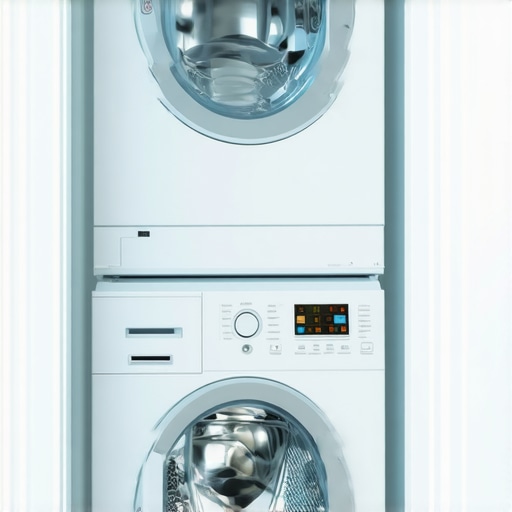
I still remember the smell of burnt rubber and the sight of my hallway wall looking like it had been through a cat fight. I was so convinced that a “standard” washer would fit into my 27-inch closet that I pushed it with everything I had. Spoiler alert: I ended up with a machine wedged halfway in, a dented cabinet, and a closet door that wouldn’t close for three months. It was a frustrating, expensive lesson in the reality of small-space living. Since that disaster, I’ve spent years researching the nuances of compact laundry, and today, I’m going to help you avoid my mistakes and find a setup that actually fits your home and your lifestyle.
Stop Fighting Your Floor Plan and Start Stacking
If you’re living in a cozy apartment or a renovated townhouse, every square inch feels like a battleground. You shouldn’t have to choose between having clean clothes and having a functional hallway. Finding the best stackable washer and dryer sets for tiny closets is about more than just reading a spec sheet; it’s about understanding clearance, venting, and how much noise you can tolerate while you’re trying to sleep three feet away. I used to think I was stuck with a laundromat card forever, but once I discovered stackable sets designed for tight hallway closets, my Sunday routine changed completely.
My biggest mistake early on wasn’t just the width; it was the depth. I forgot that hoses and vents need breathing room. I bought a unit that looked perfect on paper, only to realize the dryer vent added four inches to the back. It’s those little details that turn a “great deal” into a massive headache. If you’re dealing with limited space, you might also be dealing with older construction. I once had a machine that practically tried to walk out of the room because the floor was uneven, and I had to quickly learn how to level a washing machine on an old slanted floor before it took down a wall.
[image_placeholder]
Will a Stacked Unit Actually Handle My King-Sized Comforter?
This is the skepticism I hear most often from my neighbors. People assume that “compact” means they’ll be doing laundry every single day because the drums are too small for anything larger than a t-shirt. While it’s true you won’t be washing three sets of heavy curtains at once, modern engineering has come a long way. According to data from the U.S. Department of Energy, high-efficiency front-load washers provide significantly more internal volume compared to older top-load models of the same external size. You can get surprisingly large loads done, though you might notice that high-efficiency cycles take a bit longer to finish. It’s a small price to pay for the ability to actually use your closet again. Plus, many of these newer models are the water-saving champions for 2025, which is great for your conscience and your utility bill. Have you ever had that heart-sinking moment where you realized your new appliance was just two inches too big for the space? Let me know in the comments—I’d love to hear your “tight squeeze” horror stories!
Clear the Path Before You Buy
Measuring is more than just checking the height and width of your closet opening. You have to measure the entire ‘path of travel.’ I once spent three grueling hours wrestling a new dryer through a narrow bathroom door, only to realize the door handle blocked the final half-inch of clearance. I ended up having to unscrew the entire door frame and the handle just to get the machine into the hallway. Measure every doorway, corner, and hallway between your front door and the closet. If you are shopping for a new unit, remember that the best washer dryer sets for stacking in a small hallway closet are often slightly shallower than standard models for this exact reason.
Leave Room for the Backstage Equipment
Think of your washer and dryer like actors on a stage. They look great in front, but they need a whole crew of hoses and vents behind them to function. If your closet is exactly 30 inches deep and your machine is 30 inches deep, you have already lost. You need at least 4 to 6 inches for the dryer vent, water lines, and the power cord. If you cram it too tight, you risk kinking the dryer vent, which can lead to overheating or even a fire hazard. I always recommend using a ‘periscope’ vent—a flat metal duct that allows the unit to sit much closer to the wall than a traditional foil hose. Ensuring proper airflow is one of the best energy saving tips for your front load washing machine and dryer setup, keeping your utility bills low while protecting your investment.
Master the Art of the Level Floor
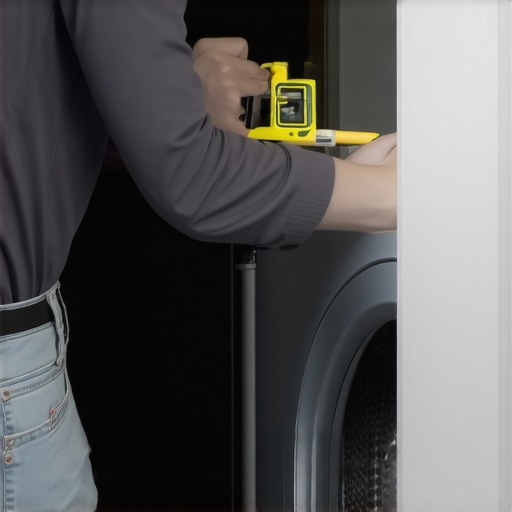
A stacked unit is essentially a vibrating tower. If the base machine isn’t perfectly level, the entire structure will sound like a helicopter landing in your hallway during the spin cycle. I learned this the hard way when my first ‘silent’ washer started migrating toward the kitchen during a heavy load of towels. You must use a spirit level on the bottom unit before you even think about lifting the dryer on top. If your floor is uneven, which is common in older apartments, you need to know how to level a washing machine on an old slanted floor using the adjustable feet and locking nuts. Skipping this step won’t just be noisy; it will lead to mechanical failure. You might eventually find yourself wondering how to tell if your washer bearings are about to fail because of the constant, uneven stress on the drum.
Connect to Your Tech for Fewer Headaches
In a tiny closet, you often can’t see the control panel easily once the machines are tucked away. This is where how smart washing machines can simplify laundry day becomes a reality rather than just a marketing gimmick. Using a smartphone app to monitor the cycle means you don’t have to keep opening the closet door to check if the clothes are dry or if the cycle has ended. Modern apps will even alert you to specific errors, helping you diagnose why your clothes are still sopping wet after the spin cycle without you having to pull the machine out to inspect it. Regular maintenance is also easier when the machine ‘talks’ to you. For instance, if the drainage slows down, you’ll get a notification, and knowing how to clear a blocked pump on your front load washing machine becomes a quick ten-minute fix instead of a flooded closet disaster. Efficiency is king in small spaces, so choosing washing machines that save water will ensure your small-scale laundry routine remains sustainable and cost-effective.
I see it every time I visit a friend: the giant blue jug of detergent sitting on top of a high-efficiency washer. Most people assume that if their clothes are extra dirty, they should just double the soap. In reality, this is the quickest way to kill your machine. Modern sensors are incredibly sensitive, and why your washer doesn’t need a whole cup of detergent to get clothes clean is actually rooted in chemistry. Excessive suds act like a cushion, preventing the clothes from rubbing against each other, which is how they actually get clean. Even worse, that excess soap builds up in the outer drum, leading to that swamp smell. It is a classic case of the reason your high-efficiency washer smells like old gym socks—it is literally rotting soap. Have you ever fallen into this trap of thinking more bubbles equals more clean? Let me know in the comments!
Is My High-Tech Dishwasher Actually Worse at Drying Than My Old One?
It is a common complaint: I spent two thousand dollars on a dishwasher and my Tupperware is still soaking wet. The contrarian truth here is that your dishwasher isn’t broken; it is just following federal energy guidelines. Older machines used massive, energy-hungry heating elements that could melt a plastic spatula. New ones rely on condensation drying. This is exactly why your dishwasher still needs rinse aid even with 3-in-1 tablets. Without that surfactant, water clings to the surface instead of sheeting off. According to the Association of Home Appliance Manufacturers (AHAM), modern cycles are designed with the assumption that rinse aid is present to facilitate moisture removal. If you skip it, you are fighting against the machine’s engineering. I have found that even if you use innovative dishwashers with AI technology, they still cannot defy the laws of physics when it comes to surface tension.

The Secret Maintenance Most People Ignore
We have been conditioned to believe that smart means self-maintaining. That is a dangerous trap. While top smart appliances for a seamless home experience in 2025 can alert you to a leak, they won’t clean their own filters. I once visited a client who thought their smart fridge was broken because it was making a loud humming sound. It turned out they hadn’t vacuumed the condenser coils in three years. Understanding why your high-efficiency fridge runs more often than your old one helps you realize that these machines are marathon runners, not sprinters. They need clear airflow to stay efficient. If you value your data as much as your groceries, you might even consider how to disable the wifi on your smart appliances once you have dialed in your settings, though you will lose out on those helpful firmware updates. Don’t let the smart label lure you into laziness—manual upkeep is still the backbone of appliance longevity.
Hunt Down the Hidden Filters Before They Clog
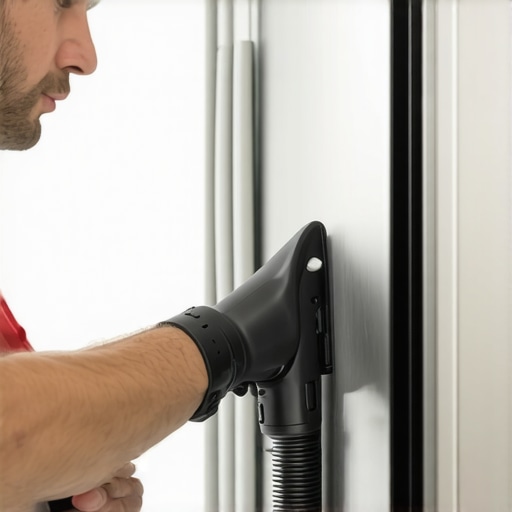
I keep a specific ‘appliance survival kit’ in my utility room, and it’s not full of complicated electronics. It’s mostly simple tools that extend the life of my machines by years. My absolute MVP is a 24-inch flexible vacuum crevice tool. Standard vacuum attachments are too chunky to get under the base of a fridge, but this thin wand lets me reach the hidden debris under your refrigerator grille where dust bunnies go to die and kill your compressor. If you don’t clear that out, your fridge works twice as hard, which is usually why your high-efficiency fridge runs more often than your old one.
Another tool I personally use every single month is a long-handled nylon bottle brush. I use it specifically for the rubber folds in my washer and the drain ports in my dishwasher. It is the best way to how to deep clean the gasket on your dishwasher to prevent leaks. If you let slime build up in those tracks, the seal eventually fails, and you’ll find yourself wondering why your dishwasher bottom is full of standing water at 10 PM on a Tuesday. I’ve seen it happen dozens of times: a tiny bit of grit prevents the door from sealing, the sensor freaks out, and the whole cycle halts.
How do I keep these smart machines running like new for a decade?
Maintenance for modern appliances is less about ‘fixing’ and more about ‘preventing.’ According to the Residential Appliance Service Guidelines published by the Major Appliance Consumer Action Office (MACAP), over 70% of service calls for ‘broken’ washers are actually just clogged filters. You have to be proactive. This means you need to know how to clean the lint filter you didn’t know your washer had—it’s usually hidden behind a small door at the bottom front of the machine. I personally set a recurring alert on my phone for the first of every month to drain this filter. It’s gross, it smells, but it’s the difference between a ten-year lifespan and a three-year breakdown.
The Smart Reset and the Future of Repair
Even with perfect physical cleaning, the software in top smart appliances for a seamless home experience in 2025 can occasionally trip over itself. I’ve had my smart fridge screen freeze twice this year. Instead of calling a repairman, I used the hidden reset button on your smart refrigerator that fixes glitches. It’s usually a pinhole button or a specific key combination that reboots the onboard computer without wiping your settings. Knowing these ‘secret handshakes’ for your appliances saves you the $150 ‘diagnostic fee’ that a technician would charge just to do the same thing.
Looking ahead, the future of home appliances trends to watch in 2025 suggest we are moving toward predictive diagnostics. We are already seeing machines that can sense a bearing starting to wear down before you can even hear the noise. This is the ultimate ‘scaling’ for home management: your house telling you it needs a $20 part before it becomes a $2,000 replacement. My advice? Don’t wait for the machine to tell you it’s dying. This weekend, I want you to grab your vacuum and clean that refrigerator grille. It takes five minutes and is the single most effective thing you can do for your kitchen’s longevity.
The Hardest Lesson I Learned About Cramming Tech Into Small Spaces
After a decade of testing machines and talking to repair technicians, I’ve realized that the most advanced feature on your appliance is often the one that needs the most human oversight. Here are the three truths I wish someone had told me before I started my journey with modern home appliances:
- Silence is a luxury you have to maintain. A washing machine that starts off whisper-quiet will only stay that way if you stay obsessed with leveling. Even a slight tilt will eventually wear out the suspension.
- Smart doesn’t mean self-healing. Your phone might tell you the cycle is done, but it won’t tell you that a stray bobby pin is currently grinding away at your pump. You have to be the eyes and ears.
- The manual is your financial savior. Most ‘glitches’ in smart appliances are actually just sensors triggered by simple clogs. Five minutes with the manual usually saves me a $150 service call.
The Maintenance Kit I Keep Under My Sink
I don’t believe in buying every gadget on the market, but there are four things I never live without to keep my kitchen running smoothly. First is a flexible vacuum crevice tool, which is the only way to effectively reach the dust-choked coils of a modern refrigerator. Second, I highly recommend using the best smart plugs for monitoring appliance energy use if you have older units, as they help you identify which machine is spiking your electric bill. Third, keep a bottle of high-quality rinse aid nearby; as we discussed, it’s not optional for modern drying cycles. Finally, I always keep a digital copy of the ultimate guide to smart home appliances for a modern living on my tablet for quick troubleshooting when a Wi-Fi connection goes wonky.
Take Control of Your Kitchen’s Future
Your home is likely the biggest investment you’ll ever make, and the machines inside it are the heartbeat of your daily routine. Don’t let the complexity of new technology intimidate you. By spending just ten minutes a month on simple tasks—like checking a filter or wiping down a gasket—you can ensure your home appliances serve you reliably for a decade or more. Whether you are currently trying to figure out how to fix a dishwasher that won’t drain completely or you are just looking for washing machines that save water for your next upgrade, remember that knowledge is the best tool in your kit. What’s the one appliance chore you’ve been putting off for months because it seemed too complicated? Let me know in the comments below!