
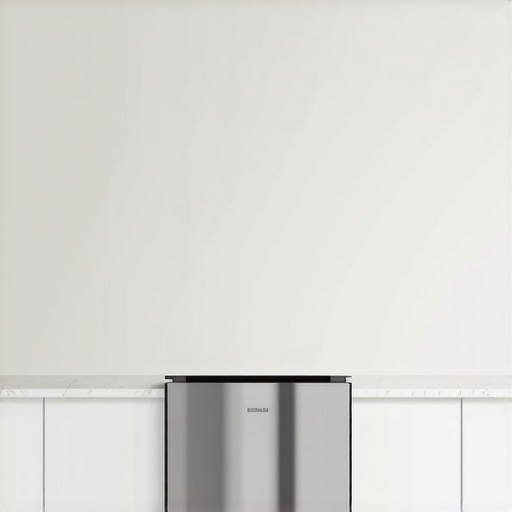
I’ll never forget the day I finally ‘finished’ my minimalist kitchen renovation, only to realize I’d made a massive, stainless steel mistake. There it was: a hulking refrigerator sticking out three inches past the cabinetry like an uninvited guest at a dinner party. It ruined the lines, killed the ‘breathable’ vibe I was going for, and—worst of all—it made my tiny space feel even smaller. I spent weeks searching for a way to hide the beast before I realized the answer wasn’t a bigger cabinet, but a smarter appliance. Today, I’m going to show you how to choose the best under-counter refrigerators for minimalist kitchens so you don’t end up with a layout that feels like a storage unit.
Stop Letting Your Fridge Bully Your Kitchen Design
When I first started looking into compact cooling, I made the classic rookie error: I bought a cheap, ‘dorm-style’ unit thinking it was the same thing as a professional under-counter model. It wasn’t. Not only was it loud enough to hear from the bedroom, but it also struggled to maintain a steady temperature. If you’ve ever dealt with freezer burn in your smart refrigerator or found lukewarm milk in the morning, you know how frustrating that is. Modern under-counter units are different. They are designed to sit flush with your cabinets, often supporting custom panels that make them completely invisible. According to a report by the National Kitchen & Bath Association (NKBA), integrated and ‘hidden’ appliances are among the top design trends for 2025 as homeowners prioritize ‘visual quiet’ in their living spaces. It is all about creating a modern and seamless kitchen that feels like a living area rather than a laboratory. Have you ever felt like your current fridge is more of a graveyard for half-used condiment jars than a tool for fresh cooking?
Can these tiny boxes actually hold a week’s worth of groceries?
This is the big one. Everyone thinks they’ll be living off takeout if they ditch the giant French-door model. But here’s the truth: most of us fill those big fridges with stuff that’s already expired. By switching to a high-quality under-counter model, you’re forced to be intentional. You might even find yourself looking for the best slim refrigerators that maximize every square inch. We’re going to dive into the specific models that offer the best shelf-to-space ratio, including tiny home kitchen solutions under 24 inches, so you can reclaim your counter space without sacrificing your Sunday meal prep. It is about working smarter, not harder, with the square footage you have.
Get the Installation Right the First Time
When you move to under-counter cooling, you are essentially committing to a permanent design choice. You can’t just slide a new one in if your measurements are off by even a fraction of an inch. I learned this the hard way during my first ‘DIY’ attempt in a studio apartment. I bought a beautiful unit, but I forgot to account for the thickness of the flooring I’d just laid down. The fridge sat too high to slide under the countertop by exactly four millimeters. I ended up having to plane down the underside of my expensive butcher block counter—a mess I could have avoided with a simple tape measure and a bit of foresight.
Measure Every Fraction of an Inch
Start by measuring your opening width, height, and depth, but don’t stop at the cabinetry. You need to check if your floor is level. A slight slope can cause the unit to sit crooked, which prevents the door from sealing properly. If you notice condensation or frost buildup early on, you should immediately check if your refrigerator door seal is actually airtight. For those working with incredibly tight gaps, searching for the best narrow refrigerators that do not sacrifice shelf space is your best bet to ensure a snug fit without structural modifications.
Don’t Smother Your Compressor
This is the most common mistake I see. Most standard refrigerators breathe from the back or sides. If you shove one of those into a tight cabinet, it will overheat and die within a year. True under-counter models are front-vented; they pull air in and push it out through a kickplate at the bottom. Think of it like a runner: if you block their mouth and nose, they aren’t going to finish the race. If you hear a grinding or buzzing coming from the floor level, it’s often the refrigerator noise that means your fan motor is dying because it’s working too hard to stay cool.  Always leave at least an inch of ‘air space’ at the back for safety, even with front-venting models, to help you spot a failing refrigerator compressor before it dies by allowing you to feel for unusual heat levels.
Make Every Cubic Foot Count
Since you’re dealing with less volume, you have to be tactical about how the interior is used. I recommend choosing models with adjustable glass shelving rather than fixed wire racks. Wire racks allow small items to tip over and spill, which is a nightmare to clean in a low-to-the-ground appliance. Once installed, you might find that the factory settings aren’t quite right for your specific climate or kitchen humidity. Taking ten minutes to recalibrate your refrigerators internal thermometer for better cooling can save your produce from wilting. Additionally, you can save money on your electric bill by tweaking your fridge settings to match your actual usage patterns, ensuring the motor isn’t running 24/7 for a fridge that only holds a few bottles of sparkling water and some kale.Once you have the dimensions and the venting figured out, you enter the territory where most homeowners—and even some general contractors—trip up: the digital and chemical nuances of modern appliances. We are told that ‘smart’ means ‘easier,’ but if you do not understand the hidden logic of these machines, they can become high-tech headaches. Take the ‘Eco-mode’ on your new dishwasher, for example. Most people use it religiously to save pennies, but I have found it can actually lead to long-term failure.
Eco-Mode Is Often a Performance Trap
We are conditioned to believe that the green leaf icon is the best setting for every load. However, the American Council for an Energy-Efficient Economy (ACEEE) has noted that while these cycles use less water, they often operate at lower temperatures for longer durations. This is the perfect recipe for fatty deposits to solidify in your pipes. If you only run eco-cycles, you are likely to find that your dishwasher smells like a sewer when it is not running because the grease never fully melts away. I recommend running a heavy-duty, high-heat cycle at least once a week to ‘purge’ the system. It is one of those tips from industry experts that saves you a $300 plumber visit down the line.
Does your AI dishwasher actually learn from your mess?
Many modern units claim to use soil sensors to adjust water usage, but they are easily ‘tricked’ if you pre-rinse your dishes too thoroughly. If the sensor detects relatively clean water early on, it downshifts the cleaning power, leaving stuck-on proteins behind. It is a counter-intuitive reality: the cleaner the plate you put in, the worse the machine performs. This is why the truth about the eco mode on your new dishwasher is often more complex than the marketing brochure suggests.
The Smart Home Signal Battle Under Your Counter
If you are building a ‘seamless’ kitchen with multiple connected devices, you are likely creating a Faraday cage of stainless steel and stone. I once spent three days trying to figure out why your smart fridge is using more data than you expected or why it kept dropping the connection. The culprit wasn’t a bad router; it was the proximity of the under-counter fridge to the smart dishwasher. Their wireless signals were literally fighting for the same narrow band. Knowing how to keep your smart home hub from interfering with appliance signals is the difference between a kitchen that works and one that requires a reboot before breakfast. 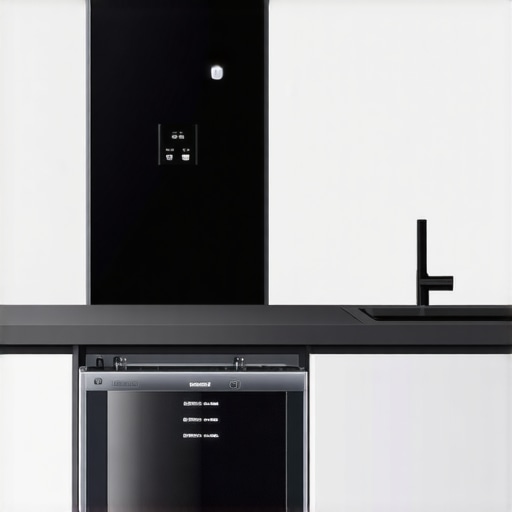
Avoid the Software Update Death Spiral
Here is the ‘oops’ factor no one warns you about: the forced firmware update. We are used to our phones updating overnight, but when your refrigerator decides to patch its OS while you are at work, it can occasionally glitch. I’ve seen units lose their cooling calibration because of a failed handshake with the local Wi-Fi. You must learn how to update your smart fridge software without crashing the system to avoid coming home to a puddle of melted ice cream. This is especially true for refrigerators in 2025, which rely more on software than hardware for temperature stability. Have you ever fallen into this trap? Let me know in the comments. Whether it is a washer that won’t spin or a fridge that’s gone offline, these nuances are what define the modern ownership experience. Just remember, the more ‘intelligent’ the appliance, the more it rewards an informed owner.Beyond the digital screen, your appliances are still mechanical beasts at heart. If you ignore the physical upkeep, no amount of firmware updates will save your laundry room from a flood. I’ve noticed that most people forget the one part of a washing machine that actually prevents a catastrophic failure: the drain pump filter. When I first moved into my current place, the previous owners had clearly never touched it. I pulled out three quarters, a hair tie, and enough lint to felt a small hat. This neglect is usually why your washing machine smells like damp towels even after a wash. The moisture gets trapped behind the debris and breeds bacteria. You need to learn the secret to cleaning a front load washers hidden filter if you want to avoid a $200 repair call for a ‘broken’ pump.
How do I keep these smart machines running like new for a decade?
It comes down to a rhythm of small wins. Every three months, I do a ‘deep dive’ day. I wipe down the seals—because learning how to fix a leaky dishwasher door seal in under ten minutes is much easier than replacing a ruined hardwood floor. According to technical bulletins from the Association of Home Appliance Manufacturers (AHAM), using too much high-efficiency (HE) detergent is actually the leading cause of ‘bio-film’ buildup, which eventually coats sensors and leads to false error codes. 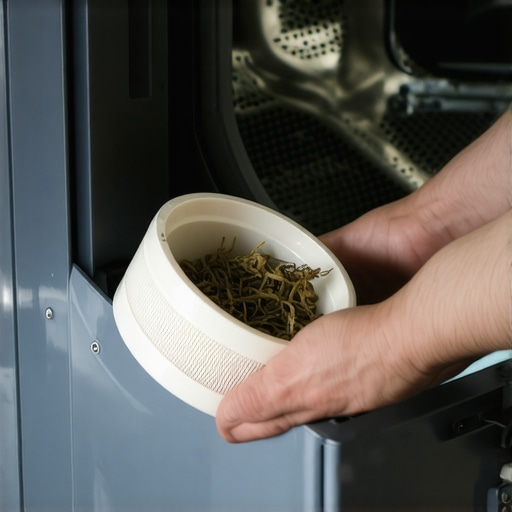 I personally keep a bottle of citric acid and a soft toothbrush in my utility closet. The citric acid is my secret weapon for the dishwasher; it breaks down hard water scales that clog the spray arms without the harsh fumes of industrial cleaners. Looking toward the future of home appliances trends to watch in 2025, we are going to see machines with integrated vibration sensors that actually alert you when a physical component is about to fail, rather than waiting for it to break. But until that AI fully matures, you are the primary technician. Don’t just trust the app; listen for the physical cues. A strange vibration might mean you need to stop your washing machine from jumping during the spin cycle before it damages the internal shocks.
The Tool Kit That Saves Your Tech
If you are serious about maintaining a high-end kitchen, you need three specific things: a digital level, a set of microfiber cloths that never touch oil, and a dedicated smartphone for your ‘Home’ hub to avoid the signal interference we talked about. I’ve found that using the best energy saving settings for your smart washing machine is only effective if the machine is perfectly level. Even a half-degree tilt increases the wear on the drum bearings by 20%. My challenge for you this weekend is simple: find your washer’s manual, locate the drain filter, and clear it out. You’ll be shocked at what’s been hiding in there, and your machine will sound quieter immediately.
What Your Appliance Manual Hides in the Fine Print
After years of trial and error with high-end setups, I’ve realized that the ‘smart’ in smart appliances refers to how we use them, not just the chips inside. One lightbulb moment for me was realizing that modern dishwashers actually need a bit of ‘mess’ to calibrate their sensors; if you pre-wash every plate, you’re essentially telling the machine to underperform. Also, never underestimate the power of a perfectly level floor. A slight tilt is the silent killer of refrigerator compressors and washing machine bearings alike. Finally, remember that your data is part of the deal. If you want to dive deeper into the ethics and security of your new gear, check out the ultimate guide to smart home appliances for a modern living which covers the privacy aspect beautifully.
Tools That Keep the Technicians Away
I do not believe in buying every gadget on the shelf, but these four items have saved me thousands in repair fees:
- A Digital Torpedo Level: This is non-negotiable for anyone who wants to learn how smart washing machines can simplify laundry day without the annoying vibration noise.
- Bulk Citric Acid: It is the safest, most effective way to descale a dishwasher without using harsh chemicals that can degrade plastic parts.
- A Mesh Wi-Fi System: To ensure your kitchen does not become a connectivity dead zone, a mesh system is vital, especially when looking at the future of home appliances trends to watch in 2025.
- The Manufacturer App: While sometimes glitchy, it is the only way to get those critical tips from industry experts regarding firmware patches.
Start Small for a Kitchen That Lasts
The journey toward a seamless, minimalist kitchen does not end with the purchase; it begins with the first day of ownership. By staying proactive with your maintenance and understanding the unique ‘personality’ of your machines, you can ensure they serve you for a decade or more. These smart appliances are designed to make our lives easier, but they require a tiny bit of respect in return. Take the time to clear that filter or recalibrate that sensor today. Have you ever discovered something strange hiding in your washing machine filter or dishwasher drain? Let me know in the comments below!