
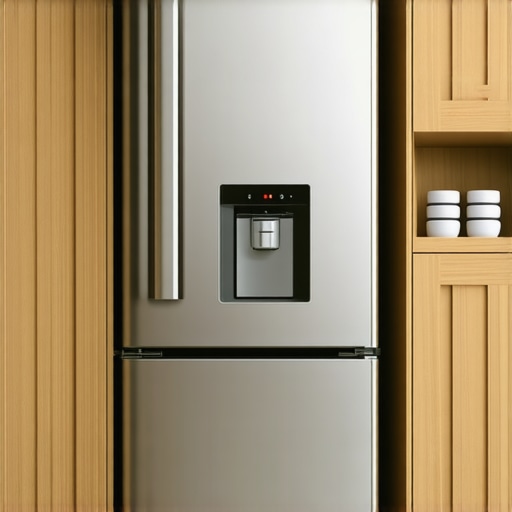
It was 2:14 AM on a Tuesday when I finally snapped. I was lying in bed, staring at the ceiling, while a dull, rhythmic thrumming vibrated through the floorboards and right into my skull. It wasn’t a neighbor’s party or a passing truck. It was my refrigerator, engaged in a high-stakes wrestling match with the kitchen cabinets. Every time the compressor kicked on, the whole kitchen sounded like a construction site. I’d spent months ignoring it, but that night, I realized that living with a “noisy house” wasn’t a badge of honor—it was a solvable headache. If you’ve ever felt like your appliances are trying to vibrate their way through the drywall, you’re in the right place. Today, I’m going to show you exactly how to stop that rattling for good without calling an expensive technician.
That Constant Rattle is Actually a Cry for Help
I’ll be the first to admit it: I made a classic “neighborly” mistake when this first started. I thought I could just wedge a piece of folded cardboard between the fridge and the cabinet and call it a day. It worked for about twenty minutes until the vibration shook the cardboard loose, and I ended up with a fire hazard and a still-noisy kitchen. When you hear that metallic clank or the low-frequency hum, your fridge is likely telling you it’s struggling with balance or airflow. According to Energy Star, an unlevel or poorly ventilated refrigerator can actually work harder, potentially increasing energy consumption by up to 10% because the compressor never gets a break. This isn’t just about noise; it’s about the lifespan of your machine. If you’re looking for a fresh start, you might even want to check out these refrigerators in 2025 that are specifically designed for ultra-quiet operation.
The truth is, most of us just slide the unit in and hope for the best. But cabinets are often slightly off-kilter, and kitchen floors are rarely perfectly flat. Before you assume you need a new appliance, you have to master the art of the “gap.” I learned the hard way that how to level a refrigerator on an uneven kitchen floor is the absolute first step in silencing the beast. It’s a simple fix that most people overlook because they’re too busy looking for a more “techy” solution.
Is a truly silent kitchen even a realistic goal?
I get the skepticism. You’ve probably tried tightening every screw and shoving rubber pads under the feet only to have the noise return a week later. You might be wondering if it’s just the refrigerator noise that means your fan motor is dying rather than a simple vibration issue. While no machine is 100% silent, you shouldn’t be able to hear your fridge from the bedroom. Most of the “unfixable” noise is actually just kinetic energy transferring into your cabinetry. By the time we’re done here, you’ll know how to isolate that energy so the fridge stays quiet and your cabinets stay still. Have you ever felt like your kitchen was literally humming along with your morning coffee? Let me know in the comments, because I promise you, you aren’t crazy—your fridge is just out of sync.
Tackle the Shaking with These Pro Adjustments
Think of your refrigerator like a high-performance car. If one wheel is slightly off-balance, the whole chassis vibrates once you hit highway speeds. The same thing happens when your compressor kicks in. My “aha!” moment came when I pulled my fridge out and realized the front-left leveling leg wasn’t even touching the tile. It was hovering just a hair above the ground, creating a perfect pivot point for the entire machine to dance. If you are struggling with similar issues elsewhere, you might notice why your front loader is vibrating so hard it shakes the whole house, which follows a very similar logic of weight distribution.
Dial in Those Leveling Legs
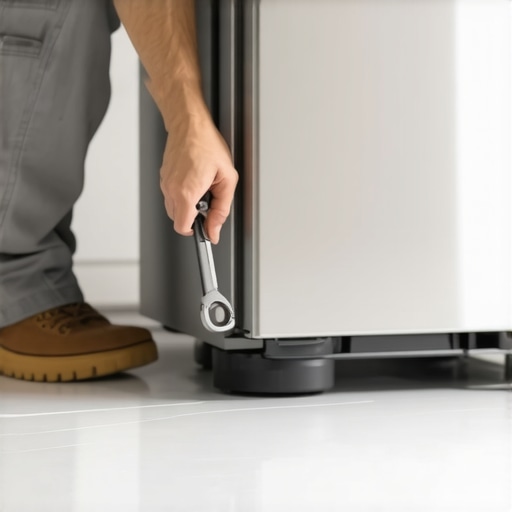
Most refrigerators have adjustable feet or rollers. To do this right, grab a carpenter’s level and place it on top of the unit. You want the fridge to be level from side to side, but actually tilted slightly backward. This helps the doors swing shut on their own and keeps the internal fluids flowing correctly. If you are on a budget or dealing with a sloped floor, knowing how to level a refrigerator on an uneven kitchen floor is your best defense. I spent twenty minutes with a wrench, and the immediate drop in decibels was like a weight lifted off my shoulders.
Stop the Cabinet Collision Course
The noise often isn’t the fridge itself—it’s the friction. When the compressor vibrates, it sends energy into whatever it is touching. If your fridge is squeezed too tightly against the cabinetry, you are essentially turning your kitchen island into a giant speaker. Ensure there is at least a half-inch of clearance on all sides. When choosing the right refrigerator, pros always remind us to measure for air gaps as much as for the unit itself. I once found that a stray magnet had fallen behind the unit and was wedged between the coil and the wall, acting like a tuning fork. Removing that tiny piece of metal cut my noise by half.
Clean Out the Debris Choking Your Fan
If the leveling is perfect but the rattle persists, it is time to look at the moving parts. Dust buildup on the condenser fan can throw the blades out of balance, much like a ceiling fan that wobbles when it gets too dirty. While you are back there, look at the rubber grommets on the compressor. These are intended to absorb shock, but they can harden and crack over time. If they look brittle, they aren’t doing their job. This is a much cheaper fix than dealing with the refrigerator noise that means your fan motor is dying, so catch it early. Modern units, specifically those with the real difference between inverter compressors and standard fridge motors, tend to be quieter, but even they need clean air to function without a protest.
Isolate the Energy with Vibration Pads
If you have done everything else and your floors are just thin, it is time for hardware. Anti-vibration pads—thick rubber discs that sit under the feet—can be a lifesaver. They act as shock absorbers for your kitchen. I used these for a client who lived in a 100-year-old apartment with hardwood floors that acted like a drumhead. It is the same trick used to how to stop your washing machine from jumping during the spin cycle. By decoupling the appliance from the floor, you prevent the vibration from traveling through the structure of the house.
The Eco Mode Paradox That No One Tells You About
While silencing the rattle is a great first win, it’s often just the tip of the iceberg when it comes to the complex relationship we have with our modern machines. We’ve been conditioned to believe that clicking the ‘Eco’ button is an absolute win for both the planet and our wallets. However, after years of tinkering, I’ve found a frustrating nuance: exclusive use of Eco modes can actually lead to premature appliance failure. In dishwashers and washing machines, these cycles often use lower water temperatures that fail to fully dissolve fats, oils, and modern detergent surfactants. Over time, this creates a ‘biofilm’ sludge that clogs sensors and internal hoses. According to the Association of Home Appliance Manufacturers (AHAM), modern units require occasional high-heat cycles to thermally sanitize the interior and clear out residue. I always tell my friends that if they want to know how to tell if your appliances’ eco-friendly tag is just marketing, they need to look at the long-term maintenance costs, not just the monthly electric bill.
Why does a more efficient machine take twice as long to wash?
It feels counterintuitive, right? You buy a state-of-the-art unit and suddenly a ‘quick’ cycle takes ninety minutes. The advanced reality is that modern high-efficiency (HE) machines substitute time for mechanical force and water volume. By soaking clothes or dishes longer in less water, the machine uses less energy to heat a smaller volume, but it needs that extra time for the enzymes in the detergent to do their job. If you find the wait unbearable, you might want to learn why your high-efficiency washer takes so long to finish a cycle before you assume it is broken. Understanding this temporal trade-off is key to mastering smart home appliances for a modern living without losing your mind.
The High-Efficiency Soap Trap
Here is the ‘oops’ factor that almost everyone gets wrong: using the same amount of detergent you used in 2005. Most people see a giant drum and assume they need a giant scoop of soap. In reality, using too much detergent in an HE machine is the fastest way to kill the motor. Excessive suds create ‘suds lock,’ a condition where the pump can’t move water because it is air-locked by foam. This forces the motor to work harder, leading to the exact same vibration issues we discussed earlier. I’ve seen countless people searching for how to diagnose a washing machine that wont spin at full speed, only to realize they’ve just been overdosing their laundry with ‘extra clean’ promises. The the secret to using less detergent in your high-efficiency washer is often using about two tablespoons—max. Have you ever fallen into this trap and wondered why your clothes felt ‘crunchy’ or your machine started acting up? Let me know in the comments.
Mastering the Hidden Tech in Your Kitchen
Finally, let’s talk about the digital ‘ghosts’ in the machine. If you have made the jump to smart appliances for a seamless home experience, you are no longer just dealing with hardware; you are dealing with software. I once spent three hours trying to fix a ‘leak’ that turned out to be a software glitch in the moisture sensor. Before you pull out the wrench, always check for a firmware update. Manufacturers frequently push patches that recalibrate how sensors interpret data. If your fridge or washer is acting weird, knowing how to reset your smart appliance after a major power surge or a simple glitch is often the only tool you really need. We’re living in an era where the future of home appliances is about being a part-time IT technician as much as a part-time repairman.
Moving beyond the simple fixes of leveling and detergent dosage, we enter the realm of what I call ‘precision maintenance.’ It is one thing to stop a rattle; it is another entirely to ensure your $2,000 investment doesn’t become a paperweight in five years. I’ve found that the biggest enemy of longevity isn’t just wear and tear—it’s drift. Sensors drift, thermostats lose their accuracy, and software becomes bloated. To combat this, I’ve moved away from the ‘wait and see’ approach and toward a proactive diagnostic routine that I perform every six months.
The Unconventional Toolbag That Saves My Sanity
You don’t need a professional-grade van full of equipment, but you do need three specific things that the manual usually forgets to mention. First, a non-contact infrared thermometer. I use this weekly to check the ‘skin’ temperature of my fridge and the internal temperature of my dishwasher during a cycle. If you find your fridge is working harder than it should, you might need to learn how to recalibrate your refrigerators internal thermometer for better cooling. According to the ANSI/AHAM HRF-1 standard, even a two-degree deviation can significantly impact food preservation and energy draw. Second, a simple plastic coil brush—not a vacuum attachment, but a dedicated manual brush—is the only way to truly scrub the static-charged dust off your condenser coils. Finally, keep a dedicated USB drive for firmware. When you how to update your smart fridge software without crashing the system, having a physical backup or a clean install path can save you from a bricked interface after a bad Wi-Fi sync.

How do I keep these machines running for a decade?
The secret to the ‘ten-year club’ isn’t luck; it’s resisting the urge to over-automate. While we love the convenience, the most reliable results come from occasional manual intervention. For example, even if you have the latest innovative dishwashers with AI technology, the AI can’t clear a piece of broken glass from the macerator. I make it a point to manually clear the pump filters every month. Furthermore, I’m a huge advocate of the ‘high-heat reset.’ Once a month, run your washing machine and dishwasher on their hottest, most intensive settings with a specialized descaler. This combats the ‘Eco’ trade-offs we discussed earlier. It is the single most effective way to ensure you aren’t reading the truth about the eco mode on your new dishwasher while staring at a puddle on your floor.
The Rise of the Self-Healing Kitchen
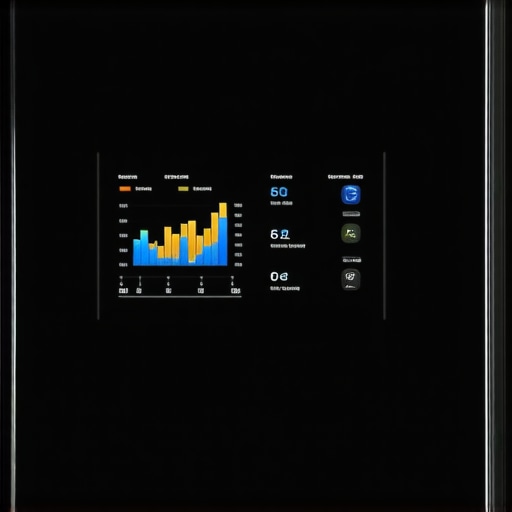
Looking at the future of home appliances, we are moving toward an era of ‘predictive failure.’ Manufacturers are starting to integrate vibration sensors that can detect a failing bearing weeks before it actually breaks. This means your phone will likely tell you your pump is dying before you even hear the first squeak. It’s an exciting shift, but it also means we need to stay tech-literate. I recommend everyone try this one advanced tip tonight: Go into your appliance’s app and look for the ‘Component Health’ or ‘Diagnostic’ tab. Most people never click it, but it often contains real-time data on motor RPM and heater efficiency that can tell you exactly when a part is starting to drift out of spec. Don’t wait for the error code; check the data now.
What My 2 AM Fridge Meltdown Actually Taught Me
After years of fixing things that go bump in the night, I’ve realized that a silent home isn’t a luxury—it’s a maintenance baseline. The most expensive lesson I learned was that ignoring a small rattle is essentially inviting a catastrophic failure into your kitchen. I used to think ‘smart’ meant I didn’t have to pay attention, but the reality is that even the most advanced units require a nuanced touch. You can’t just walk away; you have to partner with the machine. Also, never underestimate the power of a clean coil; it’s often the difference between a fridge that lasts five years and one that hits the fifteen-year mark. #IMAGE_PLACEHOLDER_E#
Gear I Actually Use to Stop the Rattles
If you’re ready to move beyond the folded cardboard trick, here are the three things I keep in my kitchen drawer. First, a laser thermometer is non-negotiable for anyone who wants to save money on your electric bill by changing three fridge settings without guessing. Second, I swear by heavy-duty rubber isolation feet; they are the unsung heroes of a quiet laundry room. Finally, I always keep a digital log of my firmware versions to ensure my experience with the future of home appliances remains glitch-free. I trust these tools because they’ve saved me from countless unnecessary repair calls.
Stop Letting Your Appliances Run You
You don’t have to be a certified technician to have a peaceful, efficient home. By taking these small steps—leveling the feet, cleaning the filters, and respecting the ‘Eco’ mode trade-offs—you’re reclaiming your space from the constant hum of home appliances. It’s about more than just peace and quiet; it’s about the satisfaction of knowing your home is running exactly how it should. Don’t be afraid to pull that fridge out tonight and see what’s really going on back there. Have you ever discovered something truly bizarre behind or under your refrigerator during a deep clean? Let me know in the comments below!