
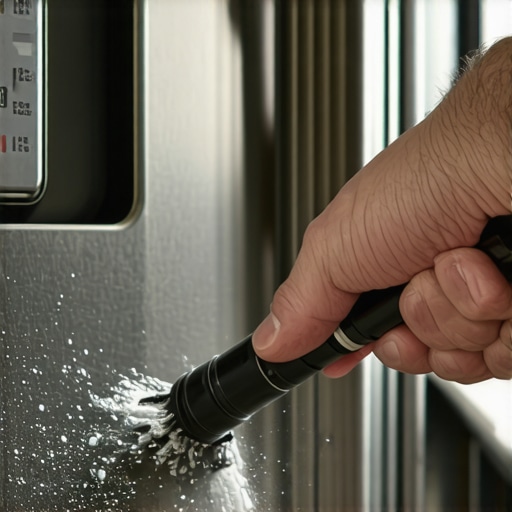
I was on my hands and knees last Saturday, desperately reaching for a stray pen that had rolled into the abyss under my fridge, when I finally saw it. Not the pen—but a thick, matted carpet of grey dust and dog hair completely blocking the bottom grille. It looked like a small, fuzzy animal had crawled under there and died. It was visceral and honestly a bit embarrassing. I felt a wave of guilt wash over me. Here I am, someone who prides myself on keeping up with refrigerators in 2025, yet I was letting my own machine choke on its own intake.
Stop Letting Your Fridge Suffocate on Dust
Most of us treat our refrigerators like static pieces of furniture—set it and forget it. But that grille at the bottom? That’s basically the lungs of your appliance. When it gets clogged with floor tumbleweeds, your compressor has to work twice as hard to keep your milk cold. I learned this the hard way years ago when I noticed why my high-efficiency fridge runs more often than it used to. I ignored the dust until the motor started making a desperate, high-pitched humming sound. My biggest mistake was thinking that a quick swipe with a broom near the front was enough. I even tried to hide the ugly grille with a decorative baseboard once. Big mistake. It nearly killed the compressor. Cleaning that hidden debris is one of the 5 mistakes that are shortening the life of your smart refrigerator, and tackling it is the single easiest way to extend the life of your kitchen’s hardest-working resident. It doesn’t require a degree in engineering, just a bit of patience and a willingness to get a little dirty.
Is This Grille Maintenance Just Overkill?
You might be thinking that a little dust never hurt anyone, but the numbers tell a different story. According to the experts at EnergyStar.gov, dirty condenser coils can actually force your refrigerator to use up to 30% more energy. That is a massive spike on your monthly bill just for the sake of avoiding ten minutes of vacuuming. We often focus on choosing the right refrigerator or looking for the best shelving hacks, but none of that organizational beauty matters if the internal components are overheating. Even when we look at the future of home appliances, efficiency remains the top priority, and even the smartest tech can’t overcome a basic build-up of household grime. [IMAGE_PLACEHOLDER] Today, we are going to dive into the nitty-gritty of removing that grille and clearing out the gunk you didn’t even know was there. It is a simple task, but one that yields immediate results in how your kitchen sounds and how your energy bill looks. Have you ever dared to look under your fridge with a flashlight? Tell me, what was the most horrifying thing you found lurking in the shadows? Grab your vacuum attachments and a stiff brush, because we’re about to save your fridge from an early retirement and a very expensive repair bill.
Cut the Power Before You Do Anything Else
You wouldn’t try to change the oil in a car while the engine is idling, and your fridge deserves the same respect. Before you even touch that bottom panel, pull the unit away from the wall and unplug it. If you have a built-in model, find the breaker. I learned this the hard way when a stray vacuum attachment hit the condenser fan, and the resulting clatter sounded like a jar of marbles in a blender. Taking this thirty-second safety step ensures you don’t accidentally short out the sensitive electronics found in refrigerators in 2025.
Pop the Grille Off Without Snapping the Plastic
Most grilles are held on by simple plastic clips or a couple of Phillips-head screws. If it doesn’t budge with a gentle tug, don’t force it. Use a flashlight to check for those hidden screws often tucked into the corners. Once it’s off, you’ll likely see a wall of grey fuzz. This is the exact moment where people realize why their high-efficiency fridge runs more often than it should—it’s literally suffocating because it can’t vent the heat. 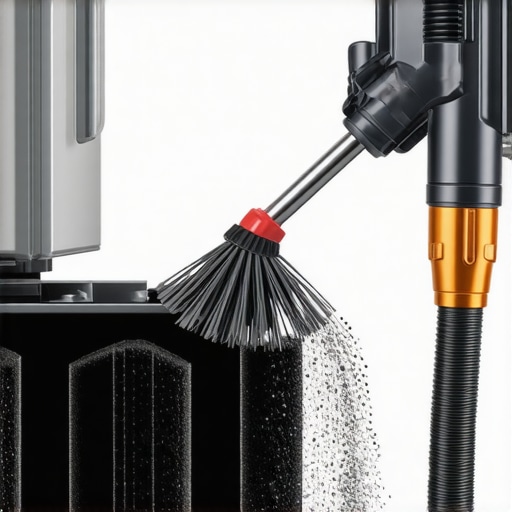
Deploy the Vacuum and the Secret Brush
A standard vacuum hose won’t reach the deepest crevices where the heat actually dissipates. You need a long, flexible coil brush—it looks like a giant pipe cleaner. I remember the first time I used one; I pulled out a solid brick of dust that looked like it belonged in a vacuum bag, not behind a multi-thousand dollar appliance. Thread the brush between the coils, twist it gently, and pull the debris forward where the vacuum can grab it. Do this several times until you see the metal of the coils again. While you are down there, check for the secret drain filter at the bottom of your fridge that most owners never even knew existed. Cleaning this prevents the dreaded ‘puddle on the floor’ syndrome that ruins hardwood.
Clear the Air Path for the Condenser Fan
The fan is the heart of the cooling system, circulating air over the coils to drop the temperature. If the fan blades are caked in grease or dust, the motor works harder and hotter, leading to a premature death for the whole unit. Use a damp microfiber cloth to wipe the blades individually if you can reach them. This is a common fix when you are trying to figure out why your fridge sounds like its whistling at you. When air can’t flow smoothly across those blades, it creates turbulence that makes that annoying high-pitched noise.
The Final Calibration Check
Once the dust is gone and the grille is snapped back into place, don’t just walk away. After plugging it back in, wait an hour and then learn how to calibrate your refrigerator thermometer to ensure the internal temps are back where they should be. It’s a small victory, but your inverter or traditional refrigerator compressor will thank you by running significantly quieter and lasting years longer. You will notice the difference almost immediately in how often the motor cycles on and off.It is easy to get caught up in the ‘they don’t make them like they used to’ mindset. We look at our grandparents’ 1970s fridge and wonder why modern refrigerators don’t last as long. But there is a hidden nuance here: efficiency. Those old tanks were essentially space heaters that happened to keep milk cold, consuming five times the electricity of top smart appliances for a seamless home experience in 2025. The real ‘trap’ isn’t just the build quality; it is our outdated maintenance habits that haven’t evolved with the tech.
Stop Overdosing Your High-Efficiency Washer
The most common mistake I see—and I fell for this for years—is the ‘more is better’ soap philosophy. If you are still pouring a full cap of liquid soap into your machine, you are actively killing it. Modern sensors are incredibly sensitive, and excess suds actually cushion the clothes, preventing the mechanical friction needed to get them clean. This is why your washer doesn’t need a whole cup of detergent to function properly. That extra soap doesn’t just rinse away; it creates a ‘scrubby’ biofilm inside the outer drum, which is the reason your high-efficiency washer smells like old gym socks.
Why is my energy-efficient dishwasher taking three hours to finish?
It feels counterintuitive, doesn’t it? You bought it to save energy, yet it runs forever. The experts at the Association of Home Appliance Manufacturers (AHAM) point out that modern appliances use significantly less water at lower temperatures, which requires more time to achieve the same chemical breakdown of food particles. This is the truth about eco mode on modern dishwashers: speed is the enemy of efficiency. If you force a ‘quick wash’ every time, you are likely leaving grease behind that will eventually clog your drain pump. #IMAGE_PLACE_HOLDER_C#
The Software Trap You Are Probably Ignoring
We often treat smart features as gimmicks, but ignoring firmware is a major ‘oops’ factor that can lead to mechanical failure. A bug in the cooling algorithm can be just as deadly as a dusty coil. If you don’t know how to update the firmware on your smart kitchen appliances, you might be missing out on critical optimizations that prevent compressor wear. These updates aren’t just for ‘cool’ features; they are often patches for mechanical efficiency. In my experience, the biggest nuance people miss is the ‘drain and clean’ cycle. Most of us think innovative dishwashers with AI technology can handle anything, but even the smartest AI can’t dissolve a bone fragment or a sticker that washed off a new jar. This debris builds up in the sump, and knowing how to fix a dishwasher that leaves water in the bottom is essential before it becomes a flood. Have you ever fallen into the trap of thinking your appliance was broken when it just needed a software reset or a smaller scoop of soap? Let me know in the comments below. We are all learning to navigate this high-tech kitchen together, and sometimes the best solution is the most counterintuitive one.
Stop the Shake Before it Breaks Your Bearings
We spend so much time worrying about filters and software that we often overlook the most basic law of physics: vibration is the enemy of longevity. If your washer sounds like a freight train during the spin cycle, it is doing more than just making noise; it is slowly shaking its own internal components to pieces. I recently helped a neighbor who was convinced their machine was dying, only to realize the feet were uneven. Learning how to level a washing machine on an old slanted floor isn’t just about peace and quiet; it’s about preventing the drum from wearing out the suspension rods. According to technical guides from InterNACHI (International Association of Certified Home Inspectors), an appliance that isn’t level can suffer from a 25% reduction in mechanical lifespan due to premature bearing fatigue. It is a five-minute fix that saves a five-hundred-dollar repair bill.
How can I keep my smart appliances healthy for the next ten years?
The secret isn’t a magic spray; it’s a routine energy audit. I personally use the best smart plugs for monitoring appliance energy use on my older units. Why? Because a sudden 15% spike in energy consumption usually means a motor is struggling or a heating element is partially shorted before the machine’s own ‘smart’ sensors even pick up the fault. You become the proactive technician. While you’re at it, don’t ignore the smaller mechanical parts like the lid switch. If your washer stops mid-cycle, you should know how to diagnose a faulty lid switch on your top loader before you assume the expensive control board has fried itself. 
The Only Three Tools You Actually Need
You don’t need a specialized toolbox to be an appliance hero. Beyond the flexible coil brush we discussed earlier, I recommend a high-quality spirit level and a simple multimeter. A multimeter is the ‘cheat code’ for appliance repair; it allows you to test for continuity in a heating element or a sensor without guessing. If you aren’t ready for that level of tech, focus on moisture management. This is especially true for your laundry room. Many people struggle with 3 reasons your energy-efficient washer smells like damp, and the fix is usually as simple as leaving the door ajar. However, the real ‘tool’ is the habit of checking for clogs. I make it a point to inspect the drain lines every six months. It’s messy, but preventing a backup is better than mopping your kitchen floor at 2 AM.
What the Future of Repair Looks Like
As we look toward the future of home appliances, the trend is moving toward ‘predictive maintenance.’ We are seeing machines that don’t just tell you when they are broken, but actually predict a pump failure weeks in advance based on the electrical draw. This shift toward the ultimate guide to smart home appliances for a modern living means our roles as homeowners are changing from ‘repairmen’ to ‘system administrators.’ My advice? This weekend, try one advanced move: grab a smart plug and track your dishwasher’s energy draw for one full cycle. If it looks erratic compared to the manufacturer’s specs, it’s time to deep clean those spray arms.
The Hard Lessons My Repair Bill Taught Me
Looking back at years of tinkering, I’ve realized that modern appliances aren’t fragile; they are just communicative. If your machine is loud, it’s talking to you. I used to ignore a slight rattle in my dishwasher door, only to realize later that I could have easily learned how to fix a dishwasher door that drops open too fast before the hinge actually snapped. Maintenance is a conversation, not a chore. Another lightbulb moment was realizing that ‘set it and forget it’ is a myth for high-efficiency gear. These machines rely on sensors that need to be clean to ‘see’ what they are doing. If you treat top smart appliances for a seamless home experience in 2025 like old-school mechanical beasts, they will fail. They require a lighter touch and a sharper eye for software updates.
The Three Things I Keep in My Kitchen Drawer
I don’t believe in buying every gadget on the market, but these three items have saved me thousands in professional service calls over the years. First, a flexible coil brush is non-negotiable for keeping your refrigerator’s compressor from overheating. Second, a spirit level ensures your washer isn’t destroying its own bearings on an uneven floor. Finally, I swear by using the best smart plugs for monitoring appliance energy use to catch electrical spikes before they lead to motor failure. [IMAGE_PLACEHOLDER_E]
Your Kitchen is Ready for a Second Life
Don’t let the complexity of new technology intimidate you. Whether you are navigating the future of home appliances or just trying to keep an old fridge humming, the principles remain the same: clean air, level feet, and the right amount of soap. By taking these small steps, you aren’t just saving money; you’re taking control of your home’s most important ecosystem. Smart appliances are meant to serve you, not the other way around. Have you ever had a moment where a simple cleaning job fixed a problem you thought was going to cost hundreds? Let me know in the comments below!