
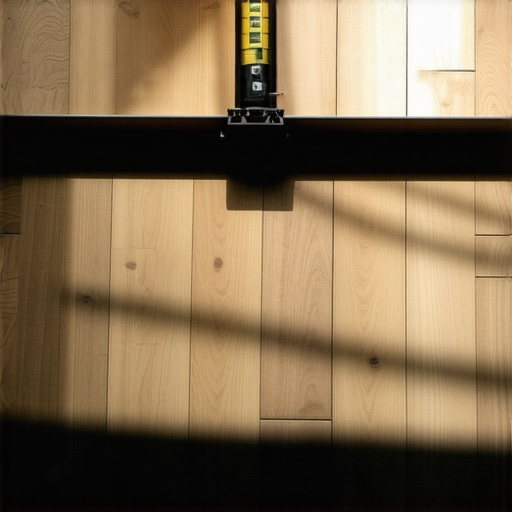
I will never forget the morning I thought a small plane was landing in my utility room. I was half-awake, nursing a coffee, when a violent, rhythmic thumping began to vibrate the very floorboards beneath my feet. By the time I reached the laundry nook, my washer had physically ‘migrated’ nearly two feet from the wall, pulling its drain hose dangerously taut. The culprit? A beautiful, 100-year-old hardwood floor that had settled into a slope steep enough to make a marble roll at top speed. If you have ever stood there staring in frustration at why your washing machine is moving across the floor during the spin, trust me, I have lived that nightmare. Today, we are going to fix it together, using the hard-won lessons I learned while trying to keep my sanity in a house that refuses to stay square. [image_placeholder]
Stop the Violent Shaking Without Renovating Your Entire House
I used to think that a slanted floor was just a quirk I had to live with, like a squeaky door or a drafty window. My early attempts at a fix were, frankly, embarrassing. I once jammed a stack of damp, folded-up cardboard under the left front foot, thinking I had solved the mystery of the century. Within two loads, the cardboard compressed, the machine started dancing again, and I ended up with a soggy mess on my floor. It was a classic rookie mistake. The truth is that even the most advanced smart washing machines can simplify laundry day only if they are sitting on a stable, level foundation. When your machine is off-kilter, the internal sensors for the balance system go haywire, leading to those endless ‘unbalanced load’ errors that drive everyone crazy. According to a report by the Association of Home Appliance Manufacturers, excessive vibration from an unlevel machine is one of the primary causes of premature bearing failure.
Can you really get a machine to stay still on a literal slope?
You might be skeptical that a few turns of a wrench can counteract a floor that looks like a playground slide. It is a common fear that the slant is just too aggressive for the built-in leveling legs to handle. I felt the same way until I realized that standard legs are only the beginning of the solution. We are going to dive into how to extend that reach and when to use specialized vibration pads that actually grip the floor instead of sliding across it. Even washing machines that save water and use high-efficiency tech need that perfect horizontal plane to prevent the drum from banging against the outer cabinet. Have you ever walked into your laundry room and found your washer has ‘walked’ into a completely different position? Tell me about your worst washer-migration story in the comments. We are about to turn that jackhammer sound back into a gentle hum.
Grab Your Wrench and Tackle Those Stubborn Legs
The first thing you need to realize is that the leveling legs on your machine are essentially heavy-duty screws designed to compensate for the world’s imperfections. Most people just try to tilt the machine and hope for the best, but that is how you end up with a bruised shoulder and a washer that still wobbles. I remember one humid Tuesday when I decided I could level my machine by hand without a tool. I spent forty minutes wrestling with a greasy metal foot only to realize I had actually unscrewed it so far that the machine was now leaning even more dangerously. The lesson? Use a proper adjustable wrench. You want to loosen the locking nut—that is the thin metal ring pressed against the bottom of the machine—before you try to turn the actual foot. Once the nut is loose, you can extend the legs on the ‘downhill’ side of your floor. Think of it like adjusting a tripod on a rocky cliffside; you are not trying to change the cliff, just making sure the camera stays flat. 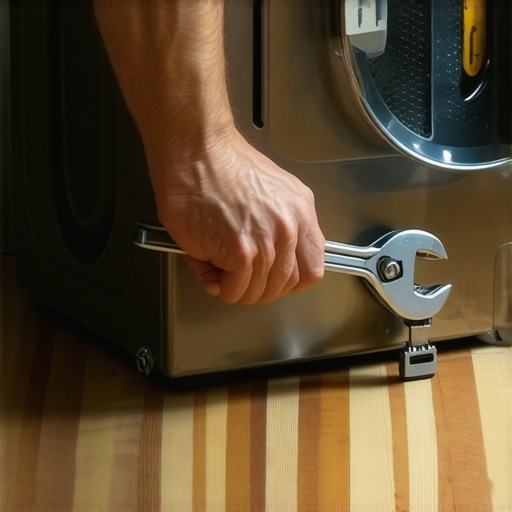
Identify the True High Point Before You Start
Before you start cranking those legs, you need a bubble level. If you do not have one, most smartphones have a level app that works surprisingly well. Place it directly on the top of the machine, checking both side-to-side and front-to-back. If your floor is severely slanted, you might find that even at their maximum extension, the legs are not long enough. This is a common issue that leads many to worry how to tell if your washer bearings are about to fail, because that constant tilting puts massive uneven pressure on the internal hardware. If you hit the limit of the leg, do not just leave it dangling. This is where specialized vibration-dampening pads become your best friend. They add about an inch of height and provide a rubberized grip that acts like mountain-climbing boots for your appliance.
Use Friction to Fight the Downward Slide
When a floor is sloped, gravity is literally trying to pull your heavy washer toward the lowest point every time the drum spins. A smooth hardwood or tile floor offers zero resistance. I once tried to solve this by putting a piece of old carpet under the machine, which only made it ‘surf’ across the room faster. What you actually need is high-friction rubber. If you are investing in top smart appliances for a seamless home experience in 2025, you should not skimp on the $20 pads that keep them from self-destructing. These pads absorb the micro-vibrations before they can turn into the ‘thumping’ sound that echoes through the whole house.
Balance the Load to Save Your Sanity
Even a perfectly leveled machine will walk if you are not careful with what you put inside. If you are using the best settings for washing your heaviest winter bedding, the weight of the water-soaked fabric can create a massive centrifugal force. On a slanted floor, that force is amplified. If the machine detects a massive imbalance, it might stop mid-cycle, which is often why your washing machine door is locked and wont open. It is a safety feature, but a frustrating one. Always make sure to distribute heavy items like towels or jeans evenly around the drum. If you are washing a single heavy rug, throw in a few smaller towels to act as a counterweight. It is a simple physical fix for a complex mechanical problem.
Wait, I have to tell you about the ‘Leveling Illusion’ because it’s the biggest trap in DIY appliance repair. Everyone assumes that if the bubble level on the lid says you are flat, the job is done. But here is the professional secret: the lid is often just a thin piece of sheet metal or plastic that can flex. If you are leveling based on the lid alone, you might be ignoring the fact that one of your legs is actually ‘floating’ slightly. When the spin cycle hits 1,200 RPM, that floating leg becomes a hammer. Expert technicians often use the ‘Diagonal Rock’ test—pressing down on opposite corners of the machine—to ensure the weight is distributed perfectly. According to a technical bulletin from the Major Appliance Consumer Action Office (MACAP), uneven weight distribution is responsible for nearly 30% of ‘excessive noise’ service calls where no mechanical fault is found.
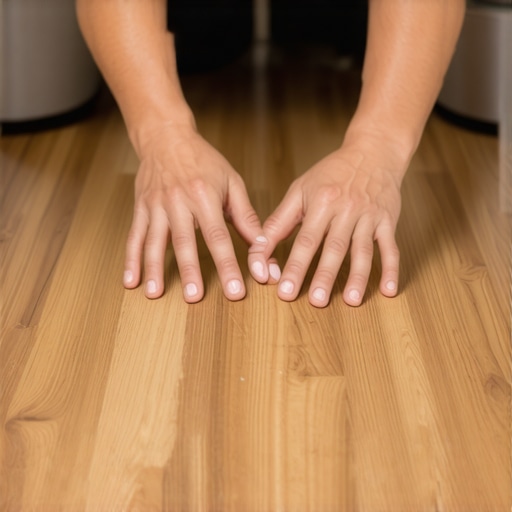
Is it possible for a perfectly level machine to still vibrate like a jet engine?
Yes, and this is where the nuance of floor joists comes in. If your laundry room is on a second floor or over a crawlspace, the floor itself might be acting like a drumhead. You can have the most perfectly balanced top smart appliances for a seamless home experience in 2025, but if the floor lacks structural stiffness, the machine’s frequency will sync with the floor’s natural vibration. This is often mistaken for a mechanical failure, leading people to wonder how to tell if your washer bearings are about to fail when the real issue is the subfloor. You might need to place a 3/4-inch piece of plywood under the machine to spread the load across multiple joists.
Stop Strangling Your Hoses and Cords
Another common ‘advanced’ mistake is over-tightening the locking nuts. I’ve seen people crank these so hard they strip the threads or, worse, prevent the rubber feet from absorbing any shock at all. While you’re back there checking the legs, take a second to look at your plumbing. A common ‘oops’ is pushing the machine too far back against the slope to save space, which kinks the hoses. This can lead to a situation where you’re trying to figure out how to fix a washing machine that only fills with hot water because the cold line is pinched against the baseboard. Always leave at least four inches of clearance, even if it means the machine sits further into the room than you’d like.
Don’t Kill Your Motor with Too Many Suds
Since we are talking about longevity, stop overusing detergent. It’s a myth that more soap equals cleaner clothes on a slope. In fact, excess suds act as a lubricant between the drum and the drive belt in some models, causing slippage. This is exactly why your washer doesnt need a whole cup of detergent to get clothes clean. It’s one of those 5-mistakes-that-are-shortening-the-life-of-your-smart-refrigerator and washer alike—expecting chemical volume to fix mechanical issues. Have you ever fallen into this trap? Let me know in the comments.
Keep Your Home Humming Like New for a Decade
I have realized over the years that the difference between a machine that lasts five years and one that lasts fifteen isn’t just the brand; it is the owner’s commitment to the small, invisible details. Most people ignore their appliances until they start screaming or leaking, but by then, the damage to the motor or the chassis is often irreversible. If you have already managed to stabilize your washer, you are halfway there. Now, you need to ensure the rest of your kitchen stays just as efficient. For instance, knowing how to update the firmware on your smart kitchen appliances is becoming just as important as cleaning the lint trap. These digital tweaks often optimize motor torque and spin patterns that reduce physical wear on the machine’s internal suspension.
The Two Essential Tools That Belong in Your Utility Drawer
Forget those cheap plastic wrenches that come in the box. If you want to maintain your home’s balance, you need a high-precision digital torpedo level. I use one because it gives me a numerical reading of the slope, allowing me to track if the floor is settling further over time. The second tool is a dedicated set of heavy-duty rubber isolation pads. I don’t just mean the generic ones; I mean pads specifically rated for the weight of high-capacity machines. When you are choosing the right refrigerator tips from industry experts, they will tell you that even a fridge needs a slight backward tilt to ensure the door seals properly under gravity. Without a precise level, you are just guessing. I also highly recommend using the best smart plugs for monitoring appliance energy use to spot ‘phantom’ vibrations—if the power draw spikes during a cycle, it usually means the motor is fighting an unbalanced load that you might not even hear yet. 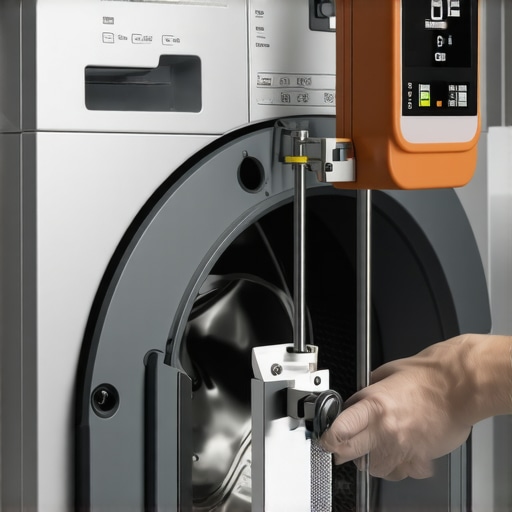
How do I maintain my smart appliances over time?
Maintenance in 2025 is about a blend of physical scrubbing and digital hygiene. According to the Service Engineering Manual for modern brushless DC motors, cumulative micro-vibrations are the leading cause of solder joint failure in control boards. To combat this, I perform a ‘re-leveling audit’ every six months. I also make sure to address the ‘gunk’ factors that add weight to the drum. This means knowing the best way to clean a moldy front load gasket to prevent the rubber from becoming brittle and losing its dampening properties. If the seal is hard, it cannot absorb the shock, and that energy goes straight into your floorboards. I predict that within the next three years, the future of home appliances will include active ‘auto-leveling’ gyroscopic legs that adjust in real-time during the spin cycle. Until then, the wrench is your best friend.
The Advanced Trick for a Silent Laundry Room
Here is my secret: use a thread-locking compound on your leveling leg nuts. Once you find that perfect horizontal plane where the machine is silent, apply a tiny drop of medium-strength (blue) thread-locker to the threads before tightening the locking nut. This prevents the constant vibration of the spin cycle from slowly ‘walking’ the leg back into a wobbly position. I want you to try this during your next laundry day—get that level out, find the sweet spot, and lock it down for good. You will be amazed at how much quieter your home feels when your top smart appliances for a seamless home experience in 2025 are actually behaving like the high-end machines they are.
The Hardest Lessons I Learned While Chasing a Level Floor
Over years of wrestling with appliances in a house that seems to move on its own schedule, I have had a few lightbulb moments that saved my sanity. First, realize that the perfect level is a moving target. In older homes, wood expands and contracts with the humidity; I have found that a machine leveled in the dry winter might need a slight adjustment during a humid summer. Second, I learned that over-tightening the locking nuts is just as bad as leaving them loose. If you crank them down with too much force, you lose the slight dampening effect of the leg threads, and the vibration transfers directly into the machine’s frame.
Third, never underestimate the power of a clean floor. Dust and soap scum under those rubber feet act like grease. Before you install your vibration pads, scrub the floor with a degreaser so the rubber can actually bite into the surface. These small details are what separate a DIY fix from a professional-grade stabilization.
My Personal Toolkit for a Quiet Utility Room
I do not leave my home’s peace and quiet to chance. Here are the specific tools I keep in my laundry drawer to ensure my washing machines that save water remain steady. I always reach for a Digital Torpedo Level because it gives me a precise percentage of the slope, which is far more helpful than a vague bubble. For the legs, I use Industrial-Grade Rubber Isolation Pads; the ones with a honeycomb pattern on the bottom provide the best grip on tile and hardwood alike.
#IMAGE_PLACE_HOLDER_E#
I also keep Blue Thread-Locking Compound on hand for any machine that lives on a particularly steep slant to prevent the feet from vibrating loose. Finally, I regularly use the best smart plugs for monitoring appliance energy use to check for erratic power draws that signal the motor is working too hard due to a hidden imbalance. This proactive approach is part of the future of home appliances management where we use data to prevent mechanical failure.
Take Back Your Peace and Quiet
It is easy to feel defeated when your laundry room sounds like a construction site, but remember that you have the power to fix it. By taking these steps—leveling the legs, adding friction, and balancing your loads—you are not just stopping a noise; you are extending the life of your appliance and protecting your home. No more worrying about why your washing machine is moving across the floor during the spin. You have done the work, you have used the right tools, and now you can finally enjoy a house that stays still. Don’t forget to keep an eye on maintenance, like knowing the best way to clean a moldy front load gasket, to keep everything running smoothly for years to come. What is the furthest your washing machine has ever walked in a single cycle? Let me know in the comments below!