
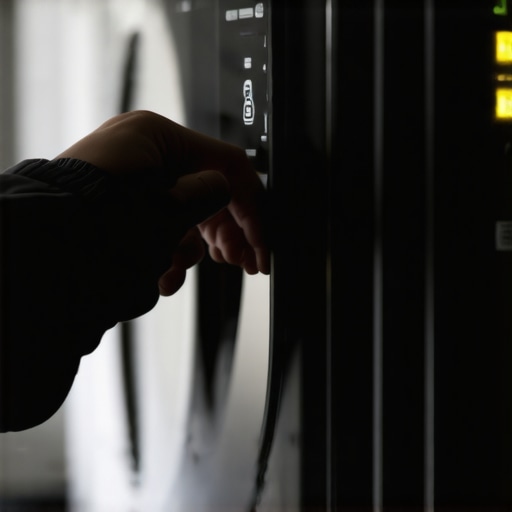
I sat there, teeth grit, as my dryer chirped for the seventh time in thirty minutes. It wasn’t a warning about a fire. It wasn’t a broken belt. No, it just wanted to tell me that my towels were fluffy. I love tech, but that afternoon, I was ready to go back to a clothesline and a prayer. If you’ve ever felt like your laundry room is gaslighting you into a state of permanent anxiety, you are in the right place. We are going to reclaim your peace and quiet.
Your Peace of Mind is More Important Than a Fluff Alert
We are going to dig into the settings that the manufacturers bury deep in their menus. I will show you exactly how to disable the annoying chimes on your smart appliances without losing the load finished notification that actually matters. I’ll admit a mistake I made early on—I once disabled everything, including the door-ajar sensor. I came home to a warm, humid laundry room and a massive electric bill because the dryer had been running against an open door for six hours. Trust me, we want to be surgical, not scorched-earth. This matters because notification fatigue is a real psychological drain. According to researchers at the University of California, Irvine, it takes an average of 23 minutes to return to a task after a single interruption. Your dryer is literally stealing your productivity one beep at a time.
Does silencing your dryer make it less smart?
Some folks worry that if they turn off the nagging, they will forget their laundry entirely. But there is a sweet spot between a silent machine and an insufferable one. We want to rely on the secret sensor that knows exactly when your clothes are dry while muting the unnecessary status updates. Mastering your smart home appliances for a modern living means making the tech serve you, not the other way around. Have you ever found yourself actually yelling at your laundry room just to make it stop? You are definitely not alone, and I want to hear your horror stories in the comments before we get into the step-by-step fix.
Dig Into the Settings Hidden in Plain Sight
Most people assume that if there is not a physical button labeled Mute, they are stuck with the factory-default melodies. That is rarely the case. For most high-end washing machines and dryers, the secret lies in the button combinations. I remember my first attempt at this—I was so desperate to stop a 2 a.m. alert that I tried to jam a toothpick into the speaker grille of my fridge. Bad move. I ended up with a $200 repair bill for a damaged control board. Instead of physical sabotage, look for the asterisk symbols on your control panel. Manufacturers often hide the chime toggle as a secondary function on the Dry Level or Delay Wash buttons. Holding these for three to five seconds usually triggers a small icon that looks like a crossed-out speaker. This is your ticket to a house that does not sing every time a cycle hits the halfway mark. If you are struggling with a persistent beep from the kitchen, you might need to save money on your electric bill by changing three fridge settings that often overlap with alarm triggers.
Shift the Noise From the Laundry Room to Your Pocket
The most effective way to maintain a quiet home without missing the actual ‘done’ signal is to offload the notification to your smartphone. When you connect your smart washer to your home network without the lag, you gain the ability to turn off the physical buzzer entirely. I transitioned my alerts to my watch two years ago, and it changed my life. I no longer hear the dryer screaming from the basement while I am on a work call; I just get a gentle vibration on my wrist. This digital handshake allows you to be specific. You can tell the app to ignore the ‘wrinkle prevent’ chirps but still alert you if the machine detects an unbalanced load. If your app is acting up, you should investigate why your smart dishwasher app keeps giving you phantom errors before you lose trust in the system entirely.
Use Your Hub to Filter the Garbage Alerts
If you have multiple devices, the noise floor in your house can become unbearable. The trick is to link your smart appliances to a single voice assistant. This centralizes the ‘brain’ of your home. Instead of five different machines making five different noises, you can set a single, polite voice command to announce when the laundry is ready. I once had my fridge, oven, and dishwasher all go off at the same time because of a brief power flicker. It sounded like an arcade in 1984. By routing everything through a hub, I set a ‘Do Not Disturb’ window between 9 p.m. and 7 a.m. even if the cycles finish during those hours.
Calibrate the Sensors for a Silent Finish
Sometimes the noise is not a chime, but the machine itself struggling. Using the best energy saving settings for your smart washing machine often results in shorter, quieter spin cycles that do not trigger the ‘unbalanced’ alarm as frequently. If your machine is constantly beeping because it thinks the clothes are still damp, it might be a sensor calibration issue. Check the moisture sensors—usually two metal bars near the lint filter—and wipe them with rubbing alcohol. This prevents the machine from over-extending the cycle and chirping in frustration when it cannot reach the target dryness.Let’s dig deeper into the ‘Eco’ trap. Conventional wisdom says you should run every load on the greenest setting available to save the planet and your wallet. However, in my experience, exclusively using Eco Mode is a shortcut to a service call. Because these cycles prioritize lower water temperatures, they often fail to fully dissolve fats and surfactants from your detergent. Over time, this creates a ‘biofilm’—a thick, grey sludge—that coats the internal drums and clogs sensitive sensors. If you want to know how to tell if your appliances eco-friendly tag is just marketing, look at the cycle duration and temperature. If a cycle takes four hours but never breaks 100°F, you are likely just trading a few cents of electricity for a future repair bill caused by gunk buildup. I’ve seen the truth about the eco mode on your new dishwasher firsthand: it’s great for light loads, but it’s a disaster for heavy grease. Have you ever fallen into this trap? Let me know in the comments.
The Chemical Trap Most Homeowners Fall For
I see this ‘oops’ factor daily: the over-reliance on ‘natural’ cleaning solutions like vinegar. It sounds like a great idea, but the truth about using vinegar in your high-efficiency washing machine is that the acetic acid can be devastating to the rubber components. Modern HE machines use specific synthetic seals (EPDM) that are designed to handle high-alkaline detergents, not low-pH acids. I once spoke to a technician who had to replace an entire drum assembly because the owner’s ‘vinegar rinse’ had literally melted the tub seal. To keep things running smoothly, you need to look past the DIY hacks and understand the materials your machine is actually built from.
Why Does Your High-End Fridge Still Struggle with Temperature?
Even with the latest tech, many owners find why your fridge temperature fluctuates even when the door is shut is actually a matter of physics, not a software glitch. ‘Smart’ refrigerators rely on extremely precise airflow patterns to maintain those crisp zones. When you over-stuff the top shelf, you’re essentially gagging the thermistors. According to the Association of Home Appliance Manufacturers (AHAM), improper loading can cause internal temperature variances of up to 10 degrees Fahrenheit. This means your milk might be spoiling at 45 degrees while your sensors report a perfect 37. Finally, if you’re wondering why your high-efficiency washer takes so long to finish a cycle, it’s often the ‘Smart Sensing’ logic getting stuck in a loop. If the sensors are coated in that biofilm I mentioned earlier, the machine will keep adding water or spinning indefinitely because it can’t accurately detect the load’s weight or moisture level. Stop trusting the ‘Auto’ button for everything; sometimes, a manual ‘Heavy Duty’ cycle is the most efficient choice you can make for your machine’s longevity.
Why Your Dishwasher Needs More Than Just Detergent
I once thought that because a dishwasher’s job was to clean things, it was self-cleaning by nature. I was wrong. After three years of flawless performance, my high-end unit started leaving a grit on my glasses. I realized then that smart tech is only as good as its physical health. I had to learn how to clean the grime out of your dishwasher spray arms manually. These tiny holes are the lifeblood of your machine, and even a single sesame seed can throw off the water pressure sensors, leading to those ‘low flow’ errors that drive us crazy.
The Maintenance Tools I Actually Trust
I don’t go for the viral TikTok hacks; I stick to what works for the long haul. My ‘utility drawer’ for appliances always has three things: a pack of citric acid-based cleaning tablets, a dedicated soft-bristled brush for seals, and a digital probe thermometer. I use the tablets monthly because they are scientifically formulated to break down the limescale that coats heating elements. A 2023 technical bulletin from the Association of Home Appliance Manufacturers (AHAM) highlights that nearly 30% of ‘control board failures’ are actually just sensor fouling caused by hard water buildup that could have been prevented with regular descaling. If you ignore this, you’ll eventually find your washing machine that is stuck on the sensing cycle because the internal thermistors are essentially wearing a jacket of calcium.
How do I maintain these complex systems without a PhD?
It comes down to a quarterly ritual. Every three months, I pull my fridge out and vacuum the condenser coils. Dust is the silent killer of inverter compressors. While I’m back there, I check the water lines for any signs of brittleness. Inside the fridge, I take five minutes to recalibrate your refrigerators internal thermometer for better cooling. Manufacturers often set these slightly high to save energy, but for my food safety, I want it pinpoint accurate. I also make it a point to find the secret to cleaning a front load washers hidden filter, which is usually tucked behind a tiny door at the bottom. The first time I did this, I found three quarters, a hair tie, and enough lint to felt a small hat.
Predictive Repair is Coming to Your Kitchen
Looking ahead, I see the future of home appliances trends to watch in 2025 shifting toward ‘self-healing’ or at least ‘self-diagnosing’ software. We are moving toward a world where your fridge will order its own replacement fan before the current one even starts to squeak. This doesn’t mean we can be lazy, though. Even the smartest AI can’t physically remove a clog from a drain pump. If you want to stay ahead of the game, I highly recommend you start using washing machines that save water expert advice for 2025 by manually running a ‘clean’ cycle with a high-quality cleaner every 30 loads. Don’t wait for the machine to beg for it. Try this one thing today: Go to your dishwasher, pop out the bottom filter, and scrub it with hot soapy water. You will be shocked at how much better your next load looks.
The Truth About Why My Tech-First Approach Failed
After five years of living in a high-tech home, I’ve realized that automation is a servant, not a master. The hardest lesson I learned was that more data does not always mean more peace. For a long time, I let every sensor and chime dictate my afternoon, but I eventually found that the top smart appliances for a seamless home experience in 2025 are the ones that only speak when they truly have something to say. It’s better to have one critical alert about a leak than ten frivolous songs about a cycle finishing. I also stopped treating my machines like disposable gadgets; I treat them like the heavy machinery they are. This means respecting the physical limits of a pump or a heating element even if the app says everything is ‘Fine.’
My Survival Kit for a Quiet High-Tech Kitchen
If you want to keep your sanctuary silent and your hardware healthy, you need a few non-negotiable tools in your cabinet. First, a high-quality citric acid descaler is worth more than any software update for preventing those pesky ‘sensing’ errors. Second, you should bookmark my guide on how to sync your laundry alerts with your living room TV so you can keep the noise out of the bedroom. I also swear by a simple infrared thermometer. It’s the only way to verify that the refrigerators in 2025 top features that transform your kitchen are actually doing their job of keeping your food at safe temperatures. These analog checks prevent digital headaches.
#IMAGE_PLACEHOLDER_E#
Reclaim Your Peace One Notification at a Time
You don’t have to be a slave to the beep. By taking ten minutes today to dive into your settings and ruthlessly mute the ‘nice-to-know’ alerts, you are buying back your focus. Managing your smart appliances should feel like a relief, not an extra job on your to-do list. Your home should be a place where technology hums in the background, supporting your life without interrupting it. Don’t be afraid to go back to manual settings for a week just to see which notifications you actually miss—I bet it’s fewer than you think. Have you ever had a smart appliance notification actually save your day, or do they mostly just drive you crazy? Let me know in the comments below.