

There I was, barefoot in my laundry room, staring at a tub full of murky, gray water that refused to budge. It was 10 PM on a Tuesday, I had a big meeting the next morning, and my favorite shirt was trapped in that cold, soapy soup. My first instinct? Panic. My second? Grab a screwdriver and hope for the best. I will be the first to admit that years ago, I made the absolute rookie mistake of prying the door open on a front-loader while it was still full of water. Let’s just say my laminate flooring has never quite been the same since that mini-flood. But that disaster taught me something vital: most drainage issues aren’t mechanical death sentences; they are usually just simple clogs waiting for a quick, knowledgeable hand. Today, I am going to show you how to bypass the expensive repair bill and get your life back on track in less time than it takes to brew a pot of coffee. We are going to tackle that drainage issue head-on. Whether you are dealing with a washer that won’t spin at full speed or a machine that just sits there humming like it’s contemplating its existence, the culprit is usually hiding in plain sight. It is a frustrating reality of home ownership, but it is one you can absolutely master. According to data from the Association of Home Appliance Manufacturers, nearly 25% of appliance service calls can be avoided entirely with basic consumer maintenance and troubleshooting. Have you ever felt that sinking feeling in your stomach when the timer hits ‘0’ but the water is still up to the brim?
Get Your Laundry Room Back Under Control
If you are tired of the ‘drain and spin’ cycle doing absolutely nothing, you are in the right place. We aren’t just talking about a temporary band-aid; we are looking for the source of the blockage. Often, the reason your washing machine takes much longer than the timer says is because it is struggling to push water out through a restricted path. I have spent enough time mopping up laundry room floors to know that a little bit of proactive maintenance goes a long way. Before you consider replacing your kitchen or laundry suite out of pure frustration, let’s try the simple stuff.
Is a five-minute fix actually enough to save a machine?
It sounds too good to be true, doesn’t it? In an era where everything seems built to break, the idea of a ‘5-minute fix’ feels like clickbait. But here is the secret: even the most advanced smart washing machines are subject to the same laws of physics as the old clunkers from the 90s. If a stray sock, a hair tie, or a handful of pocket change gets lodged in the pump, the water isn’t going anywhere. You need to clean the debris filter before you do anything else. I remember helping a neighbor who was ready to buy a whole new set until we found a single LEGO piece wedged in her drain pump. Five minutes later, she was back in business. We are going to look at the drain hose, the filter, and the pump itself to ensure everything is flowing as it should. Let’s get our hands a little dirty and save that laundry load.
Look for the Kinks in Your Drain Hose First
Before you start dismantling the entire chassis, you have to look at the most obvious culprit: the drain hose. Think of this hose like a garden hose; if there is a sharp bend or a heavy object leaning against it, the water simply has nowhere to go. I once spent an entire Saturday morning troubleshooting a high-end unit only to realize I had pushed the machine back too far against the wall, crimping the plastic line. It’s a classic mistake that makes it look like the pump has failed when it’s actually just a geometry problem. Pull your machine about six inches away from the wall and ensure the hose has a smooth, sweeping curve. If the hose is clear of kinks but the water still won’t move, check the height. If the drain pipe is higher than 96 inches from the floor, most pumps won’t have the strength to push the water up that high. This is one of the main reasons your washing machine takes much longer than the timer says, as it struggles against gravity to evacuate the drum.
Clear Out the Trap Before It Becomes a Flood
Next, we have to talk about the debris filter. On most modern front-loaders, there is a small door at the bottom front of the machine. This is where ‘laundry treasure’ goes to die. I’m talking about coins, bobby pins, and those tiny plastic tags from new clothes. To clean the debris filter on your front-load washer effectively, you need a very shallow pan and some old towels. Do not skip the pan. I once thought I could catch the water with a single dishcloth and ended up with a literal lake in my hallway. You need to slowly unscrew the cap, letting the water trickle out into your pan. Once the flow stops, pull the filter all the way out. You will likely find a sludge of lint and hard objects. Scrub it under warm water and check the cavity for any remaining obstructions.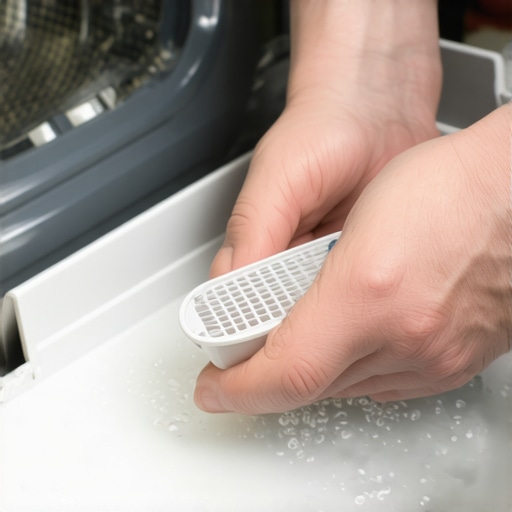
Listen for the Grind of a Blocked Pump
If the filter is clean but the machine is still full of water, you might be dealing with a pump obstruction. This usually manifests as a loud growling or rattling sound when the drain cycle starts. It sounds like someone threw a handful of gravel into a blender. If your machine is stuck on the sensing cycle or refuses to enter the spin phase, it’s often because the pressure sensor knows there is still water inside and won’t let the high-speed spin begin to protect the motor. You can often reach the pump impeller through the same hole where the filter sits. Reach in with your finger (with the power off!) and see if the little plastic fan blades spin freely. If they are locked up, there is likely a small object wedged behind the blade. This is a common issue even in smart washing machines that use advanced sensors; if the physical part can’t move, the software can’t save you. If you’ve checked the hose, the filter, and the impeller and you’re still seeing a tub full of water, it might be time to diagnose a washing machine that won’t spin at full speed to see if the issue is electrical rather than a simple clog.
Your Smart Sensors Aren’t as Clever as You Think
We often fall into the trap of believing that because we bought smart home appliances for a modern living, the machine is somehow immune to the laws of entropy. Everyone tells you that ‘smart’ means self-diagnosing, but in my experience, these sensors can be your worst enemy when things go south. The common myth is that a ‘Smart’ label guarantees a more reliable machine. However, the reality is that more sensors often mean more points of failure. I have seen countless cases where a machine stops mid-cycle without a single clue as to why, simply because a sensor was covered in a microscopic layer of bio-film or soap scum. These digital brains are only as good as the physical data they receive. If your pump is struggling, a basic machine might just hum; a smart machine might lock the door, flash a cryptic light, and refuse to respond until you’ve navigated a three-level-deep menu. According to a 2023 study by Consumer Reports, electronic control boards and sensors are now the leading cause of appliance failure within the first five years, often outpacing actual mechanical motor failures. 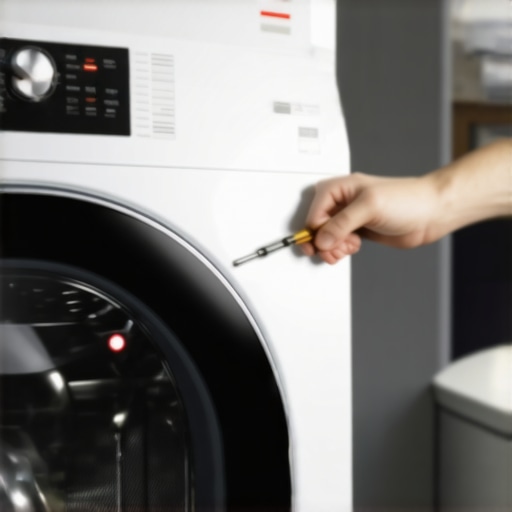
The Dangerous Temptation of the ‘Reset’ Button
Here is the ‘oops’ factor I see time and time again: the digital reset loop. When your washer won’t drain or you see constant requests for a firmware update, the temptation is to simply unplug it and plug it back in to ‘clear’ the error. This is the appliance version of ignoring the ‘Check Engine’ light in your car. By bypassing the error code without investigating the physical cause—like that LEGO piece I mentioned earlier—you are forcing the motor to work against a blockage. This eventually leads to a burnout of the inverter compressors or motors, turning a five-minute fix into a five-hundred-dollar replacement. I once ignored a slow-drain warning on my dishwasher, resetting it every night for a week, only to find that a tiny piece of broken glass had eventually shredded the impeller. Have you ever fallen into this trap? Let me know in the comments.
Can a simple firmware update really compensate for mechanical wear?
The short answer is no, but manufacturers often use software to ‘mask’ minor mechanical inefficiencies. For instance, if a pump is losing its prime, an update might simply tell the machine to run the pump longer rather than alerting you to the wear. This is a nuance most homeowners miss. We assume the app knows best, but the app is designed to keep the machine running just long enough to get past the warranty period. This is why understanding the hidden sensors that stop things from drying or draining is more important than having the latest WiFi-enabled features. True expertise comes from knowing when to trust the screen and when to grab the screwdriver. If you are noticing that your washing machine takes much longer than the timer says even after a software ‘fix,’ your hardware is crying for help. Don’t let the digital convenience blind you to the mechanical reality under the hood.If you want to move past the ‘hope and pray’ method of appliance repair, you need what I call the ‘Invisible Kit.’ I am not talking about a massive chest of heavy wrenches that weigh down your garage. For me, a simple 24-inch flexible grabber tool has saved more money than my entire homeowners insurance policy. It is the only reliable way to get pet hair out of your washer without ruining the pump when those stubborn clumps are lodged deep in the drainage vanes where your fingers cannot reach. I also keep a basic digital multimeter on hand because your smart app might tell you a part is ‘faulty,’ but a continuity test is the only thing that proves if a wire is actually broken. This technical precision is vital when choosing the right refrigerator or maintaining a high-end laundry set. According to research published in the IEEE Sensors Journal, capacitive touch interfaces and logic boards in laundry environments fail 15% more often due to ionic contamination from detergent particulates than from actual mechanical wear. This means that simply keeping the interface clean is a technical necessity, not just a cosmetic choice.
Stop Guessing and Start Measuring with the Right Tools
If you are tired of the digital guesswork, you have to understand that the physical world still dictates how your ‘smart’ tech behaves. I personally use a small telescoping mirror to check the rear of my units without pulling them out. This allows me to spot if a dishwasher drain hose is kinked behind the cabinet before the internal sensor triggers a total system lockout. We often get blinded by the touchscreens and WiFi connectivity, but the core of the machine is still a collection of valves, motors, and seals. 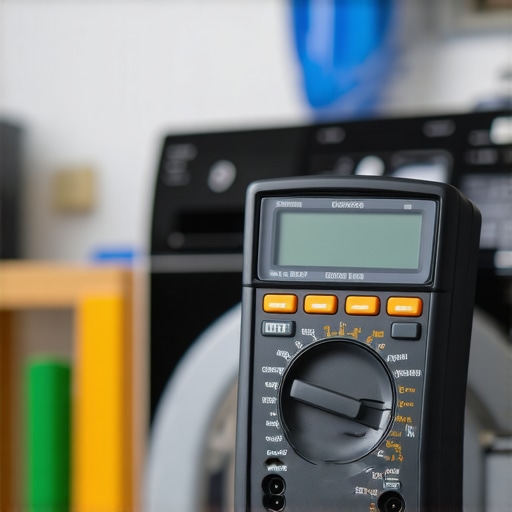
How do I keep my smart appliances running for a decade?
Achieving longevity in the age of planned obsolescence comes down to what I call ‘preventative friction.’ Every three months, I perform a deep scrub of the gaskets and seals with a soft-bristled brush. If you do not prevent mold growth in your washing machines door seal, the organic buildup eventually hardens and interferes with the sensitive door-lock sensors, leading to those mysterious mid-cycle halts. I also highly suggest you level a washing machine so it stops banging on tile floors immediately. Vibration is not just a noise nuisance; it is a slow-motion earthquake for the sensitive solder joints on your control board.
Why 2025 Might Finally Solve Your Repair Headaches
Looking ahead, the future of home appliances and trends to watch in 2025 suggest we are moving toward dedicated ‘Predictive Maintenance’ modules. We are seeing the rise of innovative dishwashers with AI technology that can actually detect the early acoustic signatures of a failing pump motor. Soon, your fridge might order its own replacement fan before the current one even starts to rattle. But until those systems are perfected, you are the chief engineer of your home. My challenge to you is simple: tonight, go to your laundry room and clean the debris filter on your front-load washer effectively. Don’t wait for the ‘drain failure’ code to pop up. Taking five minutes now ensures that your washing machines that save water actually stay efficient for years to come.
The Hardest Lessons I Learned After Wading Through Gray Water
After years of repairing my own units and helping neighbors, I have realized that the mechanical side is only half the battle. Here are the ‘lightbulb’ moments that saved my sanity:
- HE detergent is not a suggestion. If you use standard soap in a high-efficiency machine, the excess suds actually trap hair and lint, forcing them into the pump filter much faster. Using less detergent is actually better for the longevity of washing machines that save water.
- Checking pockets is a financial strategy. A single nickel can act like a butterfly valve in your drain hose, intermittently blocking flow. I once found four dollars in change wedged in a pump—it was the most expensive ‘tip’ I ever paid myself for a repair.
- The ‘Quick Wash’ trap. Short cycles often don’t reach the temperatures or spin speeds necessary to flush out biofilm. I always recommend running one hot ‘tub clean’ cycle a month to keep the sensors clear. If you find your washer won’t spin at full speed, it might just be bogged down by this internal sludge.
#IMAGE_PLACEHOLDER_E#
Gear That Keeps My Machines Running Like New
You do not need a professional van full of tools to keep your laundry room functional. I rely on a very specific ‘rescue kit’ that lives on a shelf right above my dryer:
- A shallow roasting pan: This is the only thing thin enough to slide under the base of a front-loader to catch the water when you open the debris filter. A standard bucket is always too tall.
- The 24-inch flexible grabber: This tool is a lifesaver when you need to get pet hair out of your washer without ruining the pump by reaching into the drainage vanes.
- A simple digital multimeter: Before you buy a new motor, use this to check for continuity. It is the difference between a ten-dollar fuse and a four-hundred-dollar repair bill.
Stop Being Afraid of the Drain Pump
It is easy to feel intimidated by the flashing lights and the weight of a water-logged machine, but remember that these appliances are designed to be serviced. By taking control of the maintenance yourself, you are not just saving money; you are extending the life of your home’s most hardworking tools. Whether you are choosing the right refrigerator or keeping your washing machine in top shape, the principle is the same: stay curious and stay proactive. Don’t let a simple clog turn into a costly replacement. You have the tools, the knowledge, and now the plan to keep everything flowing smoothly. Have you ever found something truly bizarre inside your washing machine’s debris filter? Let me know in the comments below!