
I stood in my kitchen at 2 AM, ankle-deep in lukewarm, sudsy water, clutching a soggy dish towel. My ‘amazing deal’ dishwasher—the one I bragged about to my brother-in-law for weeks—had decided to call it quits after just fourteen months of service. I thought I was being the savvy shopper. I thought I was outsmarting the system by avoiding the premium brands. Instead, I was standing in a swamp of my own making, realizing that the $300 I saved at the register was currently being swallowed up by the emergency plumber’s weekend rates. It was a brutal wake-up call. We’ve all been there, lured in by a low price tag and the promise that ‘it does the same thing as the expensive ones.’ But here’s the cold, hard truth: a cheap appliance is often just an expensive one in slow motion. Today, I want to pull back the curtain on why that budget-friendly fridge or washer might be the most expensive thing you ever buy for your home. We are going to break down the real math of ownership and how to spot a genuine value from a lemon waiting to happen.
My Kitchen Floor Became a Swimming pool Thanks to a ‘Deal’
When I first started outfitting my home, I had a simple rule: if it looks like a fridge and it is cold, it is good enough. I didn’t care about the ultimate guide to smart home appliances for a modern living or energy ratings. I cared about my bank balance. That mindset led me to buy a bottom-tier washing machine that sounded like a jet engine taking off every Tuesday afternoon. I spent hours trying to figure out how to manually drain a dishwasher when the pump fails because the internal sensors were basically decorative. The mistake I made—and maybe you’re making it right now—was equating ‘price’ with ‘cost.’ They are not the same thing. Have you ever bought a ‘budget’ appliance only to have it break the week after the warranty expired?
Is spending more on smart tech actually worth the hype?
I get the skepticism. Believe me, I do. Why pay for a Wi-Fi-enabled oven when you can just turn a knob? But I have learned that the ‘premium’ price often pays for better build quality, not just bells and whistles. In fact, according to the American Council for an Energy-Efficient Economy (ACEEE), the purchase price of an appliance often accounts for only 10% to 20% of its total lifetime cost. The rest is water, electricity, and the inevitable repairs. If you do not know how to choose the best dishwasher based on more than just the sticker, you are essentially gambling with your utility bills. I once ignored the hidden settings on your fridge that can save you money on utilities because I thought they were just gimmicks. My electric bill proved me wrong within a month. Choosing the right gear is not about being fancy; it is about not being miserable three years from now when your ‘cheap’ fridge starts shortening the life of your smart refrigerator by running the compressor 24/7. It is time to look beyond the price tag and start looking at the long game.
Calculate Your Real Ownership Costs Before You Swipe
To stop the cycle of buying and replacing, you have to treat an appliance purchase like a small business investment. Most people look at the sticker price and stop there. Instead, start by calculating the ‘Cost Per Load’ or ‘Cost Per Month.’ Take the purchase price, add ten years of estimated electricity and water usage (found on the EnergyGuide label), and divide by 120 months. You will quickly see that a more expensive, high-efficiency model often pays for itself by year three. I learned this the hard way when I finally swapped my rattling budget washer for one of the washing machines that save water expert advice for 2025. I was terrified when I first ran it because I thought it was broken—I kept wondering why your high efficiency washer uses barely any water. I even called the technician, who laughed and told me it was just doing its job. My water bill dropped by thirty bucks a month. That is $360 a year back in my pocket just for picking a better machine.
Check the Inverter for Long-Term Sanity
Think of the compressor in your fridge or the motor in your washer like the engine in your car. A cheap motor is like a lawnmower engine trying to pull a semi-truck; it is going to burn out fast because it only knows two speeds: ‘Off’ and ‘Full Blast.’ This constant cycling is why cheap fridges die early. When you shop, look for digital inverter technology. If you understand the difference between inverter and traditional refrigerator compressors, you know that inverters ramp up and down smoothly, like a dimmer switch rather than a standard light switch. This reduces wear and tear and is the secret to making your refrigerator last twice as long. 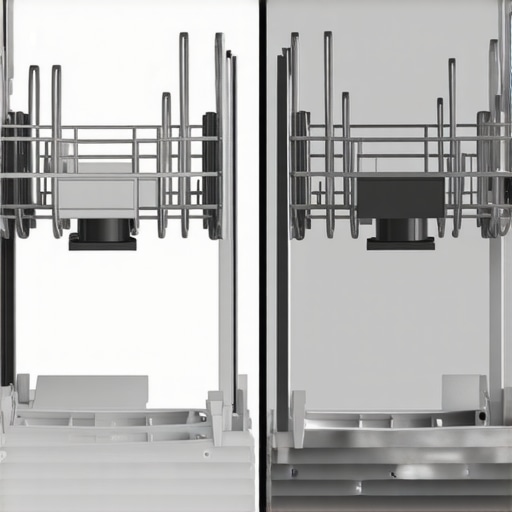
Pick the Tech That Actually Cuts Your Bills
Not all smart features are created equal. You do not need a fridge that tweets, but you do need one that monitors its own health. I used to ignore the sensors until I learned how to set up your smart refrigerator to alert you when the door is ajar. A door left slightly open for six hours can spike your energy use and spoil $100 worth of groceries. That one ‘fancy’ sensor pays for itself in a single mistake. Similarly, when using a dishwasher, do not just hit ‘Normal’ every time. If you use the best energy efficient settings for your new dishwasher, you can often cut the heat-dry cycle, which is the biggest energy hog in your kitchen. Always look for appliances that offer ‘Eco’ or ‘Soil Sensing’ modes. These aren’t just for show; they use internal lasers to check how dirty the water is and stop the cycle the second your plates are clean. This is the ‘Meat’ of smart ownership: letting the machine work smarter so you can spend less.Most people assume that if their washing machine isn’t filled to the brim with water, their clothes aren’t getting clean. This is one of the biggest myths in the appliance world. In reality, modern high-efficiency units rely on the friction of the fabrics rubbing against each other and specialized enzymes in the soap. When you see why your high efficiency washer uses barely any water, you aren’t seeing a flaw; you’re seeing precision engineering at work. According to the Association of Home Appliance Manufacturers (AHAM), modern HE machines use roughly 70% less water than older agitator models while achieving superior soil removal.
The Soap Trap That Destroys Your Motor
Have you ever fallen into the trap of adding extra detergent for a particularly dirty load? I did it for years until a repairman showed me the gray slime coating my outer drum. This buildup is the reason your high efficiency washer smells like old gym socks. Using too much soap creates suds that act as a cushion, preventing the clothes from actually rubbing together, which is how they get clean. Even worse, it strains the motor and can lead to you needing to know how to fix a leaking detergent drawer in your washer as the pressure forces water out of the seals. You genuinely only need about two tablespoons of HE detergent. Trust me, why your washer doesn’t need a whole cup of detergent to get clothes clean is the most important lesson in appliance longevity. 
Why Does Your High-Tech Dishwasher Still Leave Glasses Cloudy?
If you are using those expensive all-in-one pods and still seeing white spots, you are missing a critical step. Manufacturers market those tablets as a complete solution, but why your dishwasher still needs rinse aid even with 3-in-1 tablets comes down to the timing of the cycle. Rinse aid is released during the final rinse to lower the surface tension of the water, allowing it to sheet off before the heat cycle begins. Without it, you will end up wondering why your dishwasher is leaving a cloudy film on glasses. It isn’t a marketing scam; it is basic chemistry. Moving into the world of high-end gear like innovative dishwashers with AI technology you must know means learning these small, non-obvious rules. If you don’t, you are just paying a premium to get the same mediocre results as a budget machine. Have you ever fallen into this trap or noticed your smart tech acting up because of a simple maintenance mistake? Let me know in the comments.I’ve realized that the real secret to avoiding that 2 AM kitchen flood isn’t just buying the right brand—it’s owning a $15 torpedo level and a long-handled condenser brush. If your washer isn’t perfectly flat, the internal bearings will literally grind themselves into dust within five years because of the uneven centrifugal force. If you’ve never looked under your fridge, you’re missing the secret to making your refrigerator last twice as long. Most people wait for a total breakdown to act, but I’ve started treating my kitchen like a flight deck. I check my seals every six months because learning how to deep-clean the gasket on your dishwasher to prevent leaks is a lot cheaper than replacing a warped hardwood floor. I also keep a digital multimeter in my junk drawer to check the heating elements in my dishwasher. It sounds like overkill until you realize that a failing element is why your dishes are coming out greasy and wet.
Stop the Shake with a Simple Level
One of the most overlooked tools in the laundry room is the leveling foot. When I moved into my current place, I didn’t realize the floor was slightly sloped. My machine would ‘walk’ across the floor, straining the hoses and the motor. Now, I always keep a level handy to ensure the drum stays centered. This prevents the violent banging that leads to expensive repairs.
How do I keep these machines running for a decade?
Consistency beats intensity every single time. You don’t need a degree in mechanical engineering, but you do need to know how to calibrate your refrigerator thermometer without calling a pro. If the internal temp is off by even three degrees, your compressor works 20% harder to maintain the cooling cycle. According to the NFPA 921 Guide for Fire and Explosion Investigations, many appliance failures stem from neglected electrical connections or dust buildup—issues that are entirely preventable with a simple annual inspection. I personally keep a small toolkit specifically for my kitchen: a can of compressed air for clearing sensor dust, a multimeter for testing continuity, and a specialized brush for the fridge coils. These aren’t just gadgets; they are the insurance policy for my investment. If your screen ever freezes, don’t panic; just learn how to reset the error codes on your modern smart washer to clear those ghost glitches that occur after power surges. #IMAGE_PLACE_HOLDER_D#
The Future is Self-Diagnosing Gear
Looking ahead, the industry is shifting toward aggressive predictive maintenance. We are moving toward the future of home appliances trends to watch in 2025, where your dishwasher won’t just tell you it’s broken—it will alert your phone that a bearing is beginning to wear because the motor’s vibration frequency has shifted outside of its normal range. This AI-driven oversight will make the the 5-minute fix for a dishwasher that wont start its cycle a relic of the past because the machine will have already alerted you to the issue before the cycle ever failed. For now, we still have to do some of the legwork manually. My challenge for you this weekend: pull your refrigerator out from the wall. If you see a thick layer of grey dust on those black coils, vacuum it off with a soft brush attachment. You’ll likely hear the machine quiet down instantly, and your next energy bill will be the proof that a little maintenance goes a very long way.
What Your Local Repair Tech Secretly Wants You to Know
After years of tinkering and a few expensive mistakes, I’ve realized that the most common appliance failures are completely avoidable. First, stop treating your electronics like indestructible tanks. Modern smart appliances are high-precision instruments that hate being neglected. If you find your screen acting up, it is often just a software hang-up—knowing the hidden reset button on your smart refrigerator that fixes glitches can save you a $150 service call just to have someone press two buttons. Second, never ignore a change in ‘rhythm.’ If your dishwasher starts humming differently, check the spray arms or the filter immediately. Lastly, remember that advice from pros isn’t just talk; choosing the right refrigerator tips from industry experts usually emphasizes airflow over aesthetics every single time.
The DIY Essentials I Keep in My Kitchen Junk Drawer
You don’t need a massive toolbox to keep your home running smoothly. I personally swear by these four items: a simple torpedo level to prevent your washer from dancing across the room, a long-handled coil brush for your fridge’s underbelly, a digital multimeter for testing heating elements, and a small tube of food-grade silicone grease for door gaskets. If you’re dealing with an uneven floor, learning how to level a washing machine on an old slanted floor is the single best way to protect your drum bearings from a premature death. These small investments transform you from a victim of bad luck into an active steward of your home.
#IMAGE_PLACE_HOLDER_D#
Build a Home That Works for You Instead of Against You
The transition from a ‘budget’ mindset to a ‘value’ mindset is what separates a stressful home from a peaceful one. As we look toward the top smart appliances for a seamless home experience in 2025, the goal isn’t just to have more gadgets—it’s to have more time. When you invest in quality and commit to five minutes of maintenance a month, you aren’t just saving money; you’re buying back your Saturday mornings. No more mopping up suds at 2 AM, and no more spoiled groceries. You’ve got the tools and the knowledge now, so take that first step and check your fridge coils today. Have you ever discovered a ‘hidden’ maintenance trick that saved you from a major repair? Let me know in the comments below!