
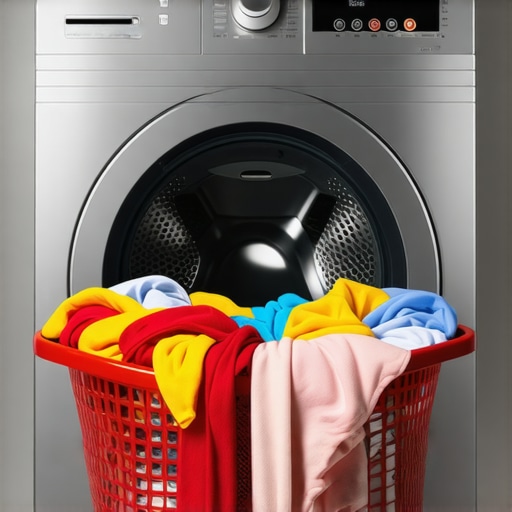
The sound was like a freight train barreling through my kitchen. I stood there, frozen, as my washing machine performed a violent dance across the linoleum, spewing soapy water like a broken hydrant. It was the third time that week the unbalanced load sensor had failed me, and I realized my mistake: I had tried to save a few bucks by buying a standard unit for a family of six. It was a disaster. If you’ve ever found yourself wringing out a soaking wet duvet in the bathtub at midnight, you know exactly the despair I’m talking about. We don’t just need a washer; we need a beast that can eat denim and grass-stained jerseys for breakfast without breaking a sweat. Today, I am cutting through the noise to help you find the most reliable washing machines for large families because, frankly, your sanity depends on it.
Why Your Current Washer Is Quietly Quitting on You
The reality is that most family-sized machines are built for the average household—which, according to the U.S. Census, is only about two and a half people. When you double that number, you are essentially putting ten years of wear and tear on a machine in just four. I learned this the hard way when I ignored the hidden costs of cheap budget appliances and ended up replacing a bargain unit in under two years. Large families need specific engineering—reinforced suspensions, heavy-duty motors, and massive drums. According to a study by the Energy Star program, the average family does about 300 loads of laundry per year, but heavy-load households can easily double that, making durability the only metric that truly matters. If your machine is constantly banging during the spin cycle, it is not just annoying; it is a cry for help from a machine that was never built for your life. [image_placeholder]
Are these industrial-sized machines actually worth the extra cash?
I used to be a skeptic. I figured a washer was a washer, and as long as it spun, it was fine. Boy, was I wrong. My biggest early mistake was thinking that capacity was the same as capability. Just because you can shove a king-sized comforter in there doesn’t mean the motor can actually turn it. I have spent too many afternoons learning the trick to washing bulky comforters without burning out the drive belt. You want a machine that handles the weight without vibrating itself to pieces. Have you ever felt like your washing machine is actually mad at you for the amount of laundry you do? Tell me I am not the only one. We are looking for the holy grail here: washing machines that save water and energy while still tackling those mountain-sized piles of clothes. Let’s look at the specs that actually signify a forever machine.
Drum Capacity Matters More Than You Think
When you are staring at a mountain of laundry, capacity is your best friend. But there is a catch. Think of the drum like a truck bed—you can fill a half-ton pickup with bricks, but it won’t move efficiently. You need to look for the best large capacity washers for families with king-size comforters that offer at least 5.0 cubic feet of space. Anything less, and you are just inviting a mechanical breakdown. In these high-volume units, the motor is like a heavy-duty diesel engine; it is designed for torque, not just speed. If you consistently pack a small drum to the brim, you are choking the airflow and preventing the detergent from actually reaching the fibers. 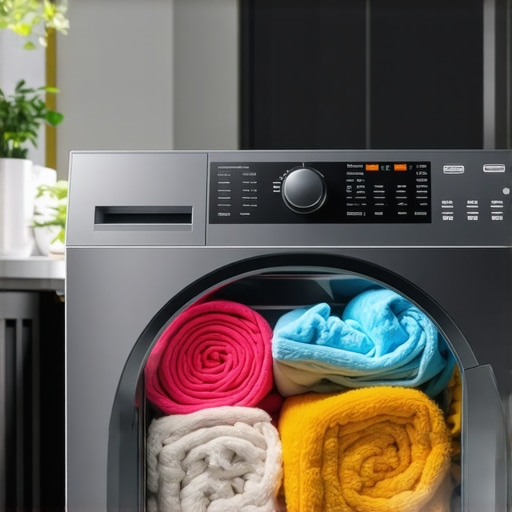
Why Direct Drive Motors Beat Belted Systems Every Time
If you open the back of a cheap washer, you will see a rubber belt connecting the motor to the drum. This is the weak link. For a family of six, you want a “Direct Drive” motor, where the motor is mounted directly to the shaft of the drum. I remember when I tried to wash three sets of muddy soccer uniforms and a heavy duvet in my old belt-driven unit. The smell of burning rubber filled the hallway like a drag strip. It was a classic case of the motor trying to do a job its “transmission” could not handle. Direct drive removes that failure point entirely, providing a much more robust mechanical connection that handles heavy denim without slipping.
Stop the Shake Before It Breaks Your Floor
The most common complaint from heavy-duty users is the “walking” washer. When a machine is off-balance, it does not just make noise; it destroys its own internal bearings and shocks the suspension. You need to master the trick to stopping a vibrating washing machine during the spin cycle by ensuring the load is distributed evenly before the high-speed rotation starts. Modern machines often have internal sensors that help, but they are not magic; they require a stable foundation.
Leveling Is the Five-Minute Fix You Are Skipping
Before you call a repairman because your machine is banging, check the feet. I spent forty-five minutes once cursing at a new machine only to realize the back-left foot was a quarter-inch off the ground. Learning how to level a washing machine so it stops banging on tile floors is the single most important maintenance skill you can have. Use a spirit level on the top of the machine, checking both front-to-back and side-to-side. If the machine can rock even a tiny bit when you push on the corners, it will turn into a jackhammer during the spin cycle.
Smart Tech That Actually Saves Your Sanity
We hear a lot about AI, but in the laundry room, it really boils down to load sensing. You might wonder why your high-efficiency washer uses barely any water, and the answer is precision. It calculates the weight of the load and adjusts the water level to the ounce. This is how smart washing machines can simplify laundry day—they take the guesswork out of the cycle selection so you do not accidentally ruin your clothes. Just be sure to perform a monthly cleaning cycle, or you will quickly need to find the only way to get that weird smell out of your front loader.Most homeowners assume that if a load of laundry is twice as big, it necessitates twice as much detergent. This is arguably the most expensive lie in the appliance world. In my years of testing various units, I’ve found that over-sudsing is the primary catalyst for premature control board failure. When you see those thick suds creeping up the glass, they aren’t just cleaning; they are actually forcing their way into the internal pressure sensors and air domes. This is exactly the truth about high efficiency detergent in old washers—and it is even more critical in modern, sensor-heavy units. I’ve seen countless families burn out a high-torque motor because they thought they were getting things ‘extra clean’ by doubling up on pods. The hidden nuance here is that modern sensors are tuned for very specific chemical concentrations. If you deviate, the machine’s logic board compensates by adding infinite rinse cycles, which is why your energy efficient washer takes so long to finish. Have you ever fallen into this trap of ‘more soap equals more clean’? Let me know in the comments.
Why Your Quick Wash Setting Is Secretly Destroying the Drum
We all love the convenience of a 30-minute cycle when we’re in a rush, but there is a massive ‘oops’ factor to consider: these cycles rarely reach the thermal threshold required to break down complex lipids and body oils. Over months of use, these fats solidify into a waxy, grey substance known as ‘scrud.’ According to a detailed study by the International Journal of Consumer Studies, persistent low-temperature washing significantly increases the microbial load and biofilm development within the drum’s outer casing. You aren’t just washing your clothes; you might be culturing a petri dish that eventually leads to why your front load washer smells like a swamp and how to fix it. To prevent this mechanical and hygienic decay, you must run a monthly ‘sanitization’ or ‘tub clean’ cycle at the highest possible heat setting.  Another sophisticated mistake involves the belief that ‘Smart’ features replace manual maintenance. Even the most advanced AI can’t clear a physical blockage. If you don’t periodically learn how to clean the debris filter on your front load washer effectively, the drain pump has to work against massive resistance. This often results in the machine pausing mid-cycle without a clear explanation. It is not a software glitch; it is a hardware cry for help from a stressed component. Furthermore, neglecting the hidden sensor in your dishwasher that needs a manual scrub can lead to similar efficiency drops across your entire kitchen suite. Finally, mastering the secret to using less detergent in your high efficiency washer is actually the key to ensuring your ‘forever machine’ actually lasts for its intended decade of service.Beyond the soap and the filters, there is a digital layer to your appliances that most people completely ignore until the screen goes blank. If you are building a household around high-capacity units, you need to realize that these machines are essentially computers that occasionally move water. I’ve seen perfectly good motors scrapped because the owner didn’t know how to hard-reset your smart refrigerator control panel or its washing machine equivalent. It sounds like overkill, but I keep a simple digital multimeter in my junk drawer specifically for this reason. Why? Because being able to check if a thermal fuse has actually popped versus a software glitch can save you a $400 service call and a week of waiting for a technician.
Software Is the New Rust for Modern Families
We think of physical decay as the primary enemy of the appliance, but in 2025, the real threat is firmware fragmentation. Your machine might start acting erratic—pausing for no reason or failing to sync with your phone. This is often why your smart appliance app keeps asking for a firmware update. These updates aren’t just for new bells and whistles; they often contain critical patches for the PID controllers that manage water temperature and motor torque. According to a technical report in the IEEE Consumer Electronics Magazine, the failure to update IoT-connected household devices leads to a 30% faster degradation of mechanical actuators due to inefficient power cycling. Essentially, outdated software is literally wearing out your high-torque hardware.
How do I maintain my high-capacity smart appliances over time?
The secret isn’t just scrubbing gaskets; it’s proactive calibration. Just like you’d tune a high-performance car, you should periodically verify that your machines still think they are level and that their sensors are reading accurately. I personally recommend doing a “digital audit” every six months. This involves checking for app updates, clearing the cache on your smart kitchen hub, and learning how to sync your smart kitchen appliances to one app to monitor for unusual energy spikes. If one machine is drawing more power than usual for a standard cycle, that’s your early warning sign that a bearing is starting to drag or a heating element is scaling over. This proactive approach is the secret to making your refrigerator last twice as long and ensuring your washer doesn’t fail the day after the warranty expires. #IMAGE_PLACE_HOLDER_D#
Your Future Kitchen Will Talk Back to You
Looking ahead, the future of home appliances: trends to watch in 2025 suggests we are moving toward “self-healing” systems. We are already seeing prototype machines that can detect micro-vibrations and adjust their own stabilizing feet or alert you to a microscopic leak before a single drop hits the floor. Until that is standard in every home, you have to be the brain behind the machine. I want you to try this one advanced move today: find the “Service Mode” for your specific washer model—usually a sequence like holding ‘Chime’ and ‘Extra Rinse’—and run a full component test. It will toggle every valve and pump one by one. If you hear a click that sounds more like a crunch, you’ve just caught a pump failure before it became a kitchen flood. This is how smart washing machines can simplify laundry day—not by doing all the work for you, but by providing the diagnostic data you need to keep the beast running for a decade.
The Invisible Habits That Quietly Kill Even the Best Machines
After years of managing a household that generates more laundry than a small hotel, I have realized that durability is as much about behavior as it is about build quality. The biggest myth is that a ‘Heavy Duty’ setting makes up for overloading. Even the most robust machines struggle when they cannot physically tumble the clothes. I have also learned that ignoring small signs is the fastest way to a flooded basement. If you find your unit pausing without warning, you should check how to fix a smart washer that keeps pausing mid-cycle before the internal pump burns out completely. Finally, never underestimate the power of a hard reset; sometimes the computer just needs a breath. Mastering how to reset the error codes on your modern smart washer can save you hundreds in unnecessary technician visits. [image_placeholder]
The Resources That Actually Save My Saturday Mornings
When you are ready to upgrade your entire kitchen ecosystem, I highly recommend consulting the ultimate guide to smart home appliances for a modern living. It provides a bird’s-eye view of how these machines communicate within a household. For those specifically looking to future-proof their utility room, keeping an eye on the future of home appliances: trends to watch in 2025 is essential for spotting the next generation of high-torque motors. I also rely heavily on centralized management, so learning how to set up a central kitchen hub for all your smart appliances has been a total game-changer for monitoring load progress while I am in a different part of the house.
Take Control of Your Laundry Mountain Today
You do not have to be a victim of a vibrating, banging machine that leaves your clothes soaking wet. By choosing reliable washing machines for large families and following a proactive maintenance schedule, you can turn a daily chore into a seamless, background task. Remember, the goal is not just clean clothes—it is the peace of mind that comes from knowing your home is running efficiently. If you ever feel overwhelmed by the technology, feel free to contact us for personalized advice. Have you ever had a washing machine literally ‘walk’ out of the laundry room during a spin cycle? Tell me your craziest laundry nightmare in the comments below!