
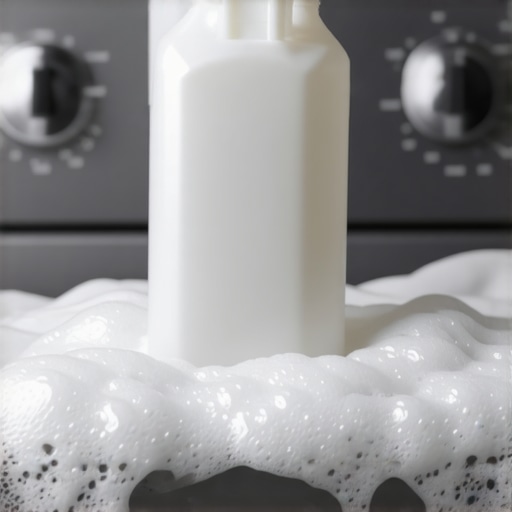
I stared at the door of my laundry room, watching a wall of white bubbles slowly ooze through the cracks like a slow-motion scene from a low-budget horror movie. My old, reliable top-loader—the kind of machine that sounds like a jet engine taking off—was gasping for air under a mountain of foam. I had made the classic mistake of thinking that buying the most expensive, modern bottle of High-Efficiency (HE) detergent was an automatic upgrade for my 1998 workhorse. I was dead wrong. It turns out that while we are all looking for washing machines that save water, forcing modern chemistry into an old-school appliance is a recipe for a soggy disaster. I learned the hard way that these two worlds don’t always play nice together, but after a few flooded floors and a very frustrated afternoon with a wet-vac, I finally figured out the secret to making it work.
Stop Pouring HE Detergent Into Your Old Machine Without a Plan
The first thing you have to understand is that old-school washers are thirsty. They gulp down forty gallons of water per load, whereas modern machines barely sip five or six. When I first switched to HE detergent, I used a full cap because that is what I had done for a decade. That was my biggest mistake. Because HE formulas are concentrated and designed to be low-sudsing, they behave unpredictably when they are drowned in the massive water volume of a traditional deep-fill cycle. You might think more water means you need more soap, but it’s actually the opposite. I found that why your washer doesn’t need a whole cup of detergent is a lesson every vintage appliance owner needs to take to heart. If you overdo it, you end up with a “suds lock,” which can actually burn out your pump or cause the machine to stall mid-cycle. Have you ever opened your lid only to find your clothes sitting in a pool of gray, soapy sludge? If so, you’re likely over-medicating your laundry with the wrong concentration of HE soap.
Is This Modern Soap Actually Going to Ruin My Vintage Washer?
This is the question I get asked most often over the backyard fence. People are terrified that the chemicals in HE pods or liquids will eat away at the seals of their older units. According to the American Cleaning Institute, HE detergents are specifically formulated to keep soil from redepositing on clothes in low-water environments. In an old machine, this actually means the soap is exceptionally good at cleaning, but only if you manage the dosage. The real danger isn’t the soap itself; it’s the buildup. If you don’t use the right amount, you’ll start noticing that weird smell often associated with modern machines, even in your old top-loader. I once spent an entire Saturday scrub-brushing the outer tub because I’d let a year’s worth of HE residue turn into a localized swamp. We want to avoid that. Today, I am going to show you exactly how to calibrate your pour so you get the cleaning power of 2025 technology without killing your 1995 hardware. Have you ever dealt with a “sudspocalypse” in your own laundry room, or are you still loyal to the old-school powders?
Stick to the Two-Tablespoon Limit
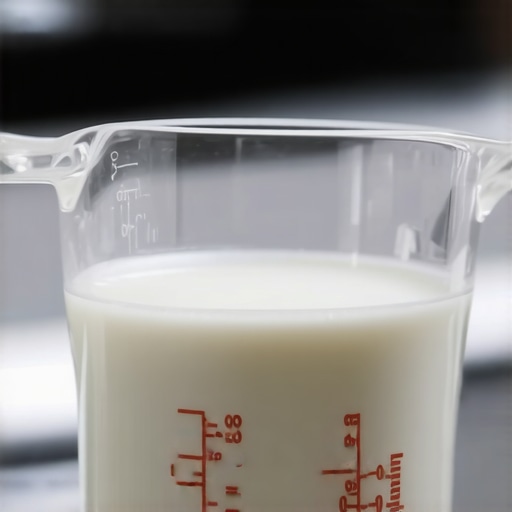
The biggest hurdle with using modern HE soap in an older machine is the sheer volume of water. In a 1990s top-loader, your clothes are swimming; in a modern HE unit, they are just getting a light misting. Because of this, the detergent is formulated to be low-sudsing. If you use a traditional “full cap” of HE liquid, you aren’t actually getting things cleaner—you’re just creating a chemical slurry that your machine’s rinse cycle isn’t designed to flush away. I’ve found that two tablespoons is the absolute sweet spot. Any more, and you’ll start seeing why your clothes come out of the washer with mysterious white streaks, which are actually undissolved detergent deposits. I remember once trying to deep-clean a thick comforter and thinking I needed triple the soap. Big mistake. The machine couldn’t drain the foam, and it ended up pausing for three hours while the pump struggled. It was a classic case of the fix for a washer that pauses in the middle of every load being as simple as ‘use less soap next time.’
Don’t Throw Pods Directly on Your Vintage Fabrics
Pods are incredibly convenient for how smart washing machines can simplify laundry day, but in an old-school machine, they are a gamble. Traditional washers fill up with water first, then start agitating. If you toss a pod on top of the clothes, it might not dissolve until the cycle is halfway done. I learned this the hard way when I pulled out a favorite navy blue sweatshirt only to find a half-melted plastic glob stuck to the sleeve. To avoid this, always drop the pod into the bottom of the drum before you add the clothes. This ensures it hits the water immediately as the tub fills. If you’re washing in cold water, you’re better off skipping pods entirely and sticking to liquid. If you must use them, check out the best settings for washing your heaviest winter bedding to ensure you’re using enough warm water to actually melt the casing. Cold water in a deep-fill tank often isn’t turbulent enough to break down the pod membrane before the cycle ends.
Clean the Gunk You Can’t See
Because HE detergent is designed to suspend dirt in a tiny amount of water, when it’s diluted in forty gallons, it tends to settle in the nooks and crannies of your old machine. This is how you get the reason your high-efficiency washer smells like old gym socks, even if your machine isn’t technically ‘high efficiency.’ Once a month, I run a ‘clean out’ cycle with just hot water and a cup of white vinegar. You also need to look for how to clean the lint filter you didn’t know your washer had. Most people with 20-year-old machines don’t even realize there is a physical filter often hidden under the agitator or in the drain line. When HE soap residue meets 20 years of lint, it creates a waterproof sludge that will eventually cause why your top-load washer is making a loud banging noise as the pump works overtime to push water through the blockage. Keeping these hidden areas clear is the only way to ensure modern soap doesn’t slowly kill your classic hardware.
While we are obsessing over water levels in our vintage tubs, we often ignore the mechanical strain we are putting on our motors through poor cycle choices. Everyone tells you that the ‘Quick Wash’ setting is a lifesaver when you are in a rush, but here is the contrarian truth: it is often the least efficient way to clean and the hardest on your hardware. In my experience, these cycles do not allow the modern enzymes in HE detergent enough time to actually break down stains at the molecular level. A study by Consumer Reports indicates that modern detergents need a specific window of saturation and temperature to perform optimally, which many express cycles cut short to under twenty minutes. You end up with clothes that smell ‘fine’ but are still holding onto deep-seated body oils. This leads to a common ‘oops’ moment where homeowners think their machine is failing, when really, they have just starved the chemistry of the time it needs to work. Understanding why your energy-efficient washer takes so long to finish is actually the first step in realizing that speed is often the enemy of both cleanliness and machine longevity.
Why Does Your 30-Minute Cycle Suddenly Turn Into an Hour?
This is the ultimate ‘advanced’ frustration. You set a timer, come back thirty minutes later, and the display still says ’12 minutes remaining.’ This isn’t a glitch; it’s the machine’s internal sensors fighting a losing battle. When you use too much soap or the wrong cycle for a heavy load, the sensors detect an imbalance or excess suds and keep adding rinses or recalibrating the spin. If you find the real reason your clothes still feel damp after the cycle, it is usually because the machine gave up on the final spin to protect its own bearings. This behavior is common in 2025-era hardware, but it can be baffling if you are used to the ‘dumb’ timers of the 90s. If your machine keeps jumping around on the clock, stop looking for a ‘reset’ button and start looking at your load size and soap dosage.
Fabric Softener is the Silent Killer You Are Inviting In
If you want to talk about the ‘trap’ that ruins more appliances than anything else, we have to talk about fabric softener. It is essentially a thin layer of liquid wax. In modern machines—and even older ones using modern soaps—this wax creates a ‘biofilm’ that traps bacteria and mold. It is one of the top 5 mistakes that are shortening the life of your smart refrigerator and other home appliances through cross-contamination of habits; we think more ‘additive’ means a better result. In reality, why you should never use too much fabric softener in your smart washer is simple: it coats the sensors and the heating elements, leading to premature failure and that dreaded mildew smell that no amount of bleach can fix.

The nuance here is that modern fabrics, especially synthetics and athleisure, are designed to be moisture-wicking. When you add softener, you are effectively waterproofing your gym clothes, making them impossible to get truly clean in future cycles. I’ve seen beautiful, high-end machines turned into scrap metal because the internal drums were coated in a gray, waxy sludge that the owners thought was just ‘lint.’ Have you ever fallen into this trap or noticed your ‘quick’ cycles leaving your clothes less than fresh? Let me know in the comments.
Beyond the chemistry of your detergent, the physical state of your machine determines whether it lasts five years or fifteen. I spent years ignoring a slight wobble in my washer until it literally began to migrate toward the hallway. If you don’t address the physics of the machine, the smartest software in the world won’t save the bearings. This is where a simple $10 torpedo level becomes your best friend. Learning how to level a washing machine on an old slanted floor is the single most important mechanical ‘hack’ I can give you. When a machine is off-balance, every spin cycle is like a tiny earthquake happening inside the drum, which is exactly why your washing machine is moving across the floor during the spin. I use a magnetic level specifically because it stays put on the metal casing while I’m underneath adjusting the legs with a crescent wrench.
Get Your Machine Off the Dance Floor
Once you’ve stabilized the base, you have to think about the drainage system. I keep a dedicated 5-gallon wet-dry vac in my laundry room solely for appliance emergencies. If your pump fails or you get a suds-lock, you need a way to get forty gallons of water out of that drum before you can even begin repairs. According to technical bulletins from the Association of Home Appliance Manufacturers (AHAM), mechanical strain from improper drainage is a leading cause of premature motor failure. If your machine is struggling to push water uphill or through a clogged line, the motor’s internal thermal protector will eventually trip, or worse, burn out entirely. I personally use a drain snake designed for smaller 2-inch pipes to clear out the standpipe twice a year. It’s a messy ten-minute job that has saved me from at least three service calls.
How do I keep my heavy appliances running for another decade?
Maintenance isn’t just about the laundry room; it extends into the kitchen, where your refrigerator is likely the hardest-working motor in your home. While we often look for the ultimate guide to smart home appliances for a modern living, we forget the ‘dumb’ maintenance that keeps them alive. I recommend every homeowner buy a long-handled condenser coil brush. If you have pets, the coils under or behind your fridge become a magnet for fur, which forces the compressor to run twice as long to keep your milk cold. Doing this simple task is the real secret to making your refrigerator last twice as long. I’ve seen compressors that were supposedly ‘dead’ roar back to life simply because they finally had the airflow they needed to breathe.
As we look toward the future of home appliances trends to watch in 2025, I predict we are going to see a massive shift toward predictive AI diagnostics. We are moving away from ‘broken/fixed’ and toward a world where your fridge or washer sends a notification to your phone saying, ‘Hey, my vibration levels have increased by 15%, please check my feet.’ This kind of proactive tech will make the $2,000 price tags on modern units much easier to swallow, as they will essentially manage their own health. However, until that tech is standard in every home, the responsibility stays with us. My challenge for you this weekend is simple: go grab a level and check your washer and fridge. If they aren’t perfectly flat, take ten minutes to fix it. Your future self (and your wallet) will thank you when you aren’t shopping for a replacement in three years.
What I Learned After My Third Floor Flood
Reflecting on years of appliance tinkering, I realized that modernizing your habits is more important than modernizing your hardware. First, high-efficiency doesn’t mean high-effort; it means high-precision. I used to think my old machine was invincible, but treating it with the same care as 2025 tech has actually extended its life by years. Second, if you’re wondering why your high-efficiency washer uses barely any water, remember that it is designed for chemistry over volume, but your old machine still needs you to be the judge of that balance. Finally, always trust your ears. If a machine sounds different, it is telling you something is wrong before it becomes a $500 repair bill. I’ve learned that a simple change in detergent dosage can be the difference between a smooth Monday and a flooded basement.
Tools Every DIY Homeowner Actually Needs
To keep my household running without a constant stream of repairmen, I rely on a few specific items. I always keep a high-quality magnetic level in my utility kit because it’s the only way to ensure how to level a washing machine on an old slanted floor doesn’t turn into a frustrating, vibrating mess. I also swear by a simple long-handled condenser brush; it is a tool I trust because it directly prevents compressor burnout by letting the machine breathe. For those contemplating a kitchen upgrade, I often refer to choosing the right refrigerator tips from industry experts to see if the latest tech aligns with my hands-on maintenance style. Having the right tools makes you feel like the master of your machines rather than their servant.
#IMAGE_PLACEHOLDER_E#
Take Control of Your Laundry Room Today
Managing a home is a constant learning curve, but you don’t have to wait for a total mechanical breakdown to start being proactive. Whether you are sticking with your vintage workhorse or debating is a smart fridge really worth the extra money, the goal is the same: peace of mind and efficiency. By making small adjustments to your detergent levels and keeping your machines level, you’re not just saving money—you’re mastering your environment. Your appliances work hard for you; a little bit of specialized care ensures they keep doing so for another decade. Have you ever tried a ‘hack’ on an old machine that actually ended up working better than the modern equivalent? Let me know in the comments.