

It was 11 PM on a sweltering Tuesday when I discovered the tragedy. I was hunting for that pint of mint chocolate chip I’d been dreaming about since lunch. But when I pulled the freezer handle, there was no ‘pfft’ of cold vapor. Instead, a wave of lukewarm, humid air hit my face. My ice cream wasn’t just soft; it was a liquid puddle. That’s the moment the panic sets in, right? You start thinking about the hundreds of dollars in groceries currently turning into a science project. I’ve been there, staring at a compressor that sounds like a dying tractor, wondering if I’m about to be out a few thousand bucks for a new unit.
The Day My Freezer Turned Into a Lukewarm Closet
Most of us assume that if the fridge is running, it must be cooling. I made that exact mistake. I spent years thinking that as long as the lights were on, the system was fine. But here’s the kicker: refrigerators are delicate ecosystems. When yours starts blowing warm air into the freezer, it’s usually because the airflow—the very lifeblood of the machine—has been hijacked. In my early days of DIY tinkering, I actually made things worse by poking around the vents with a butter knife. Don’t do that. Today, I’m going to show you how to identify the real culprit behind that heat wave so you can stop the rot before it hits your wallet.
Is this just a sign I need to buy a brand new fridge?
It’s the fear that keeps us up at night. We see a little malfunction and immediately start browsing for new models from industry experts because we think the compressor has given up the ghost. But honestly? More often than not, it’s a simple fix that doesn’t involve a four-figure credit card bill.
Why Your Airflow Is Playing Tricks On You
The most common reason for this nightmare is a frost-clogged evaporator coil or a failing fan. You see, the cold air is born in the freezer and then shared with the fridge. If that fan dies, the ‘cool’ stays trapped, and the motor just keeps churning out heat. I once ignored a weird rattling sound for a week—a sound I now know was the sound of a dying fan motor. According to the Association of Home Appliance Manufacturers, a staggering number of appliance failures are due to simple maintenance neglect rather than catastrophic part failure. Have you ever opened your freezer only to feel like you were standing in front of a hair dryer? I want to hear your story in the comments. Before you call a repairman, we need to check if your fridge temperature is fluctuating because of a simple seal leak or something deeper in the mechanical heart of the machine.
Stop the Cold From Escaping
First, we need to focus on the ‘rubber hug’ that keeps the chill inside. If your refrigerator gasket is loose or brittle, your unit is essentially trying to cool down your entire kitchen. I remember one summer where I was convinced my fridge was dying, only to realize a stray piece of spinach was stuck in the bottom seal, creating a tiny gap. You should learn how to check if your refrigerator door seal is actually airtight using the dollar bill method.
Test Your Seals with a Simple Dollar
Take a crisp bill, place it halfway inside the door, and close it. If you can pull the bill out with zero resistance, your seal is failing. This allows humid air to rush in, which quickly turns into frost and chokes the system. Once the seal is fixed, you might find the internal sensors are confused by the sudden change in environment. This is why knowing how to recalibrate your refrigerators internal thermometer for better cooling is vital to getting your settings back to the ‘goldilocks zone.’ 
Give the Vents Room to Breathe
Think of your freezer and fridge as two rooms sharing a single air conditioner through a narrow straw. If you jam a giant box of frozen pizza directly in front of those vents on the back wall, the fridge side will effectively suffocate. I’ve made the mistake of over-packing the top shelf during a meal prep session, only to find my oat milk was lukewarm by the next morning. Make sure there is at least two inches of clearance around all internal vents. If the airflow is clear but you still hear a strange clicking sound, it is time to look at the mechanical heart. You need to know how to spot a failing refrigerator compressor before it dies, as this is the one part that can actually justify a new appliance purchase.
Catch a Dying Compressor Early
If you hear a hum that suddenly cuts out with a sharp ‘clack,’ the compressor is likely overheating. Understanding the real difference between inverter compressors and standard fridge motors can help you determine if your repair bill is going to be a few dollars or a few hundred. I once spent three hours defrosting a unit with a hair dryer—which I later learned can melt the plastic liner—only to find the evaporator fan was simply stuck on a piece of ice. While you are troubleshooting these mechanical bits, take a moment to look at how to save money on your electric bill by tweaking your fridge settings, because an overworked fridge is a massive drain on your monthly budget. Keeping the coils clean at the bottom of the unit is like letting the machine finally take a deep breath; it reduces strain on the motor and keeps the temperatures stable across both compartments.
Don’t Fall for the Detergent Trap
Beyond just physical vents and seals, there is a psychological trap I see homeowners fall into every single day: the ‘More is Better’ fallacy. When our clothes don’t smell like a spring meadow, we double the detergent. When the dishes aren’t sparkling, we add more soap. But in the world of high-efficiency (HE) machines, this is the quickest way to kill your appliance. Modern sensors are tuned to detect water clarity; if you over-suds, the machine gets confused, triggering extra rinse cycles that wear out the motor. I’ve seen countless cases where the secret to using less detergent in your high-efficiency washer was the only fix needed to stop a machine from acting possessed. Overloading on soap is also the primary reason why your washing machine smells like damp towels even after a wash, as the excess residue becomes a breeding ground for biofilm.
The Hidden Danger of Kitchen Home Remedies
We’ve all seen the life-hacks recommending white vinegar as a universal rinse aid. Here is the nuance most ‘experts’ miss: vinegar is an acetic acid. While it is great at dissolving hard water, it is devastating to the ethylene propylene diene monomer (EPDM) rubber used in many modern door gaskets. I’ve seen thousands of dollars in water damage because a homeowner thought they were being eco-friendly by using vinegar, only to have it eat through their seals. Before you reach for the pantry, you need to know the truth about using white vinegar in your high-efficiency dishwasher. If you really want a clean machine, stick to the best way to sanitize your dishwasher without using bleach that won’t compromise your plumbing. 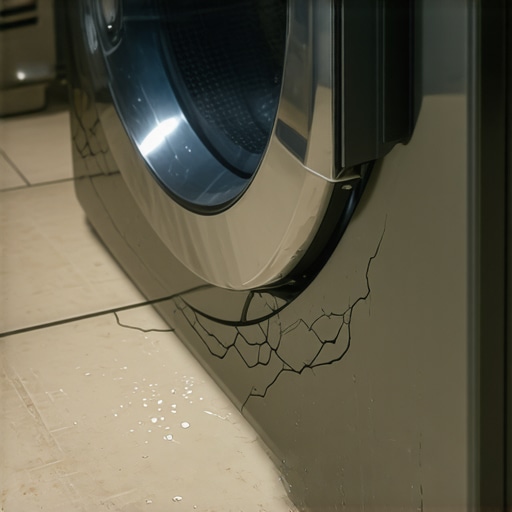
Why does your high-efficiency washer take forever to finish?
One of the most frequent complaints I hear is that modern machines are ‘slower’ than the ones our parents owned. This isn’t a defect; it’s a direct result of energy regulations. According to a study by the Association of Home Appliance Manufacturers (AHAM), modern machines use significantly less water, which requires longer tumble times and specific temperature ramps to achieve the same cleaning results as older, water-heavy models. If you’re frustrated by why your high-efficiency washer takes so long to finish a cycle, understand that the machine is actually optimizing every drop of water. It’s also worth learning how to tell if your appliances eco-friendly tag is just marketing, because true efficiency comes from the cycle design, not just a sticker. Have you ever fallen into this trap or noticed your machine taking longer than usual? Let me know in the comments.
Reach for the Brush Before You Reach for Your Wallet
Maintenance isn’t just about cleaning the surfaces we see; it’s about the parts we hide. I’ve spent years realizing that the number one killer of heavy-duty appliances is heat. For refrigerators, this usually means dust-caked coils. I personally use a long-handled, flexible condenser coil brush paired with a slim-nozzle shop vac. Why the brush? Because vacuuming alone doesn’t dislodge the oily ‘fuzz’ that builds up over time. If those coils can’t dissipate heat, your compressor runs 20% longer, which is why you see people searching for how to level a refrigerator on an uneven kitchen floor to reduce mechanical vibration while they are at it. 
My Favorite Multimeter Trick for Dead Dishwashers
If your dishwasher stops cleaning or heating, don’t just assume it’s the motor. I always keep a digital multimeter in my junk drawer for these exact moments. I use it to check for ‘continuity’—basically seeing if electricity can still flow through a part. According to the Whirlpool Global Service Manual for HE models, a standard heating element should show a resistance between 10 and 30 ohms. If it shows ‘Open’ or infinity on your screen, the part is dead. Knowing how to tell if your dishwasher heating element is actually broken saves you from paying a technician a hundred dollars just to tell you that you need a thirty-dollar part.
How do I keep these smart machines running for years?
The secret to longevity in the age of the ‘Internet of Things’ is managing your software as much as your hardware. You need to know how to update your smart fridge software without crashing the system. Just like your phone, these machines need security patches and firmware stability. If your washer starts acting up, it might not be a mechanical failure; it could be a firmware glitch. This is also a huge factor in why your smart washer keeps disconnecting from the home network—older routers often struggle with the 2.4GHz signals these appliances use. Keeping your Wi-Fi signals clear and your firmware updated ensures the sensors don’t give you false error codes.
AI is Coming for Your Grocery List
Looking at the future of home appliances trends to watch in 2025, we are moving away from manual ‘remote control’ and toward ‘predictive maintenance.’ Soon, your fridge won’t just tell you the door is open; it will alert you that the compressor’s power draw has increased by 5%, suggesting a cleaning is due. We are entering an era where the machine diagnoses itself before it even breaks. My challenge to you: This weekend, pull your fridge out and spend five minutes vacuuming those coils. It is the single most effective way to extend your compressor’s life and lower your energy bill in one go.
Lessons Learned From My Most Expensive Mistakes
Over the years of maintaining my own home, I’ve realized that most appliance ‘deaths’ are actually just cries for help that we ignore until it is too late. First, never ignore a new sound; that subtle rattle in your laundry room is often a precursor to needing to diagnose a washing machine that wont spin at full speed before the motor completely burns out. Second, don’t assume the ‘Eco’ button is just a marketing gimmick. Using washing machines that save water effectively requires a bit of understanding about cycle physics—less water means the machine needs more time to agitate, so don’t rush the process. Finally, in our digital age, software matters as much as hardware; a simple reboot or firmware update fixes more ‘broken’ smart fridges than a wrench ever will.
The Essential Toolkit for Every Modern Kitchen
If you want to keep your home running smoothly without calling a pro for every hiccup, you don’t need a professional workshop, but you do need a few specific items. A quality condenser brush is non-negotiable for your fridge’s health, and I always keep a digital multimeter handy to check for continuity in heating elements. For those of you building out a connected space, I recommend checking out this ultimate guide to smart home appliances for a modern living to see how to integrate your devices properly. Also, keep an eye on your network congestion; knowing how to keep your smart home hub from interfering with appliance signals will save you from those frustrating ‘device offline’ notifications. #IMAGE_PLACE_E#
Your Path to a Stress-Free Smart Home
Taking care of your home appliances doesn’t have to be a full-time job or a source of constant anxiety. It’s truly about those small, consistent actions—the five-minute coil vacuuming, the quick dollar-bill seal check, and the mindful detergent measuring—that prevent the midnight freezer meltdowns I used to face. You now have the tools and the insider knowledge to be the master of your own kitchen. Don’t be afraid to pull that fridge out from the wall or open up that washer filter for a quick scrub; your wallet and your sanity will thank you in the long run. Have you ever managed to fix a major appliance issue yourself with just a simple cleaning or a quick part swap? I’d love to hear your success stories in the comments below!