
I remember the exact moment I finally snapped. It was a Tuesday night, nearly midnight, and I was hunched over a tiny ceramic sink in my pre-war apartment, aggressively scrubbing a lasagna pan that felt like it was fused to the counter. My lower back was screaming, my hands were pruned into raisins, and I had a sudden, visceral realization: I was wasting my life. I had always assumed that living in a rental with ‘character’ (which is just landlord-speak for ‘no room for appliances’) meant I was destined to be a dish-washing martyr. I was so wrong. After years of thinking I had to choose between a clean kitchen and a usable workspace, I dove headfirst into the world of compact solutions. Today, I’m going to help you avoid the soaked floors and wasted weekends I endured while finding a setup that actually works for small spaces.
We are going to solve the eternal renter’s struggle of the overflowing sink once and for all. I will show you which models actually have the muscle to clean a dinner party’s worth of mess and how to pick a unit that won’t make your landlord lose their mind. Trust me, I’ve made all the mistakes so you don’t have to—like the time I bought a cheap, unbranded unit that turned my kitchen into a shallow pond because I didn’t understand how to check for a leaky dishwasher door seal.
Stop Living Like a Dish-Washing Martyr
The biggest hurdle for most of us isn’t the cost; it’s the fear that we just don’t have the room. We think we are stuck with manual labor until we finally buy a house with a chef’s kitchen. But if you are currently living in a space where every square inch is precious, you should look into the best small dishwashers for studio apartments. These aren’t just gadgets; they are time-machines that give you back an hour of your life every single day. I used to spend that hour resentfully scrubbing; now I spend it literally anywhere else. Have you ever looked at a pile of dirty plates and seriously considered moving houses just to escape them? If you’ve been there, you’re exactly who I wrote this for.
Do these tiny machines actually get the grime off?
This is the skepticism I hear most often. ‘It’s too small to be powerful, right?’ Wrong. In fact, modern compact units often outperform their full-sized cousins because they use concentrated spray patterns. According to the Energy Star program, a certified dishwasher can save more than 8,000 gallons of water over its lifetime compared to hand-washing. That is a staggering amount of water you are currently throwing down the drain. If you’re solo or living with a partner, the best small batch dishwashers for couples can handle a full day of meals without breaking a sweat. Just make sure you aren’t making the common dishwasher pod mistake that leaves residue on your favorite mugs. When I first started, I thought I could just throw any old soap in there. Big mistake. I ended up with a kitchen full of bubbles and a very confused cat. Realizing that these machines require a little bit of specialized knowledge changed everything for me. If you have the cabinet space, you might even consider drawer dishwashers for small kitchens, which are the ultimate stealth upgrade for any renter who wants to keep their counters clear.
Measure Like Your Security Deposit Depends on It
Before you even think about hitting ‘add to cart,’ you need to perform the kitchen equivalent of a crime scene investigation. Most renters focus on the width of the counter, but they forget the clearance height. You need to measure from the base of your countertop to the bottom of your upper cabinets. I once bought a gorgeous unit that sat on the counter perfectly but was exactly one-half inch too tall to slide under the cabinets. I ended up having to run it on my dining table using a series of sketchy extension cords. Don’t be like me. Check the ‘swing’ of your faucet too. If your sink has a high-arc faucet, a countertop unit might not physically fit behind it. Think of your kitchen space like a game of Tetris; if one block is slightly off, the whole system collapses.
Hook Up Your Machine Without a Plumber
The beauty of compact dishwashers is the ‘quick-connect’ adapter. This little piece of brass is the bridge between your manual labor and freedom. You unscrew the aerator from your sink—that tiny screen where the water comes out—and screw on the adapter. It’s like plugging a USB drive into a computer; it should be effortless. However, keep an eye on the hose placement. If you jam the machine too close to the wall, you might run into 5 signs your dishwasher drain hose is kinked behind the cabinet. A kinked hose is like a pinched straw; the water can’t get out, and you’ll end up with a machine full of stagnant, smelly water. Make sure the drain hose has a clear, downhill path into the sink basin so gravity can do the heavy lifting for you.
Stop Cramming Your Plates Like Sardines
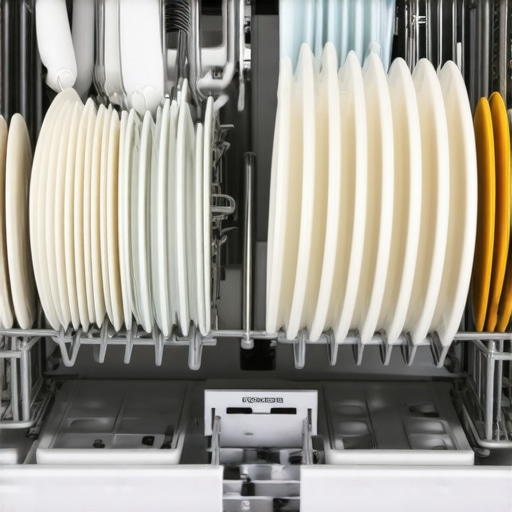
In a small machine, geometry is your best friend. The spray arm is like a rotating lawn sprinkler; if one giant plate is blocking the path, the rest of your dishes are basically just taking a lukewarm bath without any soap. You need to learn the best way to stack your dishwasher for maximum clean. Angle your plates toward the center where the water pressure is strongest. I remember a ‘Spaghetti Night’ where I tried to fit every single bowl, pot, and fork into one load. I woke up the next morning to find the spray arm had been pinned down by a rogue ladle, leaving everything covered in a thin film of tomato paste. Now, I leave space for the water to actually dance between the dishes. It’s better to run two small, efficient loads than one overstuffed disaster that you have to re-wash by hand anyway.
Clean the Filter Before It Stinks up the House
Your dishwasher filter is the unsung hero that catches every stray bit of rice and soggy crust. In a compact unit, this filter is much smaller and clogs faster than in a full-sized model. If you ignore it, you’ll eventually wonder why your dishwasher isn’t draining properly. Every two weeks, I pop mine out and give it a quick rinse under hot water. It takes thirty seconds, but it prevents that ‘old damp towel’ smell from taking over your kitchen. You should also look for the hidden sensor in your dishwasher that needs a manual scrub, as a bit of grime there can trick the machine into thinking it’s still dirty. If things do get a bit funky, you can clean a smelly dishwasher without using bleach by using a cup of white vinegar on a hot cycle. Finally, don’t forget to how to clean a moldy dishwasher door gasket the right way, because that rubber seal is where moisture loves to hide and breed mildew.
Why Pre-Rinsing is Actually Sabotaging Your Machine
Here is a secret that appliance repair techs whisper but most homeowners ignore: if you are scrubbing your plates clean before putting them in the dishwasher, you’re actually making the machine less effective. I used to be a ‘pre-wash perfectionist,’ but I realized I was just wasting water and confusing my unit’s internal sensors. Modern innovative dishwashers with AI technology use turbidity sensors to measure how dirty the water is. If the water stays clear because you’ve already done the hard work, the machine assumes the dishes are clean and cuts the cycle short, often resulting in food being baked onto the surface during the dry cycle. A study from the University of Bonn found that people often use more water rinsing dishes than a modern machine uses for the entire load. Stop the madness. Scrape the big chunks off, but leave the grease for the detergent to find. The smart appliances revolution has shifted the burden of ‘thinking’ from the human to the hardware; let it do its job.
Does your machine know when the water is truly hard?
One nuance that separates the pros from the amateurs is understanding water chemistry. In a small apartment, you might not have a whole-house softener, which leads to hard water build-up that mirrors what you’d see in a coffee maker. If you see white spots, don’t just add more soap. This is often the dishwasher detergent mistake that is etching your glassware. Etching is permanent; it’s a chemical reaction where the soap literally eats the surface of the glass because it doesn’t have enough food debris to neutralize the alkaline salts. This is why high-efficiency machines use barely any water—they need that concentrated environment to be effective, but too much chemical without ‘target’ grime leads to destruction. This is particularly true for compact units where the water-to-detergent ratio is much smaller than in a 24-inch model.
The Heavy Cycle Trap is Real
We often think that ‘more is better.’ If a plate is extra greasy, we hit the ‘Heavy’ or ‘Sanitize’ button. However, there is a hidden cost of running your dishwasher on the heavy cycle daily. It’s not just the utility bill; it’s the wear and tear on the internal heating element and the pump seals. I fell into this trap when I first moved in, thinking I was being ‘extra clean.’ Instead, I nearly fried my pump in six months. Stick to the ‘Auto’ or ‘Normal’ settings and let the sensors do their job. If the machine isn’t performing, it’s usually because of the hidden sensor in your dishwasher that needs a manual scrub. Many of these future of home appliances trends suggest machines will soon tell you exactly when that sensor is blocked, but for now, you have to be the one to check it. Have you ever fallen into this ‘pre-rinse’ or ‘heavy cycle’ trap? Let me know in the comments. I’m curious if I’m the only one who spent years overworking my appliances for no reason. Understanding these nuances isn’t just about clean dishes; it’s about being part of the ultimate guide to smart home appliances for a modern living strategy where your tools work for you, not the other way around.
I’ve learned the hard way that appliances aren’t ‘set it and forget it’ machines. If you want your fridge to stay quiet and your dishwasher to actually drain, you have to treat them like a car. I personally keep a long-reach flexible coil brush and a narrow 24-inch vacuum wand specifically for the back of my unit. You’d be shocked at how much pet hair and dust blocks the airflow, forcing the motor to work double time. It’s the primary reason why your refrigerator is making a loud humming noise. I make it a habit to pull the unit out every six months—and trust me, learning how to move a heavy refrigerator without scratching the floor is a skill that saves your security deposit. According to the Association of Home Appliance Manufacturers (AHAM), keeping these coils clean can improve energy efficiency by as much as 30% and significantly extend the compressor’s life.
Stop Ignoring the Dust Under Your Fridge
Maintenance isn’t just about cleaning the parts you can see. For my dishwasher, I don’t wait for the water to pool at the bottom before I take action. I use a specific routine involving a monthly descaling agent to combat the hard water build-up that inevitably clogs the internal spray arms. If you notice your plates aren’t coming out sparkling, you should check the easiest way to clean the filter in your dishwasher. It’s a messy job, but someone has to do it. While you’re at it, take a moment to clean the internal spray arms for better flow. I use a simple toothpick to clear out any stray seeds or bits of plastic that have migrated into the tiny water jets. This attention to detail is what separates a machine that lasts three years from one that lasts twelve.

How can I keep my smart gadgets from slowing down over time?
As we integrate more technology into our kitchens, ‘maintenance’ now includes software. I’ve noticed that if my smart fridge starts to lag, it’s usually because of a pending update. Don’t ignore those notifications; there is a logical reason why your smart appliance app keeps asking for a firmware update. These patches often fix bugs that were draining your battery or causing the processor to overheat. If the screen becomes completely unresponsive, knowing the hidden reset button on your smart refrigerator can save you from a costly service call. I also recommend that you sync your smart kitchen appliances to one app to monitor their health in real-time. My app recently alerted me to a minor leak in my washer before I even saw a drop on the floor, allowing me to fix it before it became a catastrophe.
The Era of Appliances That Fix Themselves
Looking toward the future, we are entering a phase where the future of home appliances trends suggest machines will perform their own diagnostics. We are already seeing innovative dishwashers with AI technology that can detect when a motor is vibrating off-balance and adjust the torque to prevent damage. Soon, your fridge won’t just tell you the milk is low; it will tell you exactly which capacitor is beginning to fail. This is all part of the ultimate guide to smart home appliances for a modern living experience where the burden of ‘knowing’ is shared with the machine. My advice? Try vacuuming your fridge coils this weekend—you’ll likely hear the compressor sigh in relief almost immediately, and you’ll feel like a total pro in your own home.
#IMAGE_PLACEHOLDER_E#
Small Space Lessons That Saved My Sanity
After years of living in apartments where you have to move the toaster just to open a drawer, I have developed a few ‘rules of engagement’ for compact living. First, vibration is the silent killer. Because compact machines have smaller motors, any instability can cause internal components to rattle themselves to death. I always make sure to adjust the feet on your refrigerator to stop it from rocking and do the same for my countertop dishwasher. A level machine is a quiet machine, and a quiet machine is one that isn’t eating its own bearings. Second, trust the logic. I used to think I could outsmart my dishwasher by choosing cycles manually, but innovative dishwashers with AI technology actually know the water temperature and soil level better than I ever could. By letting the ‘Auto’ cycle take over, I’ve seen a noticeable decrease in energy usage and better results on my glassware.
The Toolkit That Keeps My Kitchen Running
I don’t believe in buying every gadget on the shelf, but there are four things I keep under my sink at all times. I use a long-reach flexible coil brush to keep your refrigerator coils clean in a pet-friendly home, which prevents the motor from overheating in tight galley kitchens. I also swear by a simple bottle of white vinegar for descaling and a pack of high-quality microfiber cloths for keeping the exterior shiny. When it comes to making bigger decisions—like whether to upgrade to a high-tech fridge—I always refer back to choosing the right refrigerator tips from industry experts to ensure I’m not overpaying for features I won’t use. I also frequently ask myself, is a smart fridge really worth the extra money? For me, the answer is yes, but only if it includes leak detection and temperature alerts that sync directly to my phone.
Ditch the Sponge and Join the Revolution
Living in a small space doesn’t have to feel like a compromise. It’s about being an intentional curator of the tools you bring into your home. You don’t need a massive kitchen to have a professional-grade experience; you just need to maintain what you have with a bit of care and the right knowledge. Transitioning to a tech-forward kitchen was the best decision I ever made for my mental health and my weekend schedule. It’s all part of the ultimate guide to smart home appliances for a modern living where your apartment works for you, giving you back the time you used to spend scrubbing. Have you ever bought a kitchen gadget that completely changed your daily routine for the better? Let me know in the comments below!