
I’ve been there—standing in the middle of a kitchen that sounds like a digital orchestra, but none of the players are following the same conductor. It happened to me last Thanksgiving. I had the turkey in the oven, the dishwasher hummed along, and my phone was blowing up with notifications from three different apps. I tried to tell Siri to check the oven timer, but my oven only spoke to Alexa. Then, the laundry started its ‘finished’ chime, which I couldn’t silence from the kitchen. I realized right then that my ‘smart’ home was actually making me work harder. I was a slave to the interface. But it doesn’t have to be that way. I’ve spent the last year streamlining my setup, and I’ve finally figured out how to make everything from the refrigerators that transform your kitchen to the basement washer march to the beat of a single drum. Today, I’m going to help you stop the app-switching madness and finally achieve that seamless home experience.
Stop Juggling Six Different Apps to Run Your Kitchen
When I first started upgrading my home, I made the classic rookie mistake: I bought appliances based on their individual shiny features rather than how they played with others. I ended up with a high-end fridge that had its own proprietary ecosystem, which meant I had to update the software manually just to keep the weather widget working, while my voice assistant ignored it completely. It was frustrating. I even found myself having to bypass the smart features entirely just to get through a normal Tuesday. The secret I discovered is that you don’t need every appliance to be from the same brand; you just need them to speak the same language. By using a central hub and focusing on the best way to voice control your kitchen, you can create routines that actually make sense. Imagine saying ‘Goodnight’ and having your lights dim while your quiet dishwasher starts its cycle and the fridge enters energy-saving mode.
Is a Unified Smart Home Actually Worth the Hassle?
Many people I talk to are terrified that linking everything will just create more points of failure. According to a recent report by the Connectivity Standards Alliance, the introduction of the ‘Matter’ protocol is designed specifically to solve this, yet many users still struggle with the initial handshake between devices. I’ve found that the effort pays off the first time you’re elbow-deep in laundry and can simply tell your living room TV to show you the laundry alerts instead of running down two flights of stairs. Have you ever found yourself screaming at a smart speaker that refuses to acknowledge your dishwasher exists? I’d love to hear your horror stories in the comments. Before we dive into the technical settings, you need to make sure you know how to keep your smart home hub from interfering with signals, otherwise, you’ll be fighting a losing battle from the start. Let’s look at the actual steps to bring your appliances under one roof without losing your mind. [image_placeholder_1]
Stop the WiFi Drops Before They Kill Your Vibe
A smart appliance is only as intelligent as the signal it receives. When I first tried to link my kitchen, my dishwasher kept falling off the network. I realized I had my hub sitting right behind a microwave—a classic amateur move. The electromagnetic interference was literally drowning out the commands. You have to ensure you know how to keep your smart home hub from interfering with appliance signals if you want a stable connection. I eventually moved my hub to a central, open shelf, and the “offline” notifications vanished instantly. Think of your WiFi as the oxygen for your appliances; if the air is thin, they won’t perform.
Dial in the Settings That Actually Save You Money
Most people treat their smart appliances like a ‘set it and forget it’ situation, which is a massive waste of potential. Your fridge factory settings are often just a generic baseline. I found that I could save money on your electric bill by tweaking your fridge settings just by adjusting the internal thermometer by two degrees. It’s like shifting your car into overdrive on a flat highway; the engine does the same work but sips less fuel. Similarly, I’ve started using my phone to schedule the heavy lifting. I used to run the wash whenever I felt like it, but now I use your smart washers delayed start for cheaper energy rates during off-peak hours. It’s a small tweak that adds up to a dinner out every month.
Sync Your Alerts to the Right Screen
The real magic happens when you stop staring at your phone and let your house tell you what it needs. I set up a routine where my living room TV flashes a small banner when the cycle ends. This saved me from the dreaded “forgotten wet clothes” smell. It is surprisingly simple to sync your laundry alerts with your living room TV. Last Tuesday, I was mid-movie, saw the pop-up, and swapped the load before I could forget. No more having to deal with why a washing machine smells like damp towels because a load sat for three days. 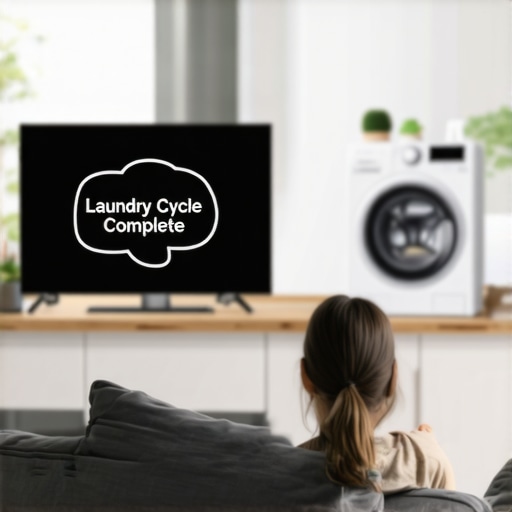
Keep the Hardware as Clean as the Software
You can have the most advanced AI-driven dishwasher in the world, but if the filter is clogged with old lasagna, the software can’t save you. I once spent an hour trying to troubleshoot my smart dishwasher app because of phantom errors, only to realize the drain light was flashing because of a literal chicken bone in the pump. Physical maintenance is the bedrock of smart performance. Take five minutes to clean the detergent drawer and prevent mold growth in the seals. This keeps the sensors accurate and prevents the system from throwing unnecessary error codes.
Bridge the Gap Between Different Brands
If you’re like me, your kitchen is a mix of different manufacturers. To make them work together, you need a common language. I compare this to a translator at a summit. This is where top smart appliances for a seamless home experience really shine—they are built to communicate. I had a nightmare trying to find the easiest way to connect an older smart fridge to a new mesh network, but once I used a dedicated smart hub to bridge the gap, the fridge finally started appearing in my morning routines along with the newer gear. Always check for Matter compatibility before your next purchase to ensure everything speaks the same tongue.Let’s dig deeper into the actual mechanics of these machines because the surface-level advice usually misses the mark. Everyone tells you that buying washing machines that save water is the ultimate goal for 2025. But here is the contrarian truth: water is the lubricant for your clothes, and in my experience, using the absolute minimum in an ‘Eco’ cycle often leads to more friction. This increased friction is frequently the reason your washing machine is tearing small holes in your clothes. Modern machines rely on chemistry and time rather than the brute force of an old-school agitator. If you aren’t adjusting your expectations to match this mechanical shift, you’re going to feel like the technology is failing you. Have you ever fallen into the trap of thinking ‘more soap equals cleaner shirts’? Let me know in the comments, because this is the fastest way to kill a $1,200 investment. In high-efficiency systems, the secret to using less detergent in your high efficiency washer isn’t just about saving pennies; it’s about preventing ‘suds lock.’ Excess suds act like a cushion, preventing the clothes from rubbing against each other, which is how they actually get clean. Even worse, those leftover suds settle in the outer drum and become a breeding ground for biofilm. This is exactly why your washing machine smells like damp towels even when you think you’re being hygienic. According to the Association of Home Appliance Manufacturers (AHAM), modern HE detergents are so concentrated that most households use up to three times the necessary amount, which eventually corrodes the rear bearing seal. #IMAGE_PLACE_HOLDER_C#
Why Does Your High-Tech Washer Take Three Hours for One Load?
It’s the number one complaint I hear from people moving into the future of home appliances. You bought a ‘smart’ machine to save time, yet it feels like it’s running a marathon. The nuance here is that why your high efficiency washer takes so long to finish a cycle is a direct result of federal energy regulations. To use less electricity and water, the machine has to soak the clothes longer to let the enzymes in the detergent do the work that boiling water used to do. It’s a trade-off. If you try to override this by constantly using ‘Quick Wash’ cycles, you’re likely leaving behind residues that lead to why your energy efficient washer leaves your clothes feeling crunchy. The real ‘oops’ factor comes with maintenance. People assume ‘smart’ means ‘self-maintaining,’ but that is a dangerous myth. If you aren’t taking the time to clean the detergent drawer or prevent mold growth in your washing machines door seal, the sensors will eventually go haywire. I’ve seen countless people waste money on a professional repairman just to find out they had a clogged filter. You have to understand the secret to cleaning a front load washers hidden filter before the machine forces a shutdown during a critical spin cycle. Real expertise isn’t just about the app interface; it’s about knowing the mechanical soul of the machine and respecting the ultimate guide to smart home appliances maintenance schedules.I’ve realized that the ‘smart’ in smart appliances actually stands for ‘Software Monitors All Real-time Tasks,’ but it can’t pick up a screwdriver for you. When my fridge started acting up last winter, I didn’t just check the app; I pulled out my multimeter. If you want to move from a casual user to a pro, you need to understand that electronics in high-moisture environments—like a dishwasher or washer—are prone to micro-corrosion. I personally swear by using a specialized non-conductive electronic cleaner for the terminal blocks once a year. It sounds like overkill until you realize that a tiny bit of oxidation is often the culprit when your sensor starts throwing weird codes. Keeping the physical path clean ensures that you won’t have to wonder why your smart fridge is using more data than you expected as it constantly tries to re-sync a failing connection.
Get the Grime Off the Sensors
Most people assume that if they know how to replace the water filter in your fridge without making a mess, they’ve mastered maintenance. But the real ‘pro’ move is sensor hygiene. I once had my fridge go into a constant defrost cycle because the humidity sensor was coated in a thin film of kitchen grease. Now, I use a microfiber cloth dampened with isopropyl alcohol to wipe down the interior sensors every six months. This prevents the system from getting ‘confused’ and helps you recalibrate your refrigerators internal thermometer for better cooling. 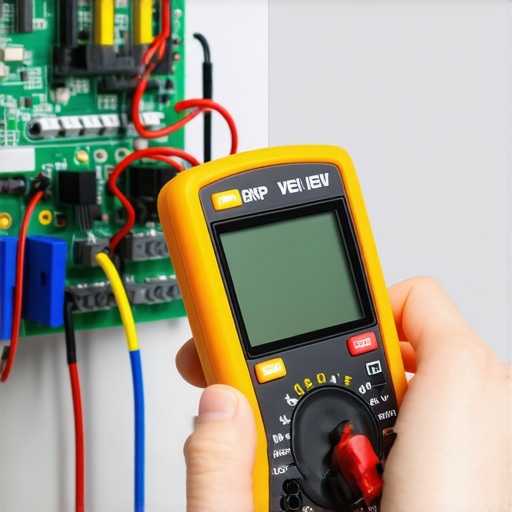
How do I keep my smart gear running like day one?
Maintenance in the smart era is about calibration. Every six months, I do a ‘hard reset’ and manual check. I use an external thermometer to verify the oven and fridge temperatures against what the app says. If they’re off, I take the time to recalibrate a smart oven thermostat that burns everything before it ruins a Sunday roast. According to the Appliance Service Training Institute (ASTI) Technical Bulletin 402, nearly 40% of electronic control board failures in modern dishwashers are actually caused by moisture intrusion at the connector level, not the board itself. This is why I always check the gaskets and look for early signs of wear. You should also know how to tell if your dishwasher heating element is actually broken vs. just suffering from a calcium buildup, which can save you a $300 service call.
Why Predictive Maintenance is the Next Big Thing
Looking ahead, the next three years will move us away from ‘apps’ toward ‘ambient intelligence.’ We are going to see appliances that don’t just alert you when a cycle is done, but use vibration analysis to tell you a bearing is 50 hours away from failing. This is the future of home appliances I’m excited about—where the machine manages its own repair schedule. However, with this increased connectivity, you must stay vigilant about the truth about smart appliances and your home data privacy. Local-first processing is becoming a huge trend, where your data stays on your hub instead of the cloud. If you ever experience a glitch after a storm, make sure you know how to reset your smart appliance after a major power surge to clear the digital cobwebs. My challenge to you: Go to your dishwasher right now and look at the heating element. If you see white, chalky spots, that’s your sign to run a citric acid cycle before the sensor forces a shutdown.
The Truth About Why My Smart Home Failed at First
Reflecting on my journey from a chaotic kitchen to a streamlined ecosystem, I’ve realized three things that no manual ever tells you. First, connectivity isn’t constant; even with the top smart appliances for a seamless home experience, physics still wins. If you hide your router in a metal cabinet, your fridge will lose its connection every time you close the door. Second, the analog maintenance matters more than the digital fluff. You can have the best AI, but if you don’t understand the secret to cleaning a front load washers hidden filter, the app will just report errors you can’t fix from your phone. Finally, over-automation is a trap. Start with one or two routines that solve real problems, like getting laundry alerts, before trying to automate your entire life.
[image_placeholder_final]
My Go-To Kit for a Trouble-Free Kitchen
To keep everything running smoothly, I rely on a few specific resources and tools that have saved me thousands in potential repair bills. I always keep a bottle of non-conductive electronic cleaner for sensor terminals; it is the best way to prevent ‘phantom’ codes in high-moisture environments. I also recommend following the official Association of Home Appliance Manufacturers (AHAM) technical bulletins, as they provide the real baseline for what your machines actually need versus what the marketing says. Finally, I stay updated on the future of home appliances through industry blogs that focus on teardowns and real-world testing. These tools ensure that you’re prepared when a sensor acts up or a connection drops.
Step Into a Home That Finally Works for You
Building a truly smart home isn’t about buying the most expensive gear; it’s about creating a space where technology removes friction instead of adding it. Whether you are currently browsing for refrigerators in 2025 or simply trying to get your current washer to behave, remember that you are the conductor of this digital orchestra. Don’t be afraid to dive into our ultimate guide to smart home appliances to refine your setup further and ensure your data stays private by checking the truth about smart appliances and your home data privacy. You’ve got the tools and the knowledge—now it’s time to make your home work for you. Have you ever felt like your smart appliances were more work than they were worth? Let me know your biggest frustration in the comments below!