
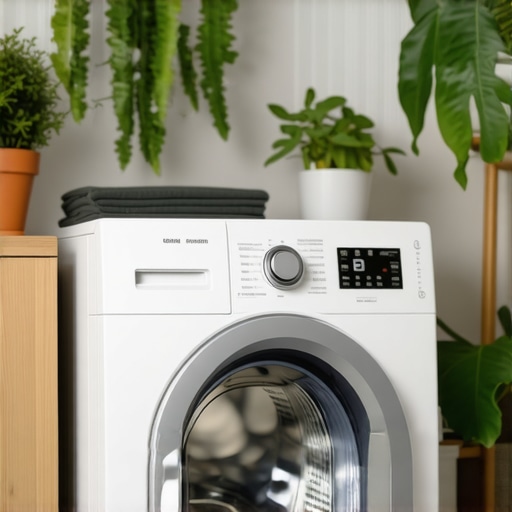
I’ll never forget the ‘Great Flood’ of my first studio apartment. I’d just crammed a massive load into a bargain-bin washer I’d found on a local classifieds site. Ten minutes later, I was standing in two inches of soapy water, wondering why my utility bill was already higher than my grocery budget. I was living alone, yet my laundry habits were costing me like I was running a professional laundromat for the whole block. It was a wake-up call: small households have very different needs than big families, and most of us are throwing money down the drain—literally. Today, I’m going to help you find a machine that fits your space and your budget without sacrificing performance. [image_placeholder_1]
Stop Overpaying to Wash Three T-Shirts
If you are living in a small space, you probably don’t have a massive dedicated laundry room. You might even be looking for 3 compact washers that fit perfectly under a standard kitchen counter. My biggest mistake when I started out was thinking that any small machine would be cheap to run. I was dead wrong. In fact, many older or budget-friendly small units are absolute energy hogs. If you’re tired of high bills, you need to look at washing machines that save water because every gallon counts when you’re paying the city bill. Have you ever looked at your monthly electric bill and felt like your washing machine was secretly running a marathon while you slept? It’s a frustrating feeling, but I promise there is a better way to handle your weekly loads without the guilt or the expense. I realized quickly that the hidden costs of cheap budget appliances can actually dwarf the upfront savings within just a couple of years.
Is High Efficiency Just a Way to Charge Us More?
I get asked this all the time by my neighbors. They see the price tag on a new front-loader and wonder if the ‘eco’ label is just a marketing gimmick. I used to be a skeptic too. But here is the reality: according to the U.S. Environmental Protection Agency, Energy Star certified clothes washers use about 20% less energy and 30% less water than regular models. That adds up to significant savings over the life of the machine. You might notice that a high-efficiency washer uses barely any water compared to the deep-fill tubs of the past, but that’s by design. It’s not broken; it’s just smarter. If you find that your energy-efficient washer takes so long to finish, don’t panic—it’s actually using less power over a longer period to get your clothes cleaner. Switching to a right-sized, modern unit was the best thing I ever did for my peace of mind and my wallet. Now, let’s get into the nitty-gritty of which models actually deliver on these promises.
Don’t Buy More Drum Than You Can Fill
Think of your washing machine like a backpack. If you’re only carrying a notebook to a coffee shop, you don’t need a 70-liter hiking pack that hits your heels every time you take a step. It is overkill. For those of us living in apartments or studios, the best stackable washer and dryer sets for tiny closets are the gold standard. A machine that is too big for your typical load doesn’t just waste physical space; it wastes massive amounts of water and electricity because it is trying to balance and saturate a half-empty drum. I have found that a 2.2 to 2.4 cubic foot capacity is the absolute sweet spot for solo dwellers or couples. Buying a ‘family-sized’ machine when you live alone is like driving an 18-wheeler to pick up a single gallon of milk. It’s inefficient, expensive, and frankly, a bit of a headache to park.
Why Your Laundry Pods Might Be Your Worst Enemy
I learned the hard way that more soap does not equal more clean. Last summer, after a particularly muddy weekend of hiking, I dumped two extra-large detergent pods into my high-efficiency machine, thinking I was being thorough. Ten minutes later, my kitchen looked like a foam party at a mid-2000s nightclub. Suds were oozing out of the detergent drawer and the machine began vibrating so violently I thought it might take flight. I spent the next hour learning how to level a washing machine so it stops banging on tile floors because the suds-induced imbalance had literally walked the unit three inches to the left. The reality is that why your washer doesn’t need a whole cup of detergent to get clothes clean comes down to the way modern enzymes work. They need room to move and agitate the fabric, not a thick, suffocating blanket of bubbles that cushions the clothes from the water.
Make Smart Tech Work for You Without the Headache
If you are ready to upgrade, do not fear the smart label. It is not just about getting a notification on your phone when the cycle is done, although that is nice for those of us who tend to forget laundry exists the moment we close the closet door. Modern tech actually protects your investment. For instance, how smart washing machines can simplify laundry day includes auto-dosing features that measure exactly how much soap you need based on the weight of the load. This prevents the sticky residue that ruins fabrics over time. If you are dealing with tough grime, how to use the steam setting on your washer for better stain removal can save you a trip to the dry cleaners and keep your clothes looking new for years. I use the steam setting on my work shirts every Sunday, and it has been a total game-changer for fabric longevity.
The Efficiency Secrets Your Utility Bill Loves
To really see the savings, you have to play by the machine’s rules. This means using the right cycles for the right fabrics every single time. Applying the best energy-saving tips for your front-load washing machine usually starts with the temperature dial. Cold water washing technology has come a long way, and for about 90% of your wardrobe, it is all you need to get things fresh. You are basically cutting your energy usage in half by not forcing the machine to heat the water. These small, daily decisions are what turn a high utility bill into extra money for the things you actually enjoy.
Most homeowners believe that more power equals better results. It is the classic ‘more is better’ fallacy that leads to early appliance failure. I used to think the ‘Heavy Duty’ setting was the only way to ensure my gym clothes did not come out smelling like a locker room, but I was wrong. In reality, the hidden cost of running your dishwasher on the heavy cycle daily is not just the spike in your electric bill; it is the accelerated wear on the internal pumps and seals. According to a recent report by the Association of Home Appliance Manufacturers, modern sensors are optimized for standard cycles, and forcing a heavy load frequently can reduce the lifespan of your machine by years. You are basically redlining your engine to drive to the grocery store. One of the most common mistakes is the pre-rinse ritual. You might think you are helping, but modern units are equipped with turbidity sensors that measure how dirty the water is. If you pre-rinse, the sensor thinks the dishes are already clean and triggers a shorter, weaker cycle, leaving you with stuck-on residue. It is time to trust the innovative dishwashers with AI technology you must know about, as they are specifically designed to outperform our old-school scrubbing habits.
Can AI Sensors Truly Fix Your Bad Laundry Habits?
The transition to smart tech is not just about bells and whistles; it is about solving the ‘user error’ problem that plagues older machines. For years, people have been using the wrong soap in the wrong quantities. If you have upgraded your hardware but kept your old habits, you need to understand the truth about high-efficiency detergent in old washers and vice versa. Using standard detergent in a high-efficiency machine creates a ‘suds lock’ that can burn out the drain pump. It is a classic trap that leads to expensive repairs. Another critical nuance is the maintenance we tend to ignore because it is not visible. We focus on the shiny exterior, but how to clean the lint filter you didn’t know your washer had is the real secret to avoiding that musty smell that ruins your fabrics. Even your refrigerator is not immune to these nuances. We often overstuff them, thinking it is efficient to keep things cold together, but blocking the air vents actually forces the compressor to work double time. If you want the secret to making your refrigerator last twice as long, it is all about airflow and gasket integrity. Many people also struggle with why your dishwasher pod isn’t dissolving completely, which often has more to do with your water temperature and cycle choice than a faulty pod. If you are running a ‘Quick’ cycle with a heavy-duty pod, the plastic casing will not have time to melt, leading to a gummy mess in your drain. Finally, you should learn how to deep clean the gasket on your dishwasher to prevent leaks before a small crack turns into a major kitchen floor replacement. Have you ever fallen into this trap? Let me know in the comments. We have all been there, but a few small adjustments in how we treat our tech can save thousands over the next decade.If you have pets, you are likely unaware that your refrigerator is basically a giant vacuum for fur and dander. I discovered this the hard way when my electric bill spiked by thirty percent last August. I now firmly believe that you must learn how to keep your refrigerator coils clean in a pet-friendly home at least twice a year. I personally use a twenty-four-inch flexible crevice tool attached to my shop vac. It is the only way to reach the deep crevices of the condenser without pulling the entire unit out and risking a floor scratch. When the coils are caked in dust, the compressor runs longer and hotter, which is the secret to making your refrigerator last twice as long—or killing it early if you ignore the grime. 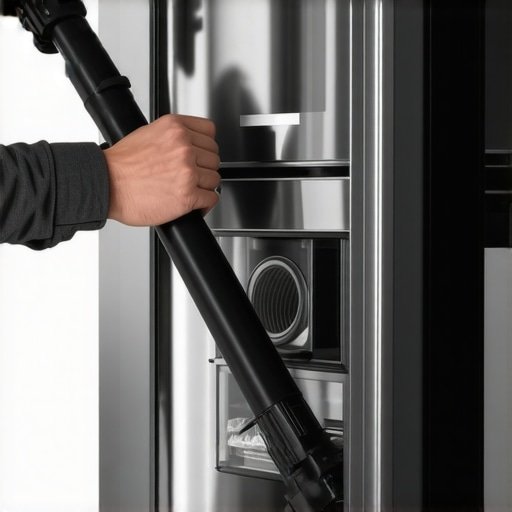 The smart appliances revolution how to choose the best dishwasher isn’t just about finding the quietest decibel rating; it is about understanding the chemistry of your water. I have started using pure citric acid crystals once a month instead of those scented commercial cleaner tabs. It is a trick I picked up from a niche technician who specialized in industrial boilers. Citric acid effectively dissolves the calcium and magnesium buildup that chokes the spray arms and sensors. If you are a coffee enthusiast, the same logic applies to how to get rid of hard water build-up inside your smart coffee maker. These minerals are the silent killers of heating elements, and a five-dollar bag of crystals can save you from a five-hundred-dollar replacement.
How do I keep these machines alive for a decade?
The key is shifting your mindset from reactive repair to preventative diagnostics. Most modern smart units have a hidden service mode you can access via a specific sequence of button presses. This is where the 5-minute fix for a dishwasher that won’t start its cycle usually hides—it is often just a simple error code clear that resets the control board. According to the Association of Home Appliance Manufacturers (AHAM), proper maintenance can extend the lifespan of a major appliance by up to 40%. I predict that the future of home appliances trends to watch in 2025 will move toward ‘proactive repair,’ where the machine’s internal AI orders its own replacement capacitor weeks before the original one fails. For now, we still have to do the legwork. My best advice is to stop overworking the system by avoiding back-to-back heavy cycles. Treat your tech with a bit of respect, and it will return the favor. Go ahead and grab a vacuum attachment this weekend and give your fridge’s underbelly a thorough cleaning; it is the single most effective thing you can do for your utility bill right now.
Three Hard Lessons I Learned About Modern Tech Maintenance
If I could go back to that first flooded apartment, I’d tell myself that ignoring the sensors is the fastest way to a broken machine. First, I learned that ‘Smart’ doesn’t mean ‘Self-Cleaning’; your sensors need you to clear the debris so they can see the grime. Second, the ‘Standard’ cycle is almost always better for your machine’s motor than the ‘Heavy’ cycle, even for tough loads. Third, and perhaps most importantly, using the wrong detergent is essentially like putting diesel in a gasoline engine. Modern high-efficiency machines are precision instruments, not brute-force scrubbers. #IMAGE_PLACEHOLDER_E#
My Secret Weapons for Keeping Appliances Like New
I don’t rely on expensive service calls for the basics anymore. Instead, I keep a dedicated maintenance kit. I highly recommend keeping a bag of pure citric acid on hand for descaling—it’s a trick I found in the ultimate guide to smart home appliances for a modern living. Another resource that changed my perspective is the breakdown of whether is a smart fridge really worth the extra money, which helped me realize that the value is in the diagnostics, not the screen. Finally, always keep your manufacturer’s PDF manual on your phone for quick access to those cryptic error codes.
Stop Guessing and Start Optimizing Your Home
Efficiency isn’t just a buzzword; it’s a lifestyle that keeps more money in your pocket. As we look at refrigerators in 2025 top features that transform your kitchen, the focus is shifting entirely toward user-friendly sustainability. You have the power to extend the life of your appliances by years just by being a little more observant. Don’t be afraid to dive into those settings and make the tech work for your specific needs. What’s the one appliance chore you absolutely hate doing? Let’s talk about it in the comments below!