

I remember the exact moment my jaw dropped. It was a Tuesday evening, and my Zoom call kept freezing right as I was trying to explain a big project. I blamed the provider, then the router, then my kids. But when I finally pulled up my network monitor, I saw it: my refrigerator was gulping down gigabytes of data like it was ice water on a summer day. I was shocked. I bought it to keep my milk cold and maybe help with busy meal prepping, not to compete with a small server farm for bandwidth.
The Day My Refrigerator Became a Data Hog
If you have noticed your internet speeds dipping or your data cap disappearing, you are probably in the same boat I was. We all want the convenience of smart home appliances for a modern living, but nobody tells you about the hidden digital appetite of these machines. I will be honest, I spent months ignoring those annoying firmware update notifications, thinking they did not really matter. That was my first big mistake. It turns out, an unoptimized smart fridge can become an absolute chatterbox, constantly pinging servers or even trying to upload high-resolution photos of your half-eaten yogurt to a cloud you forgot you owned.
Does My Fridge Really Need to Be Online All the Time?
You might be feeling a bit of buyer’s remorse right now. Trust me, I have been there. You start wondering is a smart fridge really worth the extra money when it starts acting like a bandwidth thief. The truth is, these devices are designed to stay connected for features like internal cameras and real-time inventory tracking. However, research by the Global Cyber Alliance indicates that poorly configured IoT devices can be targeted by automated bots every few minutes, causing massive spikes in outbound data as the machine essentially ‘talks’ to the wrong people. We are going to look at how to rein that in today without losing the features you actually use. Have you noticed your Wi-Fi acting funky or seen a strange spike in your data usage since you upgraded your kitchen? I would love to hear if I am not the only one who has been outsmarted by their own cooler. In the next few paragraphs, I will show you how I managed to sync my smart kitchen appliances properly to stop the data bleed.
Put Your Kitchen on a Digital Diet
After I realized my fridge was essentially a professional digital streamer without a permit, I had to take action. You can think of your smart appliances like a group of noisy toddlers in a library; they do not realize they are being loud until you teach them the rules. The first thing I did was dive into the router settings. I discovered that by isolating my appliances on a separate guest network, I could prevent them from clogging up the main channel I use for work. If you are struggling with the initial setup, learning how to connect your smart washer to your home wifi in minutes can give you a good blueprint for how most of these systems handshake with your router. 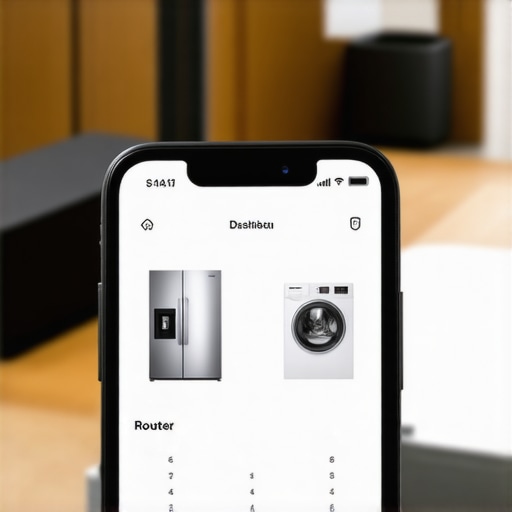
Move Your Appliances to a Guest Network
This is the biggest win for both speed and security. When your smart fridge or your innovative dishwashers with AI technology sit on the same frequency as your laptop, they fight for the same digital lane. By moving them to a ‘Guest’ SSID, you essentially give them their own sidewalk to walk on so they do not bump into your video calls. I once had a situation where my smart washer kept pausing mid-cycle because the Wi-Fi signal was being drowned out by my daughter’s gaming console. Separating the networks solved the ‘interference’ and the data lag instantly.
Tweak the Reporting Frequency in Your Settings
Many refrigerators in 2025 come with cameras that take a photo every time the door closes. While that is cool, do you really need a 4K image of your milk carton every ten minutes? I went into my settings and changed the upload frequency to ‘Low’ or ‘Manual.’ This significantly reduced the outbound data. You should also look at the best energy efficient fridge settings for your utility bill, as many of the ‘Eco’ modes also include ‘Eco’ data modes that ping the manufacturer’s server less often.
Keep the Code Fresh Without the Headache
I know it is tempting to hit ‘remind me later’ on those pop-ups, but there is a specific reason why your smart appliance app keeps asking for a firmware update. Often, these updates include ‘stability’ patches that fix bugs where the appliance might be stuck in a loop trying to reach a server that is down—one of the main reasons for why your smart washer keeps disconnecting. I make it a habit to check for updates once a month. To make this easier, I learned how to set up a central kitchen hub so I can see every appliance’s status from one screen instead of opening five different apps.
Stop the Hidden Syncing Cycles
One night, I found my fridge screen glowing brightly at 3 AM. It was performing a full cloud sync of its internal inventory system. By using the ‘Schedule’ feature, I forced it to only sync during the early morning hours when nobody was using the internet. I also took the time to sync my smart kitchen appliances to a single ecosystem, which reduced the number of background processes running on my phone and router. Just like you would calibrate your smart fridge temperature sensors to keep your food fresh, you need to calibrate your data settings to keep your network healthy.
But reining in the digital data is only half the battle; reining in our old habits is the other half. Most people believe that buying the ultimate guide to smart home appliances for a modern living means their chores will automatically get faster. This is perhaps the biggest myth in the industry. In reality, the more ‘efficient’ a machine is, the longer it typically takes to run. According to the Association of Home Appliance Manufacturers (AHAM), modern sensors prioritize water conservation and chemical activation over raw mechanical speed. This is the primary reason why your energy efficient washer takes so long to finish compared to the water-gulping monsters of the 1990s. If you try to force a ‘quick wash’ for every load, you are actually bypassing the very precision engineering you paid for, often resulting in clothes that are not truly sanitized.
The Counterintuitive Reality of High-Efficiency Cycles
You might experience a moment of panic when you notice why your high efficiency washer uses barely any water, but this is a design feature, not a defect. Modern machines use a concentrated solution to break down stains, which requires more time for the enzymes to work. Challenging the common belief that ‘more is better,’ I have found that using too much water actually dilutes the detergent’s effectiveness. However, the biggest ‘oops’ factor I see with new owners is the detergent trap. We have been conditioned to love suds, but in a smart machine, suds are the enemy. Excessive bubbles can confuse internal pressure sensors and lead to mechanical failure. Even worse, that leftover soap creates a breeding ground for bacteria, which is why your front load washer smells like a swamp and how to fix it becomes a top search query for frustrated homeowners.
Does adding more soap really lead to a better clean?
In my experience, the answer is a resounding no. I have discovered that the secret to using less detergent in your high efficiency washer is the single best way to extend the life of your appliance. When you over-pour, the machine has to add extra rinse cycles, which increases wear and tear on the motor. It is a cycle of destruction hidden under a layer of lavender-scented bubbles. 
Stop Treating Your Modern Washer Like a 1990s Top-Loader
The nuance of modern maintenance also extends to your kitchen. We often trust that innovative dishwashers with AI technology will handle everything, but even the smartest AI cannot clean a physical obstruction. There is almost always the hidden sensor in your dishwasher that needs a manual scrub to function correctly. If this turbidity sensor—which measures how dirty the water is—gets covered in a film of grease, it will tell the machine the dishes are clean when they are actually still covered in lasagna. This leads to the ‘Heavy Cycle’ trap, where users think they need more power, increasing the hidden cost of running your dishwasher on the heavy cycle daily. Instead of more power, the machine just needs a clean sensor. Experts involved in choosing the right refrigerator tips from industry experts often echo this sentiment: mechanical care beats digital features every time. Have you ever fallen into this trap of thinking your smart machine was broken when it just needed a manual touch? Let me know in the comments.
It is one thing to get your appliance connected, but keeping it running at peak performance is a whole different ball game. I used to think maintenance just meant wiping the fingerprints off the stainless steel, but I was wrong. If you really want to avoid a four-hundred-dollar repair bill, you need to get comfortable with a few basic tools and a schedule. Personally, I keep a simple digital multimeter in my kitchen junk drawer. Why? Because when my dryer stops heating or my dishwasher refuses to drain, I do not guess; I check the continuity of the thermal fuse. Most people do not realize that the secret to making your refrigerator last twice as long often comes down to mechanical upkeep rather than software patches.
Don’t Let Your Fridge Suffocate
One of the most overlooked killers of modern compressors is simple household dust. If you have a dog or a cat, your fridge is basically a giant vacuum cleaner for pet hair. I make it a point to vacuum the condenser coils every six months. I learned how to keep your refrigerator coils clean in a pet friendly home the hard way after my compressor started making a high-pitched whine that sounded like a jet engine. This is not just about noise; a struggling compressor uses significantly more electricity and wears out its internal seals. #IMAGE_PLACE_HOLDER_D#
How do I maintain these complex systems without hiring a pro every month?
The key is a consistent rotation of small tasks. I treat my kitchen like a car that needs an oil change. Every first of the month, I check the dishwasher filter. If you have never done it, the easiest way to clean the filter in your dishwasher is simply a warm soapy soak without any harsh chemicals. For my laundry room, I focus on the debris trap. According to technical documentation from Sensata Technologies, a leader in appliance sensor manufacturing, over thirty percent of sensor failures in high-efficiency units are caused by physical debris interfering with pressure switches. By spending five minutes on how to clean the debris filter on your front load washer effectively, you prevent the machine from throwing those cryptic error codes that usually lead to a service call.
A Glimpse Into the Future of Self-Repairing Tech
Looking ahead, the future of home appliances trends to watch in 2025 suggest we are moving toward predictive maintenance. Soon, your washing machines that save water will not just tell you they are broken; they will analyze the vibration patterns of the drum and warn you weeks before a bearing fails. We are already seeing this in industrial settings, and it is trickling down to our laundry rooms.
Your Next Move for a Healthier Home
If you do nothing else today, go pull the kickplate off your refrigerator and check the coils. If they are covered in grey fuzz, get the vacuum out. It is the single most effective way to save your compressor and your wallet. If you are feeling adventurous, you can even look into how to calibrate your smart fridge temperature sensors to ensure your food stays safe while you are at it.
The Hardest Lessons I Learned Managing a Smart Home
After years of trial and error, I’ve realized that owning high-tech gear requires a shift in mindset. First, never assume a ‘smart’ feature replaces manual care. I once thought my fridge would alert me to a dirty coil; it did not, it just worked harder and cost me more in power. Second, I learned that how smart washing machines can simplify laundry day actually depends on your ability to leave the door open to air out. If you treat these machines like the old ‘set and forget’ tanks of the 90s, they will eventually fail you. Finally, the biggest ‘lightbulb moment’ was realizing that connectivity should serve you, not the manufacturer. If an app isn’t making your life easier, disable the background sync and regain your bandwidth.
The Simple Gear That Keeps My Kitchen Running Smoothly
You do not need a degree in engineering to maintain these units, but you do need the right toolkit. I swear by a long-reach coil brush and a vacuum with a narrow nozzle; these are your best defense against a burnt-out compressor. #IMAGE_PLACEHOLDER_E# For the exterior, finding the best way to clean a stainless steel fridge without leaving streaks was a game-changer for my kitchen’s aesthetic. I also keep a simple digital multimeter handy to test fuses before calling a repairman. Lastly, I always recommend looking for the best front load washers for preventing mold and mildew buildup if you are shopping for a new unit, as physical design often beats out fancy software features.
Build a Home That Actually Works for You
Stepping into the world of connected living can feel overwhelming, but remember that you are the boss of your machines. Whether you are using a top smart appliances for a seamless home experience in 2025 or just trying to keep an older unit alive, the goal is peace of mind. Don’t be afraid to dive into the settings or get your hands a little dirty with a filter scrub. With a bit of proactive care, your home will be the efficient, helpful sanctuary you have always wanted. Taking the first step today by following an ultimate guide to smart home appliances for a modern living can save you hours of frustration down the road.
Have you ever had a smart appliance act in a way that completely surprised you, like a data spike or a strange notification? I would love to hear your stories in the comments below!