
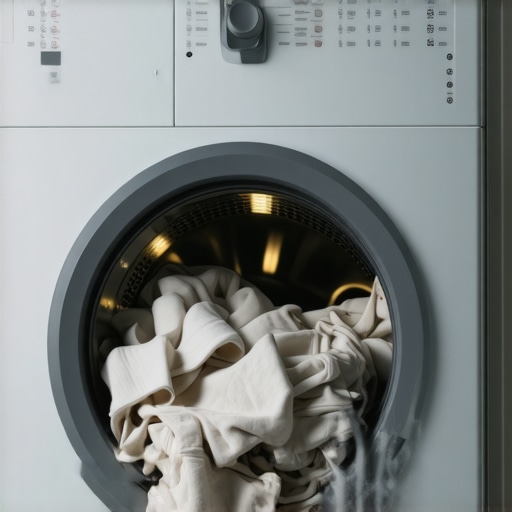
I was sitting in my living room, finally relaxing after a long day, when I heard it: a sound like a frantic giant trying to escape from my laundry room. Thud. CRASH. Bang! My top-load washer wasn’t just doing the laundry; it was staging a protest. I rushed in to find the machine halfway across the floor, straining against its hoses like a dog on a short leash. If you’ve ever experienced that “unbalanced load” panic, you know exactly what I’m talking about. It’s loud, it’s scary, and it feels like your expensive appliance is about to fly into a million pieces.
Stop the Laundry Room Earthquake Before Your Machine Self-Destructs
The first time this happened to me, I made a classic amateur mistake. I thought I could “fix” a banging load of heavy towels by just throwing in a heavy work boot to “counterbalance” the weight. Spoiler alert: it didn’t work. In fact, that’s exactly why your washing machine is moving across the floor during the spin cycle. I ended up making the vibration so violent that I nearly cracked the outer tub. We’re going to get to the bottom of that racket today. Whether it’s a simple case of “the heavy blanket syndrome” or something a bit more technical like worn-out suspension rods, I’ll help you figure out why your washer sounds like a demolition site. We want to get you back to a peaceful home without needing to call an expensive technician for something you could have tightened yourself in five minutes.
Is it actually worth the hassle to repair these things?
You might be wondering if you should just throw in the towel and start shopping for a new unit. I get it. Modern appliances often feel like they have a “self-destruct” timer set for five years. However, most banging noises are caused by physical components—springs, rods, or leveling feet—that are surprisingly cheap and easy to replace. According to a report by Consumer Reports, many common washer complaints, including noise and vibration, can be solved with minor adjustments rather than total replacements. Before you go out and buy a replacement, you need to know how to stop your washing machine from banging against the wall by checking the basics first. Have you ever felt that sinking feeling when your machine starts walking toward you? Drop a comment and tell me what was in the load when it happened—for me, it was always the “extra-absorbent” bath sheets. Once you’ve checked the load balance, we need to look at the hardware. Sometimes, the issue is as simple as a faulty lid switch on your top loader tricking the machine into thinking it’s safe to spin when it isn’t, but more often than not, the culprit is hiding just under the cabinet.
Get Down on the Floor and Level Those Feet
Before you start tearing the cabinet apart, you need to check the most basic physical connection: how the machine sits on your floor. If your washer is even slightly tilted, the centrifugal force of a spin cycle transforms it into a 200-pound wrecking ball. I once spent three hours researching complex motor issues only to realize my floor was slightly sloped and one of the front leveling feet had vibrated loose. Use a carpenter’s level on the top of the machine—check it front-to-back and side-to-side. If it’s off, tilt the machine back and unscrew the legs to extend them. Many people don’t realize that why your washing machine is moving across the floor during the spin is often just a simple leveling issue that takes two minutes to fix with a pair of pliers.
The Wrench Trick to Stop the Shaking
Once you’ve adjusted the height, make sure to tighten the lock nuts against the frame of the washer. If you skip this, the vibration will eventually unscrew the feet again. I learned this the hard way when I leveled my machine on a Monday, only to find it back in the middle of the hallway by Thursday. Think of these lock nuts as the seatbelt for your washer’s legs—without them, everything is just temporary.
Check Your Washer’s Internal Shock Absorbers
If the machine is level but still sounds like a drum set falling down stairs, we need to talk about suspension rods. These are essentially the struts of your washing machine. In a top-load washer, the tub is literally hanging on four of these rods. When the dampening grease inside them dries out or the springs weaken, the tub loses its ability to absorb movement. It’s exactly like driving a car with blown-out shocks; every tiny bump feels like a mountain. This mechanical failure is a major reason why your top load washer won’t spin after a heavy load without hitting the sides of the cabinet.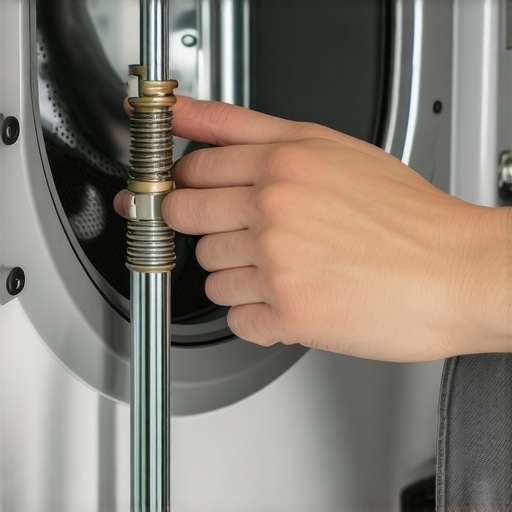
The Bounce Test for Dead Rods
You can diagnose this in five seconds without a single tool. Open the lid and push down firmly on the agitator or the bottom of the tub, then let go. A healthy suspension will pop back up and stay still. If the tub bounces up and down several times like a trampoline, your rods are shot. Replacing them is a DIY-friendly task that usually involves popping the top of the washer and swapping the rods out one by one. If you are dealing with a front-loader instead, you’ll be looking for shock absorbers at the bottom of the tub rather than hanging rods, but the concept remains the same. If the noise is more of a high-pitched roar than a bang, you should also learn how to tell if your washer bearings are about to fail, as that requires a much more intensive repair.
Recalibrate the Brain of Your Smart Washer
Sometimes the problem isn’t mechanical—it’s digital. Modern machines use sensors to detect how much the tub is swinging. If these sensors get out of alignment, the machine might ramp up to full speed when it should be slowing down to redistribute the load. While how smart washing machines can simplify laundry day is a huge benefit for most, they do occasionally need a ‘brain reset.’ Look up your model’s specific ‘calibration mode.’ Usually, it involves a series of button presses on the control panel with an empty tub. This tells the computer exactly where ‘center’ is, allowing the software to compensate for small vibrations before they become violent bangs.Most people assume that if their machine is banging, they just need to add more water to ‘even out’ the load. This is actually a major misconception that can lead to even more violent vibrations. In reality, understanding why your high efficiency washer doesn’t fill all the way to the top is the first step to realizing that these machines are designed to wash with very little water. When you manually add water or use a ‘deep fill’ setting incorrectly, you’re actually making the load float rather than tumble, which makes it nearly impossible for the sensors to balance the drum during the spin cycle. This is one of the many reasons washing machines that save water are actually more effective at staying stable than the older ‘gusher’ models.
Stop Chasing a Higher Water Level
Another nuance that even seasoned DIYers miss is ‘Suds Lock.’ If you use too much detergent, the excess suds act like a thick cushion that prevents the water from draining quickly enough. The machine then tries to spin while it is still holding heavy, soapy water in the outer tub, leading to that terrifying banging sound. According to a study by the Association of Home Appliance Manufacturers (AHAM), consumers often use up to three times the recommended amount of detergent, which is the leading cause of sensor errors and ‘phantom’ unbalance issues.
The Fabric Softener Trap That Ruins Your Machine
Here is a warning I wish someone had given me years ago: stop overusing fabric softener. Over time, that blue liquid creates a waxy residue called ‘scrud.’ This gunk builds up on the outside of the inner tub where you can’t see it, adding uneven weight to the drum. It also coats the suspension rods, making them sticky and less effective at absorbing shocks. If you have ever wondered the reason your high efficiency washer smells like old gym socks, it is almost certainly this buildup. More importantly, it’s also why you should never use too much fabric softener in your smart washer if you want your suspension to last more than a few years. 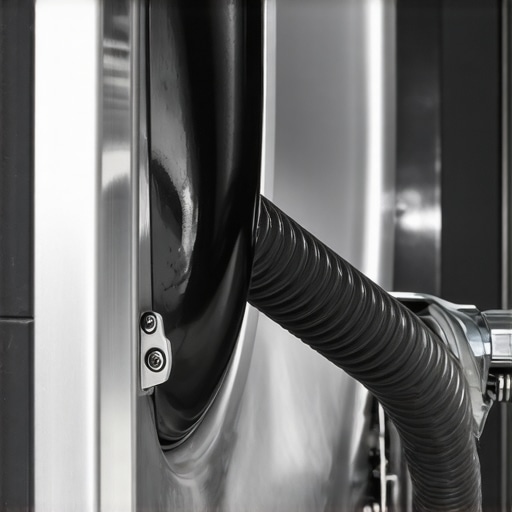
Why does the drum still rattle after you replaced the parts?
If you have replaced the rods and leveled the feet but the noise persists, check the balance ring and the counterweights. Most modern tubs have a ring filled with fluid (usually brine) at the top. If this ring leaks, the tub can never stay centered. Additionally, heavy concrete blocks are bolted to the outer tub to provide stability; if one of these bolts has snapped or vibrated loose, the machine will sound like a jackhammer regardless of how small the load is. Have you ever fallen into the trap of using too much detergent to get clothes ‘extra clean’? Let me know in the comments—I definitely did until I saw the damage it caused inside my own unit.I used to be terrified of opening up my washer cabinet, convinced that I’d end up with a pile of spare parts and a flooded floor. But over the years, I’ve realized that 90% of appliance repair is just having the right tool and the confidence to use it. One tool changed my DIY life more than any other: a digital multimeter. I use it every single time my machine acts up because it takes the guesswork out of the equation. Instead of wondering if my motor is dead or if a small sensor is just acting out, I can test for continuity in seconds. It is exactly how I diagnosed the need for a new intake when I learned how to fix a washing machine that only fills with hot water without wasting money on a technician.
The Only Tools I Keep in My Laundry Room Cabinet
Beyond the multimeter, you really only need a few specific items to handle most ‘shaking and banging’ issues. I swear by a set of heavy-duty vibration pads. These aren’t the cheap foam ones you find at the dollar store; I use high-density rubber pads that act as a secondary suspension system. If your floor has any flex at all, these are a lifesaver. I also keep a long-reach nut driver set on hand. Most washer cabinets are held together by 1/4-inch or 5/16-inch hex screws, and a standard screwdriver just won’t reach the ones tucked deep behind the control panel. If you are adventurous enough to peek inside, knowing how to replace the water inlet valve on your washer is a skill that will save you at least two hundred dollars in labor costs alone. According to the technical documentation from Sears Home Services, a digital multimeter remains the single most important diagnostic tool for distinguishing between a total mechanical failure and a simple $15 electrical switch swap. 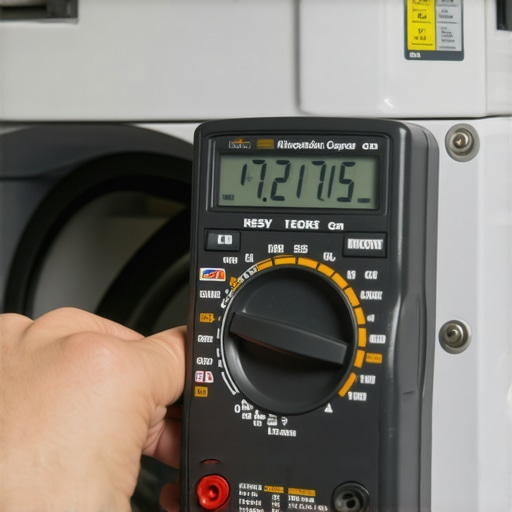
How do I keep my smart appliances running like new for a decade?
The secret to longevity isn’t just fixing things when they break; it’s preventing the ‘slow death’ caused by scale and residue. For my kitchen appliances, I perform a deep clean every three months. This includes taking ten minutes to learn how to clean the hidden filter in your high-end dishwasher to prevent motor strain. For the washer, I run a dedicated ‘Clean Washer’ cycle with a cup of citric acid. Citric acid is far more effective than vinegar at breaking down the ‘scrud’ and calcium deposits that stiffen your suspension rods and wear down the bearings. If you don’t stay on top of this, you’ll eventually find yourself searching for how to tell if your washer bearings are about to fail, which is a much louder and more expensive problem.
Your Washer is About to Get a Lot Smarter
Looking toward the future of home appliances trends to watch in 2025, we are moving away from manual troubleshooting entirely. I predict that within the next two years, ‘vibration monitoring’ will be a standard feature in every mid-range machine. Instead of you hearing a bang, your phone will ping you with a notification saying, ‘Load unbalanced: redistribute heavy items now to prevent suspension wear.’ This shift toward predictive maintenance is already starting to how smart washing machines can simplify laundry day by reducing the physical stress we put on these machines. My best advice? Go buy a $20 digital multimeter today and test the lid switch on your machine just to see how it works—getting familiar with the ‘guts’ of your appliance now will make you a pro when a real emergency happens.
What I Learned After Three Flooded Laundry Rooms
If there is one thing I’ve realized after years of wrestling with vibrating tubs, it’s that a level machine on a weak floor is still a noisy machine. I used to think that just adjusting the feet was enough, but I learned that the floor itself can act like a giant speaker box, amplifying every tiny wobble. Also, never assume your suspension rods are fine just because they look clean; the dampening grease inside is what actually does the work, and once it is gone, you essentially have a 200-pound pogo stick in your house. Finally, always check your hoses after a major ‘walking’ incident. It is incredibly easy to find a leak in your washing machines water supply line if the machine has been straining against its connections during a violent spin.
The Only Tools You Need to Silence the Racket
You don’t need a professional workshop to handle these repairs, but you do need a few specific items that make the job easier. I personally keep a set of high-density rubber pads under the feet of my machine—they absorb the micro-vibrations that even new suspension rods might miss. I also highly recommend a digital multimeter for checking your lid switches and sensors; it is a core skill found in the ultimate guide to smart home appliances for a modern living because it turns guessing into knowing. If you have a front-loader, keep a shallow tray and some towels handy so you can clean a front load washer filter without flooding the room when you’re checking for debris that might be causing a rhythmic thumping. Lastly, consider using the best smart plugs for monitoring appliance energy use to see if your machine is drawing unusual power during those unbalanced cycles.
Stop Fearing the Bang and Take Charge
Repairing your own appliance is about more than just saving a service fee; it’s about the peace of mind that comes from knowing how your home actually works. The next time you hear that familiar thud and realize your washing machine is moving across the floor during the spin, don’t reach for your wallet to buy a new one. You now have the diagnostic steps, the tool recommendations, and the insider tricks to settle it down before it causes real damage. You’ve got this! Have you ever had a washing machine ‘escape’ from the laundry room and end up halfway down the hall? Tell me your wildest laundry disaster story in the comments below!